bout de papier, Vol. 27, No. 2 (2013) — Spring 2013 // Printemps 2013, pp. 10–12
At the suggestion of bout, I have selected excerpts from three chapters in my book of memoirs Whose Man in Havana: Adventures from the Far Side of Diplomacy to be published by Penumbra Press in 2013. The book ranges through Latin America, the Caribbean, the Balkans and Central Asia. The chapters are divided about equally between experiences with External Affairs (as it then was) and international organizations which formed a second career. The fragments below are set in the Dominican Republic, my first posting, Cuba, my second posting, and Bosnia where I worked with the Organization for Security and Cooperation in Europe (OSCE).
In many chapters I have focussed on the lighter or eccentric side of people and places, but almost everywhere the dark side intrudes. As I say in my introduction, the intersection of both is black comedy. Substance slips in from time to time.
I should add a note about the Cuban assignment when I worked for External Affairs, but was tasked by the CIA in the immediate and still tense aftermath of the Cuban missile crisis. This story can be told because of the declassification of key documents and sketches by National Defence, Foreign Affairs and the John F. Kennedy Library in Boston.
– John Graham
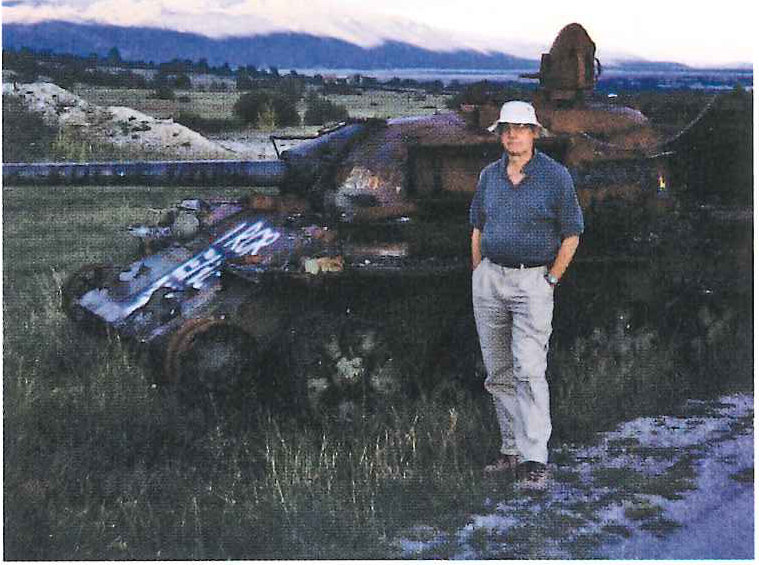
“Darkness at Noon” – Dominican Republic (1960)
The oncoming car had skidded to a halt. My brake was jammed on, but I kept sliding until I crunched into his fender and head lamp. Indignant, I threw open the car door, clambered out to demand in bad Spanish why the stupid driver was on the wrong side of the road. Three men, now outside their car, began shouting at me and pointing to a sign some 30 meters behind me. Visible in the arc of a street light at the intersection was a sign I had missed that said “no entry —one way street”. One man, presumably the owner, stepped forward to examine the damage. Glancing at the front of my car, he sucked in his breath and barked at his companions. I could not understand what they said, but all three leapt into their car. The driver backed up, changed gear and swung away from me.
What the hell was going on? I was totally in the wrong, but these people were not only rushing away from the accident, but in their haste would not even stop to straighten out the fender that was scraping the tread off the front tire and would soon destroy it. I ran after them for a short distance shouting “stop!”. But the only effect was to accelerate the car and increase the tearing noise as the fender peeled off more bits of tire.
I walked back to my car mystified and unnerved. It was December 1960 and I was in the third week of my first diplomatic posting overseas. I climbed back into my car and attempted unsuccessfully to assure my two Canadian guests that everything was alright. I had picked them up at the airport and we were entering Ciudad Trujillo (formerly and subsequently Santo Domingo) when the accident occurred.
Next morning at the embassy, I told Josefina, one of the locally engaged staff, what had happened. “Why,” I asked, “had they driven away when it was clearly my fault?”
“Perhaps” said Josefina, “they saw your license plate.”
“Yes, they could have…but my license plate…?”
“That would be enough. Your diplomatic plate is green — the same colour as the plates given to senior government officers. “Look,” she said, “let’s go to the landing.” We stood by the elevator. “When you‘ve been here longer you will understand…” She looked at me. “Then maybe you won’t. There’s a lot of foreigners here who don’t want to understand. ..at least)” she paused, “you know why we can’t talk about this in the office.”
“Sure, the phones are bugged.”
“and maybe the walls or the light fixtures — or maybe me. It’s almost certain that one member of the embassy staff has been recruited by the secret police.”
“Come on Josefina…”
“You think I’m paranoid. What about the men in the car you crashed last night? You’ve just explained that it was your fault, but they ran away as if you were death itself. In a way they thought you were. It was dark, they couldn’t see you very well. But they could see your plates and they were petrified. Anybody with green plates, except for diplomats, owes his position to Trujillo.”
“Sure, but a fender bender…?”
“Listen, their minds were racing with what might happen to them: beaten up; shot on the spot; arrested…Terrible things happen here.”
I went back to my office and sat down. This foolish accident was stripping away the remnants of my comfortable Canadian norms. A nightmare was taking their place. Those banana brains in Ottawa had sent me to a tropical version of Arthur Koestler’s Darkness at Noon. I was beginning to recognize that above the level of the campesino (peasant farmer), the principal beneficiary of the regime, the entire country was quivering with fear. The dictator’s name was not mentioned, even in a neutral context lest the maid, the telephone or the microphone in the wall report potential conspiracy or more likely the absence of the obligatory degree of respect. My friend, Bernstein, generally referred to Trujillo as “scrotums”. Megalomania had become a magnetic force. Everyone bent to the dictator and obsequiousness was an art form. Anything less than a superlative was an offence.
Whose Man in Havana? (1963)
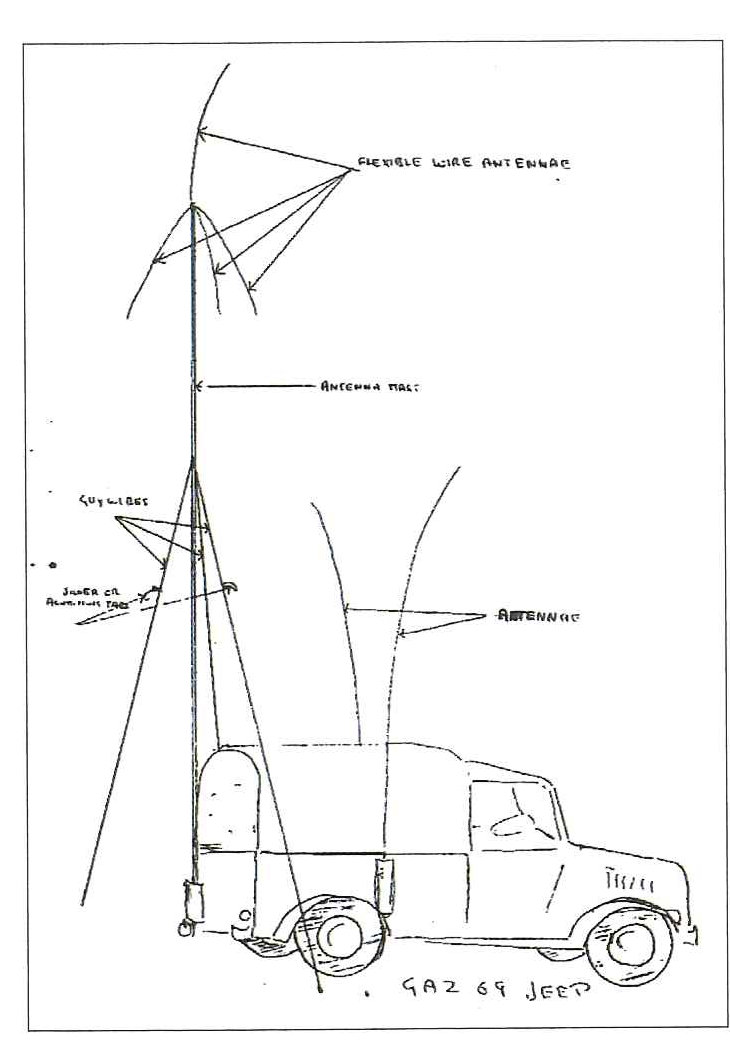
One long night sticks vividly in my memory. Air reconnaissance had reported that a Soviet base, probably a SAM missile unit, was packing up, either for redeployment in Cuba or for shipment back to Russia. The Soviet army moved its installations by night to avoid detection. I was given the coordinates of the base and asked to scout the roads in an eastern radius to determine where the convoy was headed and what it contained, with instructions to be in the target area by midnight. The area was about a two hour drive from Havana.
Just before midnight I was driving along a secondary highway when I saw the dimmed lights of a line of trucks approaching. A long convoy of jeeps, large vans, trucks and articulated trucks was moving eastwards — all recognizably Soviet vehicles. Bingo! I had my quarry.
I drew up at the side of the road and opened my notebook. By then more than half the convoy had passed and the balance were moving too quickly for more than sporadic notes and jumbled sketches. When the convoy had moved past I waited perhaps 5 minutes, turned my Volkswagen Beetle around and headed off in pursuit. Apart from the Russians and myself, there was no traffic on the road. I can’t recall exactly, but it was very dark — no moon or only a crescent. I overtook slowly, two or three vehicles at a time. With my note book beside me, I jotted down short descriptions of the vehicles and did rough sketches of the shape of the loads. Of particular interest were the approximately 40 foot long canvass shrouded canister shapes with pointed noses — almost certainly surface to air missiles (SAMs). SAMs fired by a Soviet unit and striking an overflying American U2 aircraft had almost lit the nuclear fuse I months before. To double check on shapes and numbers, I drove on about 2 miles beyond the convoy and parked, fairly well hidden by trees at the side of the road. The tail of the last flatbed was lit by a single blue light.
Perhaps I should have followed the convoy to the new destination, but this would have been pushing my luck. As it was, I found it curious that on a lonely country road in the middle of the night, no security vehicle peeled off to stop me and ask questions. Language problems, or perhaps orders to stay clear of the natives. There also appeared to be virtually no Soviet collaboration with the Cuban army or even the Cuban intelligence service. Cuban motorcycle outriders would have been more alert to persons and vehicles which did not reasonably fit the setting. Apart from a brash moment when an embassy colleague and I were stopped entering the secure communications area of one of the ancient Spanish fortifications in Havana harbor (we excused ourselves as bungling tourists), I was never stopped in the course of these operations. Soviet bases, at least the ones that I observed, were lightly guarded and almost exclusively by Soviet soldiers who were not encouraged to fraternize with Cubans. (Cuban soldiers wore uniforms.) I expect that luck also played a role…
For a young foreigner it was a fascinating environment. Everyone worked hard, but in Havana in those days the standard of diplomatic revelry was high — the zest of diplomatic party life being a function of both political isolation and local drama. There was a Roman toga ball. I held a scavenger hunt with points for commandeering a Russian jeep (extra points if it contained Russians), a Hungarian bus, an electric Soviet communications unit.
toothbrush (only one existed in Havana) and a special bonus was offered to anyone who managed to obtain an authenticated hair from Che Guevara’s beard. (Che was in Havana at this point, but this bonus was not collected.) The scavenger list may have been politically dodgy, but spirits were high and uninhibited. Shortly before my arrival two colleagues, Gaby Warren and George Cowley, had convened a masquerade party where each guest was invited to dress as his or her favorite sin. One diplomat, overdosed on bravado, came as Fidel Castro. These festivities invariably concluded in a cloud of ambrosial cigar smoke.
Sex, Sports and Diplomacy – Bosnia (1996)
(I was Chief Elections Officer of the Organization for Security and Cooperation in Europe (OSCE) for 2 Cantons.)
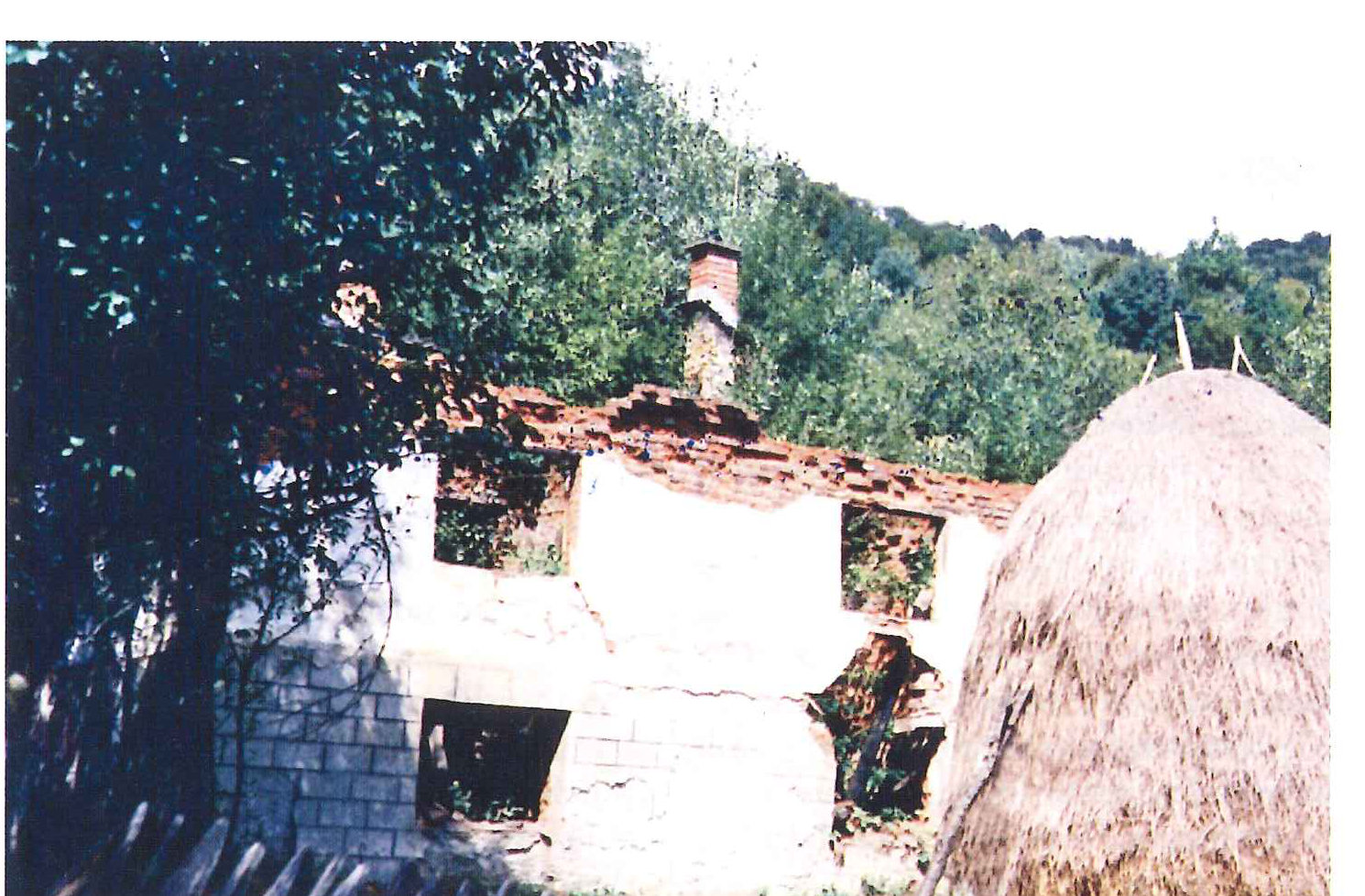
Halid Lipovac, the Mayor of Cazin, a Muslim town in northwest Bosnia, and Fikret Dragonovic, his deputy looked uneasily at their dinner guests: a Polish Colonel, a Swiss human rights officer, an American advisor, two interpreters and myself. Cazin was frowsy and war-torn, its appearance only partially relieved by an old Ottoman fortress built on an escarpment at the edge of town.
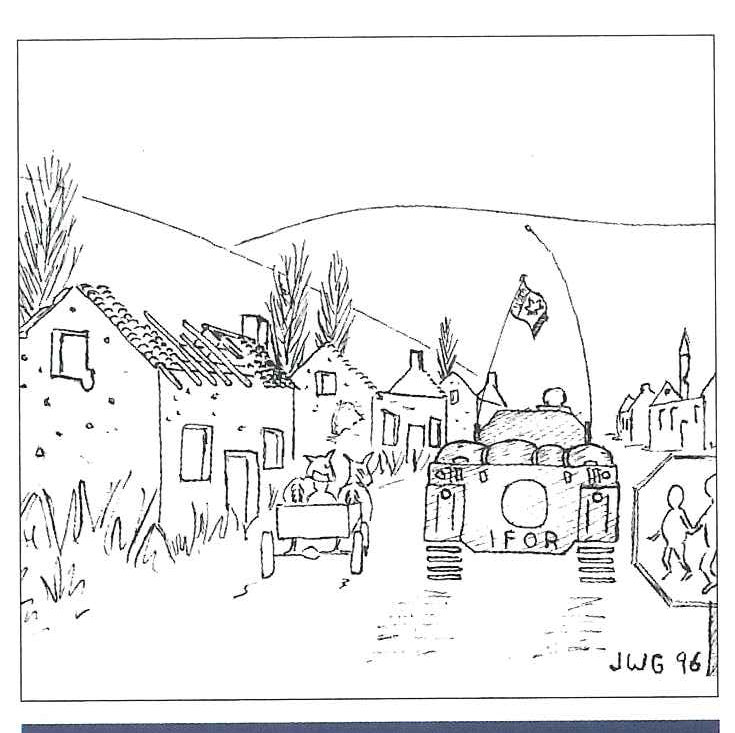
A round of losa, a semi-lethal local beverage (resembling slivovitz), had not softened the brittle atmosphere as both sides groped for common ground. I don’t suppose that the décor of the municipally owned hotel was much help — dark wood, poor lighting and cherry velvet upholstery. Most of the broken glass had been replaced, but some window frames were still sheathed in plastic. The war had stopped only five months before and there hadn’t been time to cover up most of the ravages of Serb mortar and rocket fire. This was a duty occasion for both sides and none of us were looking forward to a collision of cultures.
Another round of losa appeared. Dragonovic reached for his glass, stood, lifted his beaky nose and intoned “zvilili”, the word for toast. “Gentlemen,” he said, ignoring the interpreters, “I propose tonight that there should be two topics of conversation — sex and sports”. He was trying to break the ice.
Throwing non-sexism to the winds and attempting to bring to a close the lengthening silence that followed the translation of this initiative, I said “Gospodin Dragonovic, you told us that there should be two topics, but you have mentioned only one.” Upon translation, the Bosnian side actually beamed. Our side were not expecting this agenda in a rustic Muslim corner of Bosnia. But once propelled downward, the conversation gathered momentum.
The diners were also wrapped in smog. I had brought cigars — good, handmade Dominican coronas. The Bosnians only knew thin black cheroots. The mayor is enchanted and intends to cut his cigar into pieces to share with his friends, but Dragonovic insists on smoking. There is no cigar cutter, so I demonstrate that the tip can be cut by using your teeth to snip. Dragonovic chomps deeply and removes almost an inch of cigar and the rest starts to unravel in his mouth.
Spewing shards of tobacco leaf and puffing deeply, Dragonovic is telling dirty jokes. Invariably they feature the respective taboos of Bosnian mullahs and Croatian bishops — pigs and girls. Unfortunately, etiquette calls for reciprocity and it was soon clear that on our side I am the only one with a supply of moderately obscene stories. I respond with a story about crazed parrots and prostitutes. Dimly recalling an historical Bosnian animosity toward Rumanians, for my second story I substituted Ceaucescu for Fidel Castro.
This demented cultural interchange is beginning to work. The losa is also playing its intended role. But the key to success owes more to the quality of the translations than it does to the quality of shaggy parrot stories. Zena, one of our two interpreters, is in shock and translation both ways falls on my assistant, Maryanne. Croatian born, but raised in Chicago, Maryanne gives an 80s Punk dimension to the evening. Twenty-three, short black hair and attractive. Because the hotel has no heating, Maryanne has zipped up her black leather jacket and not one of the estimated five tattoos on her body is visible. However, her rings are. She has six in her left ear lobe, two in the right, and a turquoise stone is set in one nostril. Black leather boots complete the ensemble, but she manages to look slightly less raffish than Dragonovic who is wearing a baggy double breasted suit in garbage bag green. Maryanne is splendid. She carries all of the indelicacies with seamless aplomb.
John Graham had postings in Europe, the Caribbean and Latin America, latterly as head of post. His subsequent career has been with international organizations and NGOs. He was chair of the Canadian Foundation for the Americas and is a member of Jimmy Carter’s “Friends of the Inter-American Democratic Charter”. His book Stepping Back from the Precipice about the Dominican Republic was reviewed in the previous issue of bout.
View the original scanned pages →
Originally published in bout de papier, Vol. 27, No. 2 (2013) — Spring 2013 // Printemps 2013, pp. 10–12. Read the rest of this issue →