
bout de papier, Vol. 27, No. 2 (2013) — Spring 2013 // Printemps 2013, pp. 20–22
Note de la rédaction : Cette section spéciale marquant le décès de John Sheardown et célébrant l’aventure des « évadés d’Iran » fait appel à plusieurs intervenants clés. Gar Pardy était agent du renseignement à Washington à l’époque et il a joué un rôle crucial pour le Canada. Son compte rendu de première main constitue une excellente entrée en matière. Mark Lijek, un des « invités » américains accueillis par John et Zena Sheardown, donne le point de vue de l’initié sur cette période tendue; son admiration et sa gratitude pour les risques énormes que John et Zena, l’ancien ambassadeur Ken Taylor et Pat Taylor et d’autres Canadiens ont pris pour protéger leurs invités sont tout aussi vives aujourd’hui qu’elles l’étaient en 1979. La lecture de son récent ouvrage intitulé The Houseguests est essentielle pour ceux et celles qui veulent une version non scénarisée d’Argo.
Sam Hanson, qui vient de prendre sa retraite du MAECI, expose la perspective d’Ottawa sur la logistique de l’exfiltration. Suivent deux extraits : le collègue de John Sheardown à Téhéran, John Kneale, tire une vignette de son livre de 1993, Foreign Service, qui fait ressortir son discernement déterminant et son courage. Mark Lijek puise dans son ouvrage susmentionné pour saluer chaleureusement le chef d’équipe Ken Taylor. La conclusion appartient à un autre collègue de Téhéran, Roger Lucy, qui, fort de sa remarquable expérience personnelle, nous livre ses réflexions sur le livre de Mark Lijek et le film hollywoodien Argo. Le dernier mot appartient à Kurt Jensen avec sa notice nécrologique.
Il s’agit à la fois d’un « hommage » à John et Zena Sheardown et à l’une des plus belles réussites de l’Équipe Canada diplomatique — du Premier ministre jusqu’à l’aide ménagère de la RO.
Jimmy Carter was not having a successful presidency. Elected by the slimmest of margins — 50.1% of the popular vote — in November 1976, now two years into his mandate, he still remained an outsider to many Americans. More troublesome, he was taking on the air of an ineffective one at that.
The promise of a sharp break between the sordidness of Watergate and the future gave Mr. Carter his slight edge with the American people. In some ways he represented something more than a change of Administrations, rather he personified regime change at a time when the term had little currency.
I arrived in Washington in the summer of 1978 on a cross-posting from East Africa, after three years of coping with salubrious by Gar Pardy
Kenya and murder-ridden Uganda under Idi Amin. It was a welcome change and the new job was an interesting one — intelligence liaison with the CIA and the Department of State. It was the start of a four-year university level course on the world.
There was a miasma about the city suggesting the promise of the Carter presidency was in trouble. Not unlike today the economy was unresponsive to the normal nostrums; reliance on foreign oil seemed impossible to counter; and less than a year after arrival in the capital, President Carter, in a nation-wide speech, unconvincingly sought to off-load the responsibility to the American people.
There were successes but these were largely in foreign affairs. A historic treaty with Panama was negotiated and ratified by Congress to return the Canal to Panamanian sovereignty at the end of the century; the Camp David Accords started a process in the Middle East for reconciliation between the Israelis and the Palestinians underwritten politically by Egypt and Jordan; a second round of strategic arms limitation talks led to an unratified agreement with the Soviet Union; and most significantly, President Carter gave voice to the view that the morality of human rights had a role to play in American foreign policy and the management of the international community.
Events in Iran, however, created a worrisome backdrop. Carter visited the country early in his presidency and contrary to his views on morality in foreign affairs lavishly praised the Shah, seeing him as a force for stability in the region. It was not a view shared by most Iranians who harked back to the illegitimacy of his coming to power by British and American machinations in 1953.
1978 was a year of regime shaking civil conflict that the Shah and his main instrument of control — SAVAK — brutally tried to counter but had little success. In the process the Shah lost his limited legitimacy, and before January 1979 was out, so was the Shah. The Shah’s nemesis, Ayatollah Ruhollah Khomeini in exile in Iraq and France for the previous 14 years, triumphantly returned to Tehran on February 1, 1979. He was a man with a plan and within a year he was not only the supreme religious leader of the country and Shia everywhere, he was also Iran’s supreme political leader as well.
In Washington these events were carefully followed but there was little understanding or appreciation of how fundamental was the change in Iran. The initial issue was how to deal with the Shah in exile in Egypt. Rifts in the Administration were clearly evident. Cyrus Vance, the Secretary of State, wanted to cut all ties with the Shah and did not want to see him in the United States even for critical medical treatment. Vance and his colleagues at State emphasized that the United States needed to recast its relationship with Iran in the aftermath of the Shah’s downfall and diplomacy had to dominate confrontation.
Over at the White House, Zbigniew Brzezinski, National Security Adviser to the President, had a decidedly different approach to the world. Born in Poland between the wars, Brzezinski had built a reputation as a realistic interpreter of the Eastern Bloc, especially the dominated countries of Eastern Europe. In the process he became known as the Democrats’
“Kissinger” favouring peaceful engagement with the area over détente. In Carter’s government he was seen as a wily opponent of Vance who still saw détente as a guiding principle in the management of East-West relations. Their strongly held views became polar points in the Administration and often led to ambiguous policies which played out in counterproductive responses during the hostage crisis.
The news on November 4, 1979 that Iranian students had taken control of the American embassy did not occasion serious concern in Washington. Prompted by the decision by the United States on October 22 to allow entry by the Shah for medical treatment, the takeover was considered similar to what had happened earlier in February 1979 when students took control of the embassy but left after a few days. This benign view was soon overtaken when, unlike in February, the Ayatollah backed the action of the students and it was only then that the policy community in Washington realized that it was in the midst of major crisis.
The CIA in those days was hors de combat. Stansfield Turner was appointed by Carter as his Director of Central Intelligence in early 1977 and it was soon apparent that it was not one of his better ones. The Agency was still coping with Seymour Hersh’s 1974 allegations in the New York Times dealing with covert activities including assassination efforts involving foreign political leaders and the undermining of foreign governments. These activities were collectively known as the Agency’s “family jewels”. As well Hersh alleged that the Agency was collecting intelligence on the political activities of American citizens. Mainly based on Hersh’s allegations Congressional investigations (Church and Pike Committees) provided substantive confirmation of the Agency’s illegal activities and recommended major changes in the management of American intelligence activities at home and abroad.
In the midst of these externally imposed and wrenching changes, Turner decided there was a need to reduce the size of the Agency especially on the Operational side. Over 800 officials were fired (known as the Halloween Massacre in Agency lore). It was years before the Agency returned to overconfidently believing it had a significant role to play in American foreign policy.
It was clear from the very start that the United States did not have a coherent understanding or appreciation of what the overthrow of the Shah represented for American policy. The takeover of the American embassy complicated what was initially a foreign policy matter and turned it into a major domestic issue. [ran under new and radical leadership was one thing; Iran capturing and torturing 52 American officials was a crisis of an entirely different order.
The overwhelming concentration in Washington was concern for the 52 hostages held by the Iranians. Vance and officials at the State Department sought action at the United Nations and the International Court of Justice but even when successful there was no reaction from Tehran. At the White House Brzezinski was promoting direct military action to rescue the hostages, an idea he continued to promote and organize until it led to the disaster in the southern desert of Iran on April 24, 1980 with nine dead rescuers and two crashed aircraft.
There was little action within the Administration on the six Americans now safely sequestered at the home of John Sheardown and the official residence of Ambassador Ken Taylor. The prevailing assumption was that they were out of harm’s way and would be accommodated within any larger effort concerning the 52.
It was clear by early December 1979 that this assumption was not only erroneous but dangerous as well, not only for the Americans being sheltered by Canadians but for their Canadian rescuers.
The press by this time were counting bodies and it soon became evident both to Jean Pelletier, the Washington correspondent of La Presse in Montreal and the New York Times that the numbers being used by the State Department in describing the hostages did not add up. Pelletier even sought confirmation from the Canadian embassy as to whether Canada was sheltering some of the hostages. Fortunately both La Presse and the New York Times agreed that to publish the story at that time could well lead to increased dangers for the hostages and their Canadian friends.
In Ottawa these developments rang the alarm bells and in early December it was decided that the Americans had to be convinced the six hostages with the Canadians in Tehran had to be dealt with urgently before they joined their colleagues as hostages in the American Embassy. Pat Black, the Under Secretary for Intelligence and Security at Foreign Affairs, called in early December and asked that I approach appropriate persons within the Agency and lay out for them the need for urgent action on getting the six Americans out of Tehran. He mentioned that Flora MacDonald would be meeting with Vance in a few days during a NATO meeting in Brussels and she intended to raise the matter as well.
Frank Carlucci was the Deputy Director of the CIA and was highly regarded as the person in the Agency that could get things done and done well. I met with Carlucci soon after the call from Black and laid out the case on the need for urgent American action to exfiltrate the six from Tehran at the earliest possible moment. Carlucci appreciated the dangers the six along with the Canadian staff were now in realizing that it would only be a matter of time before the situation in Iran became public knowledge. Within a week or so of this meeting Tony Mendez was selected by the Agency to organize and carry out the exfiltration of the six from Tehran.
The exfiltration operation has now been celebrated in book, films and a Hollywood movie. Each in their own way, some more accurate than others, capture the operation in all of its detail. The Hollywood movie unfortunately eliminated the role John and Zena Sheardown played in the drama and as it becomes part of the American mythological historical record it is appropriate that Canada and Canadians stand their ground on the role that was played by so many. It was not only a hugely humanitarian and personally dangerous effort by Canadians in Tehran it was one of the finer efforts by Canada’s Foreign Service in a long, long time.
In the immediate aftermath of the rescue operation on January 28, I accompanied Frank Carlucci to Ottawa where he expressed the appreciation of the United States government to Flora MacDonald. It was a cold, snowy day in early February that he met with Ms. MacDonald just prior to the February 18 national elections. Kind words were offered and Ms. MacDonald rushed off for last minute electioneering. As we put on our winter clothes outside her office in the Pearson building, I helped Carlucci’s security man with his large jacket. Unexpectedly the coat was much heavier than anticipated and it fell to the floor with a muffled clunk. I picked it up and looked questioningly at the security official in the full knowledge that the matter of Americans carrying weapons in Canada was a perennial issue. The security man looked at me with a slight smile on his face and simply said “lifesavers.”
As a postscript to these events, in late January this year a general in Iran’s Revolutionary Guard criticized the 2011 storming of the British Embassy in Tehran saying students and activists should “avoid actions driven by emotion.” The general went on to say that Iranians must deal with their enemies “more intelligently” and “avoid shallow and emotional actions” that damage Iran’s image abroad. Insha’Allah.
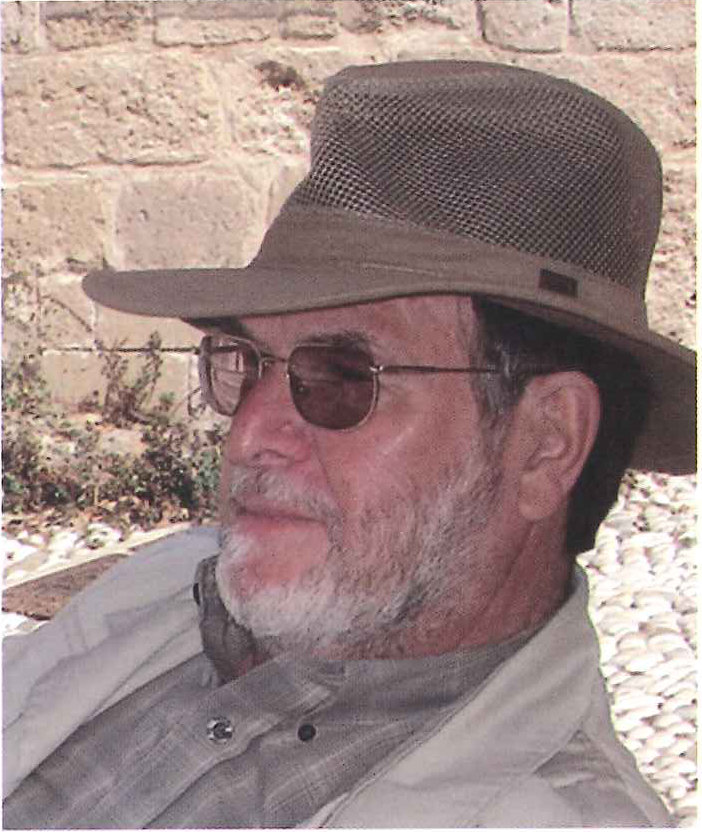
Gar Pardy is retired from the Foreign Service and comments on foreign and public policy issues from Ottawa.
View the original scanned pages →
Originally published in bout de papier, Vol. 27, No. 2 (2013) — Spring 2013 // Printemps 2013, pp. 20–22. Read the rest of this issue →



