
bout de papier, Vol. 9, No. 3 (1992) — Summer 1992 // Été 1992, pp. 20–22
Cast your mind back to your first foreign posting. Sifting through the memories, extract that single feature which most forcefully and subtly shaped your perception of that society.
It was probably the architecture.
It is stating the obvious to say that the architecture of a place shapes your vision of it; after all, you lived, worked and played in and around those buildings. But how conscious were you of the effect that the buildings had on you? How did you relate them to your other experiences of a foreign culture? How did those experiences of a foreign-built environment shape your judgment of Canada?
Finding out about architecture in the developed world is no problem. If you are in Paris, and wonder why the streets are laid out the way they are, you will have ample opportunity to learn about Hausmann’s plans through books, lectures, tours, exhibits and so forth. Finding out about architecture in the developing world can be more of a challenge, where barriers of language or lack of resources may make it hard to obtain factual” information. However, if you have good. eyes and sturdy walking shoes, there is not much to stand in your way.
Naturally, I was curious about my new house and neighbourhood when we first arrived in suburban Santiago, Chile. Driving down the street, I was none the wiser: every house had a ruddy great wall in front of it. Stucco walls, wrought-iron gates, billowing bougainvillea, a seductive view into a lush garden behind all very pretty. But still the walls stand out.
Were they for security? Suburban Santiago seemed to have far less break-and-enter than do Canadian cities. Were they for privacy? A more decorous folk than the Chileans would be difficult to find. Was it because, when we finally glimpsed them, the houses themselves were often mostly made of glass? No, they seemed to have as many drapes and curtains as have our houses. I was puzzled about those walls for three years but, in the end, the walls were only part of the bigger picture.
When you start to interpret a culture through its built environment, you are looking at a complex interplay of forces and activities.
You look at individual structures, their settings, the way the streets work, how the neighbourhoods are built, how the city and countryside relate, and how the built environment interacts with the natural one. And then you ask, how did all these things change throughout the history of the country?
Take the walls as an example. Many countries place walls around their structures, but they do not always do so for the same reasons. The Spanish who settled Chile brought their taste for walls along with them. Traditionally, their houses in Europe had been very inward-looking and were constructed around a central, open courtyard. Bigger houses were achieved simply using conglomerates of these large square “doughnuts”. This type of house – called a Mediterranean-style house – is as old as western culture, and the remains of similar houses date from prehistoric times. They were built from the Pyrennees to Persia, and later were brought to the New World by European settlers. Security, at certain times in history and in certain places, was no doubt one issue but perhaps a more pressing and pedestrian issue was the need for shade These enclosed spaces ensure that at any moment during the day, there is shade somewhere in the courtyard. For Chileans, security historically was not one of the critical issues, shade was one reason, but there were others.
The outside of these old patrician houses
* which still exist in Chile, hidden behind their avenues of poplar trees (or alamos) are generally faceless walls. Perhaps a carved door here, or some shutters there, to relieve the blankness of the surface. But our North American concept of the front of a house as a public statement simply does not exist in the South. Your opinion of the structure and your speculation as to its occupants are matters of complete indifference to them.
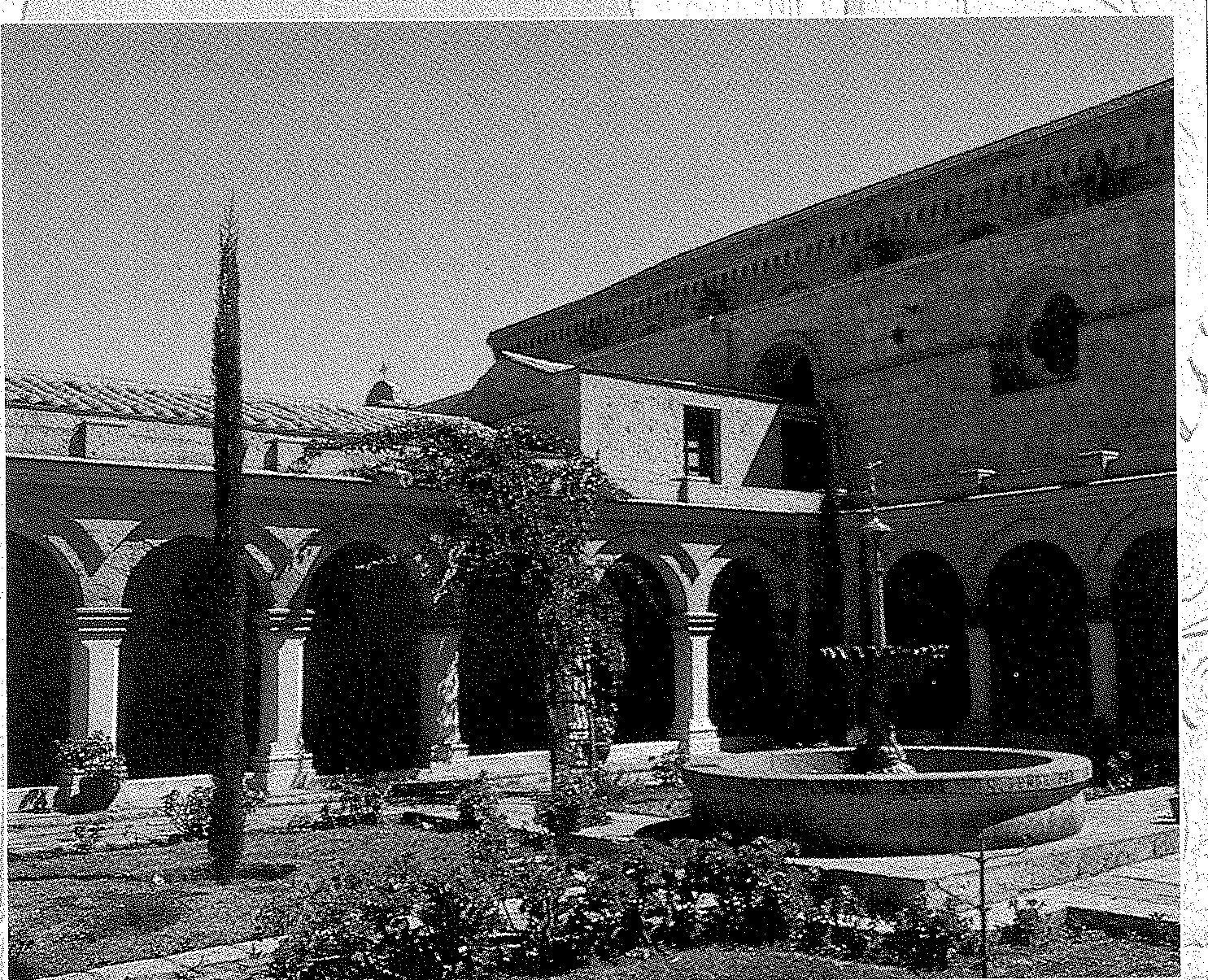
In modern Chilean suburbs, these courtyard houses have not entirely disappeared. The exterior wall is a prerequisite of domestic life, and these eight-foot high constructions of brick, stucco, iron or reinforced concrete can be intimidating sights. Behind those walls are houses that suggest distantly the courtyards of old. They merely consist of posts supporting a roof and not much else, with a free flow of space between house and garden which is impossible to recreate in this country, a sort of “Frank Lloyd Wright meets Hispanic tradition” style. When it does not rain for eight months of the year, what else do you need?
So what lies behind these walls? What is it that is so precious that it must be withheld from even the most innocent of public scrutiny?
I obtained a clue of this during a conversation which I had with a mixed group of Chileans and foreigners. The subject of the word “community” had come up, and we all disagreed over its meaning. For certain of us foreigners, “community” means those overlapping groups of people who form the contexts of our lives: the group that revolves around our children’s lives; our friends and colleagues at work; people with whom we have formed relationships or friendship or common interest; and our neighbours. Family for us is a separate category. “No, no,” said our shocked hosts. “Your family is your community. No one else matters.”
The shock was mutual. But suddenly a light had been shed on my dim understanding of the walls because, by this time, we had been accepted behind the walls of one Chilean family.
Within the walls is reserved for the family and only the family. The family is the fundamental social unit; more profoundly so than in our society. This is where family members receive their earliest socialization, nourishment, and nursing in old age; in short, many of the things that we, in our more “developed” society, have farmed out to institutions. While this sense of family solidarity has its appeal, it seems to come at the cost of greater we-versus-they mentality. And if you are invited into their hearth and home, you are treated as a member of the family, with all that that implies. The greeting, “en su casa” means much more than its rough translation, “Make yourself at home”.
But walls can have a more insidious purpose. No doubt you have noticed the walls that have sprouted alongside most superhighways running through Canadian cities. They are there in a vain attempt to provide some privacy, as well as to act as a sound barrier to those unfortunate souls who were foolish enough to buy property beside a 16-laner.
The main ring-road around Santiago has one of those high fences, too. But only on the outer side. Inside the ring, facing the nice suburban, middle class houses, there is no sheltering wall. Outside, beyond the wall — beyond the pall, so to speak – there are no nice suburban houses; instead there are the barrios of the poor. These walls began to appear in the later years of the Pinochet regime, and their purpose was unmistakable: out of sight; out of mind.
Getting to know a culture through its architecture can be entertaining and amusing. One night, we attended a Garcia Llorca play, which was being put on in a trendy, gentrified inner-city barrio. The waiting area for the theatre was, in fact, the outer courtyard of the house. The cool, stucco walls encircled us on three sides, while the house itself, now the theatre, made up the fourth side. Suddenly, from the balcony over the door, one of the actors appeared, and the play began. He was answered back by another actor, standing amongst us in the walled garden. The play took place partly in the walled garden and partly in the house. Had it not employed the walled garden, the story would have lost much of its meaning.
Buildings say more about people than their builders sometimes intend. Did Pablo Neruda, poet, diplomat, communist and champion of the common people build a wall around his house? No! His house is a wall! It is just more tastefully decorated than other walls.
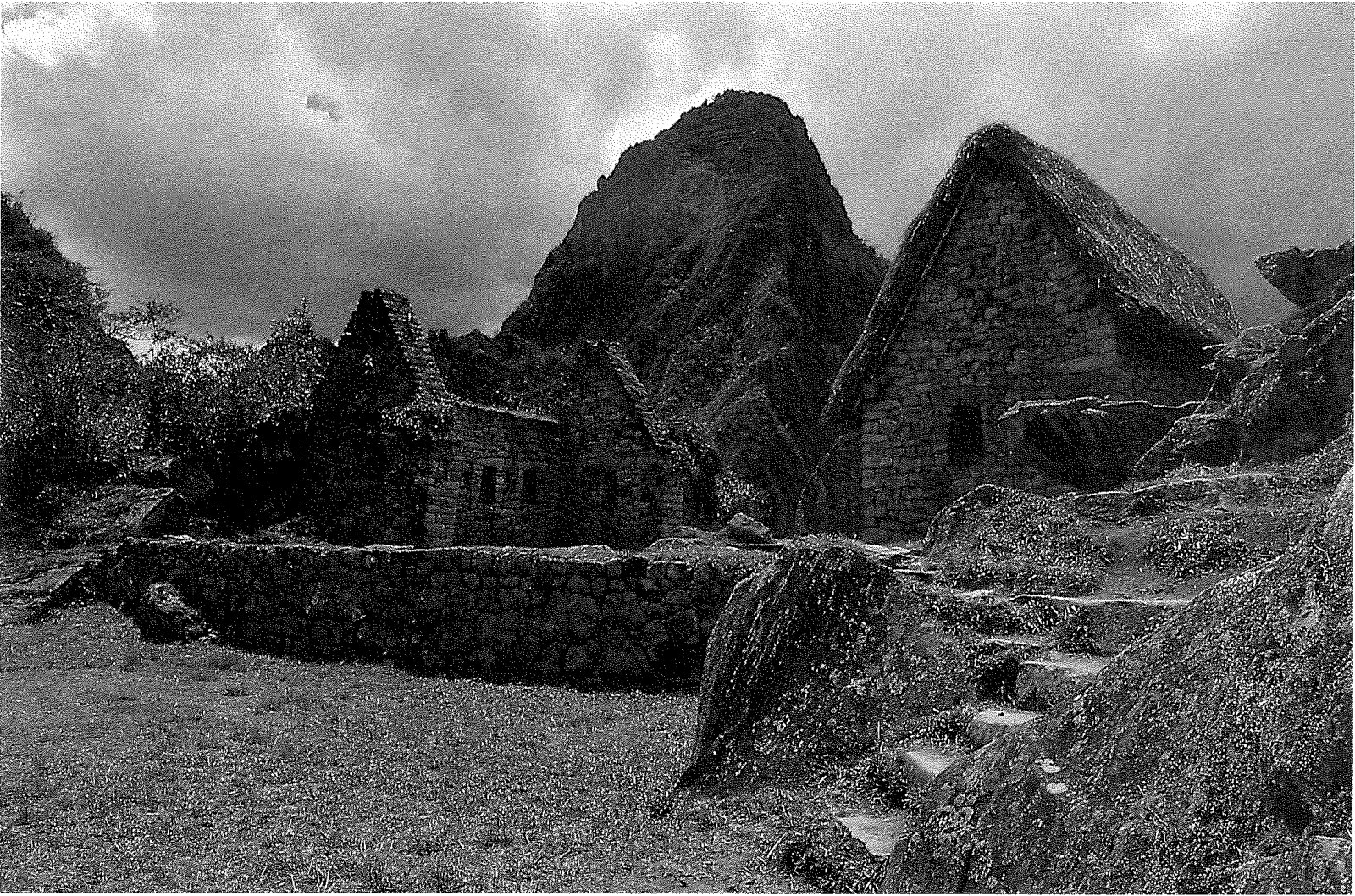
Chileans are not the only enthusiastic wall-builders in South America. In Peru and Bolivia, pre-Columbian walls are commonly found, both standing on their own as part of archaeological sites, and also integrated into subsequent colonial-era and modern construction. The Bolivians and Peruvians historically were superb stonemasons — better than the Spanish – and often their re-interpretations of Spanish prototypes, such as the Baroque style, were strikingly fresh and innovative.
The South Americans have made an art form of the humble wall. The stucco walls of ancient haciendas (“fundos” as the Chileans call them) are tinted a wondrous honey gold or a dusty, autumnal maroon. The jigsaw, earthquake-proof masonry of the Inca is monumental and humbling. The combination of baroque, Moorish and Amer-Indian motifs in the sculpture around a church doorway can hold your attention for hours. The textures of these walls beckon you to reach out and touch them. Part of the beauty of these walls is their context, for what wall would ever be complete without a contrasting blush of foliage? Bougainvillea was meant for walls, as are poinsettia and geraniums that grow as large as trees in this Southern climate. They billow over the tops of walls like foam on the crests of waves. Walls also have openings, and what could be more tantalizing than a glimpse through an archway into a cool and shady garden?
On one occasion, Chilean diplomats in Canada ushered us into the backyard of their suburban home in Ottawa. In the adjoining yard we could see clearly that — because there was no wall, only a low, symbolic fence — the neighbours were also settling down to a family barbecue. Now, in this situation, Canadians would have studiously avoided eye contact with the neighbour and vice versa in order to give their neighbours a sense of privacy.
A Canadian “wall” is created by body language, if you will. This subtlety was not apparent to our hostess. She had seized upon what she thought was the meaning of this strange, foreign, wall-less society and pursued it with relentless Latin American logic. “Hello!” she waved vigourously at the neighbours. Touched by the acknowledgement, they too smiled and waved back at her, and then turned into the solace of their dining room.
View the original scanned pages →
Originally published in bout de papier, Vol. 9, No. 3 (1992) — Summer 1992 // Été 1992, pp. 20–22. Read the rest of this issue →



