
bout de papier, Vol. 17, No. 3 (2000) — Fall 2000 // Automne 2000, pp. 39–41
Thomas Paul Malone, my father, passed away in July 2000, aged 85, after a brief illness, having celebrated his sixtieth wedding anniversary only weeks earlier. He served with the Canadian Foreign Service (initially under the umbrella of the war information service in Canberra) from 1943 to 1980. An adventurous journalist, he joined “External” at the time of rapid expansion marked by World War II and participated, with great pride, in the “golden age” of Canadian diplomacy.
He grew up in Edmonton, where his parents were early entrepreneurs, his father owning the largest store on the south bank of the river (amazingly, the Malone Building is still there!). While a student at the University of Alberta, he joined the staff of the Edmonton Journal as a cub reporter. He rapidly moved on to the Times of London and the Sydney Sun, where he met my mother, also a reporter. His exploits as an international correspondent included a scoop interview in early 1939 of the notoriously media-averse Neville Chamberlain, whom he tracked down during a country retreat. After some further reporting within Canada, Canada’s High Commissioner in Australia, the legendary T.C. (Tommy) Davis, recruited him to serve as his information officer. A long posting in Canberra was followed by an even longer one in Washington, where he laboured in distinguished company (George Ignatieff and many others) in the arid vineyard of Hume Wrong’s embassy: alas, Wrong did not believe in public relations. In the mid-1950s, he returned to Headquarters, then in the East Block, eventually heading up the Information and Consular Divisions. There many a new officer spent an introductory stint under his tutorship as I was to learn from them twenty years later, when I, as a junior officer myself, was treated to their reminiscences of the good (or bad) old days.
After an assignment as Counselor in The Hague (1958-62), a radical departure: his next posting, perhaps his happiest, was as Ambassador to Iran, from 1962 to 1967. These were the years of Iran’s accelerated modernization under Shah Mohamed Reza Pahlavi. Its positive effects were nearly immediately apparent but the dangerous undercurrents of resistance it sparked among clerics and others and the growing repression by the regime’s security service, SAVAK, were less well detected at the time. The Canadian Embassy, also accredited to Iraq and Kuwait, was small but purposeful, bagging out dispatches documenting goings-on about the region in a literate style and with intellectual incisiveness which have since been lost to diplomatic reporting.
When civil war broke out in Nigeria in 1967, Lagos beckoned. We arrived in August, just as the Biafran army was consolidating its drive on the federal capital, spurring an exodus of Nigerians and expatriates. We were the only ones that day to get off the aircraft, while dozens of panicked residents attempted to board. The Biafran separatist campaign held great relevance for Canada, where separatism in Quebec was given a huge boost in 1967 by General de Gaulle’s notorious pronouncements in Montreal. The Nigerian civil war provided the theatre for the first large-scale humanitarian mobilization in the Western world, with passions running high as thousands of civilians starved. Debates on the war in the Canadian Parliament received extensive coverage, with Prime Minister Trudeau unyielding in his contempt for secessionism. In spite of the tragic conflict in Nigeria (which they happily saw end in 1970), my parents greatly enjoyed Africa, travelling extensively within their various countries of accreditation, including Dahomey, Niger and Sierra Leone. Delightfully, in those days, these countries could mostly still be reached by French paquebots plying the West African coast. My parents warmed to the optimistic, entrepreneurial nature of Nigerians and to the dignity and charm of other West Africans.
After a two-year stint in Kingston at the National Defense College, then experiencing one of its better phases under the redoubtable Admiral Sturton Davis, with shocking innovations such as the first female course member (the soon-to-be Honourable Flora Macdonald!), they moved to Israel, with cross-accreditation to Cyprus. They were privileged to know most of Israel’s historic generation of first leaders (David Ben Gurion, Golda Meir, who was still Prime Minister when they arrived, etc.) and lived through the Yom Kippur War, which shattered the confidence of many Israelis that their security could be guaranteed indefinitely by military superiority. They also experienced the 1974 hostilities in Cyprus (with my mother and sister pinned down in Nicosia’s Ledra Palace Hotel for many hours, a much-loved country to which they retired in 1980. Their final assignment was a very happy one, to Finland, where they and their good friends the Robert Fords, frequently over from Moscow, spent much time reminiscing over their early years in the service.
Throughout this varied, rich and long career, my father’s committed partner was his adored wife Deirdre. A distinguished Australian scholar and writer, she joined a generation of Australian wives (including Sheila Menzies and Patsy Pick) who greatly enriched the Canadian Foreign Service with their sense of adventure, fun and pragmatism. My mother’s invariably positive outlook and friendly approach complemented my father’s considerably more reserved nature, which perhaps derived from the loss of his own father when he was seven. His ultra-dry wit delighted her and those others alert to it. They were very fine parents indeed to me, a renegade last son of limited virtue who sorely tried their patience by scraping along at the bottom of my classes until their consistent support paid off and I levitated just a little bit higher. They took great pride in knowing that their four sons had followed into the Foreign Service, although only Tony and myself stuck it out for any amount of time. My sister, Patricia, sensibly moved straight to the halls of real power in Ottawa, at the Finance Department! Speaking only rudimentary French themselves, they were determined that their children would do better as Canadians and educated us all in French. Their three daughters-in-law are francophone and a majority of their grandchildren primarily speak French, quite a linguistic evolution for our family over several generations and one of which they were justifiably proud.
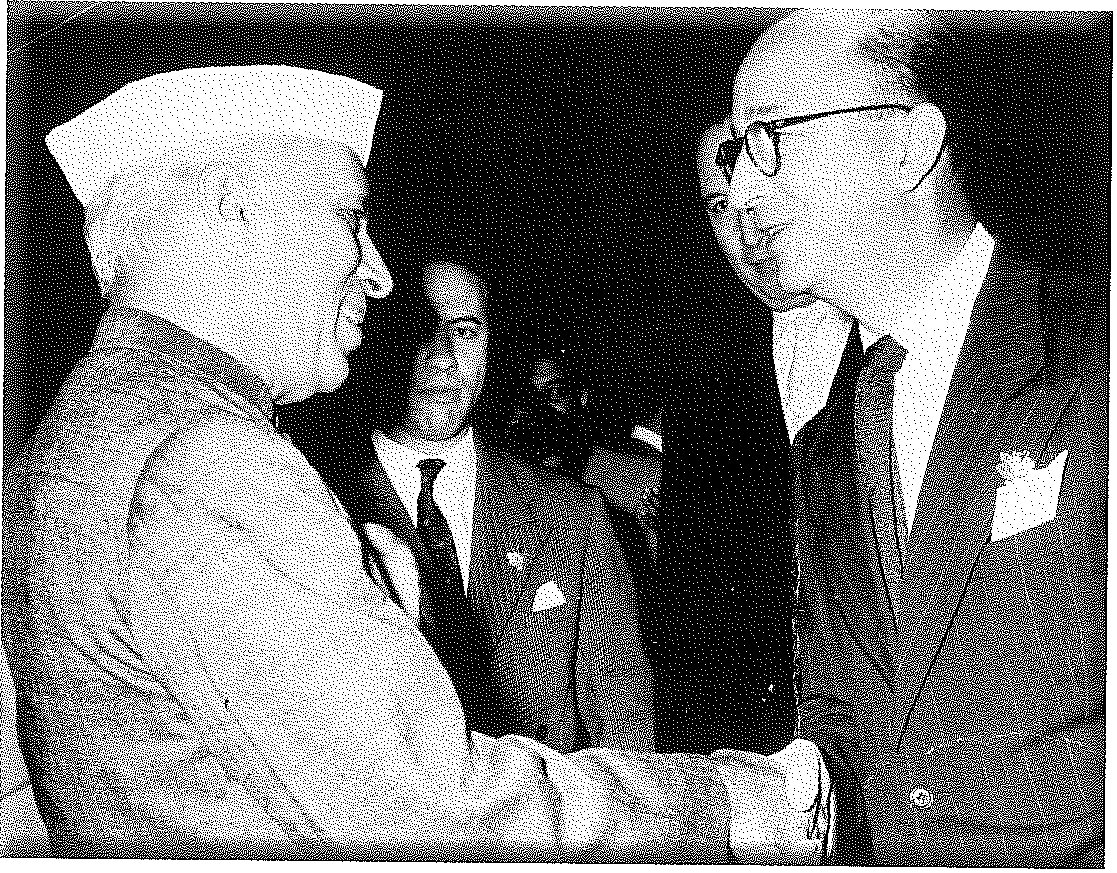
Few regrets hobbled dad in retirement. He was, nevertheless, perplexed over the sorry state into which the Public Service has fallen. He was aware of the growing hardships and diminishing rewards of service abroad. He rejoiced greatly in having worked for or with such great Foreign Service pioneers as Georges Vanier, Lester B. Pearson, Norman Robertson, Arnold Heeney, Jules Leger and Marcel Cadieux. But it is clear that their success was rooted in the appreciation and support of their political masters, a disposition that he noted with regret seems to have dissipated almost entirely.
He was very proud to have represented Canada abroad. He admired not only his early colleagues, but also the younger generations in the Foreign Service he encountered late in life. His faith in their idealism and skill was unwavering and he was never surprised to read about yet another intrepid young Canadian foreign service type sorting things out in remote and insalubrious corners of the world.
View the original scanned pages →
Originally published in bout de papier, Vol. 17, No. 3 (2000) — Fall 2000 // Automne 2000, pp. 39–41. Read the rest of this issue →



