
bout de papier, Vol. 27, No. 2 (2013) — Spring 2013 // Printemps 2013, pp. 29–31
In the historical scheme of things, the joint Canadian-CIA exfiltration of six USA diplomats: Bob Anders, Mark and Cora Lijek, Joe and Kathy Stafford and Lee Schatz, from Iran on 28 January 1980 should be, exciting though it was to those involved, a footnote to the ongoing saga of the estrangement of Iran from the USA and the global community. It was important at the time because the seizure of the U.S. Embassy in Tehran and ensuing hostage crisis had left the USA looking helpless and the international community unable or unwilling to help. The escape of the six came as a huge boost to USA morale, and American gratitude to Canada seemed without bounds. If anything, the disastrous failure of the Eagle Claw rescue mission and the additional year of captivity suffered by the 53 diplomats, who remained at the embassy, made the escape of the six seem even more remarkable.
While the CIA’s technical assistance (such as providing authentic looking Iranian visas and other stamps for the Canadian passports which had been issued to the six) was quietly acknowledged, the full extent of its involvement was long shrouded by the needs of operational security. For that reason the Canadian (in particular Ambassador Ken Taylor’s) role was given, perhaps, more emphasis than it merited. In 1997 the wraps came off, the CIA was celebrating its 50th anniversary, and it wanted to celebrate some good news stories. One of these was the 1980 Tehran exfiltration as told by its “master of disguise,” Antonio (Tony) Mendez, who had planned and led the U.S. side of the operation. The most intriguing part of Mendez’s story was the cover he had developed for the six, who posed as the Canadian members of a Hollywood crew scouting an exotic location for a Sci-fi movie. To backstop the cover, Mendez used his Hollywood contacts to set up a bogus production company, Studio Six, buying the rights to a script “Argo, A Cosmic Conflagration.” The title of Mendez’s first public account of operation, in the 1999 edition of the i aE CIA’s Annals of Intelligence said it all — “CIA Goes Hollywood: A Classic Case of Deception.”
This caused a minor furore, with the Canadian media — the CBC leading the pack — implying that Canadian Ambassador Ken Taylor did not deserve the honours that had been heaped upon him. This was unjust, but the full extent of Taylor’s role was not revealed until the 2010 publication of Trent University history professor Robert Wright’s thoroughly researched book, Our Man in Tehran. This revealed just how close Canada/USA cooperation had been, particularly with Wright’s uncovering the role Ken Taylor and the late Sergeant James Edward had played in helping the USA restore its intelligence network in Iran and in relaying information related to the planning of the failed April 1980 rescue mission, Operation Eagle
Claw. So secret had this been, that I had only an
inkling that something more was going on, about which it was imprudent to enquire too deeply.
In 2007 an article “How the CIA Used a Fake Sci-fi Flick to Rescue Americans From Tehran” appeared in Wired Magazine which played up the Hollywood connection, and almost ignored Canada’s role. As intended by its author, Hollywood
took the bait and in) the movie Argo directed by Ben Affleck appeared. Argo full circle.
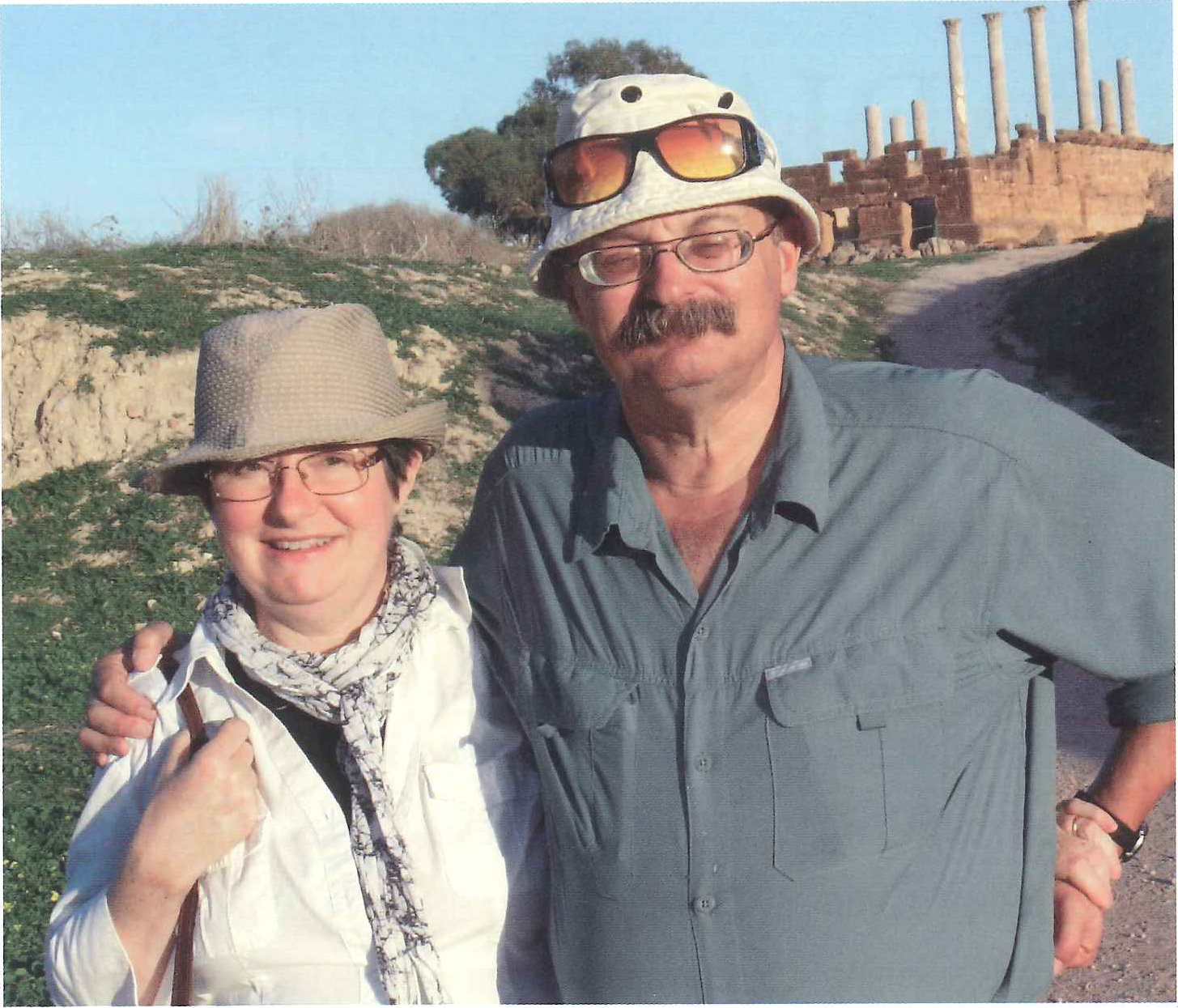
‘is a great flick. I urge you to pping stuff, mixed with some about both Washington and Che casting is generally good. feel of Tehran in January 1980 nicely, if with some exaggeraag people from construction Roger and spouse Susan Howell.
cranes was an Iraqi, not Iranian, custom. The Canadian OR where the Houseguests are holed up, frankly looks bizarre. But it does, as it must, greatly telescope events, and Hollywood being Hollywood, the USA role is emphasized, and the Canadian Embassy fades into the backdrop. Worse, key characters, in particular the late John Sheardown and his wife Zena, are written out of the script. While it had its share of anxious moments, and the risks to the participants were very real, the exfiltration (thankfully) offered little actual drama. This does not make for a great action movie. To compensate, Argo inserts a wholly spurious visit of the six to the Tehran bazaar. Similarly inserted is another cliff-hanger where the operation is almost cancelled as it might compromise Eagle Claw (in fact it served in part as a dry run for inserting agents for Eagle Claw). The grand finale is even more hyped. The passage of Mendez and the six through Mehrabad Airport was in fact rather mundane. In Argo it’s high drama, ending in the obligatory chase scene. It’s great cinema. I especially like the part where Joe Stafford, shown (as he was) as highly sceptical of Mendez’s cover story, is suddenly and passionately defending the film project, in Farsi, to some Revolutionary Guards. This is almost convincing, as Iranians are suckers for people who, like the Joe Stafford character, extol their land and culture, but it never happened. If life had imitated art, the six might have gotten away, but those of us still at the Canadian embassy would have found ourselves in a very sticky situation and I’d probably be smuggling this review out of Evin prison, written on bits of toilet paper.
Argo played fast and loose with history, but two books appeared at the same time which give accurate accounts from their authors’ particular perspectives. The first is the official movie book also entitled Argo written by Tony Mendez and Matt Baglio, his ghost writer. The other The Houseguests: A Memoir of Canadian Courage and CIA Sorcery is by one of the six, Mark Lijek. Mendez’s book was written to capitalize on the movie. Mark Lijek’s was written in reaction to his and his wife Cora’s experience as consultants to the film makers. While Affleck et al seemed willing to make every effort to appear accurate with the visual details, their lack of interest in providing an accurate portrayal of actual events dismayed the Lijeks, particularly the way the Canadian role was being downplayed. Initially, even Ken Taylor had been written out of the script (this was eventually rectified, but the movie Ken is but a cardboard shadow of our Man in Tehran). Mark Lijek had long contemplated a memoir of his and Cora’s adventures, but to get it out in time for the release of Argo, he had to go the ebook route (although a paperback version can be ordered from www marklijek com).
Mendez’s Argo book expands what had been a single chapter in his memoirs about his career, Master of Disguise (William Morrow & Co., New York,1999). To flesh it out, Matt Baglio has done some spadework, reading Our Man in Tehran and other books on the hostage crisis as well as interviewing some of the participants. Much of the other material comes from Master of Disguise, recounting Mendez’s progress from a dirt poor Hispanic-American with artistic talent (patriotically applied to forging documents for his country) through the ranks of the CIA to head its Office of Technical Services. En route Mendez’s flair for cover stories and disguises led to his developing the contacts in Hollywood which he put to good use in working out the Argo cover. Back in 1980 Mendez and his pseudonymous colleague Julio impressed us with their professionalism and confidence (indeed convincing the exfiltratees is as important as fooling those manning the border controls). Developing a sound cover requires meticulous attention to detail and this book shows just how much work did go into developing the Argo plan. Mendez gives full credit to the Canadian participants, being particularly impressed by the foresight, efficiency and flexibility of his interlocutors in External Affairs and SolGen. Mendez, in the flesh, is a fascinating raconteur, and his spook Baglio is a competent hired pen. If espionage trade craft is your thing, this is a good read, but it has little you won’t find elsewhere.
Although the exfiltration itself lacked high drama, for those caught up in the takeover of the USA Embassy on 4 November 1979, there was drama enough. For Mark Lijek and his colleagues who escaped, there followed an anxious week on the run wandering from shelter to precarious shelter until Bob Anders called his friend John Sheardown to ask for help. Lijek’s book vividly captures the tension of the seizure of the embassy by the students (Lijek calls them what they are, “terrorists’”’); how the Lyeks, Staffords and Bob Anders (along with others who were caught) escape from the consular annex; and their search for a secure hiding place (including a thwarted offer of asylum at the British compound). He conveys very well the stress and suspense of being on the run in a hostile city. If Argo needed drama, there was ample real drama here, but their week on the run is telescoped into mere seconds in the movie.
Lijek’s account of their two and a half months at the Sheardowns (where they were joined by Lee Schatz, who had been in the care of the Swedes) covered far more briskly. Life for the Houseguests soon became very routine, with occasional alarms (like the time I got them stuck in a snowdrift) but little by way of diversion, save reading and Scrabble. Lijek recounts their mounting frustration, the feeling (which we at the embassy began to share, but we had our day jobs to divert us) that they had been left on the back-burner — out of sight and out of mind, but still very vulnerable. The advent of Mendez and “Julio” in late January 1980, therefore came as a huge relief to most of the Houseguests; Joe Stafford excepted, they proved very receptive to the Argo plan. Reading Mendez and Lijek’s accounts together confirms what I had long suspected, their film crew cover was designed less to fool the Iranians and more to provide a cover that the six could enthusiastically adopt. If you believe in your cover, it will work far more convincingly than if you don’t. Indeed, we all got into the spirit of it, myself playing the Iranian border guard heavy during the pre-exfiltration rehearsals. In all, while I thought I knew the story well, I found myself sitting on the edge of my chair as I read Mark Lijek’s account of his experiences between 4 November 1979 and 28 January 1980.
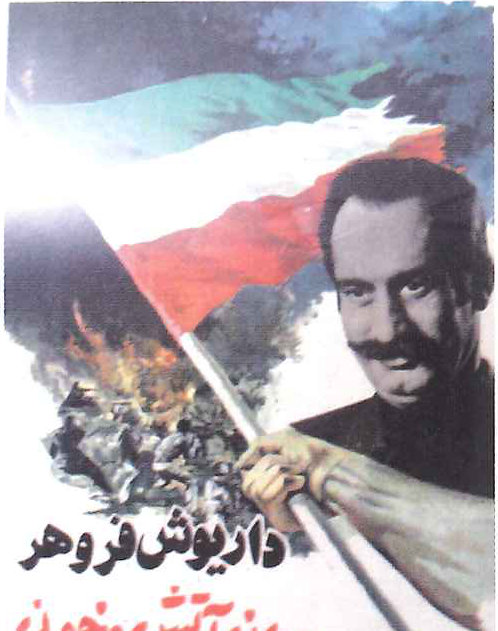
To be sure, like Mendez, Lijek would have had trouble filling a whole book if he had confined it to an account of this period. He therefore has included a prologue to the embassy takeover, recounting how he and Cora came to be posted to Tehran in the aftermath of the Revolution. In addition he provides, at the end, an account of their experiences after their escape. These sections will, I think be of particular interest to DFAIT readers, who can compare their own experiences with his account of the State Department’s assignment process, its pre-posting training and life in a U.S. embassy. One difference that stands out is the huge difference in scale on which our respective departments operate. After our post-revolution draw-down, we had at most some 15 CBS in Tehran, they had about 80 U.S. staff (before the Revolution it was closer to eets38HU 700!). Junior DoS officers have one assignment choice, they are sent out to issue visas or do consular work. Their pre-posting training was quite impressive, combining functional training, regional studies and Farsi language training. By contrast, I taught myself a bit of Farsi and, having been desk officer for Iran for the previous two years, was assumed to know what was going on there (and blithely arrived in the midst of a rapidly developing revolution). As for the aftermath, our Houseguests returned to the USA to a hero’s welcome and an audience with President Carter. Most of the Canadian participants were told to avoid the media. In due course we got our reward, but in early 1980 Canada was in the midst of a general election — indeed I was encouraged to stay in Europe until after it was over. On a more practical level Ottawa was much more generous and responsive to our claims for compensation.
I highly recommend Mark Lijek’s book. It is interesting, exciting, well written and gives a very different and hitherto largely untold perspective of the Hostage Crisis, and the “Canadian Caper.”
Roger Lucy is a retired Foreign Service Officer. He served as First Secretary in Tehran from September 1978 to 28 January 1980. bout readers will recall his many contributions on “dark-age diplomacy”.
Argo: How the CIA and Hollywood Pulled Off the Most Audacious Rescue in History, Antonio Mendez and Matt Baglio, Viking, New York, 2012.
The Houseguests: A Memoir of Canadian Courage and CIA Sorcery, Mark Lijek, available on Kindle, Kobo or paperback www marklijek com/purchase.php
View the original scanned pages →
Originally published in bout de papier, Vol. 27, No. 2 (2013) — Spring 2013 // Printemps 2013, pp. 29–31. Read the rest of this issue →



