bout de papier, Vol. 27, No. 2 (2013) — Spring 2013 // Printemps 2013, pp. 23–25
It was just after noon on Saturday, November 10, 1979. My wife Cora and were riding through north Tehran, suitcases on our knees, wondering about this latest move and what to expect from our new hosts. Several days earlier, Bob Anders, the senior of our group of five escapees from the November 4 attack on the American compound, had telephoned his Canadian friend. Before he could say much, John sheardown demanded, “Why didn’t you call sooner?”
Bob replied we were still coping on our own, and there were five of us. John did not hesitate.
“Bring them all.”
Still, hesitate we did. Unexpectedly asked to leave the British residential compound earlier in the week, we were reluctant to rely on another embassy. Our circumstances remained tolerable. But John’s clear eagerness to help was tempting. When earlier that morning we were unexpectedly forced to move to a less secure house, the consensus shifted rapidly in favor of accepting his offer. Bob called again, and the Brits who dropped us off four days earlier were now chauffeuring us to John’s house.
John was watering his sidewalk, a common practice in dusty Tehran. This was an excuse to keep open a garage door and facilitated a quick entry. John closed the door. He greeted Bob warmly and the rest of us introduced ourselves. John was a large man with a graying moustache and beard and thinning hair combed straight back. As we grabbed our bags and headed out the back door of the garage, I spied a new Mercedes 280S.
The house was built into the side of a hill. The garage was at street level and we walked up a flight of steps to reach the smoked glass entry doors. Inside we were met by an attractive younger woman with dark hair and golden complexion, whom John introduced as his wife Zena. We also met Ken Taylor, younger than John with curly hair and large glasses. John’s assistant? Some extra chairs appeared and we arranged ourselves around the large coffee table in the sitting room. Zena offered drinks. I noticed John drank Ballantines, an encouraging sign for a fellow whisky drinker. I accepted one as well. I decided to ask the question. Did the ambassador know? A quick smile flashed across John’s face and with a twinkle in his eye and a slow puff on his pipe he announced Taylor was the ambassador. I was mildly embarrassed; as a green, first tour officer my image of ambassadors was quite different. I don’t know if I was set up, but John clearly enjoyed my brief embarrassment.
By this time I had decided I liked John. Aside from the nice car, good whisky and a wife with personality and style, all of which said he was a man of the world, the firm handshake and the little joke said he was also a strong man with a sense of humor. His reaction to Bob’s call indicated courage as well. I was impressed.
The conversation continued for several hours, much of it focused on the events of the past week and speculation about the future. Ambassador Taylor told us our presence had been approved by Prime Minister Joe Clark and we would be welcome until the crisis was resolved or some other means of getting us out of Iran developed. He then said two of our group would live at the official residence (OR). Joe and Kathy Stafford volunteered. I was secretly pleased. Although I assumed the Taylors would be good hosts, I suspected life at the OR would be less relaxed than at the Sheardowns.
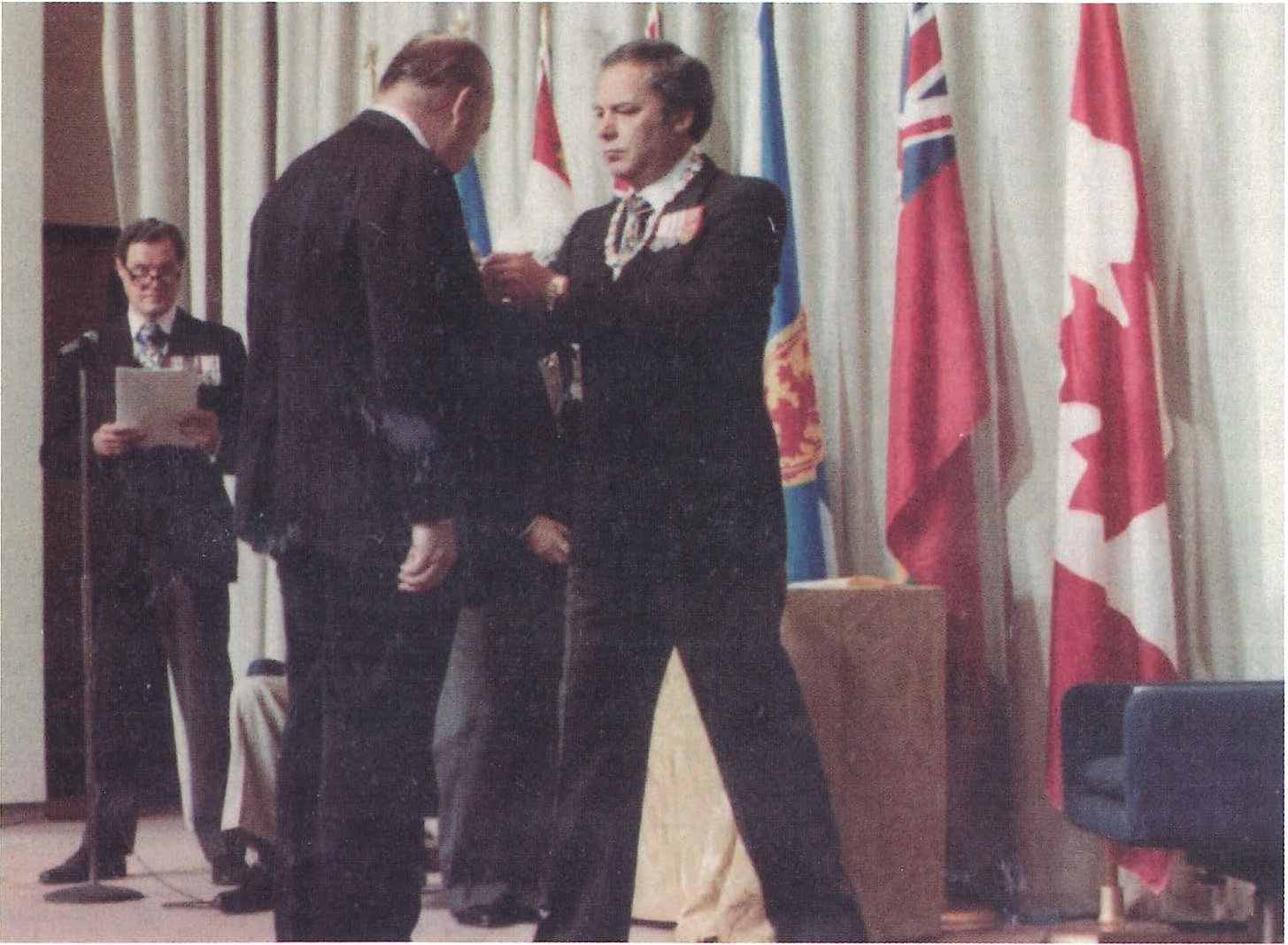
John and Zena began as our caretakers but over the next ten weeks became more like family. When I arrived at their home, I was anxious for safe refuge. I desperately wanted to get away from any US-linked house, fearing the “students” would find the lease files and send out search teams. Our last house was raided four days after we left. My expectations beyond physical safety were minimal, but not in my wildest dreams could I have imagined the quality of life the Sheardowns provided for us. We wanted for nothing. For example, even though I was penniless, John bought cigarettes for me on the black market.
The house was an ideal hiding place. But as the old saying goes, a house is not necessarily a home. John and Zena made it so for us. The first few days were a process of getting used to each other and developing routines. Lolita, the Sheardowns’ housekeeper, showed us how to manage laundry and explained the basics of the German appliances in the kitchen so we could feed ourselves. Zena initially spent time with us, but as the days passed she pulled back so we could establish our own schedules and find the best ways to pass the long days.
John went to work, often on Fridays (the Iranian weekend was Friday and Saturday) as well as regular work days. Before long we began to look forward to his return as the highlight of our day. John would usually change before dinner. Casual for him would be a nice pair of slacks, a dress shirt and the ever-present sweater. He was a formal man, in appearance and usually in demeanor. Beneath that exterior, however, lurked the sometimes impish sense of humor. I was not the only victim. When John brought the sixth houseguest, Lee Schatz, over from the Swedes, he allowed Lee to convince himself he was being spirited away by a CIA operative.
Lolita would prepare an excellent meal, served formally with John at the head of the table. Conversation would generally be light. When dinner ended, we would retire to the family room for drinks and more serious discussion. John would stoke his pipe and we four would eagerly absorb his take on the day. At 7:00 p.m. we would listen to the BBC World Service, followed by the VOA news summary an hour later. Generally there was little new information about the hostages and John’s insights into the Iranian political scene were more interesting than the radio. After a few weeks of this routine, we started referring to John as our daddy. Even Bob, who was virtually the same age, would sometimes joke we needed daddy to get home so we could settle some question or other. It was only partly in jest. For three of us, John was old enough to be our father and we came to see him very much in that role. He was our protector, our provider and often our counselor as well as our friend. It would have been impossible not to see the parallels, or the affection he was developing for us. My most lasting memory of John is of him sitting in one of the easy chairs, a glass of Ballantines resting on the arm, puffing away at his pipe and gently bringing me back to reality when some news item would trigger a flash of anger. Of the four Americans I was most critical of our government’s approach to the crisis as well as the most outspoken about my concerns. Between puffs, John provided calming counsel.
Our presence created practical problems. The quantity of waste multiplied and the presence of liquor bottles in the trash would trigger a demand for a payoff from the garbage man, also a member of the local revolutionary committee. John would occasionally leave extra early for work and dump the trash in front of the committee headquarters. The Sheardowns had shipped non-perishable food and other consumables intended to last them three years. We ate through it quickly so more local shopping became necessary. They bought from multiple sources to ensure no one would wonder at the quantities. We knew about this only because John enjoyed sharing with us. Although a small part of his efforts on our behalf, there was no reason not to have fun with it.
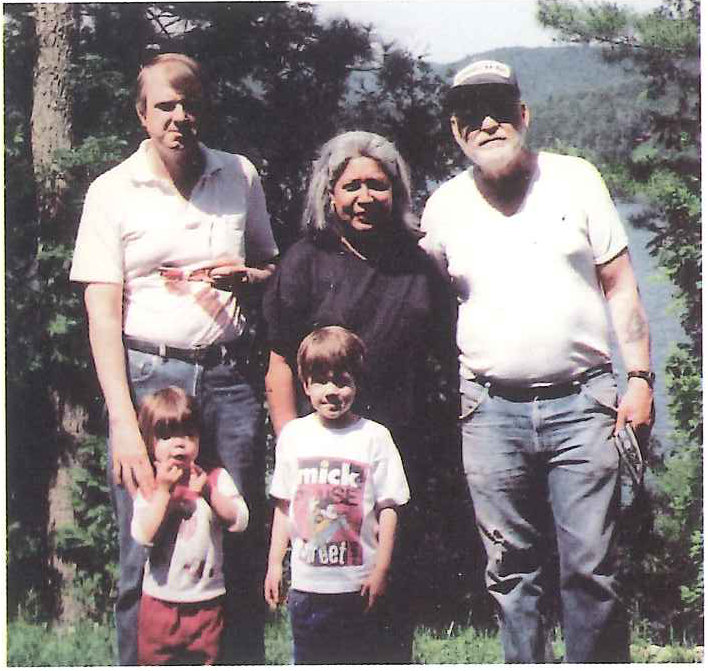
During the days, boredom was our enemy. Zena would check in to see whether Mark, Zena and John with Marks children Michael and Krystyna at their Quebec cabin circa 1991.
we needed anything, but otherwise we read and played Scrabble. I started sleeping more, often not rising till 10 a.m. John ensured we had a social life. He and Zena would host parties several times a month, inviting Canadian staff as well as knowing diplomats from New Zealand, Denmark and Australia. We appreciated the chance to talk with outsiders, while realizing how surreal it was that although in hiding from Iranian authorities and with our colleagues imprisoned downtown, we could enjoy this kind of lifestyle.
When American Thanksgiving came along, John made extraordinary efforts to obtain a traditional turkey. He confided to Lee, with whom he had formed a special bond, that the suckling pig we had for dinner was not what he had sought. The turkey did arrive for Christmas, however, along with a tree, and we Americans were taught the British tradition of hanging a decoration on each of the twelve days preceding the holiday. We also learned about pudding from Harrods, which definitely furthered my cross-cultural education. John and Zena purchased a small present for each of us, something we could eventually take out of Iran. We still have the small silver box with an inlaid top; we use it to store our maple leaf pins.
The most difficult day came without warning, just after mid-January. John returned from work early. He and Zena came into the family room and John announced they were leaving; visa operations were being moved to Kuwait. As we sat in stunned silence. John, with a slight quaver in his voice, apologized for leaving us behind, saying it was always his intention to stay till the end. Lee recovered first, telling John he John with Krystyna and Zena had been wonderful hosts and done everything imaginable to make us feel welcome. He pointed out that Zena, then still a British national, did not have the protection of a diplomatic passport (whatever that might be worth), and it was time to put her safety first. The rest of us said similar things. The situation was complicated because we suspected our own departure was imminent and believed John knew this. Only later did we learn he had no inkling.
The packers came and it was time to say good-bye. A show of emotion would make John feel worse, so we did all we could to keep the final farewell casual. We told them we would see them again soon in better circumstances. This was easier for us because we really did think we were leaving. They had no idea when or how we were to escape Iran. Yet ten days later we were out. John learned of our escape from the BBC while in Malta. He always felt they should have been told.
We saw the Sheardowns again in May in New York. The Yankees had invited us and our Canadian hosts to a game against the Blue Jays. Afterward we retired to a bar and talked for hours. Although it was a joyous occasion, we already knew something was wrong. John, the indispensable man in our rescue, was turning into the invisible man in the eyes of the media. During the first weeks after our escape when the press was eager for interviews, we would talk about the Sheardowns and find our praise edited out. For whatever reason, the media seemed capable of seeing only one hero. Initially it was Ambassador Taylor, but when the CIA announced its role seventeen years later, much of the press turned on Taylor and adopted Tony Mendez.
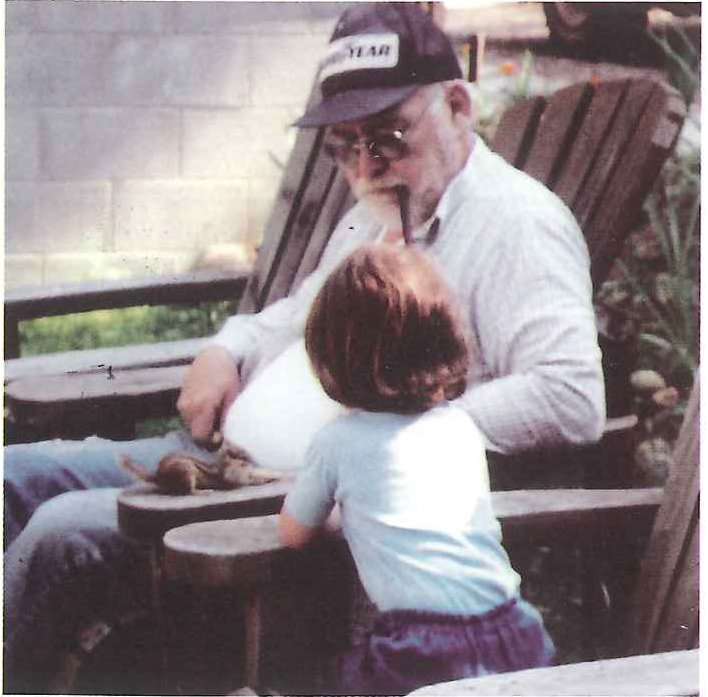
We saw John briefly in Warsaw in 1989 when he came through on a TD assignment and not long after we visited Ottawa. By this time we had two young children. John and Zena took us to their cabin on a lake in Quebec. He was building it himself. Indoor plumbing was still to come. Our children adopted John immediately, although whether it was his personality or that he taught them to pilot his motorboat is not clear. Our daughter, more than 20 years later, recalls John showing her how to hand feed the chipmunks that would turn up outside the cabin every afternoon. It was a wonderful visit, although we learned some disturbing facts. We had always assumed our side would compensate John for our upkeep. But he received only $1.65 per person per day from the Canadian government, not enough to pay our liquor bill. We offered John money but of course he refused. We talked about the media situation. John was unconcerned, genuinely I believe, but Zena felt strongly that his role had been ignored. John was displeased about the assignment to Kuwait, which he considered dangerous for Zena. He also believed it should not have been necessary for him to fight so hard for Zena to receive the Order of Canada, given the risks she had taken on our behalf. I could not help but notice that neither John nor Zena was concerned for themselves. Each expressed unhappiness with the way the other had been treated. I do not have the perspective to judge who was right about what, but I do know each loved and respected the other. That was far more important than the details. We met a few more times, at our twentieth and twenty-fifth reunions. By the twenty-fifth, Zena told us John’s memory was failing, although he seemed his usual self to me. When the thirtieth came, he was unable to attend. A group of us visited him at the hospital, but it was not clear he knew who we were. Alzheimer’s was taking away his memory.
Our experience was, in the end, an adventure with a happy ending. John and Zena, among many others, made it so. But unfortunately, such “adventures” are no longer uncommon and most do not have happy endings. The 1979 hostage crisis was an early confrontation between a resurgent and radical Islam and the West. Events in my later career confirmed this. I was sent on TD to Kuwait in 1985 to clean up the damage from the terrorist bombing of our embassy annex. In Frankfurt in 1992 I worked with a scarred survivor of the Beirut embassy bombing, and shortly after my retirement a co-worker from my last Washington assignment was killed in the East Africa bombings of our embassies in Kenya and Tanzania. Terrorism takes many forms and hostage-taking remains a serious issue. As I write this al-Qaeda in the Maghreb claims to have kidnapped as many as forty Westerners from a natural gas facility in Algeria. The unhappy conclusion I draw is that Foreign Service officers of all nationalities must be prepared to do what is necessary to uphold international law and defend the innocent against terrorism. This has traditionally not been part of a diplomat’s job description. Despite all that has happened I doubt it is much discussed today; it is not likely to enhance recruitment efforts. During my career, in the years following our rescue, I was fortunate that I never encountered anything remotely similar to Tehran. Still, I occasionally asked myself, were it necessary, could I live up to the standard set by John Sheardown and Ken Taylor and the rest of the Canadian staff? Theoretical questions are impossible to answer, but I know two things. John set the bar high, and I can only hope I would have done my best to come close to it.
Incredible luck brought me to John’s door. I became not a hostage but a houseguest, the term describing us in communications between Tehran and Ottawa. I know it is normally written as two separate words. I choose to make it one, to emphasize the uniqueness of a special place and time, and most of all, the courage and hospitality of a very special man.
Mark Lijek is a retired American Foreign Service officer. Recenty wed, he and Cora left for their first posting, in Tehran, as the Islamic revolution gathered force. They soon became “houseguests” of the late John and Zena Sheardown (to whom this issue is dedicated). Undaunted by his Iranian experience, Mark served in administrative and troubleshooting capacities in Hong Kong, Nepal, Poland and Germany with the usual stints at HQ in between. Great friends of the Sheardowns, Mark is determined that the record of Canadian bravery in Tehran is kept straight, the resultant book, The Houseguests: A Memoir of Canadian Courage and CIA Sorcery, makes compelling reading. “Honorary Canadians” as far as this journal is concerned, the Lijeks live in Anacortes Washington, a ferry ride from Victoria.
View the original scanned pages →
Originally published in bout de papier, Vol. 27, No. 2 (2013) — Spring 2013 // Printemps 2013, pp. 23–25. Read the rest of this issue →