
bout de papier, Vol. 15, No. 4 (1998-1999) — Winter 1998/99 // Hiver 1998/99, pp. 9–11
PAFSO 1998 Award Recipients
It was a sell-out days before it happened. This happy fact provided an up-beat mood for PAFSO’s dinner and presentation of the 1998 Foreign Service Officer awards on June I at the National Arts Centre. The evening proceedings got under way with a bag-piper coaxing relaxed and cheerful guests to their tables in the Panorama Room and continued throughout in a lighthearted vein under the deft ministrations of master-of-ceremonies Alan Kessel.
The first to receive an Award was Deborah Chatsis, an officer in the United Nations Criminal and Treaty Law Division of the Legal Affairs Bureau. She was honoured for her outstanding work in removing obstacles blocking progress on three issues of great importance to Canada: the UN Declaration on the Rights of Indigenous Peoples, the International Criminal Tribunal at The Hague, and the Anti-Personnel Land Mines Convention.
One of Deborah’s supporters summed up her achievement with these words: “She has had a decisive role in making happen things that are genuinely important to Canada and to the international community. She has succeeded where others would not have. She has managed to do so by bringing to her work an exceptional level of dedication, imagination and energy and by inspiring others to emulate her’.
Scott Mullin, formerly a Foreign Service officer and now an executive with the Canadian Bankers Association presented Deborah with her Award.
Patricia Fortier, Deputy Director of the Regional Security and Peacekeeping Division was recognized with an award for her remarkable leadership in inspiring her fellow officers and associates and in securing the unstinting co-operation and sustained support from other agencies such as DND, RCMP and CIDA to manage successfully four major peacekeeping operations in Bosnia, Guatemala, Haiti and Zaire over a two-year period.
Patricia’s five fellow officers who nominated her had this to say about her abilities: “Her reputation as a Canadian representative in multilateral fora is enviable. She is known to be totally in command of her brief and a strong exponent of Canadian views. Patricia is highly respected by her counterparts in other countries who look to her for leadership in setting the international agenda on new issues. Her grasp of difficult problems and her thoughtful interventions frequently result in the Canadian position which she was instrumental in developing becoming accepted wisdom which is then repeated by other countries”
Lawrence Dickenson, Executive Director of the Millennium Fund of Canada and Donald MeGillivray, Immigration Programme Manager at the Canadian Embassy in Havana, received an award for his outstanding performance in moving a group of political prisoners and their dependents from Cuba to Canada in early 1998 within a very tight time frame and under politically sensitive circumstances.
“Don’s challenge”,, wrote one senior officer, “was to handle the details of a highly sensitive Cuban offer to hand over to Canada a significant number of political prisoners. Timing was critical as the Cuban Government wanted the prisoners out of the country immediately but we wanted the certainty of thorough immigration processing. Difficult too was the question of dependents. We wanted all family members processed and out of Cuba at the same time as the prisoners”
Claudette Deschênes of Citizenship and Immigration Canada, and a 1997 Award recipient herself, was delighted to present to Don, a colleague and friend, his Award.
Roman Waschuk was, at the time of the awards, Counsellor at the Canadian Embassy, Kyiv, Ukraine. Ambassador Christopher Westdal spelled out in these words the reasons why Roman was given an Award: “I nominate him for four years of Above Left: Joe Clark presenting F Finlay and PAFSO President Carol prize to Ted Johnston. Below left: Don McGillivray. Extraordinary service that he has rendered in Kyiv in promoting Canada’s interest in the security and success of Ukranian freedom; for his vital contributions to the Canada-Ukraine Special Partnership; and for the conception, negotiation and early life of Ukraine’s Distinctive Partnership with NATO particularly during Canada’s tenure as NATO’s contact mission in Kyiv”
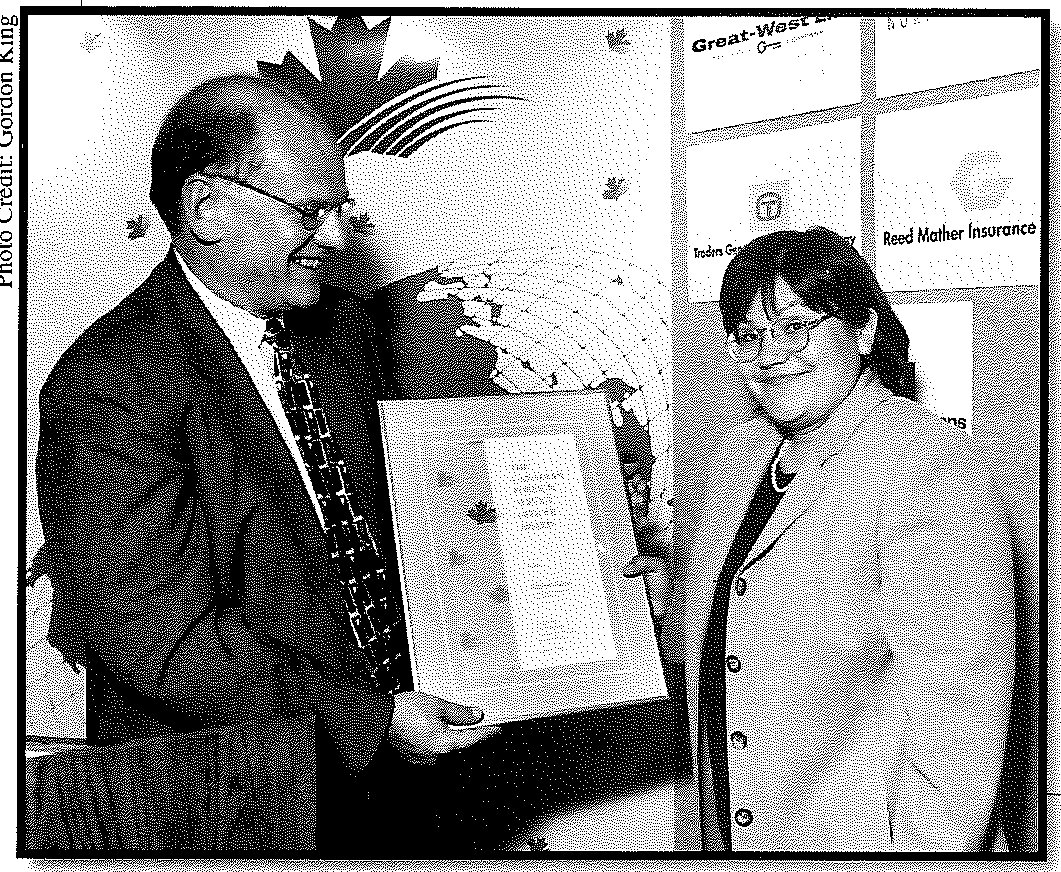
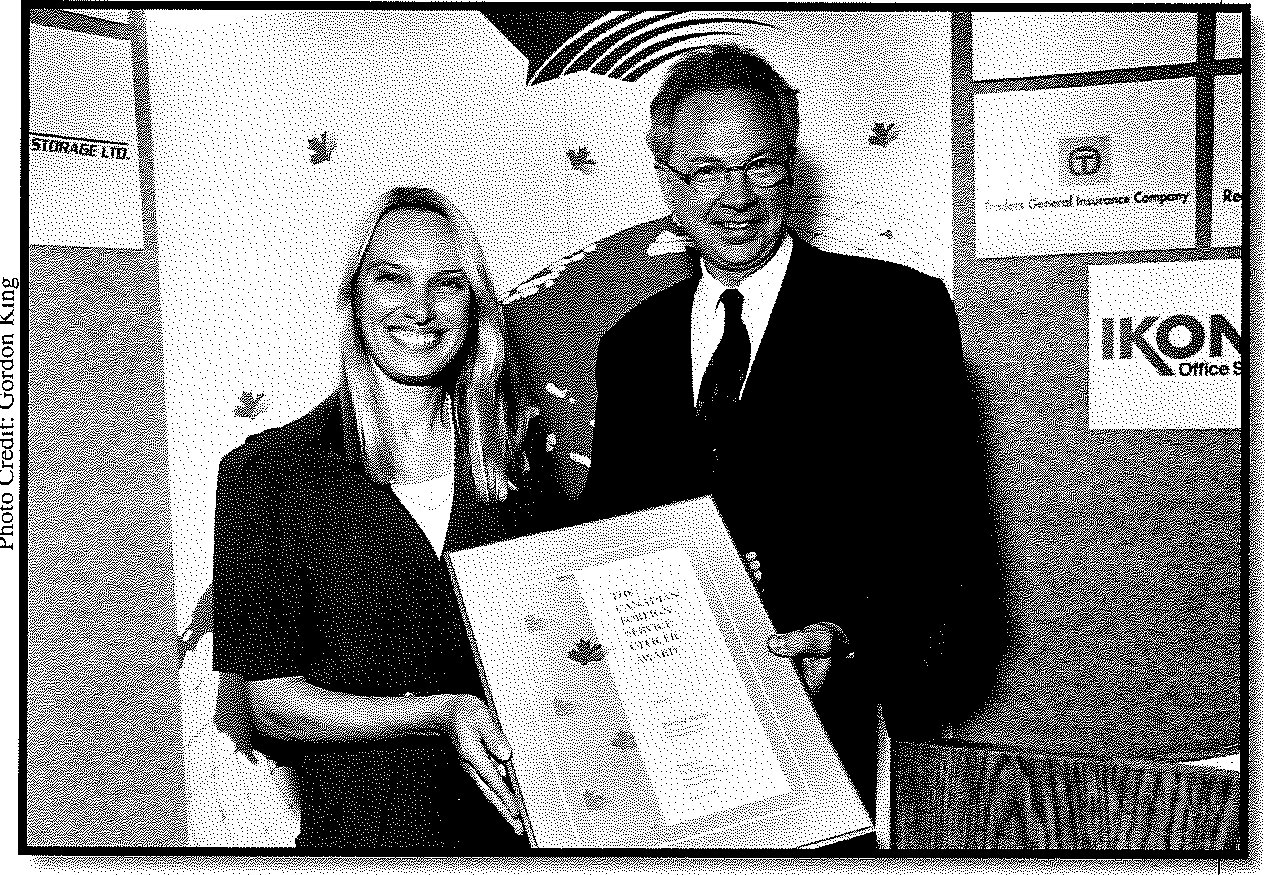
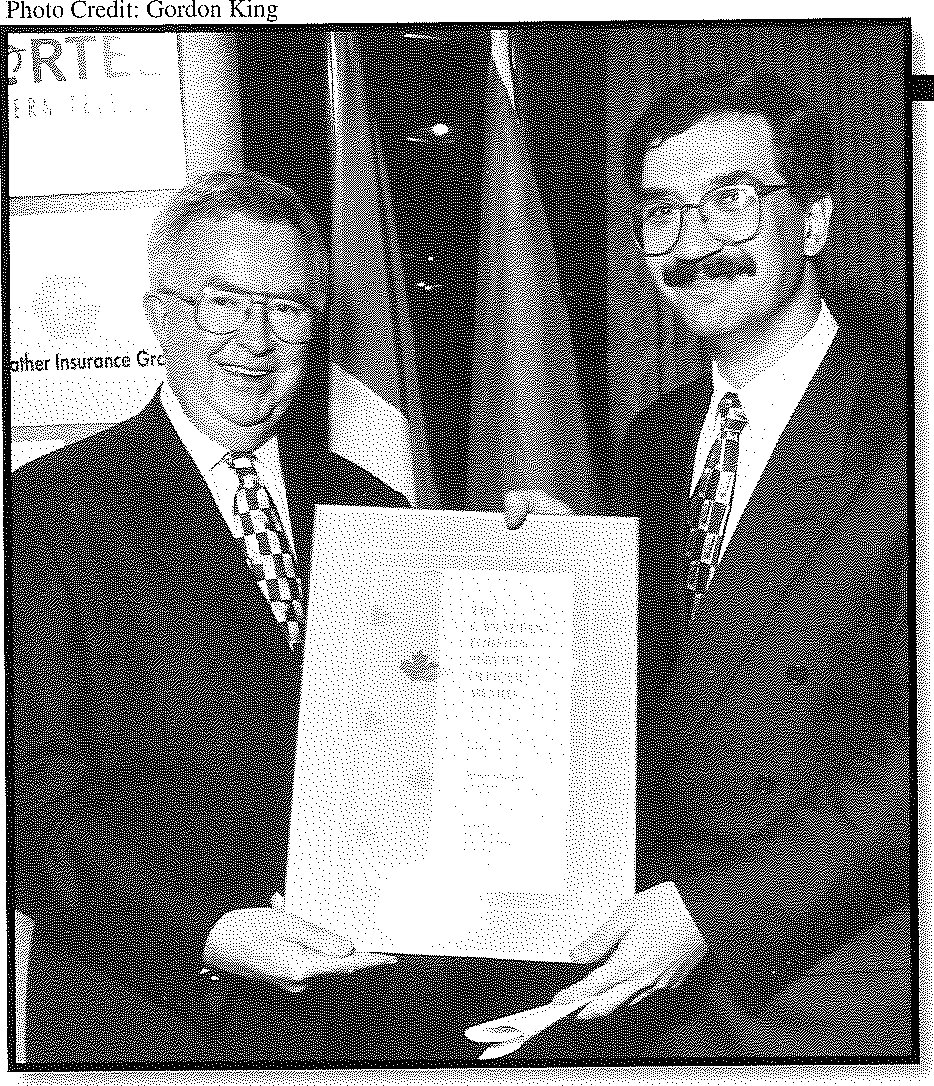
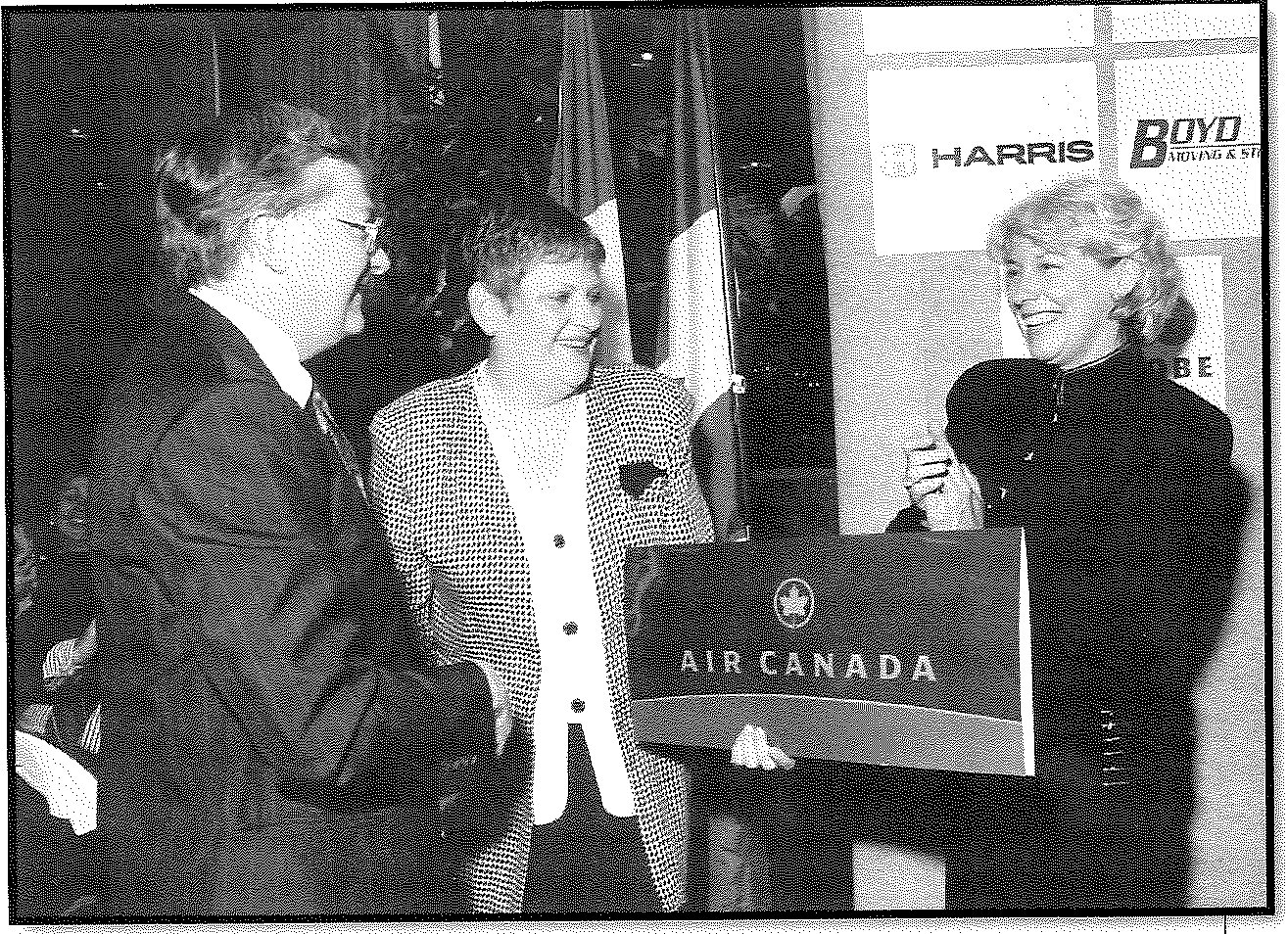
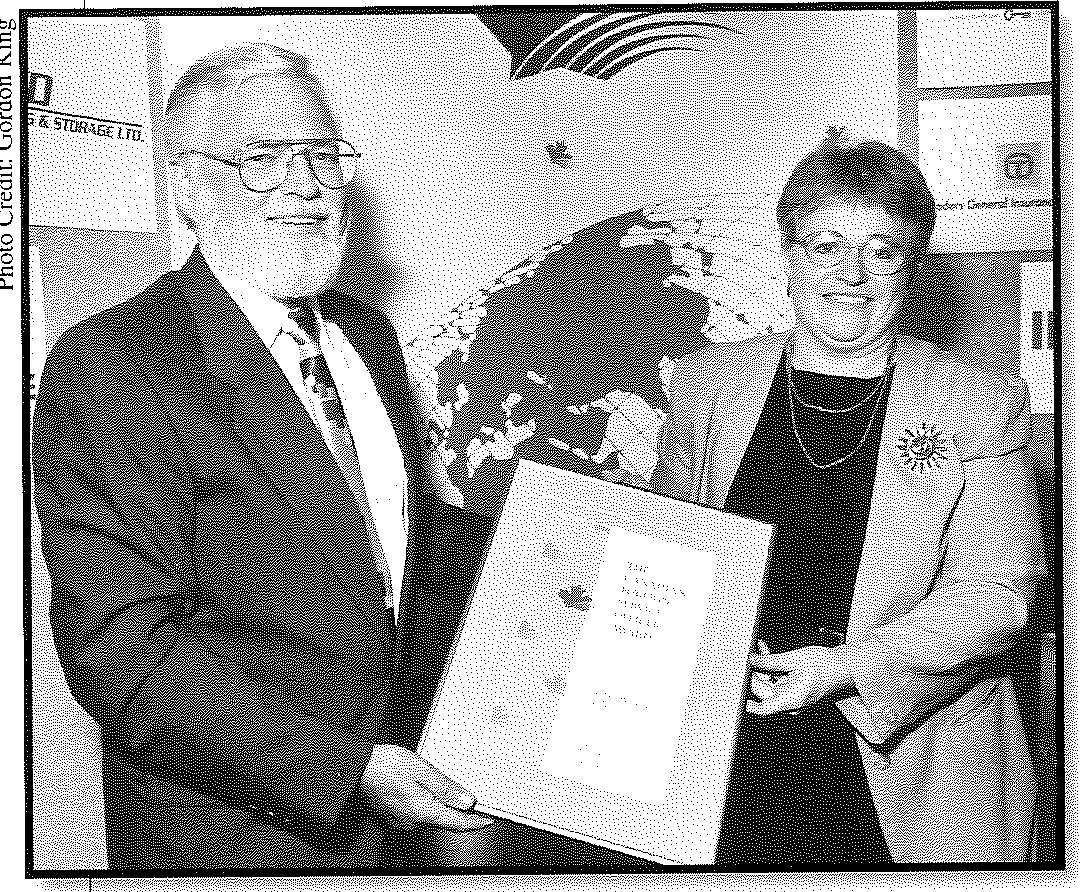
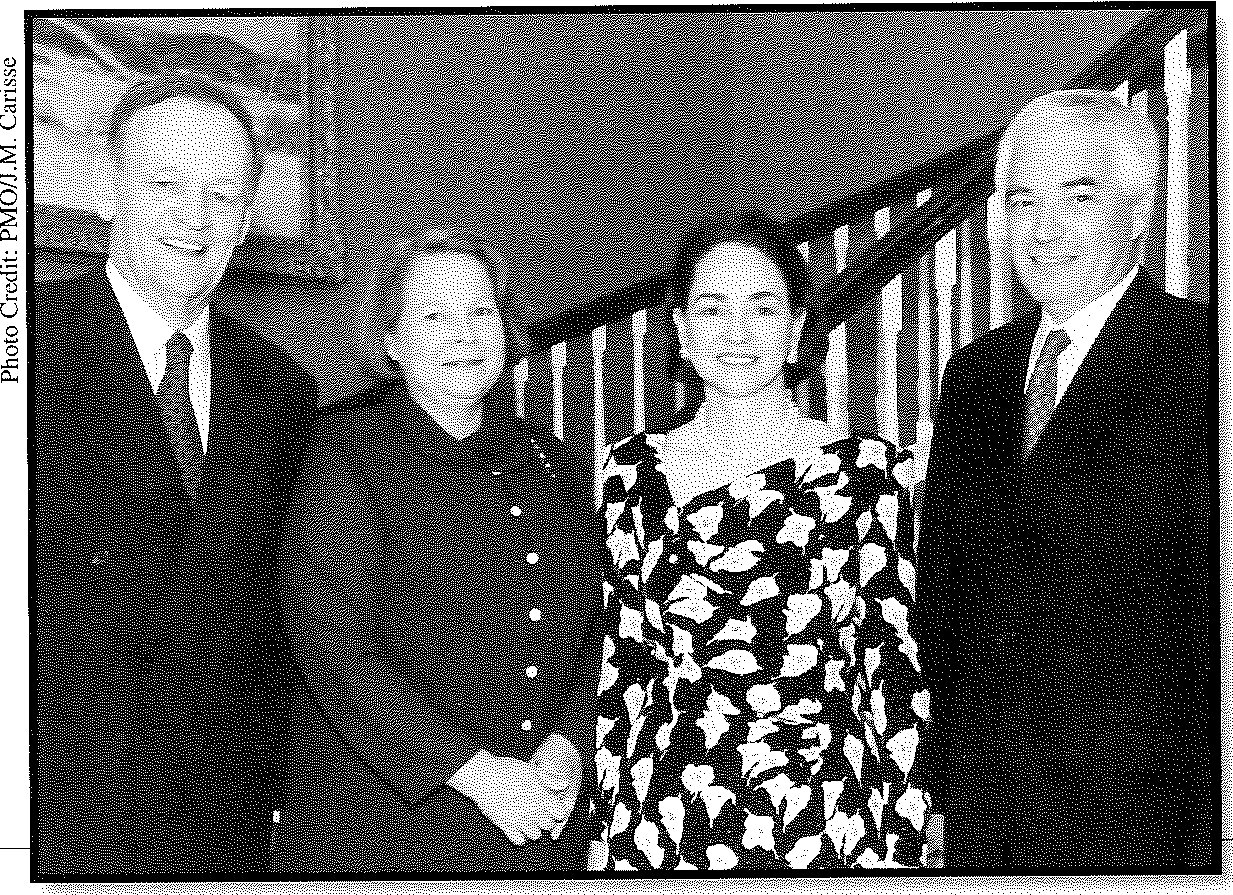
Left: Greek Ambassador John-Al presentation ceremony. Below: Lto l Mrs. Chrétien and Mr. Bartleman The Right Honourable Joe Clark was the presenter of an Award to Roman.
The panel of five judges which selected the four winners was composed of people who themselves had achieved distinction in their various fields. The panel included former HOMs James (Joe) Bissett, Allan Kilpatrick and Leonard Legault, CBC Radio broadcaster Mary Lou Finlay, and Ian Glen, Deputy Minister of Environment Canada.
Each year the Retired Heads of Mission Association (RHOMA) gives a prize for the best article in bout de papier by a Foreign Service officer at the FS1 or FS2 level. Each winner receives a framed copy of his/her article along with a cash prize. The purpose is to encourage the maintenance of a high standard of writing in the Foreign Service and to provide an additional incentive to contribute to bout de papier.
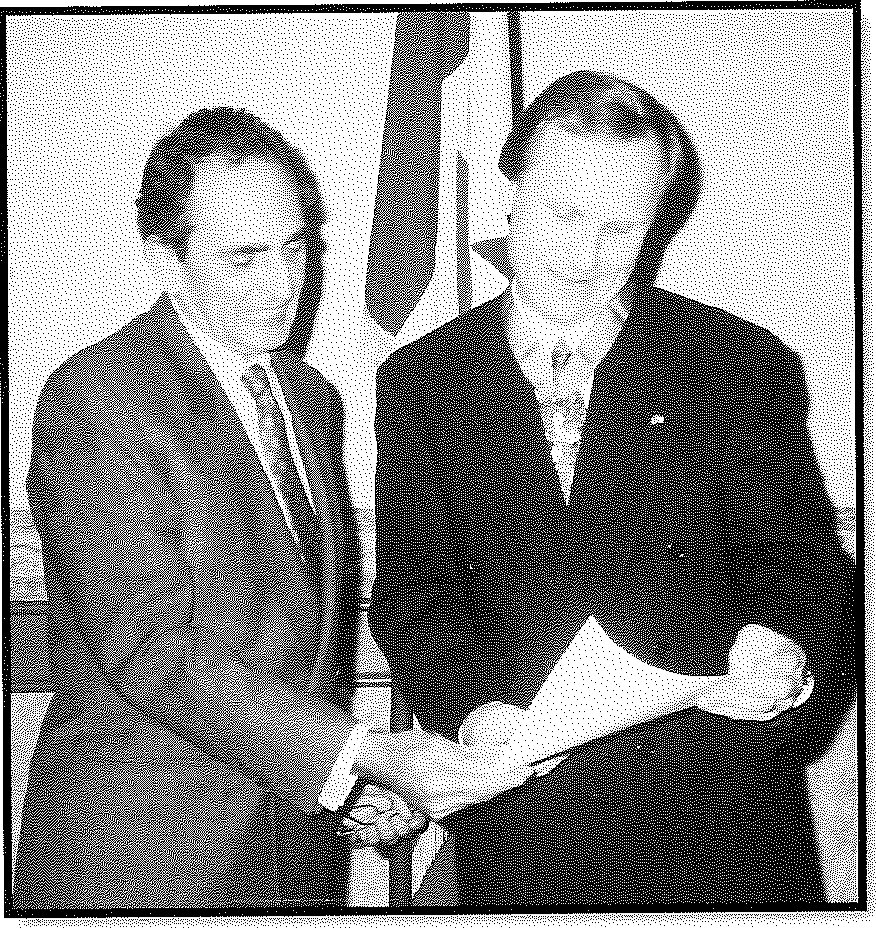
For the year 1997 two prizes were given. Philip Calvert won for his piece “Letter from the Monkey House” a wonderfully snide attack on the woefully inadequate pay of Foreign Service officers constructed in the thesis that if you pay peanuts you get monkeys. Nicholas Coghlan won for his graphic picture of the Falkland Islands shortly before the “bloody and bizarre war” between Great Britain and Argentina over their ownership. Both pieces appeared in the winter issue, volume 14, number 4. RHOMA’s selection committee was composed of Joe Bissett, Paul Lapointe and Michael Shenstone.
Prime Minister Pays Tribute to Jim Bartleman
The Prime Minister and Madame Aline Chrétien paid a signal tribute to Jim Bartleman, 32-year veteran of the Canadian Foreign Service as a dinner at 24 Sussex on June 11, 1998.
Attending were several now-retired members of the Foreign Service: Arthur Menzies, Michael and Susan Shenstone, Gordon and Jessica Riddell, members of Jim’s family: his wife Marie-Jeanne, Jim’s mother and his sister and brother and their spouses from Bracebridge, and Jim’s son Laurent, who had just graduated in biology from Queen’s University. Other guests included the then- Clerk of the Privy Council, Ms. Jocelyn Bourgon, the Chief of Staff of the Prime Minister’s Office, M. Jean Pelletier, the Deputy Minister of Foreign Affairs and Mrs. Donald Campbell, as well as the Director of Communications in the PMO and Mrs. Peter Donolo.
After dinner the Prime Minister spoke warmly about the Foreign Service and Jim’s contribution. In his response Jim paid tribute to the retired members of the Foreign Service who were present saying that he had been fortunate to have had mentors of such quality over the years.
Robert Peck Recognized by Greek Government
On October 21, 1998, the Embassy of Greece in Ottawa honoured Robert Peck, former Counsellor at the Canadian Embassy in Athens, with the “Grand Commander of the Order of the Phoenix”. The decoration, named after the mythological Phoenix bird, was instituted in 1926 and may be conferred on Greeks and foreigners who have distinguished themselves in the public service or other fields.
At the presentation ceremony the Ambassador of Greece, H.E. John-Alexander Thornolglou, presented Mr. Peck with his award, speaking highly of his imaginative and tireless efforts to bring Greeks and Canadians closer together. He said Peck played a leading role in bringing about Canada’s participation in the 1997 Cultural Capital of Europe year-long events in Thessaloniki. In cooperation with the Embassy of Greece, Peck also initiated successful negotiations for an audio-visual co-production treaty, a mutual legal assistance treaty and a memorandum of understanding in education cooperation between Canada and Greece.
Mr. Peck joined Foreign Affairs in 1982 and is currently in the Personnel Division at DFAIT.
Excerpt from Words of Thanks from FS Award Winner Roman Waschuk at June 11th dinner.
This is also an overdue recognition of messy-desk people; it is on their behalf that I accept it. I only hope that I or any one of our file-by-pile number, will still be able to find it in a few months’ time.
I accept it also on behalf of messy-country people. By this, I don’t mean countries that are necessarily in a terrible mess, but ones that cannot be tidily categorized and do not easily match Canadian pre-conceptions or expectations.
I’ll admit it: being despatched to Kyiv was not my first choice; it was a case of the Department empowering its employee to accept its inevitable decision. On the other hand, I years of dealing with the former Soviet Union and its predecessor, the Not Quite Yet Former Soviet Union, gave the lie to those of my friends who, in 1987, predicted that the Department would take one look at my CEE language and academic background and pack me off to South-East Asia.
Ukraine is a country capable of stirring both cultural empathy and civilizational dissonance. It is a feeling not unique to cultural baggage-toting Canadians in Kyiv. Many of us, brought up on Canadianized version of an overseas culture can feel a bit out of sorts upon encountering that heritage on its home turf. In the Ukrainian case, that has meant dealing with a society in prolonged and painful transition, profoundly ambivalent about its pace and direction.
Fortunately, one thing Ukrainians are not ambivalent about is Canada: it’s their favourite foreign country bar none. The challenge has been to channel these pervasive warm and fuzzy feelings and our own cult-empathy into actual accomplishments, or in the dry yet fearsome language of visit planning, deliverables. That takes understanding and teamwork. My friends and colleagues at the Kyiv Embassy — and those two groups really are one and the same thing — share these qualities, and should share in this award.
A particular tribute is due to a member of the Kyiv team who is no longer with us: Roman Lishchynski. Roman took me under his all too colourful wing upon my arrival in Kyiv, and was always generous with career advice, mostly, as he cheerfully admitted, on how not to get ahead. Yet if one rises above the sordid business of promotion boards to look at promotion of Canadian values, OSCE principles and NATO partnership, then Roman Lishchynski’s signal contribution to our profession will indeed stand out.
Even teamwork fails if it is not sustained by leadership. For someone wandering the hallways of a Department that is always fretting about falling behind the most recent management fads, I have been fortunate in having had a succession of managers, first of whom Vern Turner (Never Assume Anything), who did not shrink from being the pinball bumpers and flippers of a career that might otherwise have been completely directionless.
At the risk of falling into mutual admiration mode, I must admit to finding Chris Westdal one of our top pinball wizards, combining energetic thrust and precise targeting with a willingness to let officers rebound along their own trajectories. For this, much thanks.
View the original scanned pages →
Originally published in bout de papier, Vol. 15, No. 4 (1998-1999) — Winter 1998/99 // Hiver 1998/99, pp. 9–11. Read the rest of this issue →



