
bout de papier, Vol. 13, No. 3 (1996) — Fall 1996 // Automne 1996, pp. 28–30
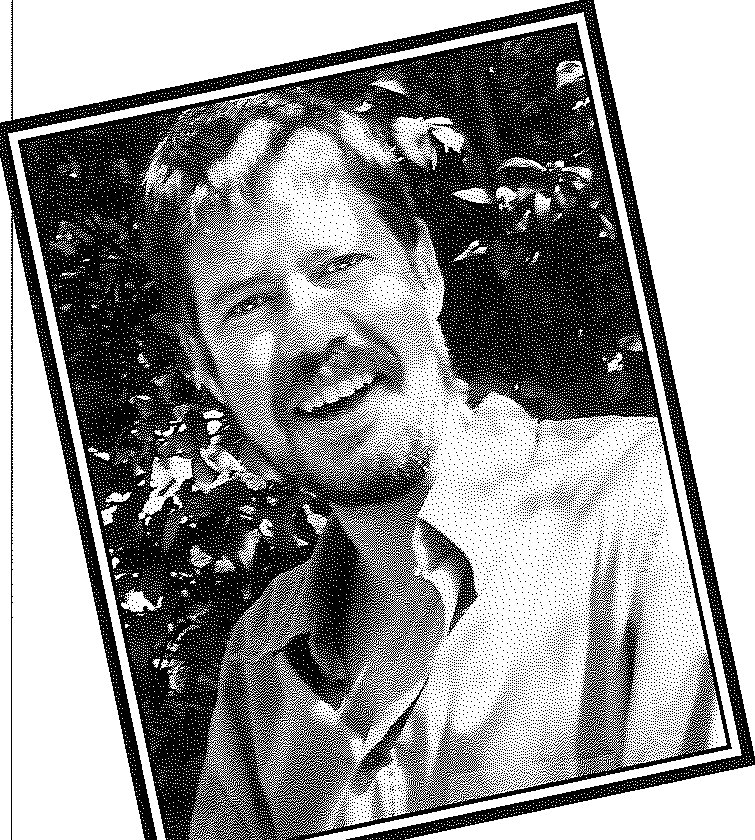
Formal agreements exist between the Department of Foreign Affairs and International Trade and its counterpart ministries in Germany, the UK, Australia, New Zealand and Mexico to exchange foreign service officers on a regular basis. For the year 1995-96, Ulrich Grau of the German foreign service worked as a political officer in DFAIT’s European Union Division, while DFAIT’s own Alain Hausser travelled to Bonn to work at the Auswärtiges Amt. Here are their respective impressions.
Il existe entre le ministère des Affaires étrangères et du Commerce international et ses homologues de l’Allemagne, du R.-U., de l’Australie, de la Nouvelle-Zélande et du Mexique des ententes officielles d’échange d’agents du service extérieur sur une base régulière. Pour l’année 1995-1996, Ulrich Grau, du service étranger de l’Allemagne, a travaillé à titre d’agent politique à la Direction de l’Union européenne d’AÉCI, tandis qu’Alain Hausser, d’AÉCI, s’est rendu à Bonn pour travailler à l’Auswärtiges Amt. Voici leurs impressions respectives.
It is a rewarding perspective to see one’s own microcosm – in my case the German foreign ministry — from a different angle. From outer space, Foreign Services might indeed look like a world of bureaucrats who work to exactly the same tune everywhere, churning out briefing books and talking points on late Friday afternoons, wondering how much difference it makes. Seeing Bonn from Ottawa, however, gives you some ideas about differences in very similar systems. A few months with the Canadian Foreign Service (ten of a twelve months exchange programme so far, spent in the European Union Division) certainly do not provide complete insight into the complex relations that exist in a mechanism like a Foreign Service, but they provide some standard of comparison. I will try to return a small part of this benefit by describing some features of the German Foreign Service. If nothing else, they might offer some consolation, where applicable, regarding the lot people in the foreign service share. These are, of course, my personal views.
Our Daily Bread: Briefing Books
German staff meet with the minister twice a year (and we have the right to insist that he shows up in person). After some introductory remarks, the meeting typically turns into a veritable “scrum”, and sometimes dialogue — valuable for both sides, the political staff as well as the bureaucrats. The Minister gets first hand knowledge of grievances and may commit himself to making changes. In some cases, this can clear the air immediately. In many cases, considerable pressure is brought upon the management to look for improvement. At one meeting with the Minister, staff members complained over briefing books. What briefing books?”, was the Minister’s reply. In fact, he had a vague notion of strange binders being carried around by his entourage. But he had certainly no idea about the tiresome manufacturing process that many of his staff are busy with too much of the time. The standards were simplified after that meeting; individual perfectionism and exaggerated demands suffered a temporary setback.
Coping with Change
Speaking of Minister-staff relations: I was in Bonn at the time Minister Hans-Dietrich Genscher, who had ruled the ministry for so many years, left office and Minister Klaus Kinkel took over. The Foreign Ministry at that time was working perfectly to its master’s tune — even after he had left. Although there was some bickering at the top echelon of the Liberal Party, it was a smooth transition, given, inter alia, Minister Kinkel’s experience as head of Mr. Genscher’s office in the Foreign Ministry earlier in his career. Continuity was one of the trademarks of the Genscher years and still prevails in the German Foreign Service. When the politician at the top and the administrative level are closely meshed after working together for many years, time and energy are saved that go into building a working relationship with every new minister, especially when they bring in many new people from outside foreign affairs or when they belong to a different political party. A fresh perspective, on the other hand, can break up crusts and unhealthy personal obligations that may develop over time, especially when mixed with party politics. At Lester B. Pearson, administrative structures and party politics certainly appear to be a complex dynamic.
Some other features of continuity: it is an often followed rule at the Auswärtiges Amt in Bonn to change only as much as is absolutely necessary when you take up a new position (during the Genscher reign “language” was built over years and the change of a comma might have indicated a shift in policy). Continuity is also secured by a very institutionalized system. One example: for every officer there is a deputy as a back-up, clearly identified in the ministry’s directory, who is supposed to have the same knowledge of the files. And there is a strict rule that both may not be absent at the same time. Organisational structures, too, are changed as rarely as possible. It seems that the reverse is true at Lester B. Pearson: ideas float freely and change is in the air daily; it is the competence of a person that counts rather than his or her detailed knowledge of a file or his or her position in the hierarchy — which I find good in many respects. However, a very personalized system with little institutionalized back-up can easily become a source of stress and anguish.
Time for Reforms: The German Foreign Service Act
In times of budget cuts, reforms are of special importance. I enjoyed the retreat of the Europe branch in April and the strong belief in reviewing and reorganizing. The fact itself that everyone in a branch, the whole team, participates in an endeavour to improve their work and their own working conditions must be recommended as an example. This is time well spent, especially if there is good follow-up.
I glanced through the report of the Royal Commission on Conditions of Foreign Service submitted in 1980, advising against a Foreign Service Act. Back in 1968, then Foreign Minister Willy Brandt set up a commission of parliamentarians and bureaucrats to look into the issue of reform of the German foreign service. They presented their report in 1971 and suggested a Foreign Service Act which today is the basis of our service (well, the Act came into effect in 1991 — it sometimes takes a while). Given the intensive competition to recruit young and qualified staff and a generally increasing reluctance to serve abroad and be exposed to health risks and other dangers, the Foreign Service had to be kept an attractive profession; the Act served this purpose. (It is certainly true, as was stated in an e-mail the other day, that many want our jobs. But the applicants are not necessarily those the Canadian or German Foreign Service would want to hire in order to serve best the country’s interests in the world.)
The Act takes due account of the special circumstances of the Foreign Service by making provision for factors specifically related to service abroad. For instance, the special duties of foreign service officials, notably the obligation throughout one’s career to accept all postings, call for an equal concern on the part of the employer for the welfare and protection of officers. At posts abroad, heads of mission assume this responsibility. Some examples:
• Provided that an illness or the consequences thereof can be ascribed to conditions injurious to health or otherwise substantially different from those prevailing in Germany, officials and their families may be granted accident compensation on the same basis as in the case of accidents incurred in the course of official duties. Similar rules apply to material damages.
• Explicit recognition is given to the part played by spouses in carrying out official duties. Spouses who assist officials or the mission in the performance of their functions are entitled to support in this connection. In addition, spouses get an allowance of 5% of the official’s salary abroad as compensation for not being able to take up a job or, for example, pay into a pension fund.
It is important to note that the Act transfers competence in certain areas to the Federal Foreign Office, for instance to regulate leave for officials on foreign postings, with only a participating role for the Ministry of the Interior and the Ministry for Finance.
Do We Enjoy our Job?
Do we enjoy coming to the office in the morning (to the extent possible) or just hope that the day goes by — an important question asked by the ADM-Europe Branch at the retreat of the branch in April. Crossing the street in Bonn while on holidays a short while ago, I met a colleague who had joined the German Foreign Service the same year I did, in 1987. I learnt that he had left the Foreign Service the day before, to join the secretariat of one of the many organizations that have their offices in Bonn. “My wife has a good job, my kids a good school, we have a nice house near Bonn and the organisation I am now with will not move their offices to Berlin. So why stay with Foreign Affairs?”
Many, though, do stay, despite the fact that postings around the world get worse (Edmonton was closed, Saratov opened), promotions are extremely rare due to budget cuts (plus, too many of the remaining promotion positions go to the people around the minister) and frustration prevails that competences are being whisked away by the chancellery (i.e. PMO/PCO), which is shaping German foreign policy to an ever greater degree. Some might simply regard the Foreign Ministry as the safest bet in difficult times: civil servants cannot be laid off or forced into early retirement (the only way to cut is to reduce new entrances to a minimum, which we already do). For many, however, it is as fascinating as it is important to take part, to the best of one’s possibilities, in our common efforts for peace, prosperity and friendship among nations and to help manage the fundamental changes the international system is undergoing today.
Popcorn
I enjoyed the open doors and the open atmosphere at Lester B. Pearson, in every respect. Floors in Bonn look deserted and depressingly quiet because most people still sit behind closed doors. In too many cases, hierarchical attitudes prevent efficient teamwork. And I cannot think of any microwave in the Auswärtiges Amt serving as the warming centerpiece of a division, with the smell of freshly prepared popcorn around noon. At Lester B. Pearson, I felt integrated (also with regard to briefing book “specials” on late Fridays) and treated equally (including the window-less cubicle for newcomers). I was most impressed by the way a comparatively small number of people handle Canada’s unbelievable variety of memberships in all the important political clubs on earth (UN, G-7, NATO, OSCE, GATT, NAFTA, OAS, APEC, Commonwealth, Francophonie — to mention just a few). It is with great respect — and many thanks — that I will leave the Canadian foreign service in September.
A European Experience
Working in the European Union Division, I should not conclude without some promotion of the European cause. Again, the experience of seeing something from the outside that I was used to knowing from the inside is rewarding (and good preparation for my future job at the German embassy in Ottawa). The European Union will more and more be Canada’s partner in Europe, in the economic and the political field. The Union is still defining its political shape, but however community and intergovernmental elements mix over the years and decades to come, whether it be a multi-speed Europe with a flexibility clause and “opting out”, or an ever closer Union of 15 and more, a Community built on the principle of subsidiarity is the only way to preserve peace and prosperity for all our societies. Most Europeans think that way when they really have to make up their minds. For me, this certainly is the lesson from history and the guideline to follow.
View the original scanned pages →
Originally published in bout de papier, Vol. 13, No. 3 (1996) — Fall 1996 // Automne 1996, pp. 28–30. Read the rest of this issue →



