
bout de papier, Vol. 21, No. 1 (2004) — Fall/Winter 2004 // Automne/Hiver 2004, pp. 38–42
Virgil’s Aeneid describes the epic adventures of a group of Trojan boat people, who escaped the fall of Troy and, after many adventures and vicissitudes (including a sojourn at Carthage
– where Aeneas jilting of Carthage’s queen, Dido, soured Roman-Carthaginian relations for the next millennium founded a new realm in Italy. It instantly became the official foundation myth of the Roman Empire and the core of the Latin literary canon. Despite the Trojans’ trials and tribulations, we know all will work out for the best.
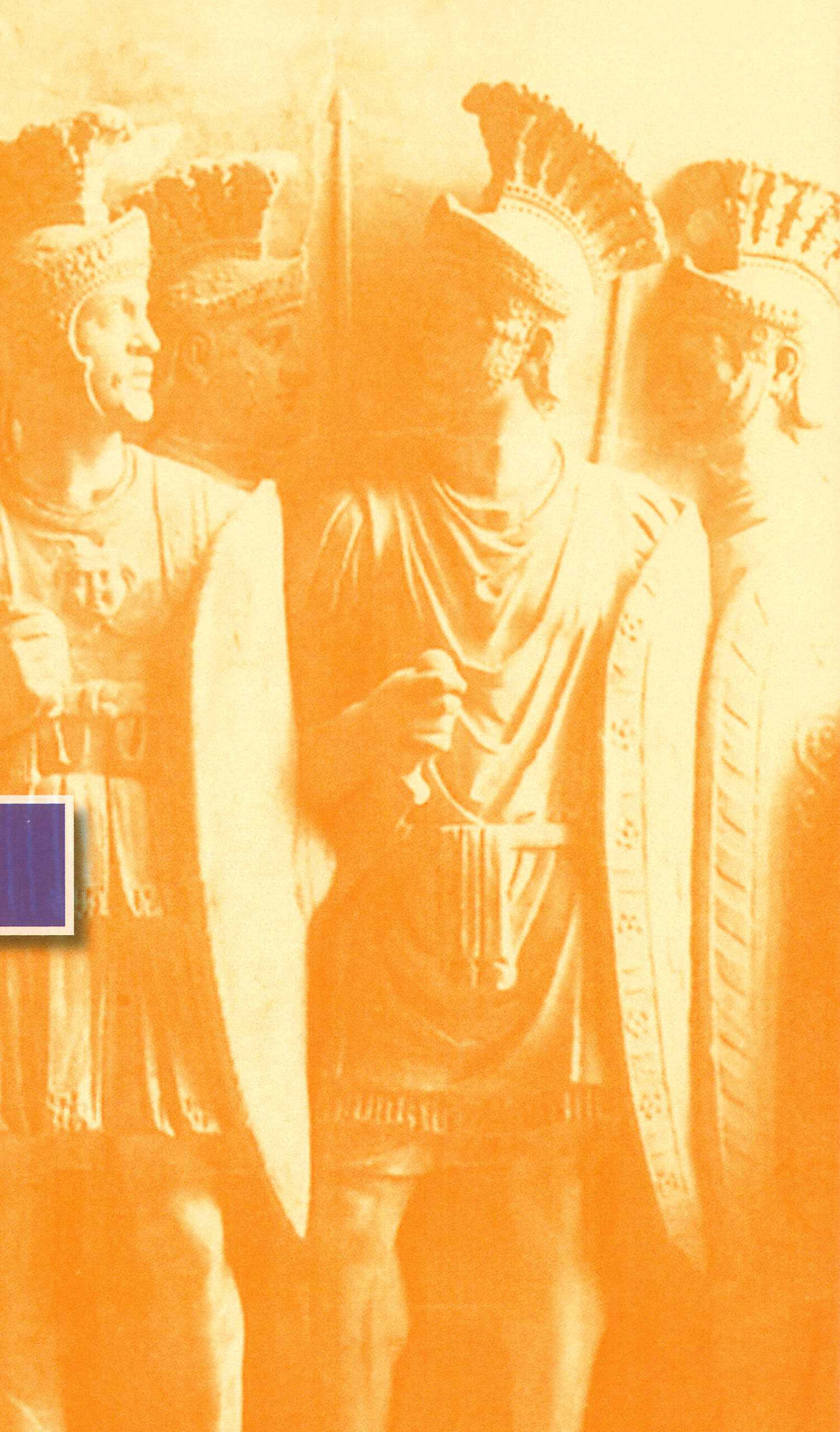
We are hardly into the first Canto, when the goddess Venus promises her son Aeneas that his Roman descendants will enjoy Imperium sine fine – unlimited rule – an empire without borders and dominion over all things and peoples. While we may misinterpret what the Gods promise us, they do – unlike politicians
– honour their pledges. In Canto 6, Virgil went on to provide what was, in effect, the Roman Empire’s “mission statement.” Let others, he says, make fine statues, utter noble speeches and chart the course of the stars – casually dismissing the accomplishments of the Greeks of “old Europe.” Romans have been given the right to rule (Imperium) over the peoples of the world — indeed this is their particular “art” — to impose peace, order, and good government and “ …to spare the submissive and to humble the proud.” When Virgil was writing, in the early decades of Augustus’ long reign, Imperium sine fine seemed very possible. Over the previous two centuries, Roman rule had spread from the Italian peninsula to embrace the entire Mediterranean basin and beyond. Pompey had taken Rome’s eagles to the Caspian and the Caucasus; Augustus’ adoptive father Julius Caesar had subdued Gaul and led his troops twice across the Rhine and twice across the “Ocean” (considered the boundary of the known world) to Britain. Augustus had ended a century of civil warfare, with the annexation of Egypt, the last (and richest) of Hellenistic successor states, to Alexander’s empire. He had then rounded off the corners of the Empire, subduing the last pockets of resistence in Spain, the Alps and the Balkans, pushing Roman control to the Danube. Roman geographers believed that there was only a narrow strip of land between the Rhine, the Danube and the “Ocean,” and that the Caspian Sea was in fact a gulf of the “Ocean” – it was, therefore, not unrealistic to assume that the Roman Imperium would soon embrace all of Europe, leaving only a few offshore islands: Britannia, Hibernia, Scandia and Thule. In Africa, Rome controlled the entire Mediterranean shore. To the south, expeditions had found only endless deserts, a few oases and hostile nomads. It was well known that the equatorial zones beyond were too hot to sustain life.
Under Augustus, Roman expeditionary forces also probed down both sides of the Red Sea, the major route by which spices and silk entered the Empire. Above the Nile cataracts lay the kingdom of Nubia, which maintained many of the traditions of ancient Egypt. The Romans penetrated as far as modern Khartoum, but did not occupy the whole country. Further up the Nile, Roman expeditions found nothing but endless swamp. On the eastern shore lay Arabia – most of it was rightly termed Arabia Deserta, but where the Red Sea met the Indian Ocean lay Arabia Felix (Yemen) where the spices came from. Augustus sent an expedition there. A trip down the Red Sea is arduous at the best of times but the Romans’ Nabatean guides, who had no desire to see the spice trade in Roman hands, made it even more so. The Romans returned empty handed. Nonetheless Augustus in his Res Gestae proclaimed At my order and under my auspices, two armies were led at almost the same time into Ethiopia and into Arabia Felix; great forces of the enemy of both races were cut down on the battlefield, and many towns were captured. Roman ideology made little distinction between direct and indirect rule. Surrender was nice, but token submission sufficed – as far as they were concerned these regions now lay within the Imperium.
Roman conquests could be pretty dreadful affairs, but the Romans were skilled at assimilating conquered territories, particularly if the social and economic structures parallelled their own. The political and economic structure of most Gallic tribes was close enough to the oligarchic city states of the Mediterranean to make that possible and the local elites were strongly attracted to Roman material culture. But Gaul could not Romanize in peace if Germany remained unsubdued. By the time Virgil was finishing the Aeneid, the Roman armies were across the Rhine and pushing towards the Elbe.
Free Germany was far less developed than Gaul and most of it was divided into unstable chieftainships; there were no towns or other economic centres, and the economy was subsistence and pre-monetary. While the Romans were soon claiming to have subdued Germany, pacification was by no means complete. Essentially they held a series of permanent bases along the Main and the Lippe from which they made forays into the interior to show the eagles and, as required, “humble the proud.” A great pincer movement was planned for AD 6. It would have taken the Army of Germany down the Elbe meeting a similar thrust by the Army of Illyricum coming up from the Danube. The target was the most advanced German state in the region – the Marcomanni. However, before the sweep could be launched the Illyrians revolted and were only subdued after a three-year near genocidal campaign involving ten legions.
Much blame has been heaped on the head of the Roman governor, Varus, for What happened next. Previously Governor of Syria, Varus is usually portrayed as a foppish dilettante who thought he could control Germany by the same methods he had Syria. Actually, ten years earlier, Varus had proved himself a very effective commander in Syria. Faced by an uprising in Judea he had mustered all the troops he could scrape up, had marched to the sound of the catapults and, despite being outnumbered, swiftly crushed the revolt. In the fall of AD 9, Varus was returning to his base on the Lippe, when word came of a revolt in the northwest. Varus’ reaction, of course, was to turn his army towards the rebellious region to crush the revolt immediately. Following the advice of Arminius, the native commander of a German auxiliary unit, Varus took a road through the Teutoburger Wald near modern Osnabruck.
Arminius had, in fact, planned an ambush. Where the route passed between a steep forested hill and a swamp, the Germans had constructed an earthwork several kilometres long, from which they sprang their trap and, in a running fight, hounded three legions — over 20,000 Romans – to extinction. Only a few troops escaped to the safety of the Lippe forts, which were speedily evacuated.
The Romans did not immediately react, as the bulk of their forces were still tied up in the Balkans, exterminating the Illyrians. Augustus was dispirited by the disaster and it was not until his death in AD 14, that his successor Tiberius sent his nephew Germanicus into Germany with a massive force. After three years beating about the German bush, Germanicus recovered Varus’ eagles, laid waste to much of Westphalia, and suffered several near disasters (including the loss of much of his fleet). Finally Tiberius decided the game was not worth the candle and Germanicus was cross-posted to Syria. Despite the losses that Germanicus inflicted on the Roman army, his supporters convinced posterity that it was Tiberius’ jealousy, not the futility of Germanicus’ mission that had led to his recall from Germany.
There was an element of truth in the belief that jealousy prompted Germanicus? recall. In Republican Rome, seeking military glory and conquering new territories was part of the political career path. The aim of every Consul or Proconsul was to conquer new lands and win a Triumph. In the Imperial system, Emperors could not afford to let private citizens compete with them for military glory, and governors who tried to win territory without proper clearance or who were too successful often found themselves facing treason charges. With territorial aggrandizement now an imperial prerogative, and Emperors reluctant to delegate or be absent from Rome for too long a period, the heady pace of expansion that had marked the late Republic slowed considerably. Moreover the army was now a professional one; no longer were legions raised for a campaign, they were permanently stationed along the frontiers and over time became rooted there. Mustering large forces for a major campaign became increasingly difficult, and potentially dangerous, as gaps in the defences could be exploited, or troops might revolt if sent far from their homes and families.
Teutoburger Wald is often seen as the high-water mark of Roman expansion, and Augustus reportedly urged Tiberius to cease further expansion. In fact, further, if, usually piecemeal, gains were to be made for the next 200 years, starting with the invasion of Britain in AD 43, followed by a gradual expansion beyond the upper Rhine and the Danube. In the first decade of the second century, Trajan conquered Dacia (modern Romania), and later that century Marcus Aurelius tried to turn most of former Czechoslovakia into the provinces of Marcomannia and Sarmatia. Trajan also annexed the Nabatean kingdom in modern Jordan and northern Saudi Arabia. Well into the third century the Romans continued a gradual advance of their outposts into northern Arabia and North Africa to exercise closer control over the nomads
Augustus would not have beyond. Such advances, however, tended to run out of steam once they started to encompass peoples such as the Germans or the inhabitants of Scotland, who were unamenable to Romanization and whose economies were too underdeveloped to support the garrisons required to occupy them. It was in these areas that Virgil’s noble aim of sparing the submissive and humbling the proud was replaced by an approach summarized in Tacitus’ famous line: “They made a desolation and called it peace.”
Along the Iranian front, however, Rome continued to pursue its aim of conquest from first contact in 92 BC to the final exhaustion of the two empires in AD 629 — surely the longest period of great power confrontation in history. If the Romans were to emulate Alexander and advance to India, they had, like him, to defeat Iran. Modern Iran, Iraq and large parts of the “Stans” were ruled by the Parthians, originally nomads from the region between the Caspian and Aral seas. When the expanding empires of Rome and Parthia first came into contact both had other preoccupations and their respective commanders agreed that the Euphrates should be the boundary between their spheres of influence. To the Romans this was just an interim measure and they were soon probing beyond the Euphrates. The plutocrat senator Marcus Licinius Crassus wished to emulate the military glory won by his fellow triumvirs, Caesar and Pompey. In 53 BC he invaded Iraq with seven legions and quickly lost his entire army, and his life, to the massed firepower of Parthian horse archers and armoured shock cavalry. Twenty years later, Mark Anthony, well funded by Cleopatra, tried again. To avoid being caught in the open plains he advanced through the mountains of Armenia; however, the difficult terrain held up his vital siege train. Unable to take key fortresses guarding the entry points to the Iranian plateau, Anthony had to beat a winter retreat, almost as brutal as Napoleon’s retreat from Moscow. Caesar too entertained a grand design of leading his armies on a huge sweep across the Danube, around the Black Sea, through the Caucasus and down into Iran. Fortunately for his reputation, the ides of March came and Caesar was gone.
’e prevailed in a decade-
Augustus would not have prevailed in a decade-long civil war, nor have reigned another 45 years, if he had not learned from others’ mistakes. He choose not to invade Iran. Instead he made a show of force along the border, at the time when the Parthian Arsacid dynasty was preoccupied with internal problems. The return of the legionary eagles lost by Crassus and Anthony was agreed upon, as was the repatriation of any surviving PoWs who could be located. (Many had been sent to man Parthian garrisons in Central Asia — one group may even have ended up fighting the Chinese.) This Augustus celebrated with great fanfare, as if a military victory had been won. I compelled the Parthians to give back the spoils and the standards of three Roman armies, and to beg the friendship of the Roman People. The standards were deposited in the temple of Mars the Avenger and the event commemorated on everything from the coinage to a special triumphal arch. Again token submission was enough, and the Parthian frontier was quiet for the next 80 years. The only flashpoint was Armenia. A bitter war fought in Nero’s reign led to a compromise whereby it was agreed that the Parthian king would choose the king of Armenia (who indeed came from a cadet branch of the Arsacid family) while Rome confirmed the choice and conferred the royal insignia.
A century after Augustus’ death Trajan, fresh from his conquest of Dacia, took advantage of internal dissension in Iran, and a technical violation in the appointment of an Armenian king, to march east, first overrunning Armenia and then invading northern Mesopotamia. The local rulers in trans-Caucasia, eastern Anatolia and Kurdistan (Gordyene) quickly rallied to his coalition. As Parthian resistence crumbled, Trajan advanced down the Tigris and Euphrates, taking the Parthian capital at Ctesiphon (just south of Baghdad) before pushing on to the Persian Gulf – the first (and last) Roman emperor ever to advance so far. Even as he watched a ship sailing off to India and regretted that, now in his sixties, he was too old to follow, his newly annexed, but scarcely organized, provinces in Iraq erupted behind him. To save his isolated garrisons, Trajan hastily returned sovereignty to Parthia and Armenia, while trying to consolidate a new front, roughly along the present-day Turkish and Syrian borders. At this point, massive and bloody inter-communal fighting between the local Greek and Jewish communities broke out in Cyprus, Egypt and Cyrenica (encouraged by the large Jewish community in Babylon, which had been instrumental in raising the revolt in Iraq): Sick and discouraged, Trajan died in August 117 returning to Rome. His successor Hadrian withdrew the remnants of the Roman garrisons to the upper Euphrates.
Despite this debacle, the lure of Alexander continued to draw Roman armies south and east. From the late second century, endemic conflict with the Parthians allowed the Romans to advance the frontier down the Tigris and Euphrates until it extended roughly from the Mosul area to almost as far south as Fallujah. In AD 224, however, the Parthian Arsacids were overthrown by a new dynasty, the Sassanids, from Fars province, the very heart of Iran. Claiming a somewhat shaky descent from the Achaemenid kings Darius and Xerxes, they also demanded the return of all the lands the Achaemenids had lost to Alexander 500 years before, including not just Roman Mesopotamia, but Syria, Egypt and Asia Minor as well.
The Sassanids were far better organized and unified than the Arsacids, and came to power at time when the Roman internal situation was becoming increasingly unstable, and when barbarian pressure on the Rhine and Danube was increasing. They inflicted some major defeats on the Romans, stabilizing and to some extent rolling back the frontier, and shifting the focus of great power rivalry out of Mesopotamia and into mountainous zones of Kurdistan, Armenia and Georgia. The Romans were able to recoup some of their losses at the end of the third century, only to lose most of their gains in 363, when Julian the Apostate (another victim of an Alexander complex) embarked on disastrous march on Ctesiphon. Thwarted and stranded on the wrong side of the Tigris, Julian was mysteriously felled by a spear in a skirmish (probably wielded by one of his own soldiers). To extract the Roman army, his successor, Jovian, had to concede key strong points and territories. Julian was one of the last rulers of an undivided Roman Empire — never again could the whole weight of Roman power be directed against Iran.
For the next century and a half Rome and Iran were too engrossed in warding off barbarian attacks to find the resources to fight each other very much. Accommodation was reached over Armenia — effectively Rome and Iran partitioned and annexed the kingdom, and the Romans agreed to subsidize the Iranian defence of the Caucasian passes against nomad attacks (they did not always pay up). The two sides also agreed to restrain their respective Arab allies from raiding the other’s territories in peacetime.
Unfortunately this period of detente broke down in the first decades of the sixth century to be followed by an almost continual and escalating series of wars that lasted
Despite this debacle, ’ for the next century. The main theatres of war were the heavily fortified cities of the upper Euphrates and Tigris, but fighting also took place in Armenia and Georgia, along the desert frontiers of Syria and Arabia and, through the use of Arab and Abyssinian proxies, down into the Hejaz and Yemen. The Romans were largely preoccupied with reconquering Italy, North Africa and Spain, which had been lost to the barbarians in the previous century and with defending the Balkans from nomad incursions. Persian raids in the mid and late sixth century devastated Antioch, Apamea and other great cities of northern Syria, and increasingly the two empires relied on Arab auxiliaries to defend the desert flanks of their empires. In 591 Roman intervention in an Iranian civil war placed Khushru II on the throne in exchange for significant territorial concessions in Armenia. When Khushru’s Roman patron, Maurice, was overthrown in 602, Khushru exploited the ensuing period of instability and civil war, overrunning Syria, Palestine, much of Anatolia and finally Egypt. The Slavs and Avars overran the Balkans and with the Iranians besieged Constantinople.
Khushru, confident the restoration of Iran’s Achaemenid glories was at hand, rebuffed the Roman peace overtures and put the Roman envoys to death.
Imperium sine fine had shrunk to the confines of Constantinople and a few littoral stretches of Anatolia, the Balkans and the West. Emperor Heraclius, like his distant predecessor Aeneas almost two thousand years before, contemplated abandoning the shores of the Sea of Marmora to recoup his fortunes in North Africa and Italy. While Carthage and Rome still remained under Roman control, the fall of Constantinople to the Iranians in AD 626 would have made today’s world an utterly different place. Instead Heraclius redeployed the remains of the Roman field armies in northeast Anatolia, and, allied with the Turkish Khazars, struck south and east through Azerbaijan, advancing down through Kurdistan to inflict a decisive defeat on the Iranians outside Mosul. Heraclius marched on Ctesiphon, Khushru was overthrown in a palace coup and in 629 his successor agreed to a peace based on the status quo ante. The lure of Alexander
The Romans had survived their worst crisis since the time of Hannibal, but almost 30 years of war, the occupation of their richest provinces and devastation of what remained left them exhausted and unable to respond when five years later the Islamic conquista began. Syria, Egypt and North Africa were lost. Anatolia was held, but barely, and twice more in the next century, Constantinople was to be besieged. The Iranians fared less well; the Sassanid empire was lost entirely. Known to us now as Byzantium, the Roman empire survived another 800 years, but Imperium sine fine was now something to be pursued on the spiritual, not the temporal plane.
View the original scanned pages →
Originally published in bout de papier, Vol. 21, No. 1 (2004) — Fall/Winter 2004 // Automne/Hiver 2004, pp. 38–42. Read the rest of this issue →



