
bout de papier, Vol. 13, No. 3 (1996) — Fall 1996 // Automne 1996, p. 34
When Guillermo Pérez retired last November he had been in the service of the Embassy in Mexico for fifty years and forty seven days, chauffeur and friend to a dozen ambassadors, local guide to countless Canadian visitors. I knew Guillermo for only three of those fifty years plus, which encourages a certain modesty in writing about him. Others and their families, whose lives he touched, would have their own stories to tell and their own slant on his remarkable career and memorable qualities. But all Heads of Mission who passed through his hands would share, I think, my image of him as a constant and reassuring presence in the complex and sometimes chaotic environment of modern Mexico. Whether at the end of a tiring day, or after a late social function, or perhaps in some unfamiliar provincial town, the sight of Guillermo’s trim and stocky figure waiting with the car was usually worth a ten on the contentment scale. One was not so much driven around by Guillermo as committed to his care.
Elsewhere in this issue John Hadwen has written about the special relationship between Heads of Mission and their drivers and the professional and personal qualities which so many of them exhibit (the drivers, that is!) Guillermo was cast squarely in this mould. He relished any opportunity to give good service. In the face of a problem, he would be untiring until it had been solved. Above all, he was intensely proud of being a member of the Canadian Embassy.
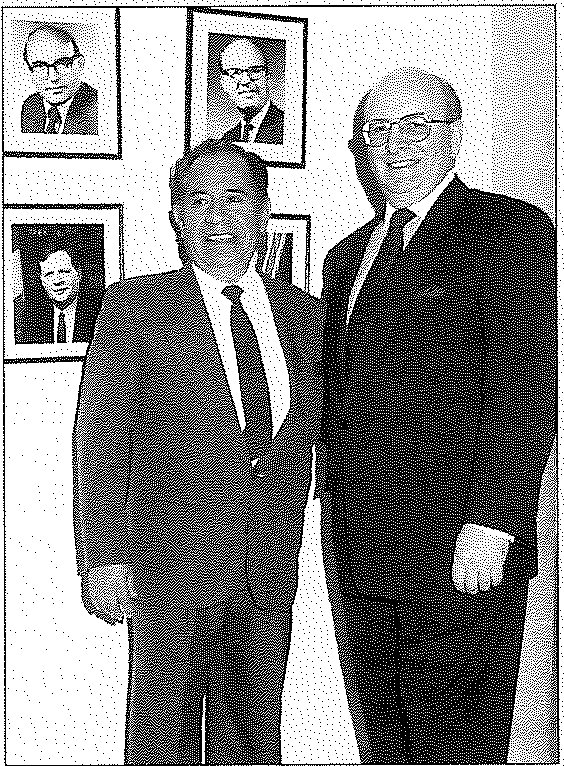
He had been hired in 1945 at eighteen. Hugh Keenleyside was the ambassador then, and Guillermo’s father was his driver. For the next few years until he succeeded his father in 1949, he functioned as the Embassy’s office boy and odd job man. One such odd job in those early years was to travel up to Oshawa to collect a truck which Canada was donating to the Mexican Red Cross — a considerable responsibility, one would imagine, for a lad still in his teens.
Guillermo was — and is — a cultured man, deeply interested in his Aztec heritage. When Jim Langley was the ambassador, and coming under the spell of Mesoamerican archaeology, Guillermo would sacrifice the occasional weekend to accompany him on digs at Teotihuacan. With the reserved demeanour and the white gloves that betrayed both his origins and contemporary sensibilities, he excavated among the relics of his ancestors.
He spoke serviceable English but reserved it for visitors; he insisted — to their benefit — on using Spanish with his ambassadors. During the long hours of waiting which are the lot of a Head of Mission driver, he read widely and voraciously. Once when he knew that Gabriel García Márquez, who was then living in Mexico, would be coming to a reception, he brought along one of his books and was pleased when my wife was able to have it autographed for him.
In 1989, after 40 years behind the wheel, he moved to an indoor job as supervisor of the younger drivers, a post he retained until his retirement. By then the honorific “Don” had been conferred on him by his Embassy colleagues as a mark of their respect. Five of his six children had completed university degrees. His retirement party was attended by the entire Embassy and his fifty-year service certificate was signed by the Prime Minister.
Don Guillermo used to keep a notebook in the car in which he wrote things down in a neat hand. It never seemed seemly to ask what he was recording. But if now, in well earned retirement, he is working on “Ambassadors I Have Known: From Keenleyside to Chrétien and Beyond”, bout will have no choice about reviewing it.
View the original scanned pages →
Originally published in bout de papier, Vol. 13, No. 3 (1996) — Fall 1996 // Automne 1996, p. 34. Read the rest of this issue →



