
bout de papier, Vol. 21, No. 1 (2004) — Fall/Winter 2004 // Automne/Hiver 2004, pp. 15–30
ANDREW COHEN’S BOOK, While Canada Slept, How We Lost Our Place in the World, published in 2003 to considerable critical acclaim, argues that Canada’s standing in the world is in steep decline and that we must take steps to recover the position we once had, if we are to retain our national self-respect and the respect of others. Dissenters from this view include two Canadian ambassadors, one retired, one active. John Noble, formerly ambassador to Greece and Switzerland, and at present Director of Research and Communication at the Centre for Trade Policy and Law at Carleton University, reviewed the book in critical terms in the October 2003 issue of Policy Options. Christopher Alexander, currently Ambassador to Afghanistan, stated his objections in his speech accepting an award for professional excellence at the annual Professional Association of Foreign Service Officers (PASO) Awards dinner on June 12, 2003. Then V. Peter Harder, Deputy Minister of Foreign Affairs, addressed the issues during his speech to the Retired Heads of Mission Association in Ottawa on March 17, 2004.
Andrew Cohen issued a vigorous reply to Noble and Alexander, as well as taking some side-shots at Lloyd Axworthy and Peter Harder, in his speech to a PAFSO Professional Committee breakfast seminar on April 15, 2004. To present these four pieces together, we have had to edit for length for reasons of space.
Overestimating Canada’s Decline in the World, October 2003 — John J. Noble
ANDREW COHEN’S BOOK CLAIMS that Canada has abandoned its spirited internationalism with a less broad vision, a much-weakened military and a less generous attitude as an aid donor, and is less effective in its diplomacy. He notes that some of the realities of spending on defence, aid and diplomacy don’t square with the mythical images of Canada as a peacekeeper, major aid donor, trader and diplomat. He asks “Can we expect to sit at the global table by virtue of our economic power without pursuing a foreign policy worthy of our history, geography and diversity?”
Many of Cohen’s criticisms are correct, including the many which he echoes from discontented members, past or present, of the military and foreign service. But his basic criticism that Canada has lost its place in the world doesn’t stand up to serious scrutiny, nor does the allegation that everything that has taken place has been done in a deep slumber.
Cohen also makes a major mistake in assuming that the problems he identifies can be corrected simply by the addition of new financial resources in all three sectors. Faced with a choice between a declining health care system and more expenditure on aid, military and the foreign service, what would most Canadians choose? He fails to show how a beefed-up military will have much of a role to play in the fight against the new threat of international terrorism, where Canada’s best contribution might be to help keep terrorists from reaching our shores or from entering the United States via Canada, a task which is totally outside the purview of the Canadian military.
Cohen looks back to the Golden Age of Canadian diplomacy through the prism of three of its strongest figures: Lester Pearson (known mainly because of his time as foreign minister, when he won the Nobel Prize, and then as prime minister, when his main achievements were domestic), Hume Wrong and Norman Robertson (virtually unknown outside the public service), whom he idolizes for the idealism they embraced, the diplomacy they practiced and the standards they set. Cohen gives no credit to Pearson’s political bosses throughout this period, primarily Louis St-Laurent, who was first his minister and then his prime minister, as having been involved in any way in any of the successes.
The G7/G8 summit process, which started out in 1975 as an effort to deal with international economic co-operation in the light of the oil crisis, has become a year-round exercise involving the prime minister, his ministers of finance and foreign attairs and sometimes other ministers, and their officials to look at major political and economic issues. These are much more than photo opportunities in idyllic settings and involve Canadian diplomats on a daily basis.
Cohen acknowledges the important role which trade played in the careers of Wrong and Robertson, but then suggests that the fusion of the Department of External Affairs and the “trade” parts of the former Department of Industry, Trade and Commerce (and not just the Trade Commissioner Service as claimed by Cohen), was a mistake and has resulted in an overemphasis in Canada’s foreign policy on trade versus more traditional diplomatic pursuits. I think Cohen is dead wrong here and he has sided with some “traditional purists,” who do not see trade and economic interests as part of Canada’s diplomacy, when in fact they always have been, even during the so-called Golden Age.
The idea that our aid program is not part of foreign policy is equally wrong-headed as are Cohen’s pleas to untie Canadian aid to the detriment of Canadian business and farmers, but to also introduce a new type of conditionality by linking aid to human rights performance. The idea that Canada should concentrate its aid program in the 15 least developed countries that practice good governance is an oxymoron on several counts. Cohen rightly emphasizes the disgraceful decline in the level of our aid program as a percentage of GNP, which has taken us almost to the bottom of the OECD countries as a percentage of GNP, though not in actual dollar terms.
Cohen does admit that Canada and the world have both changed since the Golden Age, when Canada played an abnormally pre-eminent role. He also admits that the Waspish male-only Canada that Pearson, Wrong and Robertson epitomized has long since disappeared into a multicultural/multilingual society where communities in Canada with roots in almost every country on the planet are able to exercise political influence on Canadian foreign policy, some with more effect than others.
Cohen’s book focuses almost exclusively on relations with Washington (always the top priority) and London (a faded owner and one which has trouble deciding between its Atlantic and European vocations), to the detriment of all other relationships. Times have changed and many new actors have emerged.
Cohen briefly alludes to the national unity crisis which Canada faced from 1967 on, but doesn’t fully develop the extent to which this has impacted on Canadian aid, foreign policy and diplomatic practice in the 35-year period since then. National unity issues took up tremendous foreign policy and aid resources and by and large can be called a success. Francophone summits in which the premiers of Quebec and New Brunswick can participate alongside the prime minister of Canada are a reality today.
Cohen unfairly accuses Jean Chrétien of being the most parochial PM since the first part of Mackenzie King’s term of office. Despite having presided over the decline in our military spending after the hiccup of increased spending by Mulroney, as well as the decline in our aid budget, started under Mulroney, Chrétien has continued to play an active role on the world stage in the various international organizations of which Canada is a member. Canada easily won its bid for another term on the UN Security Council; Chrétien kept troops in Bosnia and participated in the Kosovo War without a UN Security Council mandate, and he pushed forward two of the most innovative diplomatic initiatives taken anywhere (the Ottawa Convention on Anti-Personnel Land Mines and the International Criminal Court). Chrétien’s success at deficit reduction was the envy of the G8 and it gave him enhanced credibility to speak on economic issues at those summits and elsewhere. He supported the FTAA and APEC initiatives and proposed an FTA between NAFTA and the EU. His environmental policies were weaker than Mulroney’s and his eventual support for Kyoto was more a means of differentiating himself from President Bush than a real commitment to emissions reductions, where the Americans may yet beat us to the punch.
In the Chrétien years the British became so weary of Canadian activism that they called Canadian demarches “ABC initiatives” (“Another Bloody Canadian initiative”) and the French were impressed at Canada’s successes in the land mine and criminal court debates. Chrétien failed to get US participation in either of these agreements and failed to get US agreement to his initiative to stop the massacres in the Great Lakes region of Africa. It was US opposition and not, as claimed by Cohen, the lack of long-range military transport, which killed this initiative.
Cohen is right to point out some shortfalls in our military, aid and diplomatic practices. However, he is just plain wrong and overly romantic to say that the overall picture represents a serious decline in our diplomatic influence from the Golden Age, when even he admits everything was not as golden as some old fogies like to think. All in all Cohen’s book is worth a read and identifies some areas where more political direction, policies, and more financial resources are needed for Canada to be able to play a more effective role in the world. However, Cohen overestimates the extent of our relative decline in the world and rather than worrying too much about that, he should perhaps have concentrated more on policy options about what we could do to be more effective in promoting and protecting our vital interests. Where he does venture forth — suggesting a new Third Option and diversification from our economic dependence on the US – he turns his back on 40 years of history and dreams of a world and options which don’t exist.
Extract from acceptance speech at the PAFSO Awards Dinner, June 12, 2003 — Christopher Alexander
ANDREW COHEN’S BOOK — While Canada Slept — argues that our diplomacy, development and defence have been one long, slow rout since Pearson, that only our success as traders has saved us from international irrelevance.
My question is, “Where has Andrew Cohen been?” He is lucid on two-dimensional facts and figures tracking Canadian engagement abroad. But his book leaves the agenda of the past two decades — which Canada addressed in leading roles — quite literally missing in action.
There is little or nothing here on the G7 and G8. The transtormations of Central and Eastern Europe and of Russia and Ukraine are glided over in silence. The expanding diplomacy of the IMF on finance and of the World Bank and UN system on development are absent. The Balkans get short shrift. The theory and practice of the right to protect is glossed over and failed states and the new regional contlicts undersola. Strategic stability and the NPT are omitted, environmental diplomacy skipped. China’s economic story is left out altogether. Terrorism is low-bridged.
These are not minor deficiencies. By leaving out the core of the global agenda over the past two decades, Cohen has excluded the bulk of Canada’s international effort from his selective reckoning.
Yes, most of us in this room would advocate with Cohen an enlarged Canadian commitment to defence and development. But it is difficult to argue that our footprint on the international stage has diminished over the past 40 years.
In fact, it has grown immeasurably.
Wrong, Pearson and Robertson presided over a Department of External Atfairs that began the Second World War with a handful of posts and ended it with not very many more. The wartime and post-war stars in this firmament – Massey in London, Ritchie in Bonn, Ignatieff in Belgrade and later New York, Ford in Moscow – shone because they were articulate, well-read and handpicked. They could and did operate on the basis of personal rapport within tight circles.
But the instruments at their disposal were extremely limited. The impressive military force Canada fielded from 1940 until well into the 1960s was largely tributary to allied strategic command in whose councils our voice was, at best, subdued. Our diplomatic capacity — while highly conspicuous at the top – was thin in terms of both territory and issues covered, with much greater weight given to views from London and Washington as a consequence. We had little independent capacity to generate and assess intelligence. Our international information and media presence was negligible. Our foreign language capabilities were spotty. Unlike the US and UK, we had little to deploy in the way of technical and reconstruction capacity.
Let’s be realistic: as Pearson cajoled his audience in San Francisco and Escott Reid harangued the allies in Washington
– both unquestionably “present at the creation” — External in Ottawa remained in the care of a handtul of officers and even fewer support staff who lacked a textured, real-time view of events on the ground in Europe and around the world.
We were a mid-size player using scant resources exceptionally well.
In their extent and complexity our international capabilities have today grown out of all proportion to what we enjoyed in the post-war Golden Era. One has only to count the posts, and to consider what each is doing.
So why has there been such an outcry and public debate of late — crystallized in Cohen’s book — over a perceived diminishment in Canada’s role and prestige?
The answer lies in the realm of the economy. If Canada is today a successful trading nation, this is mainly due to our unprecedented integration with the US. We are arguably now more dependent on trade with our southern neighbour than at any time since Samuel de Champlain founded Quebec in 1608.
This connection imposes certain considerations upon us.
But it also follows that most of the opportunities for Canada to enlarge its economic reach and international standing now lie elsewhere in the world – beyond this North American island we co-occupy with a great nation.
Andrew Cohen opens his book by comparing Canada’s international relations to a Potemkin village. Apart from building model communities on the Dniepr, Catherine the Great’s favourite ensconced Russian sea power on the Black Sea at Sevastopol and founded what was to become the fastest-growing city in Europe in the nineteenth century – Odessa. Each anchored Russia’s assaults on the Ottoman Empire in the Transcaucasus and the Balkans, and sealed her emergence as a great power.
To the extent Canada’s Potemkins are now expanding our global reach in the twenty-first century, Cohen may yet be proven prescient.
The project of building Canada’s international presence is not yet complete. It is useful to have creation myths as compelling as those rooted in the McLaren cemetery in Wakefield. But today’s challenges are to manage a large and multi-faceted organization; to compile and integrate vast amounts of information and commentary; to obtain views from outside the usual ambit of diplomatic work — from financial and commodity markets, from NGOs and civil society, and from conflict or pre-conflict zones, where the barriers of language, religion and ethnicity cannot be permitted to detain us from or blind us to emerging realities.
“While Cohen Slept” — Canadian Diplomacy in the 21st Century — V. Peter Harder
Setting the Scene
I HOPE TO SAY a few interesting things today about changes in Canada and the world that are forcing changes in the way we manage our international relations. But first, I would like to describe three factors that intorm everything we do.
In a very real sense, the public policy consensus in Canada has changed from the one of only 10 years ago, and everything that we do, and I mean everything, is refracted through these three lenses.
First, fiscal responsibility. We spent some very rough years eliminating the deficit, and no government wants to ever again go into the red. That means that some very good ideas will not get funded. It means that new initiatives, particularly for Foreign Affairs with its low levels of discretionary funds, require the financial as well as the policy support of other departments in Ottawa. And it means we are going to be in a constant financial reallocation exercise, challenged to free up funds to meet new and more urgent priorities at the expense of existing or planned expenditures.
Second, economic space is greater than political space. Our economy is thoroughly globalized, but our political concerns are focused on relatively fewer areas than ever before. I don’t mean to in any way diminish the stakes in Afghanistan or the Middle East or the former Soviet Union; but I think compared to the old East-West division of the world, the space where vital political issues are at stake is undoubtedly smaller.
Third, it is all about the knowledge society. The free movement of goods, service, labour and capital, while not absolute, is still freer than anything we have seen before. Government increasingly sees itself as being in the “knowledge” business, not simply through education funding, but in so many other areas as well. To a remarkable extent, we are out of “bricks and mortar” and very much into ways to best support Canada’s impressive achievements in the new knowledge-based sectors.
With this as prologue, let me start by mentioning two recent events that, I have to admit, took me quite by surprise.
The first was the publication last year of Andrew Cohen’s stimulating examination of what he sees as the decline of Canadian influence in the world and the role that the decline in our foreign service has played in this slide. As many of you know, the book has been very well received, and has stimulated many citizens and commentators to think more deeply about where we are headed as a country, and whether there are things we can do to improve our prospects.
The second was a comment last month by Allan Gregg, the noted polister and political commentator. Speaking on TV, Mr. Gregg said that the three big themes for the next federal election would be: increasing income differentials, or “do I belong to this club;” declining social services, or “is this club worth belonging to,” and the decline of Canadian influence in the world, or “what do others think about this club.”
I find this interesting. I am certainly pleased that people are concerned about Canada’s place in the world – so concerned that it may even be a major electoral theme. It’s good to know that people care.
And yet, they are also concerned that we are in decline, that we count for less on the world stage. And this cannot be a source of comfort to any of us who care about this country.
Are they right?
A number of responses to Andrew Cohen’s book, in particular, have been quite dismissive. Of course Canada had greater influence in the world 50 years ago. Europe was in tatters, and there were scarcely more than 50 countries in the United Nations. It was both a smaller pond and a very different one, and so any efforts to compare the two are simply un-historical.
I think this is far too easy, I know there is more than a hint of nostalgia in the Cohen book, and this is like red meat to the hard-nosed realists among us. But there are also some very acute observations of what we have done to ourselves, quite separate from changes in the world. Of course, we can always argue that many of these decisions were necessary, even desirable, but there is no escaping the charge that many of the things that we did, that are seen to have weakened Canadian influence and the foreign service, were our decisions alone.
Decline: It’s an Impressive Club
Today, I want to take the Cohen thesis and the Gregg perception seriously. and ask…
Are we in decline? If we are in decline, should we be worried? If we should be worried, what can we do about it?
Has Canada’s place in the world declined? Of course it has. Of course, it hasn’t.
On the one hand, on the other. Yes and No. Here we go again, you must all be thinking.
In truth, there is no simple answer to the question.
Seen historically, as I mentioned earlier, there can be no doubt we have declined. After WWII we had, I believe, the third largest merchant fleet in the world. We sold it off virtually for scrap metal value and made people like Aristotle Onassis fabulously rich in the process.
I once heard a story, which I have not been able to verify, that after WWII, the Canadian Defence Liaison Staff in our High Commission in London maintained its own airplane!
We had money, and we had weight.
But things changed, with the rebuilding of Europe, with decolonisation, with the rise of Asia, and with all the other developments that shifted relative political and economic weights over the last 50 years.
We have declined, at least measured in terms of our ability to influence international events. But here’s the surprising thing: the influence of almost every other country that was important after the war has declined as well.
Think of Europe. Does anyone believe, if we were designing a United Nations Security Council from scratch today, that both Britain and France would have permanent seats? Perhaps one for the European Union, but two permanent seats for Western Europe? All the countries of the European Union see their further integration as a necessary step to maintaining any substantial influence at all over international developments. On their own, almost every one is weaker than before, and so they bind themselves together, in part, as a way of retaining some purchase on power.
Think of Russia, compared to its influence at the heart of the Soviet Union and Empire.
Think, and this is most radical, of the United States. We are so used to talking of its enormous power, its hyperpower as the French call it, that we forget how much it too is buffeted by events beyond even its control. People talk of the enormous American economy, and how it dominates the globe. Well, yes and no. Compare today’s influence on the global economy with the time when we had a system of exchange rates fixed to the US dollar backed by gold. Seems like an eternity ago. Think of the US today facing threats against its own sovereign territory, launched from countries like Afghanistan or Yemen or Somalia, and compare that to the US of 40 or 50 years ago. Having to fight, according to its own calculations, two wars in two years in an effort to counter threats and reassert influence. I know there was the Soviet menace, but that was manageable because of American leadership and influence in Europe and elsewhere. Today, despite all its power, the USA and the rest of us face real and lethal threats, and our capacity to influence the launching pads for these threats is much more limited than we would like.
In other words, from one perspective at least, most of us are in decline.
Decline or Liberalisation
But there is another way to look at the decline. Not as something “done to us” by changes in the world, but rather as something we did to ourselves, as a matter of explicit national policy. I am thinking here of the ways that all Western Governments, with Canada in the forefront among them, made decisions to reduce the role of government, both at home and abroad.
Internationally, I am thinking of decisions like international trade agreements, or air deregulation agreements, or financial services agreements and investment agreements. I am thinking of the wide range of instruments that have freed the private sector from constraints of various kinds, freed it to operate very differently from the way it did 40 or 50 years ago. I am thinking of telecommunications agreements that allowed corporations and individuals to maximise the benefits of the new technologies. I am also thinking of technical agreements like the Great Lakes Water Quality Agreement that established bilateral, independent advisory boards.
All of these instruments have one element in common: they are all designed to insulate important international activities against interference by governments. Bit by bit, agreement by agreement, we have freed up so many international transactions from the direct control of government. The cumulative effect has been enormous.
We use language like “the Canada- USA relationship” as a kind of shorthand to describe the things we do across the border. But we shouldn’t fool ourselves. The vast majority of that relationship, the overwhelming number of transactions across the border, take place with no reference to government at all. And we can say the same for our relationships with all the developed and many of the developing countries of the world.
Andrew Cohen calls his book: “While Canada Slept.” In truth, Canadian governments, like governments around the world, have been far from asleep. They have been busy negotiating new rules of the road that make the world today vastly different than the world of 40 or 50 years ago, rules of the road that deliberately limited the capacity of governments to influence international affairs of all kinds.
Globalisation didn’t just happen by itself; it was made possible by the combination of enormous technological advances and new rules to allow for much freer international trade and finance, including in many countries that 40 years ago either didn’t exist or were locked, like the Soviet Union and its satellites, into closed economic systems.
We have seen a parallel development domestically as well. When we think back only a few years, we remember a national airline, a national railway, an unchallenged national broadcasting system.
Parties used to run for office promising job creation, and they could deliver to some extent because governments controlled such a large portion of the economy. How things have changed, though our political rhetoric may not have kept up all that well.
Canada: More than Just Government
The fact is, governments today exert influence over narrower spheres of international and domestic life than ever before in our history. Is this decline? Have we as a nation declined, measured in terms of our prosperity, our freedom, our cultural and scientific achievement?
Canadians today are probably more influential around the world than ever — in business, in the arts, in development assistance, in NGO’s and communications. We have seen an extraordinary blossoming of Canadian innovation and talent in the last two decades, and Canadians — even if occasionally mistaken for Americans-are recognised around the world. Seen from abroad, the great success story in Canada is the ways we have welcomed people from all over the world into a dynamic, thring society. Governments play a role, but private Canadians have, in their schools, their businesses, their clubs and churches and neighbourhood groups carried the load. We often take this for granted, but experts from around the world are coming here to see how we are doing it. Think of the challenges we are and will continue to face in the world, and the message that very diverse people can live together in harmony is extraordinarily positive and hopeful.
When people say Canada has lost influence in the world, they are often thinking along very traditional lines of state-to-state relations, and have missed the dramatic changes in the world and in Canada that Canadians have capitalised on so effectively. By that measure, Canada – the people as well as the government – has a lot more influence and impact than our critics give us credit for.
The Stuff Left Behind
With that as background, what is left for governments to do? Leaving aside proper management of programs, and similar tasks, what is left is surprisingly interesting. It is interesting because it is often complex and difficult. One could almost say the private sector ran off with the easy stuff, and left governments holding a bagful of nasties.
Consider international security. The Cold War had its terrifying moments, but we also established some pretty clear “rules of engagement” that provided a centre of gravity, a stability to East-West competition. Since the fall of communism, Canadian soldiers have been deployed into live war zones in the Gulf, in Kosovo and Afghanistan. They have been involved in difficult and dangerous peace enforcement missions in the Balkans and Haiti. We have witnessed genocide in Rwanda and a slaughter in the Democratic Republic of the Congo that defies belief.
I won’t recite the new terrorist threats we face, since you know them well, but I will say that efforts to address the terrorist threat are going to involve more complex and risky undertakings than just about anything we have seen in the last 50 years. I don’t mean just military counter-measures: I mean efforts to address the legitimate needs of the societies that are producing so many of the terrorists.
We are only beginning to face up to the conflict between traditional notions of sovereignty and the increasing demand to become involved – somehow – in transforming entire societies. Rogue states, failing states, failed states.
The Canadian-sponsored “International Commission on Intervention and State Sovereignty” is a bold contribution in the realm of new ideas for these times. Its articulation of the responsibility of states in protecting their citizens and in the event of their unwillingness or inability to fulfill this obligation of state sovereignty, the report argues for a multilateral obligation to protect.
We are a long way from International Relations 101 of just a few decades ago.
Economically, we also have some tough challenges ahead. Admirable talk about the need to preserve the global commons is coming home — climate change, overfishing, public health, weaponisation of space to name just a few notables. On trade policy, the stalled Doha round suggest to some of the more pessimistic among us that the era of global trade agreements may be reaching its end, unless we can find innovative ways to narrow the gap between developed and developing countries in areas such as agriculture.
Despite our free trade agreements, disputes persist, and they can be real doozies; softwood lumber has been going on long enough to grow entire new forests! Even the relatively straightforward tasks many of you are familiar with are changing rapidly. Old style trade promotion is on the way out. We are not only looking at how best to attract foreign investment, and the science and technology that comes with it, but also how we can support Canadian investment, science and innovation abroad.
We used to talk of technology transfer as something developed countries did for the developing world; now, it is a cutthroat competition among developed countries.
The domain of the government’s international operations has been narrowed in one sense but, at the same time, what is left to do is often new, uncharted, complex and uncertain of public support.
Globalisation: Interdependence on Steroids
However we choose to conduct our international affairs, one thing is abundantly clear; the old ways of organising ourselves will not be up to the tasks. Which leads naturally to the question: are we ready? With a supplementary: if we are not, how do we get ready? And at least one more: can we do it?
Let me start by listing four major consequences of globalisation for how we manage our international affairs and, by extension, our foreign ministry. I’ll be brief.
First, globalisation brings both greater vulnerability and greater unpredictability. International events can affect nations with unprecedented speed, and increasingly it seems we rarely know from where the next hit is coming.
Second, in international affairs, many of the issues that matter the most to a country are quite distant from the traditional concerns of a foreign ministry, raising the question in some minds whether we need professional diplomats at all or, at the very least, whether we can train a cadre of professionals to discharge their new tasks effectively.
Third, we have seen a sharp increase in the number and power of non-state actors in the international arena, and their capacity to affect national politics and policies can be dramatic. I am thinking here of examples such as NGO’s, multinationals, and global media outlets.
Fourth, traditional diplomatic structures are less relevant than before, and the downward trend will only accelerate. It is arguable that summits now drive issues more than any other single feature of international life. Leaders and their offices are in constant contact with each other. Specialised ministries are in constant contact with their counterparts around the world.
Does Foreign Affairs Get It?
When we look at these changes, we can rattle off a list of desirable qualities that we need today to promote and protect Canada’s interests abroad. Qualities such as flexibility and adaptability, not just of individuals but also of institutions that have to rearrange themselves to meet new challenges. Greater openness to new international actors, including a readiness to see them as an important element in both the development of policy and the delivery of programs. Greater creativity, and less reliance on traditional structures: think here of Royce Frith lining up British fishermen to support us in the fish wars with Europe. Greater integration with domestic policy makers, and greater tamiliarity with the people and issues that drive the domestic agenda.
This kind of talk has been around for years, but it grows more intense every day. Foreign Affairs has made some moves in the right direction, but it is a competitive bureaucratic environment out there, and I can tell you we are seen as not having done nearly enough.
Some of this criticism is unfair, but some of it is spot on. It is arguable that many domestic departments in Ottawa grasped the organisational and policy implications of globalisation far more quickly than our own Foreign Ministry, which has been talking about globalisation and delivering policy papers and speeches on it for years, but has actually done remarkably little to adjust itself to the new demands.
There is no point in rehashing old battles, just as there is little to be gained by lamenting years of budget cuts. In my meetings with my counterparts from other countries, I am struck by the similarity of our situations. We can look backward and feel sorry for ourselves, or we can move forward. It’s actually a false choice, since there is only one option, and this government has made it abundantly clear that it wants a better integrated, more active Canadian presence abroad.
Does Anyone Else?
We have our marching orders, and so let me mention a few of the markers we have already set down.
It is clear we have to be better integrated with the domestic agenda since, as our speeches keep saying, so much of our domestic agenda is intimately bound up with developments beyond our borders. But there is an integration problem on the domestic side as well. Many domestic departments have set up their own elaborate international secretariats to look after the international side of their mandate. This is fine as far as it goes, but it has at least three shortcomings:
• first, it often makes it hard for our people to penetrate to the policymaking level in those departments and bring their international expertise to bear when policy is being formulated;
• secona, it often sows confusion abroad as different Canadian messengers carry different Canadian messages;
• and, third, it ignores another important feature of globalization, one that, if we continue to ignore it, will cost us considerably in the future. I I refer here to the way in which globalisation has broken down barriers that used to exist between domestic policy areas. It is old hat to say that fisheries management is international as well as domestic. Departments proud of their international expertise are singing yesterday’s tune. One example: our approach on international fisheries issues atfects our environment; it affects our social policies in coastal areas and, hence, our fiscal policies; it affects our provincial governments and their programs and policies; it affects our trade policies and the way in which we allocate our military and security budgets. Measures to address one problem could create havoc in another area. We can go on and on. Is Kyoto just an environmental issue? Is SARS just a public health issue? Is the fight against terrorism in Canada just a homeland security issue?
The Government Wants Results
The government has made it clear that the old way of doing business is not good enough, and I think that is exactly the message we need. It has instructed Foreign Affairs to lead a major review of Canada’s international policy, and has explicitly told us to integrate our foreign policy development and international security policies into the broader review. It’s a tall order, but we are off to a good start. We have said, from the beginning, that we are not looking to carve out international affairs for ourselves in some counter-productive and stupid turt war. Instead, we are trying to work with other Departments and Agencies to an unprecedented degree to pull together all the strands of the Government’s international activities, and to develop coherent intellectual and organisational structures for promoting our international interests.
Ministers and Deputies are meeting regularly to discuss the review and, so far, the co-operation has been excellent. I cannot go into details, but I can tell you that we are being guided by one, overarching theme: to succeed in the world of the 21st Century, Canada will need a “whole of government, whole of Canada” approach to promoting and protecting its interests in the world.
Easy to say, but hard to do.
Whole of government means more, much more, than simply co-ordinating different perspectives on a problem. It means getting the best available people on any given issue to work together towards common purpose. It means sharing the lead on issues, and sharing the credit — and blame. It means breaking down rigid bureaucratic mandates that are often obsolete and developing flexible structures that encourage creativity and innovation.
Whole of Canada means working more creatively with the provinces and Parliamentarians. It means engaging private Canadians more successfully in promoting the interests of this country abroad. Trans-border industry associations can do a lot to keep markets open for Canadian goods and services, and can help us attract foreign investors to this country. Canadian companies can help set standards for responsible corporate behaviour in the developing world. Our artists abroad are showing the world that Canada is a dynamic, multicultural creative society, a country worth knowing better.
Can the Foreign Service Help Deliver Them?
Is there still room for a professional foreign service in this rosy picture? I believe so, and I will fight for it, but we have to change some of our habits.
We have to connect better to the “drivers” of the domestic agenda, not just the issues but also the people.
We have to open ourselves to much greater interchange with other departments. I would like to see us develop better ties with the provinces, with universities and with the private sector, including through personnel exchanges. I know there are some programs in place to do just this, but they are small and far from central in our thinking and planning.
Most of all, we have to decide on what core competencies we want to bring to the policy table.
It’s the World, Stupid
I I think it’s pretty clear: our comparative advantage has to be our international expertise and experience. I say “experience” very deliberately. Living abroad, speaking their languages, getting to know people, what moves them, what excites them, frightens them, motivates them. Getting to know the local politics, the domestic “drivers” in other countries.
This is not the same as meeting your technical counterparts in Geneva and then flying back to your home in Ottawa. Think of the controversy surrounding the Multilateral Agreement on Investment a few years back. Experts had negotiated an agreement that they all thought was forward-looking and useful, and then were astonished when publics in Canada and many other countries were outraged at what saw — rightly or wrongly, it doesn’t matter — as ceding all possible government controls over to reign investment. Many a technocrat was left fuming about “politics, bloody politics”. Yeah, right. They didn’t do their public policy homework.
We have to try to get inside the thinking of other countries, and we can only do that through first-hand experience. You can memorise a book of IMF statistics, but that is not going to tell you everything you need to know before advising a potential Canadian investor on where best to place his planned investment in South Asia. You can read a dozen books on Nigeria, or Thailand, or Britain, but they are not going to give you the “feel” for place and people that you need to make informed judgements. We have to be “out there”, living abroad and bringing that unique experience to bear in the deliberations of the Government.
And the People Who Are At Home in the World
There is an added benefit: moving to different countries, settling in quickly, developing contacts, filtering information — these are much tougher to do than most people realise, and the ones who do it well are invariably adaptable people with open minds, natural curiosity, and a capacity to assimilate and integrate information very quickly. Sounds like a useful skill set for Governments dealing with public policy issues in the age of globalisation!
I believe a professional foreign service will be critical to Canada’s future. I believe our experience and the skills we develop in the course of a rotational career are invaluable assets for the Government. I believe we should have more people abroad than we do now, and that our ratio of people abroad to people at Headquarters is badly out of alignment and in need of urgent attention.
But, as they like to say, talk is cheap. Can we “walk the walk?” This is exactly what we are trying to figure out. How do we staff our missions abroad to make sure we are getting the right people doing useful work for Canada? develop policy mechanisms in Ottawa to ensure that foreign service personnel work effectively with personnel in other departments and bring their international experience to bear as we develop policies for the 21st Century? How do we open up the foreign service to new people, new ideas, without losing the very qualities of mind and habit that make us unique?
These are the issues that most engage us at the moment. A stimulating, intelligent, credible foreign policy review is difficult enough to deliver. A review that actually changes behaviour in Ottawa, that actually produces better policy-making capabilities, that actually delivers better policies that serve the “whole of government” and the “whole of Canada” — that would be really something.
And finally, the review must pass the tests that I mentioned at the beginning — living with fiscal responsibility, properly calibrating our economic and political space, and, finally, helping to build the knowledge society — on these points at least there is no choice; we do it or we disappear.
I think it can be done, and I believe deeply that a professional foreign service is a critical element in getting there.
Remarks to PAFSO’s Professional Committee Breakfast Seminar, April 15, 2004 — Andrew Cohen
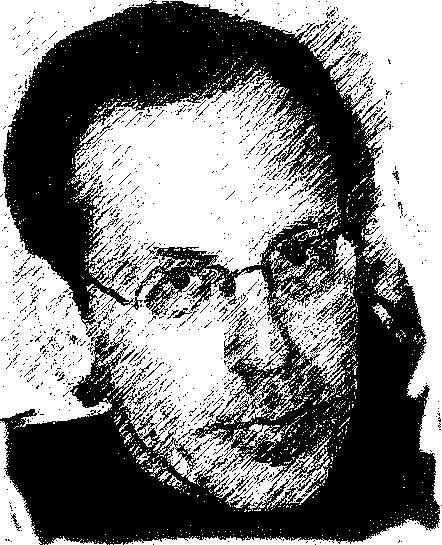
“Is Canada Awakening? While Canada Slept, A Year Later”
IT IS A PLEASURE TO BE AT the Department of Foreign Affairs today. I mean that. In the last year or so, since the publication of While Canada Slept, How We Lost Our Place in the World, the Department has offered me an opportunity more than once to discuss my book. At its generous invitation, I have spoken not only here, in the Lester B. Pearson Building, but in the United States and Europe. What it says to me is that the Department is open to hearing other voices — like that of the esteemed scholar, Michael Ignatieff, who gave the annual O.D. Skelton Lecture here last month — and is unafraid of a vigorous discussion, a good and necessary thing.
For this I salute Peter Harder, the deputy minister. In fact, he’s so interested in generating a discussion that he gave a speech last month entitled “While Cohen Slept.” Actually, I’m awake, and I’m flattered.
The Professional Association of Foreign Service Officers, which has organized today’s breakfast, has long been a forum of debate. It was enormously helpful to me in researching my book; I am particularly grateful to Debra Hulley and Ron Cochrane, as well as Daryl Copeland, John Kneale and other officers of the Department who for years have thought boldly about our foreign relations.
Why I am here this morning? It isn’t to explain the thesis of my book, which is that Canada isn’t the nation it was in the world nor the nation it can be in the world; that we no longer punch above our weight and indeed we barely carry it; that we have a yawning gap between our resources and rhetoric; that we live, as Canadians, in a kind of Potemkin Village, riding on our reputation of two generations ago, labouring under a mythology of Canada as peacekeeper, warrior, diplomat and social worker to the world.
You cannot write a book like this one without attracting criticism, and I did. Fine. I welcome it; doing what I could to provoke a conversation we have not had was the point of the exercise. I was, I should add, well treated by critics, whose kind words on the front cover are now helping publicize the second edition. For some critics, it was I who was asleep, not Canada; I who had missed or belittled our achievements in the world; I who erroneously measured them in quantitative rather than qualitative terms; I — and this really hurt — who was a nostalgist, living in the sepia-coloured world of the 1940s, clad in Persian lamb coat and driving an open roadster, living in a lapsed world of Formosa, Indochina, Ceylon and the Levant, thinking of the art deco skyscraper and that new invention called cellophane, and mired, oh so mired, in that illusory Golden Age of Canadian Diplomacy, which, as Ambassador Tom Delworth once told me sotto voce: “You know, it never really was.”
In other words, my dear Cohen, Wrong, Robertson and Pearson were perfectly nice chaps, but really now, aren’t you making of the past than it was, and less of the present than it is?
The criticism, you should know, didn’t come from politicians, from whom, actually, I received support. Members of the cabinet and the government caucus, as well as the opposition, had things to say. So did Brian Mulroney, even though he concentrated on what I said about Mr. Chrétien and not him. There was no criticism from the military, where I heard from current and retired officers, or the NGO community, or from my colleagues of journalism. Nor did much come from the Ivory Tower, though there was one famous historian. Come, come, he scolded, people like you ought to leave the study of history to people like me — which, no doubt, he’d get around to in about 25 years. I found that kind of condescension typical of the academic community, which has always resented journalists encroaching upon their territory. They never had much nice to say about populist historians such as Pierre Burton and Peter Newman.
Truth be told, the criticism of my book – such as it is — has come largely from this Department, or former members of this Department, and from its former minister.
Consider, for example, the view of John J. Noble, who served here for 35 years. Mr. Noble doesn’t like the thesis of my book. He thinks that the argument that Canada has lost its place in the world doesn’t stand up to “serious scrutiny” by which, of course, he means his own scrutiny.
Mr. Noble says that I assume the problems in our foreign affairs can be corrected “simply by the addition of financial resources in three sectors.” I don’t assume that. He says that faced with a choice between “a declining health care system” and spending more money on defense, diplomacy and development, what does he think Canadians will choose? But I don’t say they should choose one or the other. I say that it will take a return to the principles that once guided us, a sense of what we want to be in the world. Then, yes, we will have to make choices, but they won’t necessarily be between health care and foreign policy.
Mr. Noble says I give no credit to Louis St. Laurent for Mr. Pearson’s success in the world, when in fact I cite Mr. St. Laurent’s seminal address at the University of Toronto in 1947 which gave intellectual ballast to the Golden Age. I aiso applaud St. Laurent for supporting Pearson, belatedly, in bringing Canada into the Colombo Plan in 1950.
Mr. Noble says that I don’t think trade and economic interests are a part of Canada’s diplomacy, when, in fact, I devote a chapter to trade and argue that our commerce too often trumps our conscience. Then again, human rights seem irrelevant to him.
In some cases, he doesn’t seem to be reading the same book. He says, most objectionably, that I say that aid isn’t part of our foreign policy, when I call for “a comprehensive review” of all the arms of our internationalism, one of which is aid. Interesting, as that is just what the Liberal government is now doing. I call as well for the creation of a Canada Corps, which, incidentally, the government is doing, by that very name. I’m not asking for a commission.
What is staggering is Mr. Noble’s Pollyannaish view of the world and Canada’s place in it. He takes a morsel of some of the things we have done and makes a meal of it. Among our achievements, says Mr. Noble, is that Quebec and New Brunswick sit at la francophonie and other international conferences beside the federal government, as if this were a great achievement. It isn’t.
He argues that Jean Chrétien really wasn’t that parochial, as I say, because, after all, Canada won a seat on the Security Council during his mandate. He seems to have forgotten that Canada has assumed that seat every ten years or so since 1949.
He says that we went to war in Kosovo, and that we should cheer that. Maybe, but he should know that our military contribution there was so feeble, largely because of our antiquated equipment, that the Americans told us to stay home next time. It’s in the post-war analysis.
Mr. Noble also says that eliminating the deficit gave Mr. Chrétien “enhanced credibility” to speak at the G8. Maybe, but he should also know that, in strictly economic terms, Canada would barely qualify for membership today.
In fact, and this is where it gets funny, Mr. Noble says so active are we in international councils that when Canada came around, the British and French used to complain of “another ABC — another bloody Canadian initiative.” Certainly, we played a central role in the anti-land mine treaty and a lesser role in creating the International Criminal Court, which I applaud, but the importance of both is overstated as long as major nations, such as the United States, have opted out.
I I have a suggestion for Mr. Noble; if he thinks we were so active in those international councils with so many ideas, let him talk to Stephen Lewis, who is now a special envoy to the Secretary General of the United Nations, and Kim Campbell, who chairs the Club of Madrid. Both have another view, and that’s of a word lamenting a Canada that doesn’t do nearly enough for its size and affluence.
The sadness of Mr. Noble’s argument
– which is why I have spent some time on it — is its aggressive complacency. It suggests that the elements of hard power — a real military, a real aid program, and a real diplomatic service — don’t matter much. He calls these “shortfalls in our military, aid and diplomatic practices,” as if they were accounting errors, counted in loose change, rather than in the currency of national sovereignty. The numbers speak for themselves. We are the bottom of spending in NATO. Our international assistance is half of what it was a generation ago. The foreign service of Mr. Noble has real problems — which I need not tell you — none of which he acknowledges. The sense here is that the past doesn’t much matter, that our vision doesn’t much matter, and that we are engaged as we always were. It is kind of quaint, this happy denial, a glorious myopia. Mr. Noble misses the point. It isn’t that Canada is irrelevant in the world, which I never, never argue. In fact, I say that we do more than 190 countries of the UN, and that we should publicize that. My point is that it isn’t enough. We don’t act like the world’s second largest country, its tenth or twelfth largest economy, which has fought in hard places, kept the peace, brokered and mediated. Our foreign policy doesn’t reflect our history, geography, diversity and prosperity. Perhaps Mr. Noble had an interest in building all this and cannot abide anyone questioning it. He lives in a Potemkin Canada, a village of shadow and illusion, of which he could well be Mayor. Still, he isn’t alone in his criticism. In June of 2003, on the night he was honoured by PAFSO for his exemplary service, Christopher Alexander offered a spirited, if extended, critique of my book. I like and respect Mr. Alexander, who is our Ambassador to Afghanistan, much as I think he’s wrong. We had an exchange of messages, via electronic mail, which was amicable and lively.
Mr. Alexander asks “Where has Cohen been? He is lucid on two-dimensional facts and figures tracking Canadian engagement abroad.” But, obviously pained, Mr. Alexander says leave out the agenda of the last two decades. “Missing in action,” he declares.
And what did I miss? Well, just about everything. Changes in the G7. The transformation of Central and Eastern Europe. The expanding diplomacy of the IMF. The World Bank. The UN. The Balkans. Terrorism. China’s economy. Environmental diplomacy.
In other words, I left out “the core of the global agenda over the past two decades,” and excluded “Canada’s international effort from his selective reckoning.” He says that it’s difficult to argue that our footprint on the international stage has diminished over the past forty years. “In fact, it has grown immeasurably.”
Difficult to argue? Grown immeasurably? Well, I wonder if we’re looking at the same world. Still, I can learn from Mr. Alexander. Perhaps he can tell me about the seminal roles we played in the G7, in the World Bank, at the UN, the Balkans, on China, on environmental diplomacy. I hope he will, and I hope he can, and when he does, I ask him to tell other Canadians, because they don’t know about them. And I suggest they don’t know them because yes, Canada did make a contribution in these areas, and yes, it fields more diplomats than it once did, but not everyone thought that contribution was as important as Mr. Alexander.
Heavens, to Mr. Alexander a list this long seems to compensate for a country that halved its aid (as a percentage of GNP), abandoned peacekeeping (under the UN), effectively disarmed itself, and let its foreign service come to the threshold of a strike. But really, things are fine.
He mentions, for example, the theory and practice of the right to protect. I mention that too, in my book. I salute our initiative. But let’s not exaggerate it. We presented the report to the UN and it shelved it after September 11. When it was dusted off, six months or nine months ago, Tony Blair and George Bush barely noticed. Certainly it’s a start. But if we really believed in it, why didn’t we use it more creatively and strategically, before the war in Iraq, persuading our reluctant allies at the UN that humanitarian intervention to unseat a genocidal regime was grounds for multilateral intervention? Did we make that argument?
Lloyd Axworthy, another critic, says the problem with my analysis is that “it paints by numbers.” I like Mr. Axworthy, and we have agreed to disagree here. But he would say that, wouldn’t he? The truth is that the numbers were so awful during his stewardship. I hasten to say that I don’t blame him; he says that he supported every single proposal for increased spending on the military. It was just that the arms of our foreign policy were being cut disproportionately and he had to live with it as minister. He did. His response was human security and soft power, which brought us the Land Mine Treaty, the International Criminal Court, and the Kyoto Accord. I praise them, with some reservations, and hoped that Mr. Axworthy would win the Noble Peace Prize for the Land Mine Treaty. At the same time, I am wary of building a foreign policy on that kind of approach, based on treaties countries can ignore or abandon.
I I am glad that Mr. Alexander thinks that we’ve grown “immeasurably,” and he should tell that to Paul Martin, who thinks that our growth is measurable, and perhaps it isn’t growth at all, but decline. Remember, Mr. Alexander, this is a prime minister who says that “we have punched above our weight in the past and can do so again,” who wants to return Canada to the world to reclaim a position of influence and pride. Does that sound like a man terribly proud of Canada’s stature today?
Mir. Harder, like Mr. Alexander, wonders where I have been. But if I read this right, he seems to be answering Mr. Alexander’s question. When Canada was out remaking the world, as Mr. Alexander suggests it was, Cohen was too busy chronicling Canada’s decline. I missed all the action.
Mr. Harder makes some sound points, and I cannot do them justice here. He argues, as all these critics argue, that we are doing fine things in the world, but many of them are not being done by national governments, so one is mistaken to concentrate on traditional measures. Provinces, states, cities, companies, churches, non-governmental organizations, individual Canadians are all active in the world, Mr. Harder says, and it is a mistake to think along the line of state-to-state relations. I cannot disagree.
He talks about so many important things, and he moves the debate forward, and tor that I applaud him. He asks, What kind of Foreign Service do we need? What kind of resources must we deploy? What kind of expertise can we bring into government? How do we renew our intellectual capacity?
One thing that unites the critics is that they reject a discussion of our internationalism based exclusively on the three “Ds”. This is too limited, they say, too confining, too restrictive. Some give it passing reference —— that is, yes, more resources would be nice but let’s not get too fussed about it. Sorry, I do. And saying that we do many things is not a rationale for what we demonstrably don’t do; that argument sounds to me like a comfortable complacency we already have too much of in this country and a reluctance to face realities.
I I think we need a real military in whatever we do, but particularly as “the good governance nation,” as Michael Ignatieff calls us, which is involved in policing, peacekeeping and nation-building. I think we need a fully-funded aid program, more focused and more accountable, I think we need to field the finest foreign service, which means recruiting and retaining the best, paying them well, and reconfiguring the foreign service, which need not be Lester Pearson’s foreign service. And whatever Mr. Alexander may say about our achievements, I don’t think you can be serious in the world without those three elements and dismissing or ignoring them because you don’t have them is simply too convenient.
The good news this spring is that we seem to be thinking with ambition and creativity again in the world. Mr. Martin talks of making Canada in the world one of his top priorities, a language we haven’t heard in a decade. He has initiated the review and we have intelligent people here in this building at work writing it. He talks of rebuilding the military and is moving modestly in that direction. He is ready to take a position of conscience, as he did in agreeing to meet the Dalai Lama.
So I think that we are moving on, and we should. We should talk of the future now, not the past. As I respect the work of John Noble and Lloyd Axworthy yesterday, I respect that done today by Chris Alexander and Peter Harder. I have no doubt they represent the best of public service, with an intelligence and vigour no less than that of Hume Wrong, Norman Robertson and Lester Pearson. They are joined by many others.
Whatever we do, we will have to make choices. It isn’t enough to say that everyone else is in decline, that the world is different, that there is less money to do things and less opportunity, that globalisation imposes new realities, offering a shrug, a sigh and wave. Yes, all that’s true. It isn’t enough to suggest, somewhat defensively, that things are fine, that we really do a lot which Canadians don’t understand or recognize, and our challenge is really about salesmanship, much as we need it.
But every generation faces new challenges. I don’t think that we can continue as we are and hope to be relevant without an understanding of the roles we can play and the resources we need. You see, I still think we need to find ways to matter on the big questions — in the Middle East, in the campaign for human rights, in fighting terrorism, in eradicating poverty, in reforming international institutions, in moderating American power.
In his memoirs, Charles De Gaulle famously said, “I have a particular idea of France.” It is time that we find that idea, debate that idea, embrace that idea — and then, understanding who we are in the world and where we are going, give ourselves the means to bring that idea of ourselves to life.
View the original scanned pages →
Originally published in bout de papier, Vol. 21, No. 1 (2004) — Fall/Winter 2004 // Automne/Hiver 2004, pp. 15–30. Read the rest of this issue →



