
bout de papier, Vol. 22, No. 3 (2006) — Fall/Winter 2006 // Automne/Hiver 2006, pp. 25–28
THE SADDEST COUN
ASSIGNMENT IN COLC
Nicholas Coghlan, McGill-
Queen’s University Press,
Montreal, 2004, 270 pp.,
$39.95.
FAR IN THE WASTE
SUDAN: ON ASSIGNMENT
IN AFRICA, by Nicholas
Coghlan, McGill-Queen’s
University Press, Montreal,
2005, 344 pp., $39.95.
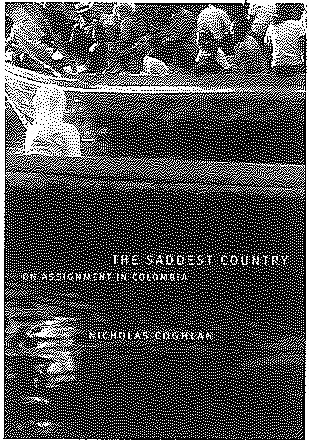
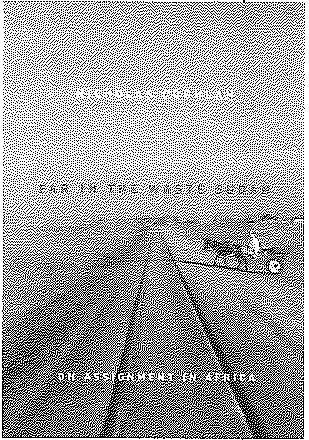
How Nicholas Coghlan became a member of Canada’s Foreign Service should be closely investigated. The selection process, the questions asked and those asking the questions should be identified so that the information can be used to ensure persons of similar striking qualities are identified and welcomed. Mr. Coghlan’s two books under review provide ample evidence that he is the sort of representative Canada needs as it struggles to re-establish its place in the world and deal with the asymmetrical problems of an unbalanced international system.
Anyone who, in the space of a few years, can write comprehensive, understanding and perceptive books about two of the world’s most difficult countries obviously has the talents to be in the front lines of our foreign service. Not only are the books well written but Mr. Coghlan has an eye for the telling detail, details while overwhelming at times, but when synthesized provide the reader with a sense of place and an understanding of why Colombia and the Sudan are the way that they are.
Of Colombia he writes a massacre is “defined as the killing of four or more persons at one time and in one place” or in the Sudan “more court cases involved litigation over cattle and marriage dowries gone wrong with the horn size and skin colour of bulls providing much grist for learned legal debate.” In both cases it is amply clear that outsiders have not had or will ever have sufficient import to materially alter the inevitable direction of their national roads to ruin.
In many ways the books document the extensive travels in both countries of Nick and his ever-present Jenny. (Some of his trips must have caused sphincters to tighten on Sussex Drive in Ottawa.) And it is not aimless travel. It is travel in the great tradition of the 19th century when the traveller frequently brought the understanding and nimble mind that provided the basis for discovery and insight.
In Colombia there was hardly a river (and there are many) that Mr. Coghlan did not boat and in doing so saw the country for what it is — an Eden where too many apples have been eaten. In the Sudan, the clash of some of the world’s great civilizations and religions, African, Arab and others continues to dominate. And these are places where inept, to be kind, or more accurately, exploitative leaders and outsiders ensure that even time, the greatest of all solutions, will not bring redress or resolution.
Colombia is the more familiar of the two for Canadians. However, the Sudan with its latest festering boil, Darfur, is closing the gap and becoming one of those international flashes that Canadians adopt and then turn away from with easy aplomb.
Colombia is where insurgency is a business. It overlaps with the drug barons and the oil companies. Whatever the original reasons for the creation of the ideological insurgent groups of FARC, the ELN or the EPL some 50 years ago or even longer if one accepts “root” causes as a justification for such violence, these have long faded, and today the FARC and EPN dominate territory, exercise many of the attributes of government and ensure that for the long suffering Colombians, long suffering will remain.
The emergence of the paramilitaries, or the paras, as a not-so-secret weapon for the Colombian military or government and large economic interest, added another volatile chemical element in an already explosive mixture. Along with the government and the drug barons, these are, as Mr. Coghlan writes, and according to the Colombians themselves, the “actors” in their danse macabre. And ironically, as actors their “roles” cannot be assumed in advance of specific events.
Mr. Coghlan describes the interplay between these elements in one small battle:
It looked as though what had happened was that the guerrillas had attacked, but the paras had then encouraged the population to leave and in turn then pressure the military to reinforce the garrison at Jurado – thus providing a shield for a renewed para presence. He goes on:
The remains of the police station were an awesome sight. For one hundred metres all around, the dirt was pitted by ten-foot craters left by the launching of the FARC’s now trademark propane canister mortars.
At the Marine base, the scene was even grimmer… You could work out which were the last holdouts by piles of used rocket-propelled grenade cartridges.
As he left this scene, Mr. Coghlan writes:
All this, of course, in that South Seas location. We boarded the Belalcazar at midnight for a ride back to Bahia Solano; the stars were so bright you could read by them, and the dolphins left phosphorescent trails as they dived under and around our bows. Another day in paradise.
Mr. Coghlan’s book is replete with such scenes and their cumulative effect is one of Danteasque despair and no doubt the reason for the title of his book, The Saddest Country.
There is hardly a section of the country that Mr. Coghlan’s cool but sympathetic eye does not take in. From the Darien Gap on the border with Panama, in the north (“…Cacarica Watershed. Cacarica, translated literally, means “Rich Shit.”) to Puerto Asis, Putumayo in the south where “80 percent of the department’s economically active population, i.e., 97 percent of the rural population, is directly engaged in one phase or another of the cocaine business.” And, despite focussed attempts to limit the trade, “forty tons of finest Putumayo cocaine still reached North America and Europe every year. A fitting epitaph to the decades’ long ’war on drugs.””
Colombia, in addition to its well known reputation for cocaine (and increasingly for the by-products of the poppy, as Mr. Coghlan wearily notes), is also known as the kidnapping capital of the world. Kidnapping, drugs and an extensive protection racket provide all of the main actors
– the insurgent groups, the paras, the drug barons and the government – with the grease that keeps the present sad system humming. It is a successful “failed” state. It is, however, kidnapping, both for its lucrativeness and its widespread intimidation value, that continues to dominate Colombian life. As Mr. Coghlan notes, middle class Colombians form the “vast majority” of those taken and as “an increasing number of couples make living will pacts that stipulate that if one is kidnapped, the other will not pay – kidnappers are turning more and more to children.” Mr. Coghlan discusses two such cases involving Canadians in which he was involved and while he does not say so directly it is clear, as we have known for years, everyone pays. Purists far from the scene of such events decry these payments but anyone who has been on the front lines knows that the higher moral duty is to ensure the release of these unfortunate victims. He gives true and well deserved credit to his locally engaged consular officer, Ida, “our long serving and highly reliable” official. In these days of doubt about the foreign service Ida Isaak and Mr. Coghlan are valuable examples of the quality of persons we need to see more often in our foreign service.
Weaker persons might have reconsidered their decision for a career in the foreign service upon learning that after three years in Colombia you were assigned in 2000 to open an “office” of the Canadian embassy in Khartoum. However, for Mr. Coghlan, he did not miss a step; in his words “you cry when you learn you have been posted to Sudan, but you cry harder when the time comes to leave.”
The book from this assignment, published in 2005, and titled Far in the Waste Sudan, provides another example of Mr. Coghlan seeing a country from the ground up and the people down. His travels were as extensive as in Colombia and if that is possible, more dangerous. While The Saddest Country is almost exclusively about Colombia, Far in the Waste Sudan provides a compelling account of such associated issues as the politics and effectiveness of humanitarian and development assistance in such situations, the effect and the politics of the discovery of oil, the machinations of leaders whose first interest after decades of war was more personal than enlightened, and Canadian commercial interests in the Sudan.
Mr. Coghlan left the Sudan just as Darfur (“Home of the Fur People” which gives a sense of the climate just a few miles north of the Equator) was becoming critical and just as another peace agreement brought a welcomed respite to the war in the south. Except for two short aid-related trips to Darfur and several days hiking throughout the area centered on the fabled mountains of Jebel Marra (“a lake rich in myths and legends, whose depths were reputed to the home of evil itself”), there was little going on in the Sudan at that time to indicate the birth of another insurgency or the ferocity and obtuseness of the reaction by the government in Khartoum.
However, there is much in the book about the war in the south. Mr. Coghlan’s descriptions of the pig-headedness of both the government in Khartoum and the rebels with political headquarters in Nairobi and their respective international supporters clearly demonstrate that any eventual permanent solution in Darfur will be long in coming and will involve untold suffering.
The discovery of large quantities of oil in south central Sudan in the late 1970s and early 1980s, much of it in the contested areas, introduced a new dynamic into the decades-old civil war. As Mr. Coghlan notes, oil was the reason Canada opened a diplomatic office in Khartoum in 2000, not because it needed the oil but because a heavy hitter from Calgary, Talisman Energy (formerly BP Canada) bought out the interest of Arakis, another Canadian firm, in 1998. Talisman bought new capital (25 percent interest in the project) but also modern oil technology and within a few years, hundreds of millions in revenue for Khartoum which by 2001 amounted to “40 percent of the Sudanese government’s budget.”
As Mr. Coghlan wryly notes, “Talisman had done its geological and financial homework, but it had no idea of the political and public relations quagmire into which it was wading by acquiring Arkis and pursuing the Sudan project.” It was not long before it did, as Talisman became a sitting duck for Canadian and international humanitarian organizations (with Canadian government hand-wringing on the side) and by 2003 it threw in the towel and sold its share to the Oil and Natural Gas Corporation (ONGC) of India (a clone of the early days of PetroCanada) for $1.1 billion.
A footnote to the Talisman story occurred in September 2006 when an American judge denied a claim by the Presbyterian Church of Sudan. The claim filed in 2001 alleged that Talisman aided and abetted the Sudanese government in a brutal campaign of ethnic cleansing and rights abuses in south Sudan. The company is reported to have been “pleased” with the ruling.
This chapter should be required reading for any Canadian resource company (or others as the field for humanitarian concerns are broadening as we read) interested in investing in a country with a record such as that of the Sudan. However, there are ups and downs to such investments and Mr. Coghlan ably highlights them. While he does not go so far, there are four conclusions that might be reached:
1. While forced out by domestic and international pressure, Talisman’s continued presence in the Sudan might have brought greater interest in and resources on community development and emergency relief work than its successor, the ONGC. Certainly, by the time that it left it was actively involved in humanitarian work in its areas of activity.
2. Secondly, the new capital by Talisman meant that the oil pipeline to Port Sudan, the expansion of the oil fields along with the increase in oil prices after 2001 provided the Sudanese government with resources allowing it to become more robust and bloody in its fight with the southern rebels.
3. By the same token, the rebel commanders in the south, seeing the ever increasing revenue accruing to Khartoum probably made the calculation that the only way they were going to get their hands on any of it was through a peace agreement. Accordingly, in 2002 peace agreements were signed, one dealing with Juba Mountains region and the other, the Machakos Protocol, covering self-determination for the South and the separation of state and religion. These agreements appear to be holding and southern leaders are now part of the gravy train in Khartoum. (John Garang, the leader of the Sudan People’s Liberation Army for a long number of years became Vice President of the Sudan following the peace agreements. He died in a helicopter crash on July 30, 2005 in southern Sudan. There are questions still as to the cause of the crash.)
4. It might be extrapolated that the hard-nosed reaction of Khartoum to the emergence of the insurgency in Darfur in 2003-04 was supported by the ever increasing oil revenues. Having forced the south to accept an agreement, after 50 or so years of conflict, it is likely that Khartoum believes Darfur is an easier problem. And certainly, no one will suggest that Sudanese oil be internationally sanctioned. Mr. Coghlan’s frequent observations on humanitarian and development assistance in war-torn Sudan should be required reading for those who make large decisions on these issues. There is no doubt that delivering assistance into Sudan in the midst of a civil war was a daunting task. That people did succeed, as Mr. Coghlan notes, was a tribute to the hundreds of organizations, governmental, non-governmental and international that were involved. However, there was a “niggling doubt”:
What would happen when back in London, Washington, and Ottawa people started to lose interest and there was nothing left for the planes to carry? The SPLM/A had been in control of a very large portion of territory for nearly twenty years now — wasn’t it about time they started to feed their own people? And what kind of self-sufficiency and resilience were we encouraging by dropping hundreds of thousands of tons of grain out of the back of planes, however accurately, month after month, year after year?”
In some ways the most discouraging chapter in the book is five which records Mr. Coghlan’s conversations with the political “elite” of Khartoum. These are all honourable, (not too formal a word to use), educated, experienced men (there are no women of course) and democratic politicians. There is little sense that they preside over one of the world’s more reviled political system. One is almost left with the impression if only General Omar Bashir were to leave the scene they would see that a new Sudan appeared. However, in one conversation with a former President, Mr. Coghlan records what may well be the epitaph for the Sudan: “There are many Darfurs in Sudan.”
These are rare books about two of the world’s most troubling countries and being written by a person who walked the ground and talked with those involved is all the more enlightening. Not many, if any, members of Canada’s foreign service have produced books of this quality and importance. Perhaps Mr. Coghlan’s example will lead more to do so as Canadians and the world need all the help they can get on the issues that both books so ably portray. I have already suggested to the personnel department of Foreign Affairs that Mr. Coghlan’s next assignments should be to Papua New Guinea and Albania.
View the original scanned pages →
Originally published in bout de papier, Vol. 22, No. 3 (2006) — Fall/Winter 2006 // Automne/Hiver 2006, pp. 25–28. Read the rest of this issue →



