
bout de papier, Vol. 7, No. 4 (1990), pp. 22–23
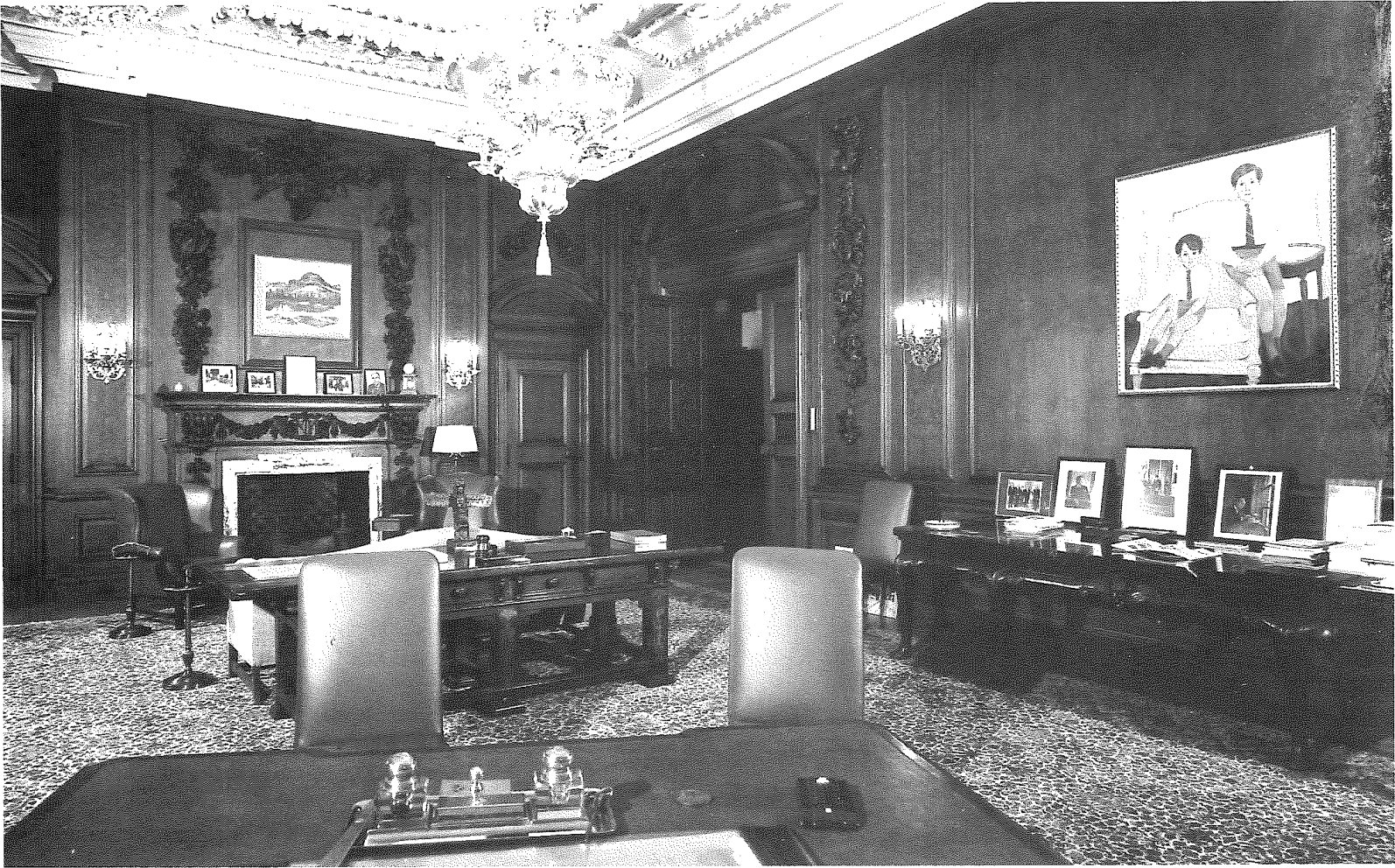
A long and colorful chapter in Canadian diplomatic history came to a close last spring when the moving vans lined up in front of the venerable old Dupont Chancery in Washington in preparation for the move to our new building on Pennsylvania Avenue. The Dupont Chancery was our first foreign legation when it opened in 1927 and home to literally hundreds of Departmental staff in the intervening decades. The Department is exploring the possibility of a medium-term lease of the Dupont building in the expectation that as our presence in Washington continues to grow, there may be a future need for additional Embassy office space. This would allow us to keep this architectural treasure in Canadian hands.
Amid the pervasive clutter, noise and excitement of the move, Embassy staff packed up their belongings, and a few tears were undoubtedly left behind “for the memories.”
It was a difficult parting of the ways for many, in particular locally-engaged staff such as Betty McAree and Verna Henderson who have spent much of their adult life working at Dupont and who will be well-known to Washington alumni.
Betty McAree is the longest-serving Embassy employee in Washington, with 43 years of service, while Verna Henderson has spent 38 years in various Canadian Government positions in Washington. Verna Henderson is an acknowledged expert on the workings of the Congress and the Administration, one of those rare Washingtonians who actually read the Congressional Record from cover to cover every day. They both paint wonderful vignettes of the various Ambassadors who have passed through Dupont. McAree, for example, recalls how in the informal, intimate atmosphere of the Washington Embassy in the early 1940’s, Ambassador Lester Pearson used to sit on staff desktops for a brief “chit chat” whenever the mood struck and host regular Friday morning roundtable sessions with all of the staff invited, “right down to the newly-arrived American clerk-typist”. McAree believes that Arnold Heeney “epitomized the perfect Ambassador during the wonderful era of striped pants diplomacy. He was brilliant, charming and gracious.” And when Hume Wrong was Ambassador (1946-53) and his nephew Hume Wright was First Secretary, she remembers how “the Washington gossip columnists had a field day with Wright and Wrong at the Canadian Embassy.”
For all of us in the Foreign Service, the end of an era at Dupont Chancery has special significance. A great deal of Canadian diplomatic history has been played out inside the walls of the Dupont building. Indeed, the names of those who have served there as Ambassador literally reads like a veritable “Who’s Who” of the Foreign Service. (see box). Individuals such as Vincent Massey (1927-30), Lester B. Pearson (1944- 46), Arnold Heeney (1953-57), Norman Robertson (1957-58), Charles Ritchie (1962- 66), A.E. Ritchie (1966-70), Marcel Cadieux (1970-75), Allan Gotlieb (1981-89), and most recently, Derek Burney, who enjoyed the surroundings for a few brief months before the move uptown, have all left their mark on Canadian diplomatic history. Some went on to even greater things: Massey became our first Canadian-born Governor General and Pearson became Prime Minister. Peter Towe, now head of Petro-Canada International, also has the distinction of having served at Dupont in three different capacities — as Third Secretary (1949-53), Minister Economic (1967-72) and as Ambassador (1977-81).
Yet as one looks back over the history of our diplomatic efforts at Dupont, it is striking how little the bilateral issues have changed over the years. As our first Ambassador, Massey (who incidentally began with a staff of four and an annual salary of $12,000) had to contend with everything from tariff and trade issues to transborder smuggling, while finding a modus operandi with the British Embassy that had suddenly lost its monopoly over Canadian interests in Washington. Already in Massey’s time, there was a preoccupation with the welter of legislation being proposed in Congress. “This task is one of considerable magnitude, “ Massey wrote to his superiors in Ottawa in 1927, even though Ambassadors of the day didn’t believe it proper for diplomats to be on the Hill. (Arnold Heeney, for example, never went to Capitol Hill during his posting to Washington, a far cry from the practice of more recent years). And, there was a general lack of U.S. awareness of their northern neighbor: President Calvin Coolidge asked Massey in 1927, “Is Toronto near the lake?”
Some of Massey’s successors such as Charles Ritchie and others faced the difficult task of manning the ship at a particularly turbulent period in bilateral relations. Ritchie found himself caught in the crossfire that began under the Kennedy and Diefenbaker Governments and continued into the Johnson- Pearson era, including witnessing the infamous Camp David incident where LBJ grabbed the unfortunate Lester Pearson by the lapels and chewed him out for having criticized publicly Johnson’s decision to carpet bomb North Vietnam. Ritchie’s celebrated diaries, Storm Signals in particular, are of course full of revelations from this period. Local scuttlebut also tells of Charles Ritchie, as a young Third Secretary in Washington on his first posting, being forced a to show his mettle by navigating around the Dupont Chancery in his stocking feet on a narrow ledge that protruded out on the fourth floor.
The Dupont building itself also has a noteworthy history. It was built between 1906 and 1909 as a private residence for Mr. Clarence Moore and Mrs. Mabelle Swift Moore. Mrs. Moore, the daughter of Edwin Carlton Swift of the Chicago meat packing company, was very much into sausages and money. She inherited the family fortune when her father died in 1901. Her husband Clarence was a noted horseman who ran a prosperous banking and brokerage firm in Washington. In 1912, he opted for the wrong boat in returning from England and went down with the Titanic, along with 50 pairs of English foxhounds that he had purchased for the Chevy Chase Hunt Club.
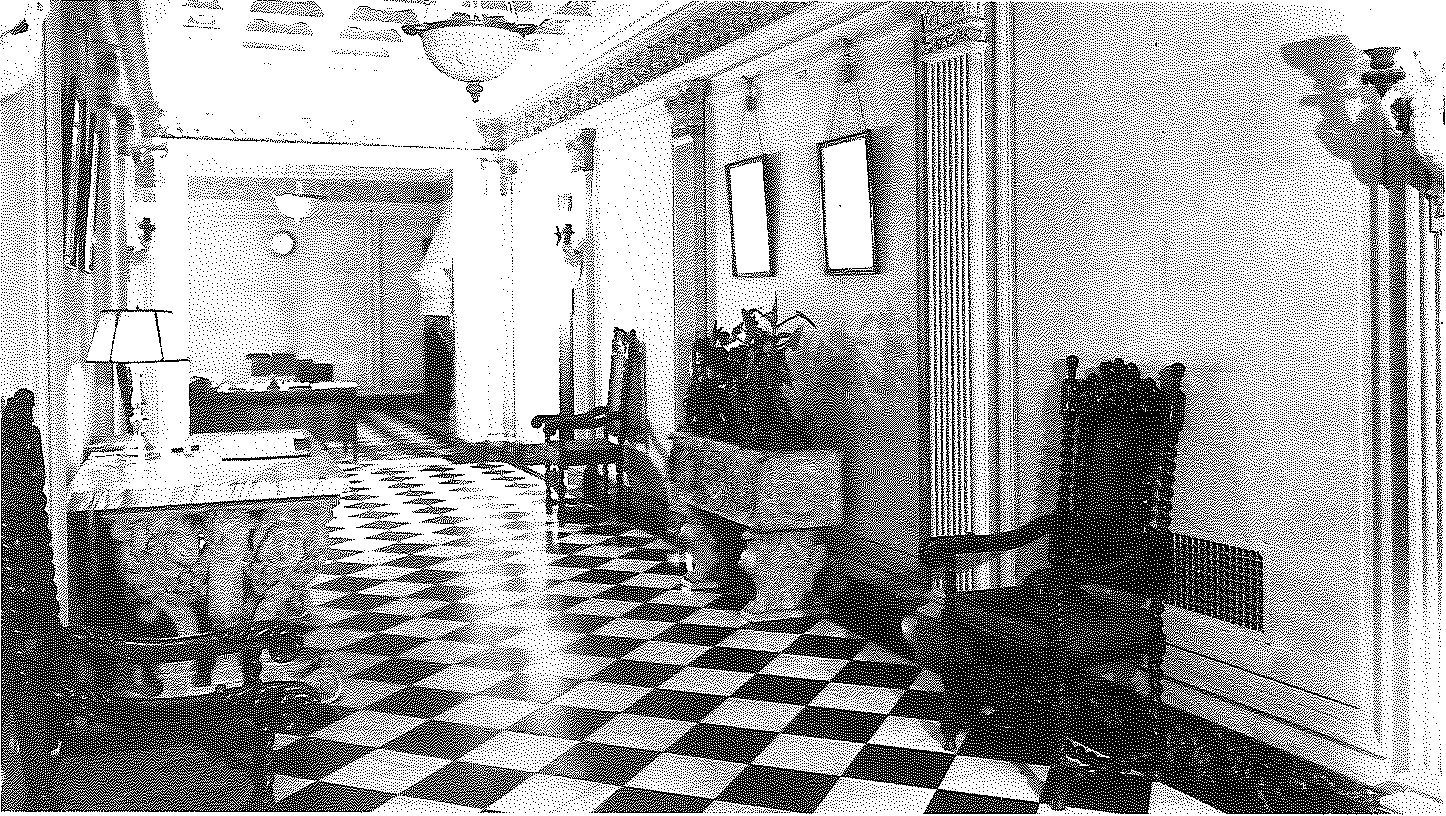
In 1927, the widow Moore, then remarried to a Danish taxi driver turned diplomat named Aksel Wichfeld and living mainly in Europe, sold the building to the Canadian Government for the princely sum of $475,000 — $375,000 for the property and another $100,000 for the furnishings. This was thought to be an extravagant amount of money at that time and the Masseys, who had been living in the nearby Mayflower Hotel, reportedly had a hard time convincing the Department to cough up the money. (Sound familiar, anyone?) After the purchase, the building served as both chancery and official residence until 1946, when a separate residence was purchased in nearby Rock Creek. In later years, as the Embassy continued to grow, Dupont came to house the Political/Economic and Immigration/ Consular sections, with other operations relocated elsewhere.
Despite the inevitable wear and tear, and the somewhat ragtag, tattered look that the decades have bequeathed to the Dupont chancery, Dupont is still quite a remarkable structure. In 1912, The Washington Post described the building as “one of the handsomest in the city (and) a constant scene of hospitality. “ It features a Louis XV exterior facade and interior details from the 16th, 17th and 18th centuries, with particularly attractive wood carvings, plaster and iron work throughout. The Ambassador’s office had one of the finest “Adams” ceilings found in Washington. Even the temperamental electrical elevator, which constantly amazed visitors and was dear to the hearts of staff (particularly when it worked) was an original, having been installed in 1909.
For many of the Embassy’s staff, the move from the Dupont Chancery brings the end of a special period in Canada-U.S. relations and, for many of us, of a unique period in our careers. In an era where the plague of “open concept” and windowless offices for the rank and file continues unchecked, the rich flavour of life at the Dupont Chancery will be sorely missed.
Canadian Ambassadors to the United States
Charles Vincent Massey, 1927-30
W.D. Herridge 1931-35
Sir Herbert Meredith Marley 1936-39
Loring Christie 1939-41
Leighton Goldie McCarthy 1941-44
Lester B. Pearson 1944-46
Hume H. Wrong 1946-53
A.D.P. Heeney 1953-57
Norman Alexander Robertson 1957-58
Arnold D.P. Heeney 1959-62
Charles A. Ritchie 1962-66
A.E. Ritchie 1966-70
Marcel Cadieux 1970-75
Jake H. Warren 1975-77
Peter M. Towe 1977-81
Allan E. Gotlieb 1981-89
Derek H. Burney 1989-
View the original scanned pages →
Originally published in bout de papier, Vol. 7, No. 4 (1990), pp. 22–23. Read the rest of this issue →



