
bout de papier, Vol. 7, No. 4 (1990), pp. 20–21
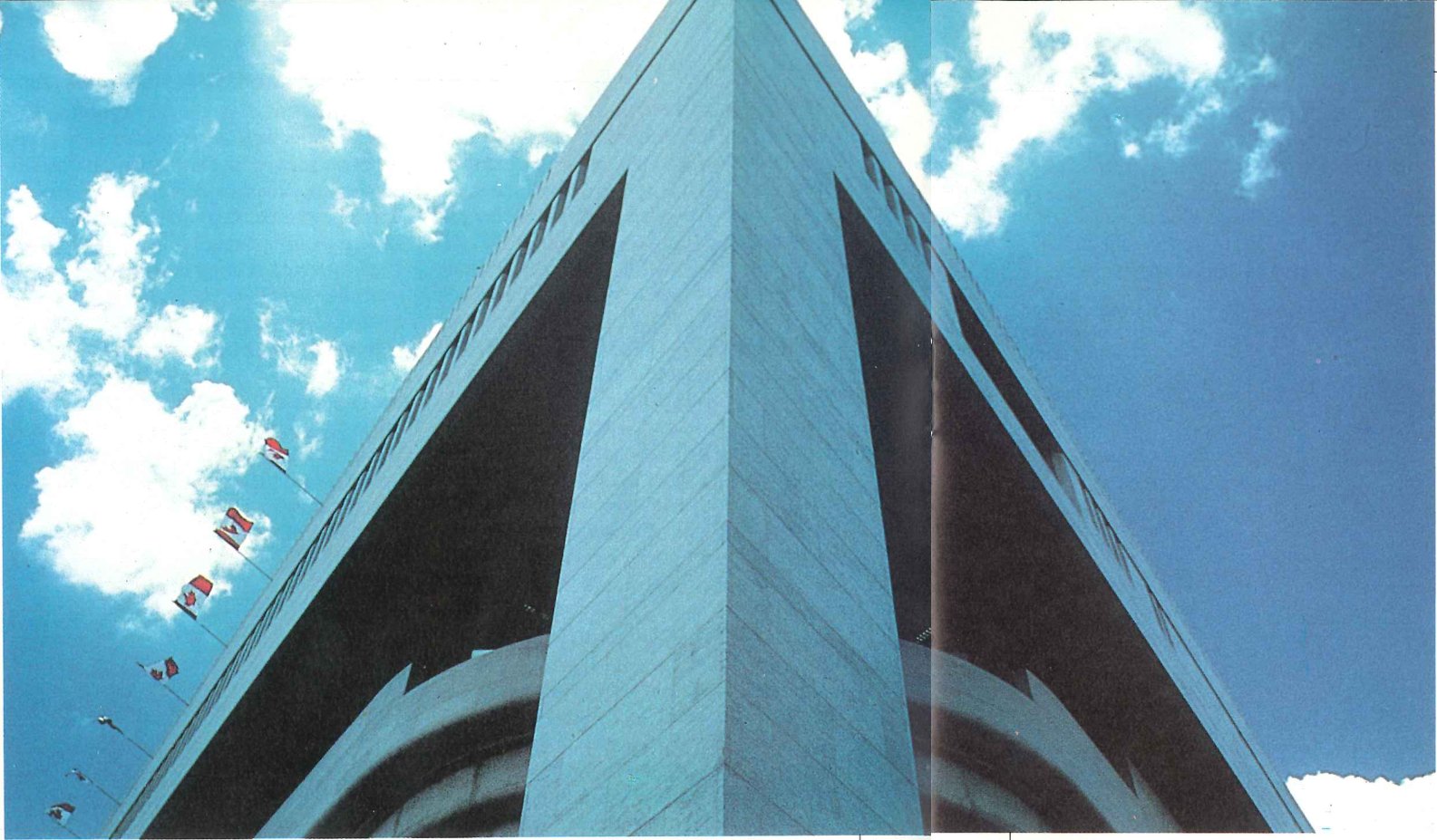
anada’s presence in Washington has gone through a period of transition and consolidation following the move into the new, $90 million Arthur Erickson-designed chancery on Pennsylvania Avenue in May of 1989.
Despite the initial controversy occasioned by Prime Minister Trudeau’s 1982 decision to select Erickson as principal architect for the project over the heads of the Departmental Review Committee, in the final analysis, Trudeau appears to have made a good choice.
Erickson’s effort is in many ways a success – the building makes a dramatic Canadian architectural statement in the U.S. capital. His design is majestic, open and refreshingly innovative, blending neoclassicist and modernistic trends.
The building draws inspiration from a variety of sources including the nearby U.S. Capitol Building and the Federal Trade Commission. Our Rotunda of the Provinces features its own 12 columns and coats of arms, representing the provinces and territories, built above a cascading fountain. The northwest corner of the Embassy nearly thrusts across Pennsylvania Avenue in counterpoint to the sharp and dramatic configuration of I.M. Pei’s famous East Wing of the National Gallery of Art.
In the expansive and airy Embassy courtyard, six aluminum columns hold up a skylight and planter, reflecting the neoclassical flavour of much of official Washington architecture. The courtyard generates an undeniable feeling of freedom and space, of Canadian frontierism let loose in urban America.
A six floor structure, the building has office space for over 300 staff, a 175-seat theatre, an art gallery (albeit rather cramped in my view), a multi-purpose meeting room that initially reminded me of my high school basketball gym, but which has considerable charm once night falls and guests arrive, and a 20,000-volume library. The artwork in the building is entirely Canadian and includes Departmental purchases as well as corporate donations. It projects a potpourri of images — a bronze Haida canoe to be set above the outdoor wave pool; off the elevators, a colorful series of tableaux depicting the cycle of life and death in a tulip garden; and a spangled aluminum curtain in the theatre.
The Embassy is already creating a sensation — over 10,000 visitors have passed through it on public tours since last spring, and invitations to Embassy events, in particular Ambassador Burney’s sixth floor dinners, are hot items. The press reviews both from influential dailies like the Washington Post and from U.S. and foreign architectural journals have been generally positive. The Canadian Architect has described the building as Erickson’s finest effort over the past two decades and the best addition to the Washington cityscape in 10 years.
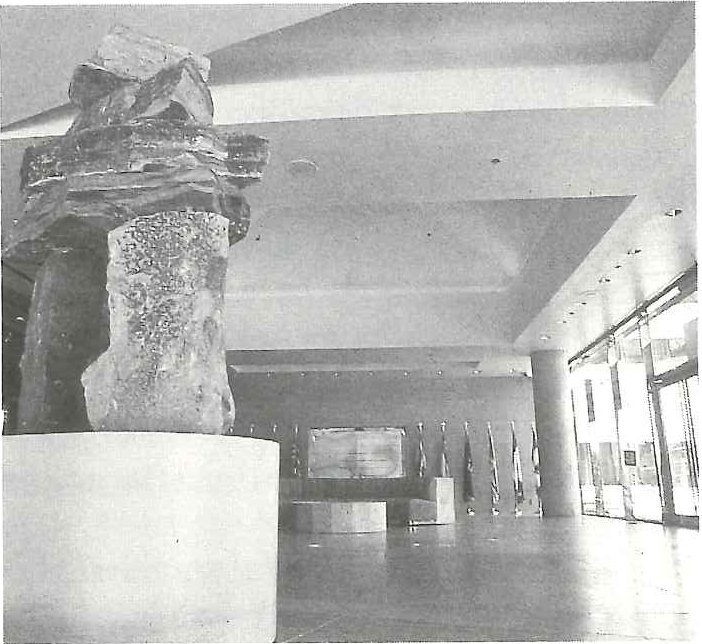
Beyond architecture, however, the new Embassy makes a distinct political statement on our biggest and most fundamental bilateral relationship, while sending other signals to our American hosts. It is bold, almost aggressive in design, as if Erickson wanted to assert Canada’s self-confidence in the heart of her southern neighbor. In moving to Pennsylvania Avenue, we have abandoned the diplomatic enclave of “Embassy Row” in the upper northwest part of the city and moved to the political heart of a very political city. We are now positioned just below Capitol Hill and within walking distance of nearly every major department and agency, midway between the Capitol and the White House, on the most prominent street in the capital.
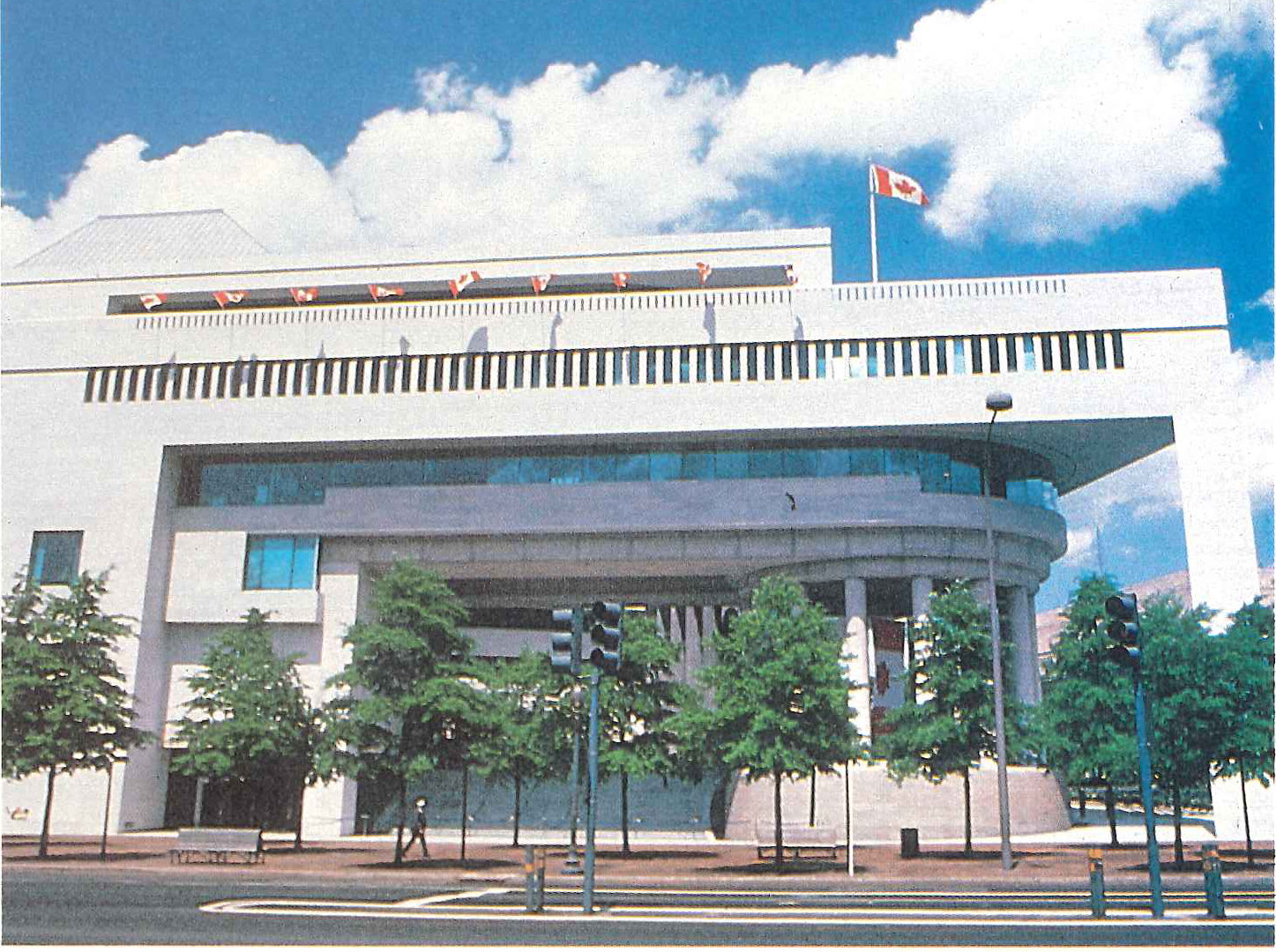
It is also notable that the Embassy faces the Congress, very much a co-equal branch of Government here, rather than the departments and agencies or the Executive branch. In fact, Ambassador Burney’s glass-panelled sixth floor office may offer the finest panorama view of the Capitol Building and Smithsonian Mall found anywhere in Washington. At the Embassy opening in May, Secretary of State Baker described it as one of the best offices in the capital, while Congresswomen Pat Schroeder called it the “best tanning clinic in the city.” Our location may reflect a changing approach to managing political and trade relations with a country whose legislative process is unpredictable and prone to chaos, and increasingly activist and assertive. This situation is further exacerbated by a partisan political environment where the Republicans continue to control the Presidency (five of the last six Presidents were Republican) and the Democrats are the masters of Capitol Hill. The Embassy, therefore, must be vigilant of the role of the Hill in affecting a range of Canadian interests. Consequently, Canadian representatives here must by force of circumstance pursue an activist, advocacy approach with the legislative branch rarely seen in other postings.
Although Pierre L’Enfant’s original design of the layout of the capitol envisioned foreign embassies being built at the foot of Capitol Hill, Canada is the first, and perhaps the last, Embassy to set up shop there. Back in 1978, in one of those all-too-rare instances of Departmental foresight, we approached the Pennsylvania Avenue Development Corporation with an offer to purchase the 287,000 square-foot site for $4.5 million, a steal given current real estate values in the area today. Other U.S. government agencies had also expressed interest in the site and it required the personal intervention of House Speaker Tip O’Neill to put it in Canadian hands. In a bit of an understatement, the Washington Post of December 8, 1979 reported that Canada estimated the cost of the land and the new building “at around $20 million, but inflation doubtless will increase that figure.” The Post also informed its readers that completion was scheduled for 1984!
At that time, the gentrification of Capitol Hill had not really begun and the area was in a state of decay. A city-operated temporary shelter for homeless women was operating on the Embassy site and had to be torn down, which provoked a hue and cry from advocates for the District’s homeless. The site does in fact have quite a history. It began as a “select boardinghouse” in the pre-Civil War days for Members of Congress and other officials. Chief Justice John Marshall (whose name was given to the adjacent park) one of the first boarders. Around 1869, it became Fritz Reuter’s popular restaurant and rathskeller, whose cuisine was described by a local journalist as “a memorial to the small hot bird and the large cold bottle, to terrapin, and to the broiled live lobster.” Later, the Embassy site was home to a Ford auto emporium and briefly served as an encampment for unemployed WWI veterans until they were chased out of town by Army Chief of Staff Douglas MacArthur.
The Pennsylvania Avenue revitalization process was first motivated by President Kennedy, who was appalled at the general state of affairs in the area during his inaugural walk in 1961, and pursued with considerable vigor by Presidents Nixon, Carter and Reagan. Today, with Washington enjoying a real estate boom and considerable efforts being undertaken to regenerate the area, Canada is literally “sitting pretty.”
Despite the nouveauté of it all, one would probably be amiss if it were not stated that there are certainly those among us who miss the musty, dusty, fin-de-siècle atmosphere of the old Dupont chancery and our other satellite offices downtown, particularly the proximity to good shopping and lunches and to the northwest residential area where most officers live. And, a final irony, while it is probably safe to say that many thought the new building would help draw Embassy staff together, in making the move we seem to have lost a measure of the intimacy that we had before. Our paths seem to cross less than in the past, even though we are now all under the same roof.
View the original scanned pages →
Originally published in bout de papier, Vol. 7, No. 4 (1990), pp. 20–21. Read the rest of this issue →



