
bout de papier, Vol. 10, No. 1 (1993) — Winter 1993 // Hiver 1993, pp. 8–9
by Conan W. Purves
In October of 1989, the Canada Fund project of the Canadian Embassy donated $18,000 for the construction of an industrial laundry and training centre in the satellite city of Sobradinho. The following May 1990, the Canada Fund also released enough money for the construction of an industrial bakery for similar purposes. The Centro Espírita “Adolfo Bezerre de Menezes,” a spiritual and philanthropical non-governmental organization that had already established itself in Sobradinho, was made responsible for the construction and organization of both the laundry and the bakery. In June 1990, the Embassy sent a representative to Sobradinho in order to evaluate the progress of both of these projects.
Sobradinho is one of the many small satellite cities surrounding Brasilia, such as Taguatinga and Ceilândia, where the many workers needed to build O Plano Piloto, the city of Brasilia, lived. Today, many immigrants, generally from the very poor provinces of the northeast, continue to come, hoping to find employment in the city. They are almost all illiterate and unskilled. The immigrant community of Sobradinho, officially called Sobradinho Deus has 2,500 families, lacks electricity, gas, paved roads and, until May 1990, running water. The need for assistance is severe and, as neither the Brazilian government nor the private sector has been forthcoming, only philanthropic organizations, often religious, are attempting to help.
The Centro Espírita “Adolfo Bezerra de Menezes” is a branch of Spiritism, a religion based on Christianity, but very much influenced by traditional Brazilian folklore and ceremony. The fundamental doctrine of Spiritism is the belief that by sacrificing oneself for others more needy, it is possible to reach higher levels of perception and existence. At least in the case of Sobradinho, the Spiritists follow this doctrine thoroughly.
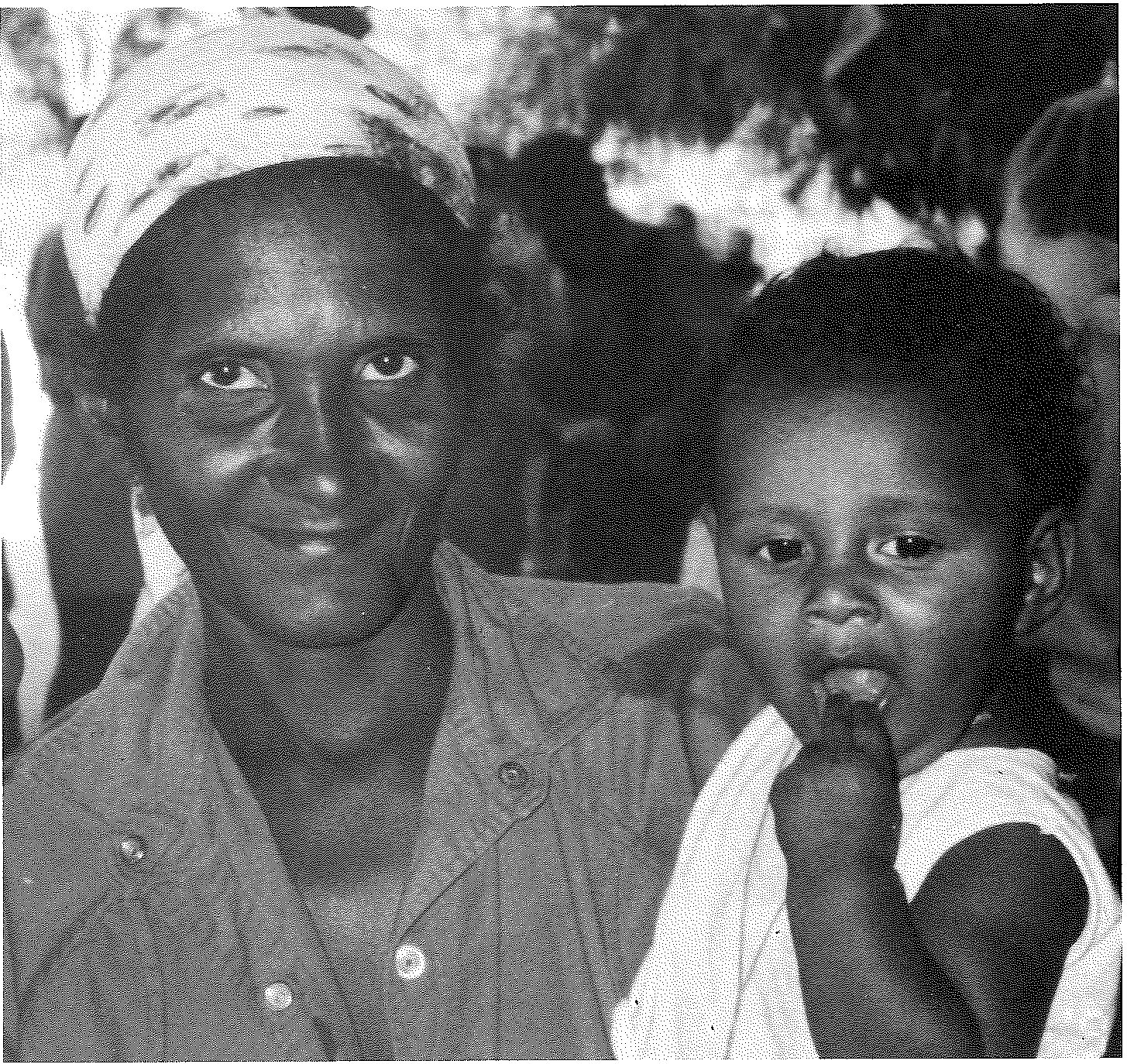
There, the Centro Espírita has two projects: a day-care for 450 immigrant children called Centro Integrado de Atenção Materno Infantil (CIAMI) and a much larger educational complex, the Centro de Orientação e Educação Rural (COER). The latter houses the site where the laundry and bakery were built. In both places, the mother or father of the attending children must come in for a least four hours a week and contribute to its running. For example, at CIAMI many of the mothers run the cafeteria which feeds the children.
COER is situated on a plot of government-leased land measuring 390,000 square metres. Begun in December 1985, it is intended to respond to the needs of the local migrant community. The complex is run by Heloisa Helena Silveira, who lives on the site with her husband and two children. Already, COER has a large school for the very young and several buildings in which local youth are trained in woodworking, metalworking and auto mechanics. Everything built in these classrooms is either used at COER or sold at the local markets. There is also a large agricultural area where many vegetables are grown for consumption at CIAMI and garlic, an expensive spice in Brazil, is grown for sale. COER offers a total of 21 courses, including health, hygiene, economical cooking, manicure/pedicure and sewing. Many of the courses hope to train an individual in a skill that will ensure their employment. The remainder offer valuable practical knowledge for the local youth, whose upbringing and lack of education guarantee that they will lack many of the skills necessary for survival. Future projects include equipment and faculty for education in other skills and residences for single parents and families. As its blueprint indicates, the managers of COER plan it to be a community almost fully run by the locals of Sobradinho as well as answering to all their needs. The industrial laundry and bakery made possible by the Canada Fund are a significant advance to this end
The industrial laundry centre is a 10m × 8m room in a concrete building. It houses an industrial strength washing machine, capable of holding up to 20 kg of clothes, a dryer with a capacity of 10 kg and a mechanical iron. The laundry has two functions: it operates as a commercial laundry, serving the 2,500 families of Sobradinho Deus and it also trains the immigrants in a specific skill. The laundry will wash a basket of clothes for the extremely low price of 30 cruzeiros (70 is the going price in the rest of Sobradinho). The laundry also washes the clothes of the children from CIAMI. All profits are returned to the laundry and used to buy soap and other necessary non-durable supplies. Since its inauguration, all the equipment has worked perfectly and has needed only its regular maintenance. As a training centre, it offers three courses a year. Each course teach up to a maximum of fifteen people. However, in order that each person trained is ensured employment upon completion of the course, members of COER conduct a market study of Brasilia and its surrounding cities to ascertain the actual demand for trained laundry workers. Local business guilds and organizations are also contacted. Thus, the actual number trained in each course depends on the number of workers needed at that time. Because of the competence and efficiency of the students who complete the course, local businesses have begun to contact Sra. Silveira for prospective employees. Since its inauguration, three courses have been completed and every student has received a job, many in hotels in Brasilia.
At the time of the visit of the Embassy representatives, the bakery was not yet completed. The building, entirely constructed by members of the COER community, was finished. The bakery’s inauguration awaited only some necessary equipment, all of which had been paid for. It will fill a role similar to the laundry. Most of the breadstuffs made there will be eaten at CIAMI, although some will be sold locally. As in the laundry, all profits will go the purchase of necessary supplies. Sra. Silveira expects that the demand for workers trained in industrial baking will exceed that for the laundry and will thus offer courses for more than fifteen people.
The addition of the industrial laundry and bakery training centres not only represents a huge step forward for the development of COER, but also a step in a different direction. Although every course is open to both sexes, most of those which actually prepared the student for a job taught skills in traditional male activities, such as wood working and cattle handling. Despite the fact that they are open to both sexes, very few women enter these programs. The laundry and bakery offer employment opportunities specifically oriented to the women of the Sobradinho immigrant community.
The Canada Fund allows the Canadian Embassy and Consulate General in Brasilia to spend a certain amount of money each year on projects involving small, underprivileged non-governmental organizations that are deemed to be worthwhile. The object of the Canada Fund is both philanthropic and diplomatic, directly benefitting local communities while also creating relations between Canada and other countries at the grass-roots level. At this point, the laundry and bakery have fulfilled both of these objectives. The efficacy of the industrial laundry is striking, especially in Brazil where both the public and private sectors of the economy offer little to the needy. Because of the laundry, 45 immigrants, who otherwise almost surely would have been destitute, have managed to get a job and maintain a decent standard of living. Furthermore, the Canadian presence has almost certainly been felt in the COER community. It is significant to note that in the past five years Sra. Silveira has approached several other embassies and received nothing, while the work of the Centro Espírita is not even recognized by the Brazilian Government.
View the original scanned pages →
Originally published in bout de papier, Vol. 10, No. 1 (1993) — Winter 1993 // Hiver 1993, pp. 8–9. Read the rest of this issue →



