
bout de papier, Vol. 13, No. 3 (1996) — Fall 1996 // Automne 1996, pp. 9–12
Different countries have different national fantasies. After you have served there for a while, you start to entertain those fantasies too. In Brazil, I found myself dreaming up Fitzcarraldotype schemes to develop the Amazon frontier. In Mexico, which has more than 600 museums and galleries in Mexico City alone, the national fantasy is to become a famous artist, and many otherwise earnest professionals dabble in cultural pursuits. After two years in Mexico, spending much of my time promoting other artists work, I decided it was time to promote something I had created myself.
Since I cannot paint, sculpt, write fiction or poetry or play a musical instrument, my scope for creativity was rather restricted. But I could at least produce clear non-fiction prose; and I knew I could organize events. My mind turned instead to becoming a famous curator of other people’s work.
Thus was borne my bright idea of curating a photographic exhibit. The subject I chose was something I knew something about — namely exotic marine life. I have dived for enough years to know that I am never going to take successful underwater photographs; but there are lots of people who try to take underwater pictures, and very few who can write well about them. This would be my artistic niche.
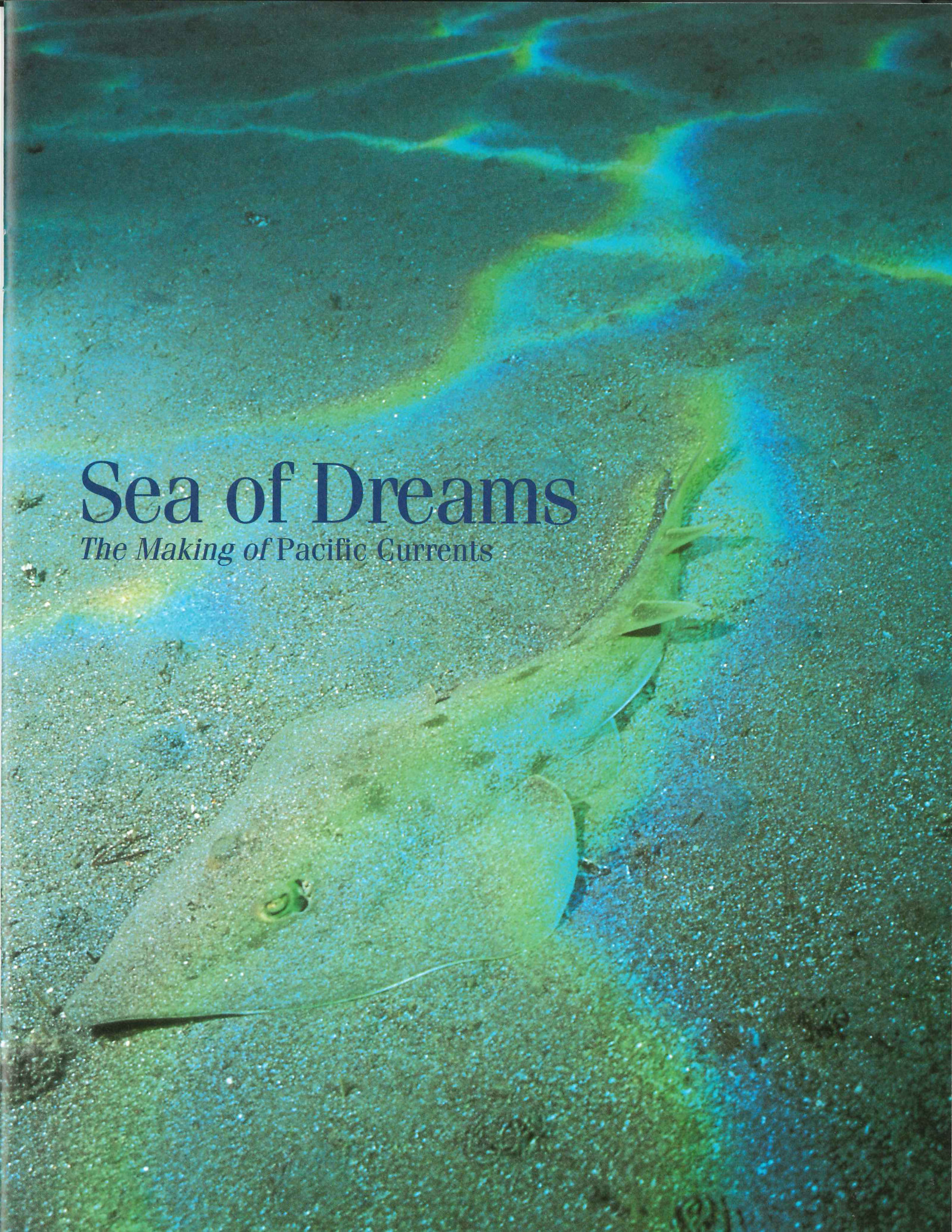
I had spent the entire month of April 1994, sitting on board a long-range diving boat, in the company of five professional underwater photographers and twenty marine scientists. To kill time on board we watched slide shows, and the work of two of the photographers — Richard Herrmann and Maris Kazmers — impressed me a great deal. Their subject matter was not the exotic tropical inhabitants of coral reefs, but the equally brilliant, usually overlooked marine life of the cooler waters off California and British Columbia. The idea began to form in my mind of curating a tri-national photographic exhibit of marine life along the Pacific coast of North America – from Baja California to British Columbia. Canada’s membership in NAFTA is our current calling card in Mexico, and I knew that the Embassy could easily use an exhibit like this, organized along national lines but with completely apolitical content, as part of our public affairs program. Thus began the idea for Pacific Currents.
It took a year until I was ready to launch the project. The day Pacific Currents became a reality was the day in late April 1995 when our new PIF budget for the year was confirmed. It is a sad testimony to the constraints on creativity in our Department, but I knew if I had to appeal to Ottawa for money for this project, it was dead in the water. Once we had enough funds of our own in the Embassy to at least manufacture the basic exhibit, we were in business.
The first step was to find the right photographers, willing to participate in the exhibit. I started with the two whom I knew — Richard Herrmann and Maris Kazmers. However, both of them are American, and to have a tri-national exhibit, I needed a Canadian and a Mexican as well. Luckily, Maris was able to recommend a Canadian friend from Vancouver, Jason Puddifoot, while an NGO contact put me in touch with an underwater photographer from Mexico City, Pablo Cervantes. None of these photographers had been approached before by anyone who wanted to curate a collection of their work; instead, for the most part, they sell individual images through stock agents for calendars, post-cards, science texts and coffee table books. All of them were very receptive to the idea, and willing to waive their normal professional fees up front for use of the photographs. In return, I made a commitment to them that if the project generated any revenues, they would be divided equally among them.
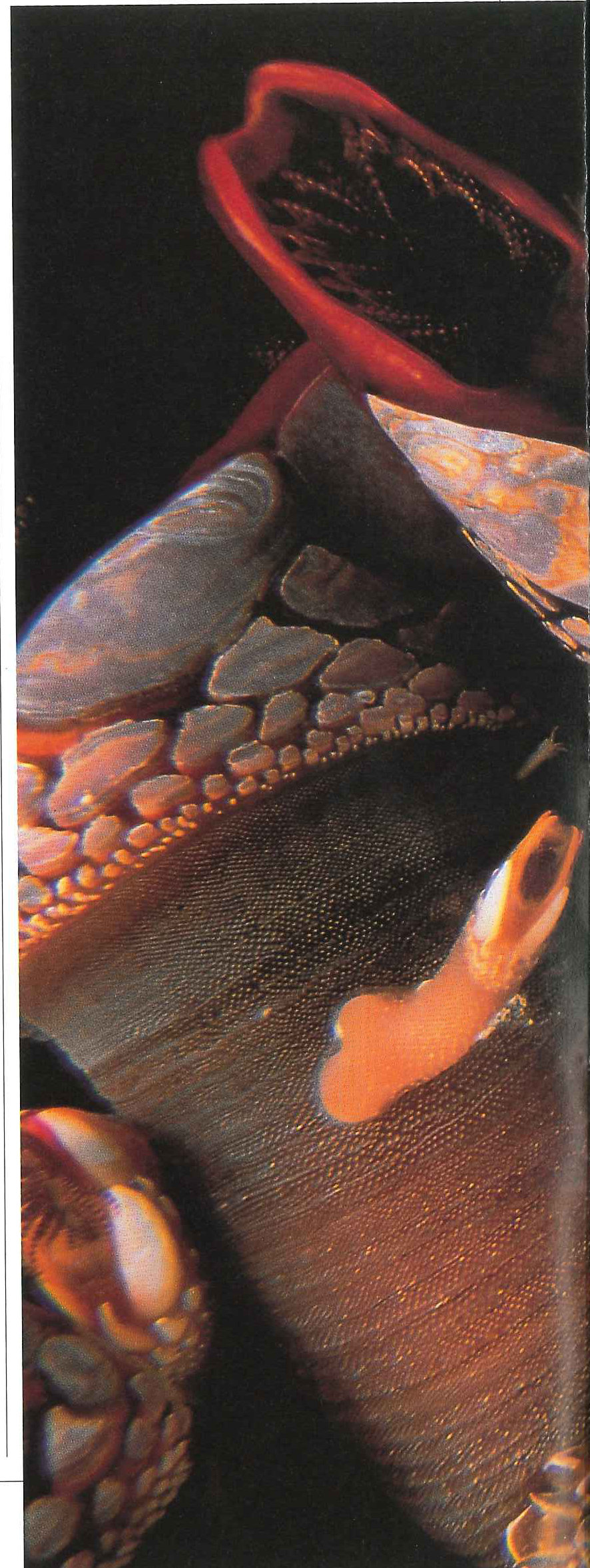
The next step was to select the pictures. For the next six weeks my wife had to put up with me waving slides in front of her nose, asking questions like “which do you like better, the squid or the octopus, and why?”. The problem was not finding enough high quality images to include in the show; each of the four photographers had sent me their own selection of their best work from the thousands of pictures they had taken over the past decade. The problem was to find a balance: first between the three regions in the exhibit — the Sea of Cortez, California and British Columbia; then between the four photographers; and finally between images of animals people would recognize — such as the marine mammals — and images of animals, such as the invertebrates, which most people have never seen.
My solution in the end was to follow a consistent visual sequence in each of the three sections, starting with close-up shots of the weird invertebrates, then middle distance shots underwater of the larger creatures such as turtles and sharks, and finally top-side shots of dolphins and whales. Roughly speaking, as the viewer moves back from the image in terms of perspective, you also move up the evolutionary ladder. This approach also worked in terms of balancing the four photographers and the three regions.
Then came the framing. I rapidly found the local framing stores in Mexico City to be useless for my purposes — their idea of fine art framing is to glue the photo down onto cardboard. Instead, I turned to professional museums for help. The curator of photography at Mexico’s best private art museum volunteered her time to do all the mat cutting and mounting — which is critical to the professional look of a travelling exhibit. The staff of the Canadian Museum of Contemporary Photography in Ottawa gave me hours of invaluable free advice on the kinds of durable materials to use in framing the show. In the end, I went for a very simple classic look – pewter tinted aluminum frames and gallery white mat board under U.V. filtering plexi-glass. All of this material had to be imported through special orders from the manufacturers in the United States and Canada.
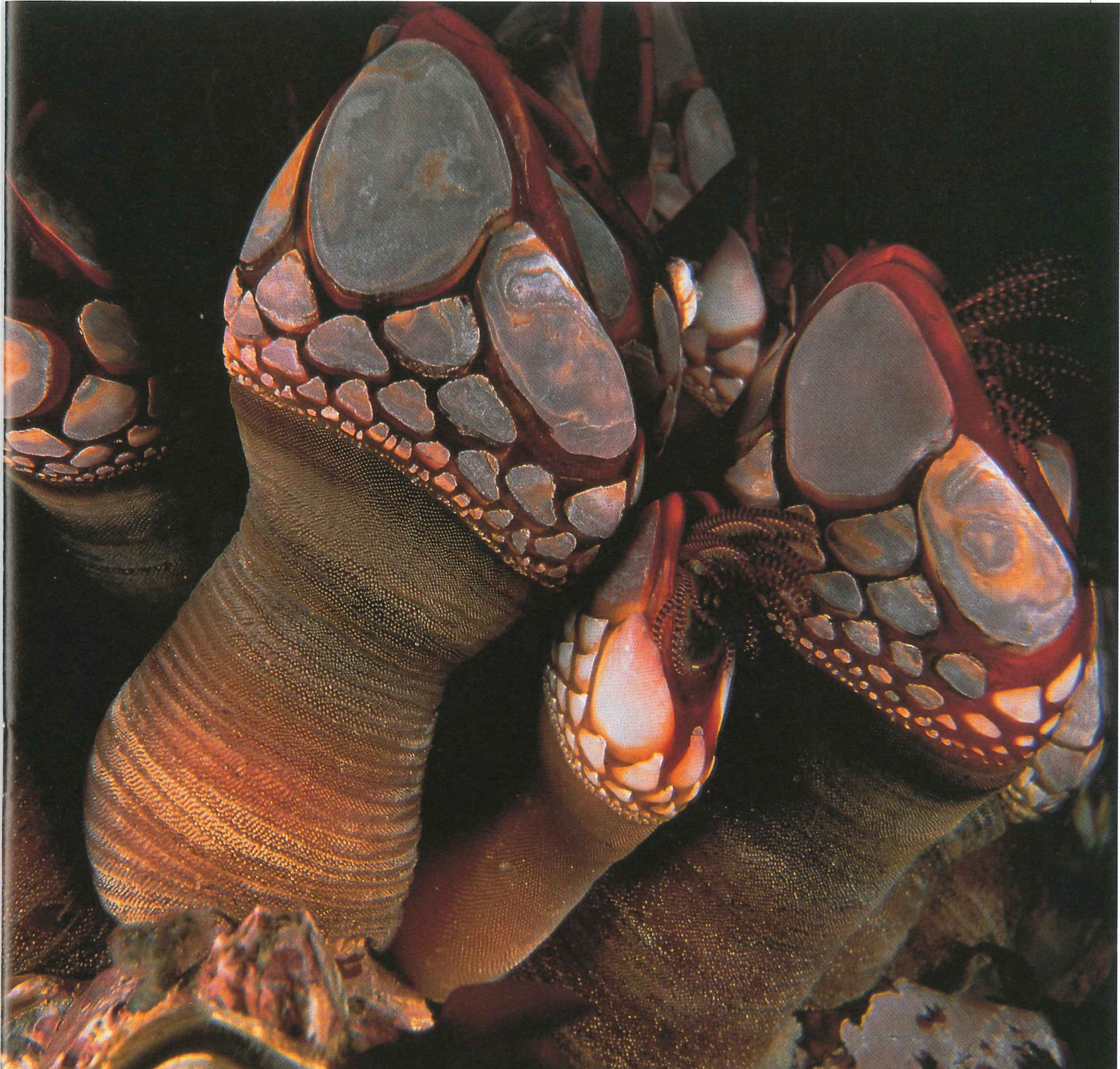
The last major item of business for the show was the catalogue.
At first, I had ruled this out as far too expensive. Then I met Rachel Vincent, Communications Co-ordinator for the Commission for Environmental Cooperation (CEC) – the NAFTA environment secretariat headquartered in Montreal. Given their North American mandate and environmental focus I thought the CEC would be a natural sponsor for the show. Rachel did too. “Why don’t you produce a catalogue” she asked. “Far more people will see the catalogue than will ever see the show.” “You give me the money and I’ll write a catalogue”, I replied. Thirty days later she came up with $20,000. Suddenly, I had a cosponsor and a catalogue to produce.
Through a friend of Rachel’s, I was introduced to Patricio Robles Gil, Mexico’s foremost publisher of natural history books.
For the next four months, Patricio, his graphic designer Martin Garcia Urtiaga and I designed the catalogue. The most difficult factor proved to be the need to produce the text in all three NAFTA languages — English, French and Spanish. This naturally tripled the length of the text – and hence the cost. Martin’s breakthrough idea for dealing with this problem was to make the catalogue very large — 40 cms long and 20 cms wide. This enabled us to lay out each section of text on two facing pages, thus reducing the number of text pages to pictures. The elongated shape also allowed us to run maps of each section of Pacific coastline on the left margin of each text section — thus serving as a visual anchor for the text.
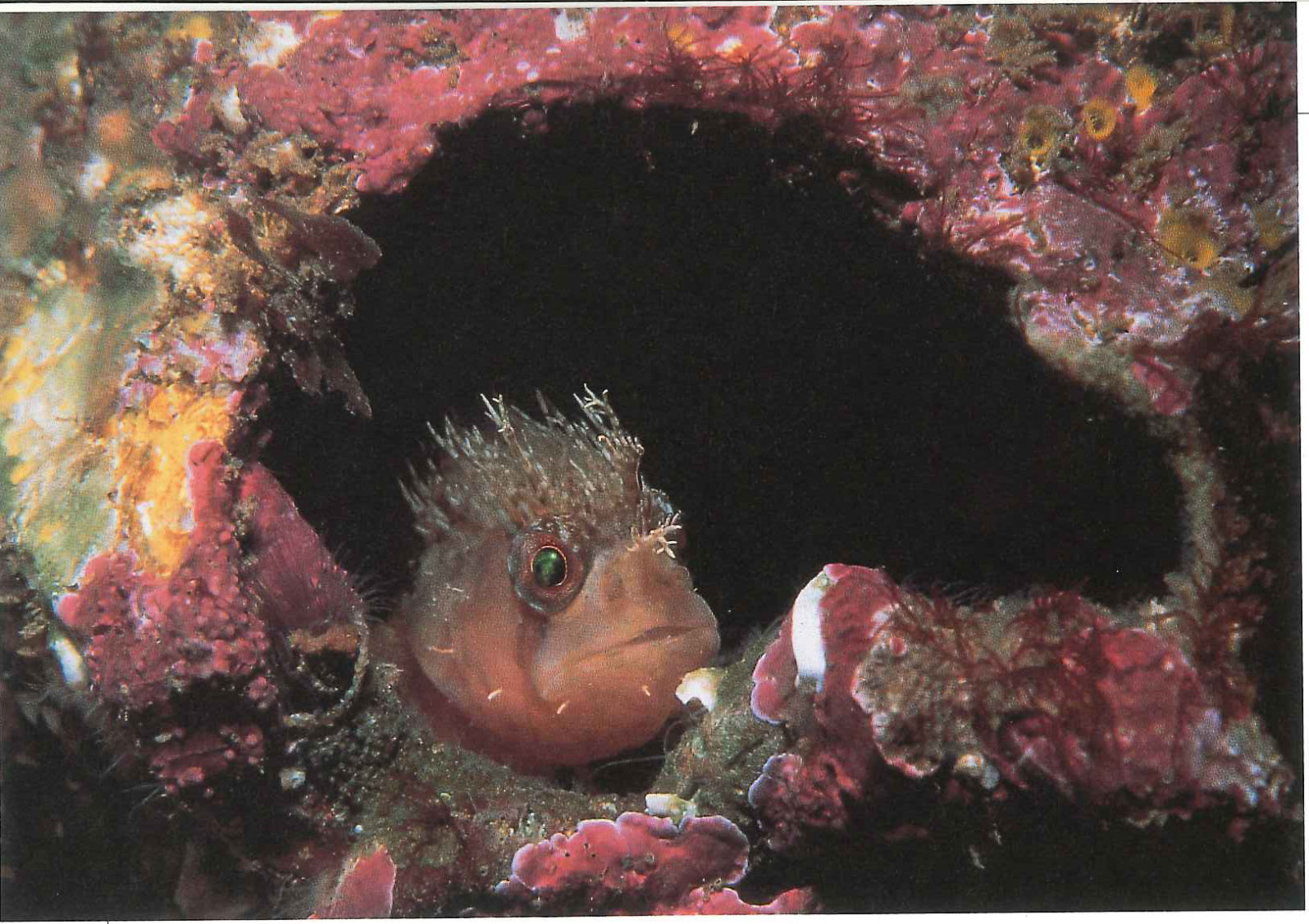
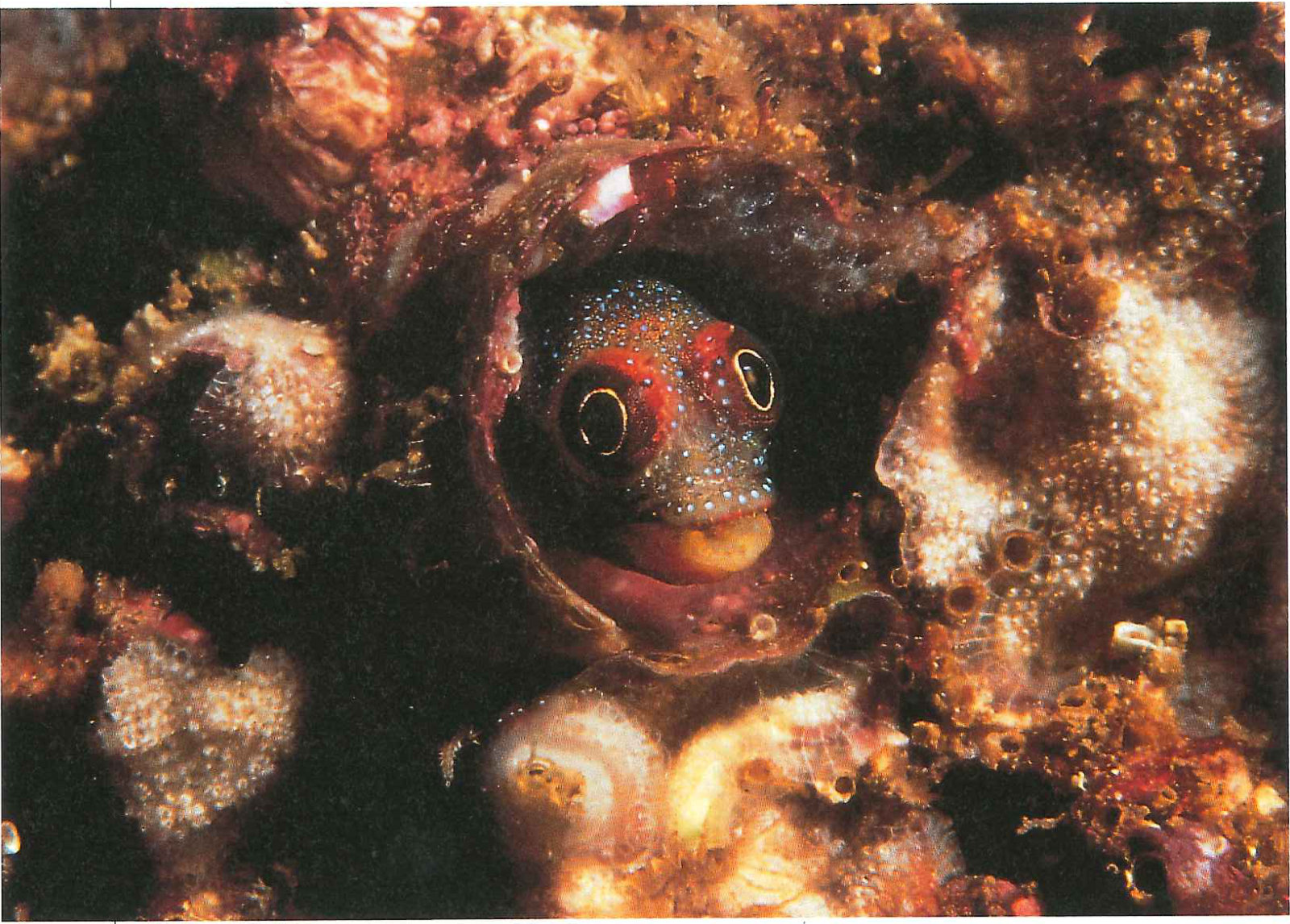
The hardest part of the whole project proved to be the translation. The French and Spanish sections were each revised five times, by different colleagues in the Embassy. Sending the text to professional translators proved to be a disaster — they had no understanding of the content or the photos, and the French and Spanish texts came back completely different from each other, and from the English text. In the end, I had to sit down with two Embassy colleagues, Marianick Tremblay and Claudia Vega-Islas and revise all three versions simultaneously, line by line. Along the way, we had a few laughs — especially trying to come up with common names in all three languages for some of the creatures. My favourite case was a goofy looking little fish from British Columbia, “The Mosshead Warbonnet”. In French, according to an official translation provided by the Department of Fisheries and Oceans, this is “Le toupet-élégant”. So in Spanish we dubbed it “tupé elegante”
The exhibit finally opened on October 12th, 1995 at a meeting of the three North American Ministers of the Environment in the Mexican colonial city of Oaxaca. The meeting took place in a 16th century former convent. We hung the photographs on panels down the echoing stone corridors, with arched windows looking over the roof tops of the city. When we turned on the spotlights at twilight to inaugurate the show, the effect was spectacular.
Since then, Pacific Currents has travelled to four more venues around Mexico. In June 1996 our Consul General in Los Angeles, Dennis Browne, inaugurated the show with his Mexican counter-part at the Scripps Institution of Oceanography, in La Jolla, California. At Scripps, the photos were hung around the tanks in the Stephen Birch Aquarium, many of which contained the animals from the exhibit — including the now famous “tupé elegante”. At present, the show is hanging in La Biosphère in Montreal, the environmental education centre in the former American Pavilion from Expo ’67.
Pacific Currents is already booked to tour around North America for at least the next two years. The quality of the photographs, and certainly the catalogue, have helped enormously to place the show. But I have found what attracts museum curators in the first place, from La Jolla to Montreal, is the original concept of a tri-lingual tri-national exhibit, which views North America from a fresh perspective.
Along the way I have learned a few important truths. First, I finally know what museum curators do for a living. I found that creating and managing this project could easily take up 100% of my time; and that “Pacific Currents — The Show” had turned into “Pacific Currents — The Life!”. Second, I would never have had the chance to put together this project if I had not had the freedom, backed up by the resources, afforded by working in an Embassy. Finally, if I had been living in the hyper-professionalized atmosphere of Canada or the United States, I would never have attempted to create a professional exhibit from scratch. In Mexico, where occupational boundaries are much more porous, I found professionals far more ready to collaborate with an amateur in this kind of project. But as I noted before, in Mexico everyone harbours in themselves the spirit of an artist.
View the original scanned pages →
Originally published in bout de papier, Vol. 13, No. 3 (1996) — Fall 1996 // Automne 1996, pp. 9–12. Read the rest of this issue →



