
bout de papier, Vol. 14, No. 1 (1997) — Spring 1997 // Printemps 1997, pp. 27–30
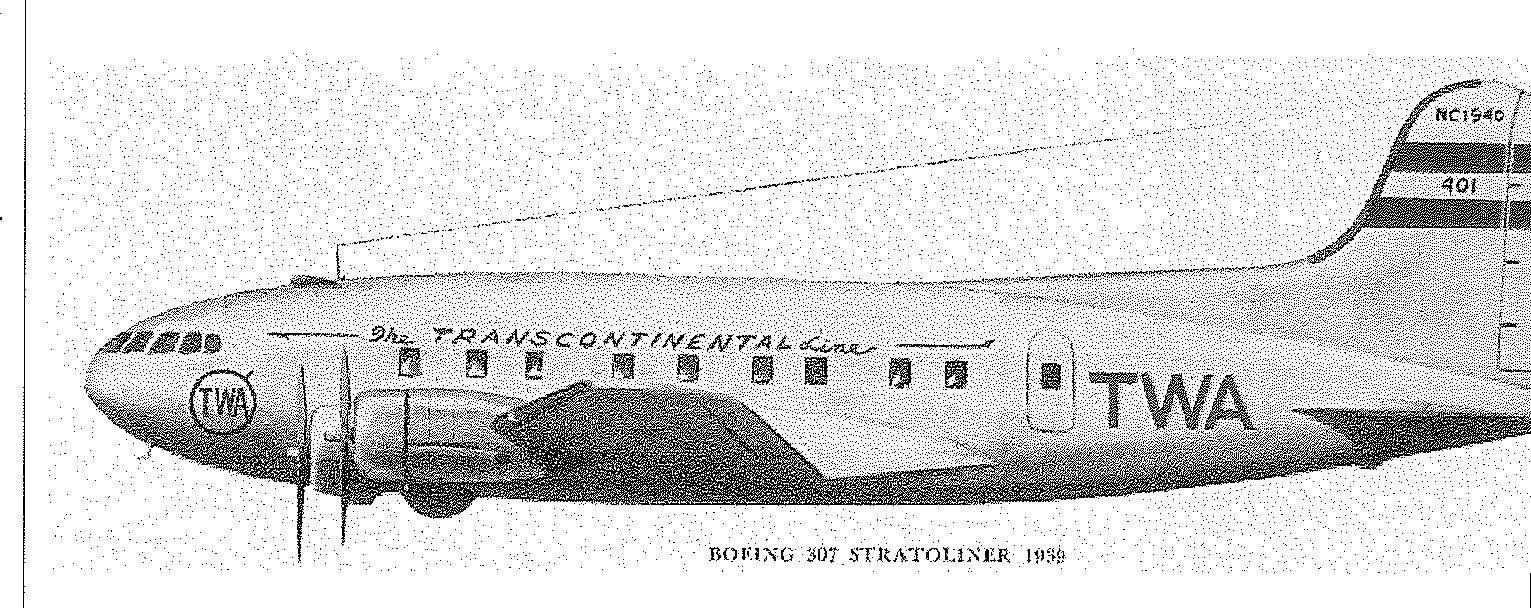
The four-engine Stratoliner was incongruous as it lumbered to the end of the runway at Wattay Airport, Vientiane on Monday, October 18, 1965. Around it were modern machines of war, mostly from the United States, though echoes of France were still to be seen. A helicopter stood out, reflecting the nature of warfare in Laos and throughout Indochina.
The Boeing 307 Stratoliner — F-BELV, its name — was on the last leg of its twice-weekly flights stitching together the offices of the International Commission for Supervision and Control (ICSC) throughout Indochina. Earlier in the day it left Saigon, two hours later than scheduled, touched down briefly at Phnom Penh, came on to Vientiane and was now en route to Hanoi, its final stop for the day. It would retrace the route the next day. Captain Henri Domergue, an experienced pilot with the Paris-based Compagnie Internationale des Transports Civil Aériens (CITCA), was in charge. There were three other crew members — a radio officer, a flight engineer and a steward.
The passengers mirrored the make-up of the Control Commission. On board were five Indians, one Pole and three Canadians. The three Canadians were:
Sergeant James Sylvester Byrne, Royal Canadian Army Service Corp, from Aylmer, Quebec and with the Canadian Delegation in Saigon. He was on the plane as a courier.
Corporal Vernon J. Perkin, Royal Canadian Hussars, of Regina; he was going to Hanoi for the first time to take up guard duties with the Canadian Delegation. John Douglas Turner, a foreign service officer from Vancouver and Canada’s senior representative on the ICSC delegation in Hanoi
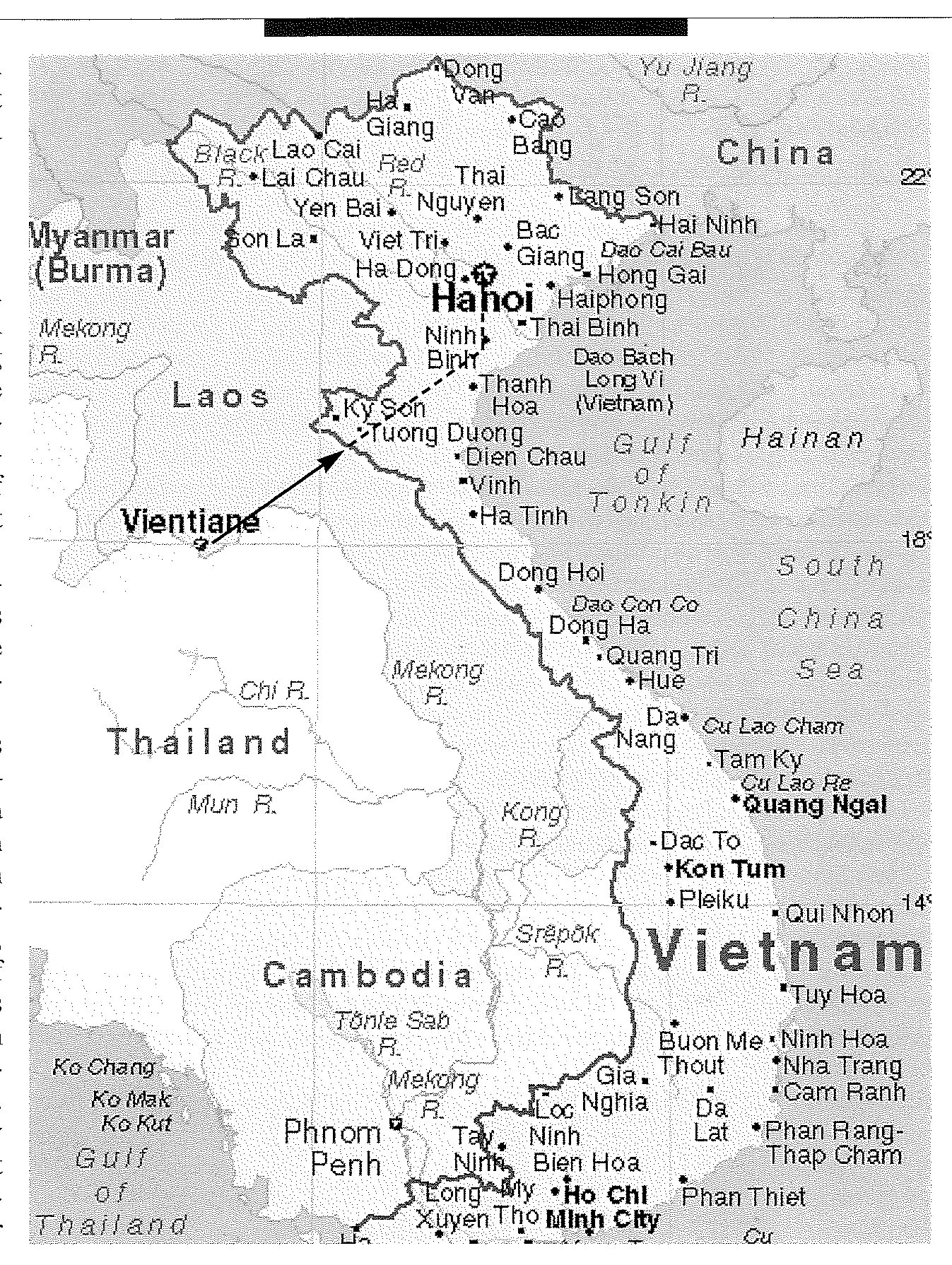
Wattay tower cleared the flight for takeoff and it was airborne at 3:05 pm. Fifteen minutes later Captain Domergue radioed Gialam Airport, Hanoi, confirming departure from Vientiane. He reported the flight would cross the border with North Vietnam (Muong Xen) at 3:55 pm and would be over Phu Ly, south of Hanoi, at 4:44 pm. Arrival at Gialam was expected at 4:58 pm. One minute later, Gialam’s air traffic control confirmed receipt of Captain Domergue’s message and cleared the flight for arrival as scheduled.
That was the last the world ever heard from F-BELV, its thirteen passengers and crew. When the aircraft did not arrive, Gialam tried to contact it but there was no response. The conflict of the next decade passed the Stratoliner by and it was quietly forgotten. More casualties in a war that was to know many.
Thirty years later
Donald J. Byrne, an Ottawa lawyer writing to the Prime Minister on various aspects of government policy, commented at the end of a letter:
On a personal note, my step-father, James Sylvester Byrne, was listed as missing-in-action in Vietnam in the service of Canada in 1965, when the plane he was travelling on en route to Hanoi on behalf of the International Control Commission failed to arrive on October 18, 1965. As this is the 30th anniversary of his loss, I would welcome any information the Canadian
Government may have gathered in recent years from Vietnam with respect to this event.
The letter was sent to the Consular Affairs Bureau in Foreign Affairs. The Bureau manages the daily mayhem that affects some of the millions of Canadians who visit other countries. Deaths, natural and otherwise, problems with the law, missing persons, accidents, illnesses and myriad other problems are dealt with by a small band of officials working closely with others in the 250 Canadian diplomatic and consular offices around the world.
An earlier era
The Vietnam war cut across Canadian foreign policy for over twenty years. Canada, in keeping with its post-war status in the early fifties, was drawn willingly into the efforts to end the war in Vietnam and to manage the decolonization of Indochina. Canada, India and Poland were selected to oversee the disengagement of France and the emergence of Vietnam as a unified state.
The forty years between the creation of the ICSC and the letter from Mr Byrne represent a tumultuous period of Canadian foreign policy. The tracing of information on the fate of F-BELV through the thousands of volumes of files was daunting. The work was hastened by the memories of persons who had served in Indochina with the ICSC and some who were there when F-BELV disappeared.
Tiptoeing across the pages of recent history and, particularly, the minutiae of information exchanged between headquarters and the field is less edifying than the public perception. The government file, long a metaphor for many of the ills in the relationship of the governed with their government, in reality is often nothing but a disjointed pile of the ephemeral looking for a theme.
The search of the records was substantial. Those who labour in the dusty wasteland of departmental records turned up a number of volumes of records containing references to F-BELV. The files, most stored at Tunney’s Pasture, before they become historical treasures of the National Archives and National Library, soon became “continuous as the stars that shine” and “stretch’d in never-ending line”. Out of these reliquiae emerged the story of F-BELV.
“An ancient four-engine Boeing 307”
F-BELV began its life in 1939. It was one of ten Stratoliners built by Boeing in the waning days before the aircraft industry dedicated itself to the production of the instruments of war. The 307 was the first four-engine ’pressurized’ transport, intended to transform I aviation from its “wing and a prayer” image to one of safety and comfort.
Only nine Stratoliners left the Boeing plant — one crashed during a demonstration flight in March 1939. Pan American, then an emerging international airline, purchased three as part of its ’Clipper’ fleet. Trans World Airlines, the dream of Howard Hughes, purchased the remaining six. One was to be used by Mr Hughes in an attempt to establish an-around-the-world record. The war ended that idea.
All nine were used as transports for the USAF (designated C-75) throughout the Second World War. By 1965, seven were still flying. Six were in Indochina, forming the backbone of the Compagnie Internationale des Transports Civil Aériens (CITCA), as it sought to maintain a civilian presence in the dangerous skies over Vietnam, Laos and Cambodia.
In late 1995, the last Stratoliner returned, after fifty-one years of flying, to the Boeing plant in Seattle. It is now being refurbished and will soon become part of the American aviation legacy, lovingly kept by the Smithsonian Institution.
The International Commission
The International Commission for Supervision and Control was established in 1954 by the Geneva Conference on Indochina. The purpose of the Conference was to end the hostilities in Indochina, thereby creating the conditions for France to withdraw. The Conference began two weeks after the fall of Dien Bien Phu and ended in late July with the conclusion of the Agreements MAGELLAN Geographix™M. On the Cessation of Hostilities in Indochina
– one each for Vietnam, Laos and Cambodia. The Agreement for Vietnam provided for a cease fire between the communist Vietminh and the French and the regrouping of the two armies on either side of a demilitarized zone along the 17th parallel. This led to a de facto partition of the country that was to end with planned general elections. The Final Declaration of the Conference, which no government signed, and from which the representatives of South Vietnam dissociated themselves, called for the elections to be supervised by the ICSC. The partition and the ambiguity of the Geneva settlement provided the basis for the dominant role the region was to play in global politics for the next thirty years. The International Commission was made up of delegations from Canada, India and Poland, with India presiding. Parallel structures were established in all three countries (in Vietnam, there were offices in Saigon and Hanoi). In 1955, the Commission had 160 Canadians, a similar number of Poles and 1086 Indians. These numbers decreased significantly over the years and when the Commission was disbanded in 1973, the total strength was less than 300.
The search for F-BELV
Hanoi authorities assumed, when the plane did not arrive that F-BELV had returned to Vientiane. The Control Commission office in Hanoi radioed Vientiane shortly after 6:00 pm that the plane was “unable to land” at Hanoi but that clearance had been obtained for it to land at 9:00 am the next morning.
ICSC officials back in Vientiane were puzzled by the message; late that evening they prepared a reply questioning the report, noting the aircraft had not returned to Vientiane. Though intended for immerliate transmiccinn the message was not sent until morning because of ionospheric interference with radio transmissions. Between 5:00 pm on October 18 and mid-morning on the 19th, Hanoi believed the aircraft had returned to Vientiane, while Vientiane believed that it was on the ground in Hanoi.
The next morning ICSC authorities in Vientiane realized their message of the previous evening had not been sent and that there might be a problem. A ’flash’ message was sent at 10:35 am reporting that F-BELV had not been heard from and requesting an immediate investigation. By noon, the confusion was over and all parties accepted that F-BELV was missing. Information from all sources was quickly combined and ground and air searches organized
A Search and Rescue Operations Centre was established at the Canadian Delegation offices in Vientiane with a second office at Wattay Airport to pre- and de-brief air crews involved in the search. Over the next days more than 25 aircraft searched between Vientiane and the Vietnamese border. The search area was initially five miles either side of F-BELV’s track to Muong Xen; it was then expanded to ten nautical miles, with further expansions south towards Paksane and north to the Plain of Jars. Contour searching at minimal altitudes was carried out.
North Vietnamese authorities did not allow ICSC search aircraft to overfly the route of F-BELV in Vietnam. It was ten days before the ICSC was allowed to resume flights to Hanoi. The Vietnamese authorities advised that searches were being carried out by its own forces. Search operations were also limited over Pathet Lao-controlled areas in Laos.
The search continued until November 16. Four sightings were reported, two of which turned out to be false. The remaining two were identified as wreckage of earlier crashes. The Commission established an internal committee which reported the aircraft “met with an accident after it left Vientiane airport at 15.05 hours on 18 October, 1965 and that all the passengers on board F-BELV are dead.” The ICSC unanimously accepted the conclusion on January 20, 1966.
The ICSC continued efforts to determine the fate of F-BELV until the Commission was disbanded in 1972. In 1973 Canada’s Foreign Minister, Mitchell Sharp, raised the issue during his visit to Hanoi. In late 1974, Canada again requested information. In early 1975, Vietnam replied that no trace of the plane had been found, despite intensive searches. The Vietnamese advised that the investigation was complete and that the aircraft could not have crashed in Vietnam. A similar inquiry was made to Laos without response. Other inquiries were made in late 1977 but no new information emerged
The flight factors
The six Boeing 307s with CITCA were considered dependable workhorses. CITCA kept three fully operational with a fourth in scheduled maintenance. Following the disappearance, the ICSC thoroughly investigated the air worthiness of the planes and was assured by France that all had valid Airworthiness Certificates from the French civil aviation authorities, validated by the Bureau Veritas, the International Register for the Control of Aircraft.
An Air America captain, familiar with the 307, was quoted in the Boeing Magazine in 1968:
307s are a pleasure to our eyes over here. They are being well kept. After discussing the aircraft with the head of the CITCA maintenance department and some of the mechanics, it became obvious that all of the people involved in the work on and flying of the planes are highly impressed with their old beauties…. (The planes’] appearance… is spotless, high polished paint work always fresh. Their interiors are clean and neat. The cockpits look like new, all equipment present and accounted for. It is most interesting to see the face of a disbelieving young fighter pilot as the 307s trundle out and take gracefully to the air among supersonic F-4s and new Boeing 707s.
ICSC members who flew in the planes were not as poetic. A 1968 Canadian report noted “considerable concern” regarding the safety of CITCA flights. Though not doubting the airworthiness of the aircraft, the report said that “performance limitations and outdated navigation/communication equipment are such that … a more modern aircraft and related equipment is most desirable.” The same report reflected concerns of flight safety between Vientiane and Hanoi:
Because of the limited speed and altitude capability of the Stratoliner, it is vulnerable to airborne as well as ground based NVN defensive forces.
The air corridor from Vientiane to Hanoi was through a war zone. There was a civil war in Laos with ongoing contestations for control on either side of the track assigned to the CITCA flight. Near the border, control was with North Vietnamese armed forces along the Ho Chi Minh trail, leading south through eastern Laos to South Vietnam.
In the air, while control was with the United States, it was a dangerous place. The Rolling Thunder exercise began in March 1965 and while there were pauses, air attacks throughout the region were frequent and massive. On the day F-BELV disappeared, there were numerous sorties and North Vietnamese air defensive forces were on high alert. These forces were significant and capable. Numerous American aircraft were downed and CITCA pilots and passengers reported anti-aircraft fire near the air corridor. The North Vietnamese also alleged that American aircraft used the ICSC air corridor and flew in the radar shadow of CITCA aircraft.
Life Magazine writer Lee Lockwood, on a trip to Hanoi on the CITCA Stratoliner, gave a sense of the time:
At Phnom Penh… I picked up the International Control Commission plane, which flies every Friday and every other Tuesday to Hanoi…. The ICC plane, piloted by three Frenchmen was an ancient four-engine Boeing 307. We let down en route at Vientiane, Laos. The plane had to leave from here and arrive in Hanoi — exactly on schedule, flying within a 20-mile corridor. Clearance for any deviation in flight plan must be obtained several days in advance —from the North Vietnamese, the U.S. Air Force, the U. S. Navy, the Royal Laotian military and the commands of the Pathet Lao guerrilla forces, any of which is quite likely to open fire on stray airplanes.
Though written in 1967, this accurately reflects the environment and narrow parameters for the ICSC flights in 1965.
Investigations, theories and speculations Newton’s third law of motion states that an ’object in motion tends to stay in motion until action upon by an outside force’
The determination of these ’outside forces’ is at the centre of a global network of national aircraft accident investigation offices. The offices find international sanction in the Chicago Convention establishing the International Civil Aviation Organization (ICAO). Annex 13 of the Convention gives the state where the accident occurs primary responsibility to investigate. The state of registration, the manufacturer of the airframe, the builder of engines and the state of nationality of passengers are given appropriate status.
The disappearance of F-BELV pushed the limits of what the framers of Annex 13 envisioned. Complicated and overlapping jurisdictions and responsibilities in Indochina clouded and confused the ability of all interested parties to obtain a clear understanding of what happened
F-BELV could have disappeared in either Laos or North Vietnam. CITCA was headquartered in South Vietnam which was at war with North Vietnam and was flying for an international commission with a mandate to keep tabs on the actions of the warring parties. The United States was conducting ground and air operations throughout the area. The aircraft was registered in France, manufactured in the United States, with passengers from Canada, India and Poland
France assumed primary responsibility for the investigation. Its officials, both in Indochina and with the National Committee for Aviation Safety (NCAS) in Paris were involved in the search and the inconclusive efforts to determine the fate of the aircraft. F-BELV was quietly deregistered on September 22, 1971.
Leaving aside Bermuda Triangle theories, only a limited number of ’outside forces’ can explain the crash of an aircraft. The available information suggests the crash of F-BELV was most likely due to accidental or deliberate anti-aircraft fire from military units in Laos or in Vietnam.
Later
In early 1996, Canada asked the US Department of Defense to review the F-BELV disappearance in light of its own extensive information on missing aircraft in Indochina. The request went to the Prisoner of War/ Missing in Action Office.
In April the Americans replied that its records indicated a plane with characteristics similar to that of F-BELV crashed in the vicinity of 1911N/10411E, a position just west of the Laos-Vietnam border south of Muong Xen. The location was 14.5 nautical miles south of the flight path of F-BELV. It stated that there were also reports from refugees from the area indicating that a four-engine aircraft had crashed in mid October 1965.
This information was given to the government of Laos in June requesting that efforts be made to verify the crash report. It is hoped that a reply will be received shortly.
View the original scanned pages →
Originally published in bout de papier, Vol. 14, No. 1 (1997) — Spring 1997 // Printemps 1997, pp. 27–30. Read the rest of this issue →



