
bout de papier, Vol. 17, No. 3 (2000) — Fall 2000 // Automne 2000, pp. 43–44
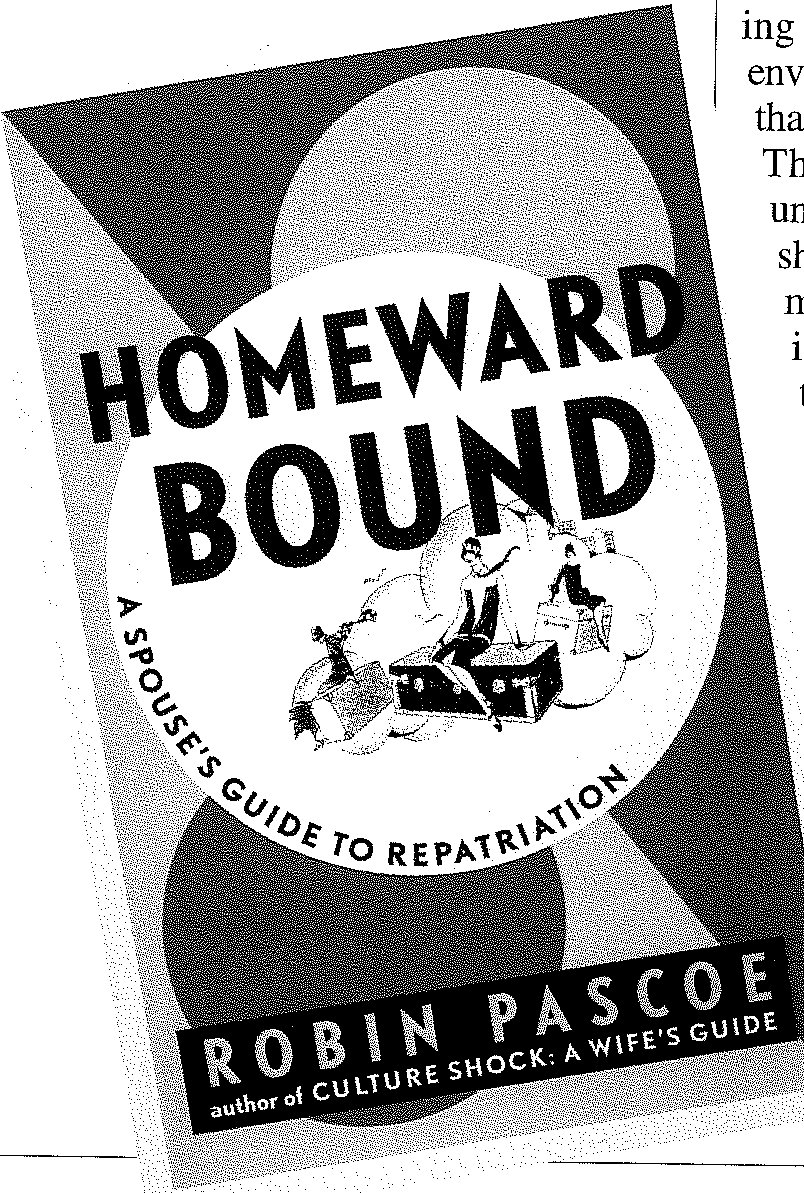
HOMEWARD BOUND: A SPOUSE’S
GUIDE TO REPATRIATION by Robin
Pascoe, Expatriate Press, Vancouver, 2000,
138 pp. US $16.95
reviewed by Nancy Fraser
The absence of a truly useful treatment of the issues of re-entry has finally been filled by this book, Homeward Bound: A Spouse’s Guide to Repatriation, by Canadian author Robin Pascoe.
For those who live the rotational life, the very prospect of the act of moving internationally is dreaded. Dismantling the familiar accoutrements of everyday existence, and deciding what must be left behind and what can be transported entails endless decisions, lists and, inevitably, exhaustion. What is equally difficult is coming to terms with the knowledge that nothing will ever be the same again, that after this move, this grouping of friends in this particular place where knowledge and understanding were hard-won will forever be changed.
It is ironic that the move back home, the actual re-entry process, is frequently much more painful and more complicated for the family than was the move overseas, particularly for the spouse who is probably in charge of managing it. It is this fact that Robin Pascoe, a long-term Canadian foreign service spouse, and now an internationally-known lecturer and author on expatriate issues, has chosen to address with her well-honed journalistic skills in this her latest book. Those who are familiar with Pascoe’s two earlier books in the Culture Shock! series: A Wife’s Guide and A Parent’s Guide will recognize her humourous style of writing about the very serious issues that must be addressed repeatedly by those who divide their lives into international segments; new readers have a treat in store.
Logic would seem to dictate that preparing to live in a totally unfamiliar cultural environment would present more challenges than returning home. If only that were so. The very challenges of addressing the unknown carry their own impetus; the real shocks come when the familiar environment in the home country most definitely isn’t! And when the spouse is expected to function effectively and immediately, to unpack and re-assemble a home with children who are less than happy or cooperative even as the employee is trotting off to his or her vaguely familiar job and questioning the reason the spouse is so slow to start contributing to family income can load on stresses, resentments and rage that may never be overcome.
The organization of this book is The organization of this book is chronological, so no matter in what stage readers are involved, it’s possible to connect to the issues that are affecting them, and to go back or forward to contemplate what came before or is lying in wait. The chapter titles address concerns that occur even before the family leaves their international setting (So You Have Decided to Move Home: Things to Contemplate Before You Leave the Post), all the way through to the final chapter: Re-entry Rage and Resentment; Get Over It! Mechanisms to cope with all the issues that will present themselves in both the short and long term, are provided. Ms. Pascoe identifies problems that are often faced by spouses who have chequered employment histories that reflect their peripatetic existence, and suggests that international experience has value that may not have been considered by the job-seeking spouse. At every turn, the successes and mistakes made by others are included, and contributions and advise from experienced spouses who responded to an extensive survey are freely quoted. Included in the author’s valuable insights are some that relate to the impact the stage the family finds itself in may have as they traverse the re-adjustment road. As well, she examines the effects such personal jolts as professional downsizing, retirement, divorce, ill-health or death will have on any adaptation process. Nevertheless, as understanding and cozy as this author is of the vicissitudes of re-entry, her tough-love approach to finally getting on with life at home is bracing. This book is directed at the needs of the spouse, however it is valuable reading for the other adults in the family, if only to sensitize them to the experiences and emotions that define the reentry experience of the spouse, and the impacts they will place on the entire family.
In addition, a foreword by American psychologist Carlanne Herzog, an afterword by Dr. Kirsten Thogersen, who is Danish, and the skills of British editor Joanna Parfitt, ensure this book is a truly international treatment of a process that transcends boundaries. The bibliography will be helpful to readers seeking more information. It’s natural to feel entirely alone when attempting to adjust to a home that feels like anything but in the midst of acquaintances who have no understanding of why their new neighbour is acting so strangely. Ms. Pascoe’s web site www.expatexpert.com provides immediate comfort and support to those who crave connections with others who share their peripatetic experience, be those connections through chat groups or relevant articles.
To purchase the book, contact www.expatexpert.com or www.expatriatepress.com; anyone who will ever come home will be delighted to have Robin Pascoe’s Homeward Bound: A Spouse’s Guide to Repatriation as a valuable resource in their library.
View the original scanned pages →
Originally published in bout de papier, Vol. 17, No. 3 (2000) — Fall 2000 // Automne 2000, pp. 43–44. Read the rest of this issue →



