
bout de papier, Vol. 17, No. 3 (2000) — Fall 2000 // Automne 2000, p. 39
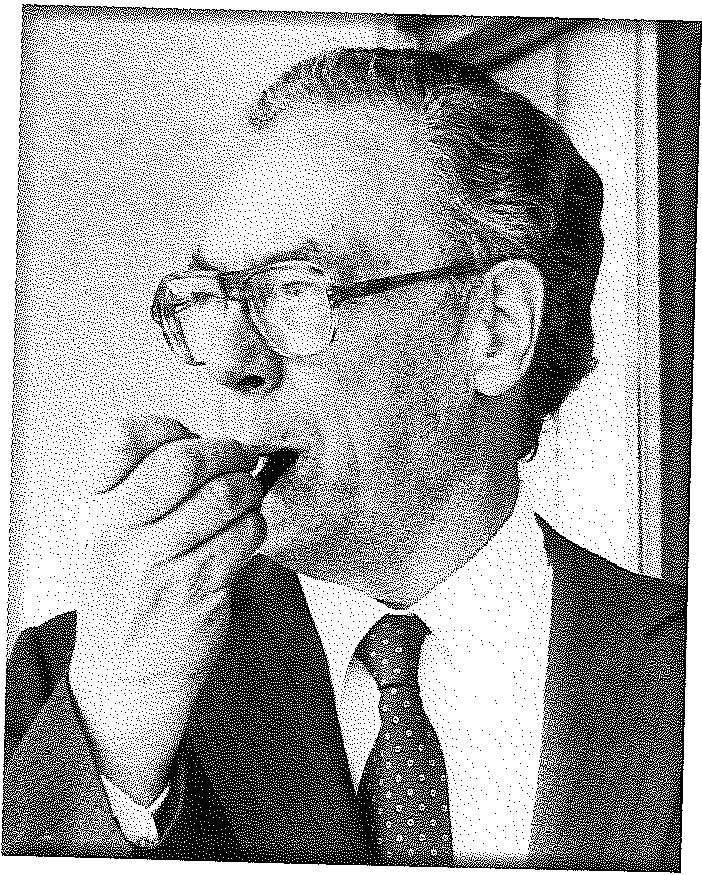
James Howard Stone passed away on April 5, 2000, in his 79th year. The toll of recovery from removal of his bladder after a lengthy illness was too much for him.
Jim Stone dedicated his life to serving others. You could sense it in his selfless pursuit of values that all could share and he derived great pleasure from gently inspiring others to do the same. Perhaps this accounts for the Pied Piper effect he had on young people of all ages who were always attracted to his presence – and in later years retained that affection. Wherever Jim lived, the whole community was his family. And his immediate family was intensely dear to his heart.
Jim was exposed to “dedicated service” as a young boy when his father, a medical doctor, took his family to Norway House in northern Manitoba, becoming one of the first medical practitioners to reside in the area populated by native peoples. The way of life at that time did not include running water, electricity or any other luxury beyond canoeing, fishing and sledding. The experience of living so close to nature left Jim with a lifelong preference for spending as much time as feasible near water. Hence the haven of cottage life which became so much a part of the Stone family.
Jim’s father, a veteran of WWI, thought it only appropriate that his son should join him in WWII and ensured that Jim was inducted in the 14th Field Regiment as a private. Somewhat later Jim became a lieutenant with the 17th Field Regiment of the Royal Canadian Artillery, serving in Italy and the Netherlands. As recounted by journalist Kylie Tanner in The Citizen last April 9:
“Around midnight on April 18, 1945, his regiment was attacked in Otterlo, Netherlands. Lieut. Stone directed the battle from a battery command post, and kept in touch with regimental headquarters right until the German troops infiltrated the area. As the Germans forced their way in, Lieut. Stone destroyed the radio. He quickly resumed control of the battle by finding a scout car in a safer location and hooking its radio into the regimental frequency. The battle was over by the morning, with hundreds of Germans killed or taken prisoner. Mr. Stone was awarded the Military Cross for bravery at Otterlo.”
Jim rarely spoke of his wartime experience but at the time of his death he was nearing completion of an anecdotal review of his life and was well into the war years — a treasure for his family.
Following the war, Jim attended Queen’s University where he met Christine, an Ottawa native, who became his bride after graduation in 1948. Their career together took them in and out of Ottawa to postings in Paris,
Wellington, Rome and London, as trade and economic specialists; Jim later served as head of mission in Brazil and in Chicago. With retirement in 1980, they left a trail of friends and fond memories as a result of these assignments to what Jim somewhat sheepishly referred to as “time-share resorts.”
Christine, their two daughters and two sons, noticed over the years that Jim’s method of relaxing was not always one of voraciously reading novels and communing with nature but also of being creative with his hands. It could be buying used Bentleys (when in London) and crawling underneath outside Chester Terrace to make his own repairs with greasy hands, or disappearing quietly under the cottage to fix an old clock or repair that famed cottage screen door. Then, to the surprise of many, Jim discovered an aptitude for three-dimensional art. He studied sculpting in various media, both in Ottawa and in San Miguel de Allende, Mexico, and has left a variety of his works dotted around the family home. Just as with Jim himself, his sculptures draw you to them with a magnetic appeal – a trait so dominant throughout Jim’s life.
Jim also shared his retirement with the needs of the community. He was an integral member of the Ottawa Salus Corporation and served many years on the board in the effort to meet the need for better care for the mentally ill.
Jim was a man of compassion for others and an inspiration for the young. He will be greatly missed.
View the original scanned pages →
Originally published in bout de papier, Vol. 17, No. 3 (2000) — Fall 2000 // Automne 2000, p. 39. Read the rest of this issue →



