
bout de papier, Vol. 9, No. 1 (1992) — Winter 1992 // Hiver 1992, pp. 16–17
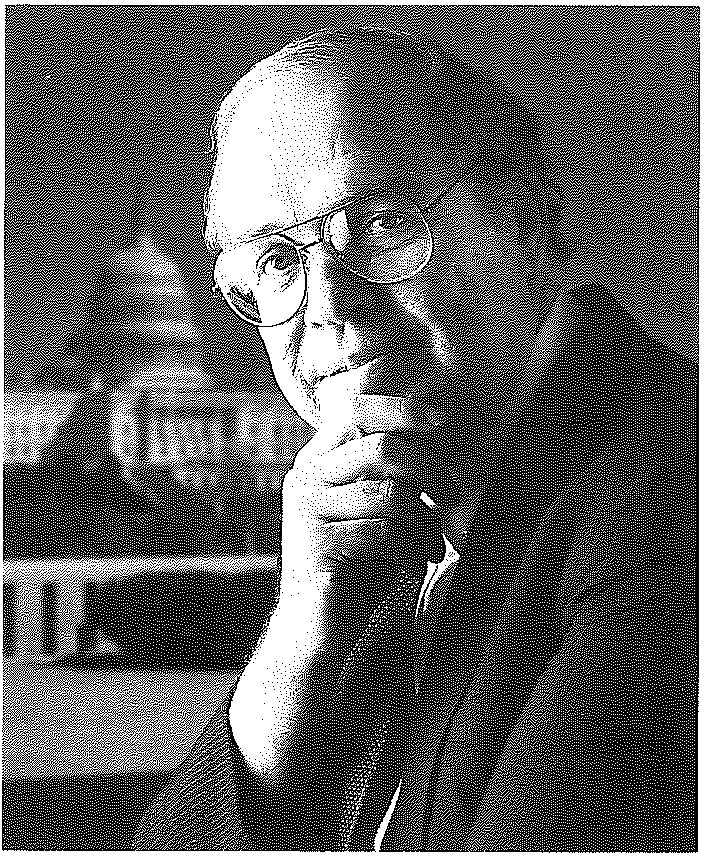
The following article was adapted from informal remarks made by Derek Burney, Ambassador to the USA, on May 14 in Ottawa to the PAFSO Professional Committee. These written remarks were provided Neil Reeder, Executive Assistant to the Ambassador. Editor
Unquestionably, success in the Gulf War gave Americans a surge of national pride; self-confidence and satisfaction in their military victory; in their advanced technology; and in their leaders, some of whom, like General Schartzkopf, became heroes on a scale usually reserved only for athletes! That was one level of the prevailing mood and it was authentically American: one of unabashed emotion and genuine pride.
Beneath the euphoria, however, were signs of a less confident and more querulous America. The sweetness of military victory was diluted somewhat by the unforeseen plight of the Kurdish refugees, the staying power of Saddam Hussein and the seemingly unchanged rigidity of Middle East political problems. More to the point, underneath the high gloss of victory in the Gulf, then as now, the USA faces serious domestic challenges: education, urban and infrastructure decay, crime, drugs, race and a stagnant economy. Neither the necessary solutions nor the required resources are readily at hand and the competition for what resources are available is becoming more vocal and stronger than ever.
It is ironic that, as the walls come down elsewhere, as democratic and capitalistic values increasingly are in the ascendancy virtually everywhere, even in Albania, there are now growing doubts in the USA itself about its future, and doubts in particular about whether things will indeed continue to get better. The remaining superpower is also in a real sense a lonely superpower. It is still determined to take the lead internationally (and is doing so) but it is less certain and even less committed than when the world was defined more simply, and more sharply, in two camps. The USA sees itself today as being threatened more by the growing economic power of its friends, such as Japan and Germany, than it was by the military power of its former arch-rival. Not surprisingly, public polls in the USA suggest that the protection of American jobs is considered to be the number one foreign policy concern of Americans. In the public’s mind, the major threat to the USA is Japan’s economic power and, ironically, the USSR is now viewed as fourth on the list of “most-liked” nations. Canada continues to be ranked as number one in the “most-liked” category, but that is not necessarily a source of satisfaction for some of our compatriots.
The Bush Administration remains confident, coherent and competent in managing what has suddenly become a vastly different international situation than the one it inherited. The overwhelming success in the Gulf war and American management of the coalition forces were singular successes for the President and for his foreign policy team. While doubts may persist about his national strategic vision, few find fault with Bush’s decisive leadership or with his tactical skills. (And, as the pundits say, you cannot discount his numbers!)
International Priorities are Clear
The USA search for success in the Middle East persisted even with limited signs of progress. The window of opportunity was thought to be narrowing, yet most observers continued to see Bush and Baker as the best equipped American team ever to cajole something useful from their unprecedented Gulf venture. Their creative dynamism also achieved something in parallel on strategic arms control.
That being said, the disintegration of the USSR poses a very different challenge for the USA and for all Western governments. How to find the right balance between support for democratic and economic reform in the USSR and at the same time support the Republics is a key question for the USA and Canada alike. Our European colleagues formerly attached less significance to the aspirations of the Republics. For different reasons, such as geography, they placed a much higher premium on political stability for stability’s sake. There was also a strong desire in Germany to ensure the speedy departure of Soviet troops.
Washington, or the Administration at least (and never forget that there is not really a single government in Washington — negotiations between the Administration and Congress can often be as arduous as are the negotiations between the USA and foreign entities), wants to achieve what it can while it can from Moscow. At the same time, it seems to push arms agreements ahead, support real reform where it finds it, and continue to build on the new thinking in Moscow on many international political issues. This is a delicate and tricky manoeuvre, fraught with risk and uncertainty, but one which does not lend itself to the tidy strategies which academics or pundits prefer.
As the global equation shifts dramatically from Cold War security issues and alliances to global economic competitiveness, I suspect that American relations with Europe and with Japan are likely to become rather more difficult and more fractious. The Gulf war triggered new debates about international burden-sharing, and new rounds of finger-pointing, at Japan in particular. Preemptive lunges of unilateralism by the American Congress (without the Administration’s blessing) may become more tempting than ever. This helps explain in part why the Uruguay Round on tariff negotiations remains a priority for the Administration (if not for Congress) and creates a continuing source of American tension with Europe and Japan. This explains, as well, the current friction over monetary policy. The USA remains determined to stimulate economic growth through the means of lower interest rates. Others in the G-7, including Canada but particularly Germany, are putting more emphasis and faith in measures to check inflation.
Remember too that American leadership on international economics used to be accepted as more or less automatic. It is not so today and this is now becoming most evident in the G-7 Economic Summit context. (Surely the most privileged association membership which we Canadians have!)
Remember too that Congress, because it is closer to the grassroots’ sentiments of America, tends to be very parochial on economic matters. It is equally leery of America’s global responsibility for maintaining and defending the open global trading system (or even trans-national institutions). Grassroots America tends to see an unfair world out there which is buying up large chunks of America, squeezing American imports through so-called “unfair” subsidies and non-tariff barriers to US trade of one kind or another — all protectionist measures which are claimed not to exist in the “land of the free” — or so they would like us to believe.
Where Does Canada Fit?
Fortunately, I believe Canada is well positioned in Washington these days to deal with the good, the bad, and the ugly. Relations at the top are excellent and set the standard for constructive effort. Access is unprecedented in quality and frequency and can lead to influence if, and as, we choose to exercise it.
However, this may not last as Canada too could become a victim of the parochial whims and whips of Congress. Accordingly, we need to be more vigilant to use the instruments and the leverage which is available to us to defend and promote our national and foreign policy interests. The Free Trade Agreement gives us a unique bilateral instrument to that end, but is not now, nor ever will be, a universal solvent. The relationship will continue to evolve. The recent action by the USA Administration in challenging the binational panel decision on pork (a decision which had been in Canada’s favour) was a classic example of the politics of domestic interest groups and parochial expedience in Washington prevailing over the principles and obligations of an international agreement. (The incident had relatively little to do with pork and more to do with the somewhat desperate attempt by the Administration to shore up support for the Fast Track).
The recent renewal of NORAD (title amended in 1991 to the North American Aerospace Defence Command), unheralded and unreported as it was, represents one of the quiet successes of our bilateral partnership. Frankly, it places the two countries in a unique category of cost-efficient cooperation on defence and security issues which no other two countries come close to having.
The success in Congress on the Clean Air Act and the negotiation of the Acid Rain Accord were singular achievements for which many individuals on both sides of the 49th parallel struggled persistently for more than a decade. They represent the triumph of reason over parochialism, constitute a tribute to perseverance and unrelenting political pressure, and guarantee a major dividend of the bilateral relationship as a whole.
Now, if I may, let me conclude with a pet theme which may verge on being a sermon of sorts. Some choose to measure success with the USA by the extent of our political differences. I find that a very shallow standard and one that achieves very little if anything for Canada’s interests, let alone Canadian foreign policy objectives. I have no difficulty defining myself as a Canadian in positive terms to Americans and I have no difficulty in celebrating the success of our most vital relationship; whether on trade, environment, or defence, or on more nuanced international issues. Nor do I have any problem in expressing our real differences to Americans which reflect Canadian interests or views.
Where and when we differ, we must assert our differences clearly, confidently and firmly in the hope that in doing so we can influence the USA to adapt to, to share, or even to accept our reasoning. We should not, however, assert our differences simply for the sake of a headline or in some false attempt to shore up our separate identity. This would be folly.
We are different. Canadians have different attitudes about running a country and a different outlook on the world which reflect our very different role and capacity in that world. I can say confidently that Canada is very different in many ways — most of them good differences. If you do not believe me, come on down and see for yourself.
We Canadians also have a country worth preserving and I hope that is something on which we can all agree.
View the original scanned pages →
Originally published in bout de papier, Vol. 9, No. 1 (1992) — Winter 1992 // Hiver 1992, pp. 16–17. Read the rest of this issue →



