
bout de papier, Vol. 8, No. 4 (1991) — Fall 1991 // Automne 1991, pp. 20–23
Many of us had the pleasure of meeting Rick and Amanda Hansen during the “Man in Motion” tour. I had the added privilege of being associated with them when he served as Canadian Commissioner General at Expo 88.
The “Man in Motion” tour was a remarkable triumph of spirit over adversity, perhaps the least important element of which was Rick’s own physical disability. For a considerable part of the tour he had, in addition, to overcome intimidating resource deficiencies, general public indifference or even scepticism, and an almost constant inability to predict what physical, political and psychological obstacles the following days and weeks might bring. There were many times, I am sure, when every logic urged him to abandon the trip, and many occasions when he could, with honour, have done so. But that is what makes Rick different. He simply does not acknowledge limitation, whether he is wheeling around the world or tackling the attitudes and practices that further disadvantage persons with disabilities.
Rick Hansen is an outstanding Canadian representative and we are proud to welcome him to these pages.
Bob Burchill, Editorial Board
It’s been over six years since you first began “Man in Motion” and four years since you completed the tour. What immediately comes to mind now when you reflect on the tour?
One of the most dominant images I have is the opportunity to travel through so may different countries, to meet so many people bout de papier Vol. of diverse cultures as well as political and ethnic backgrounds. It was also fascinating to see people responding to an important social issue and message and translating it in their own unique way. My experiences in these countries were extremely profound and certainly reinforced my faith in humanity.
Each day we are bombarded with negative news about what isn’t going right in the world and base our opinions solely on the information we receive through the media. So when one gets the opportunity to remove oneself from that and gains a mainstream slice of the reality of human nature, it’s really refreshing. That kind of experience has profoundly affected my life and will always be with me.
In fact, every time Look at all the things that aren’t going well I remind myself of the tour and what a great experience it was. It gives me that extra boost and puts things back in perspective.
I’ve heard it said many times that travelling through foreign countries is the best education a person can get. Would you agree with that?
People can theorize forever, but it doesn’t come close to the impact of first-hand experience and being able to meet people, to interact and to experience differences. I’ve often said we should learn to celebrate our differences to give us a sense of comfort.
Were you ever shocked by what you saw in other countries?
Yes, many times I was quite shocked by some of the living conditions that existed in certain countries. Coming from middle-class Canada you have certain levels of expectation and of what you believe to be minimum standards of living. Then you visit countries where there is debris everywhere, people in the streets, leaking roofs and no cars and those are the sorts of things that are quite shocking. I was also shocked by some of the tensions that exist. I recall wheeling through the Middle East and feeling the tension between the Jewish state and the Arab world.
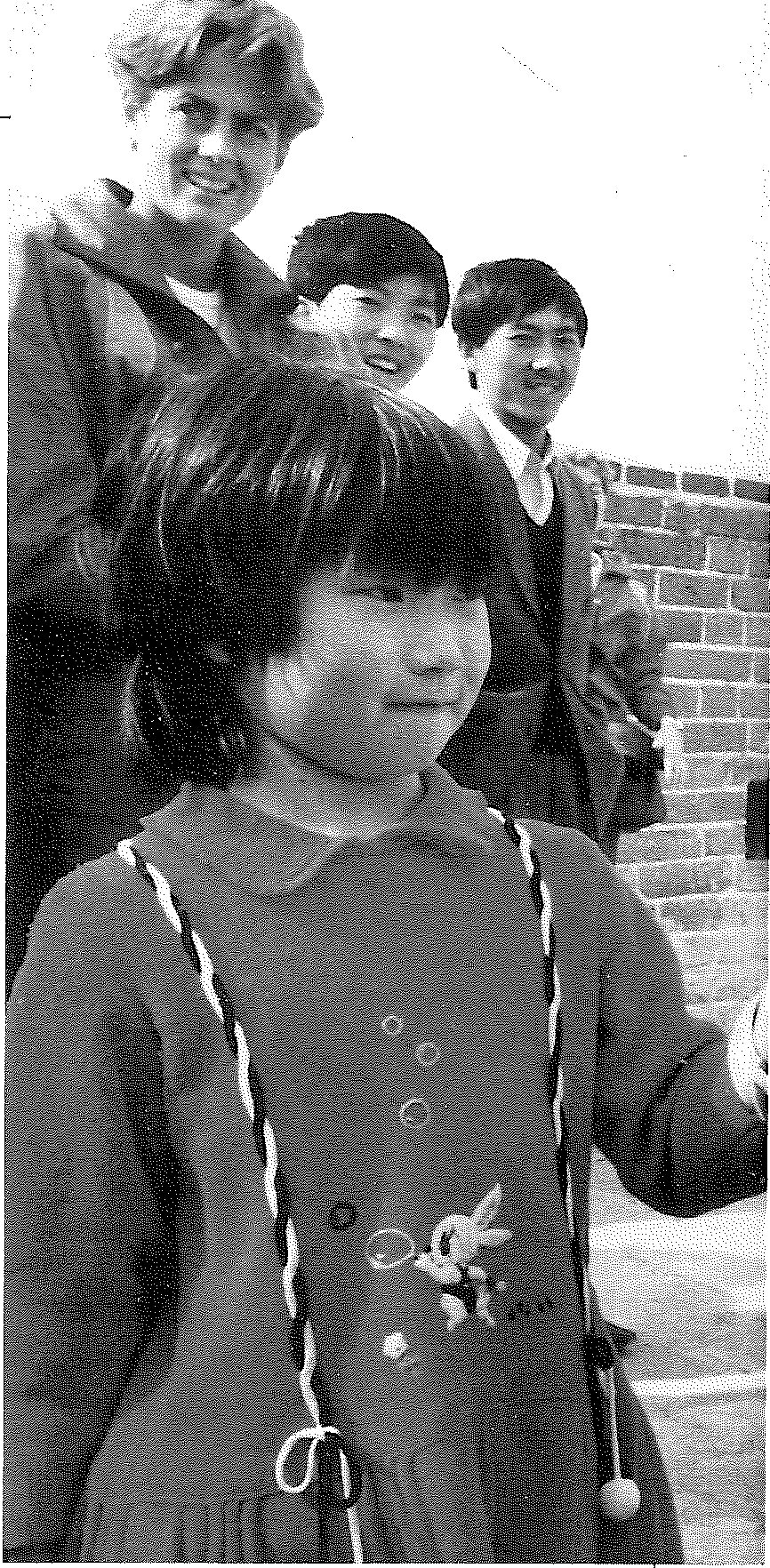
You read about it, you see it on television, but you just can’t understand it until you are there and listening to the situation.
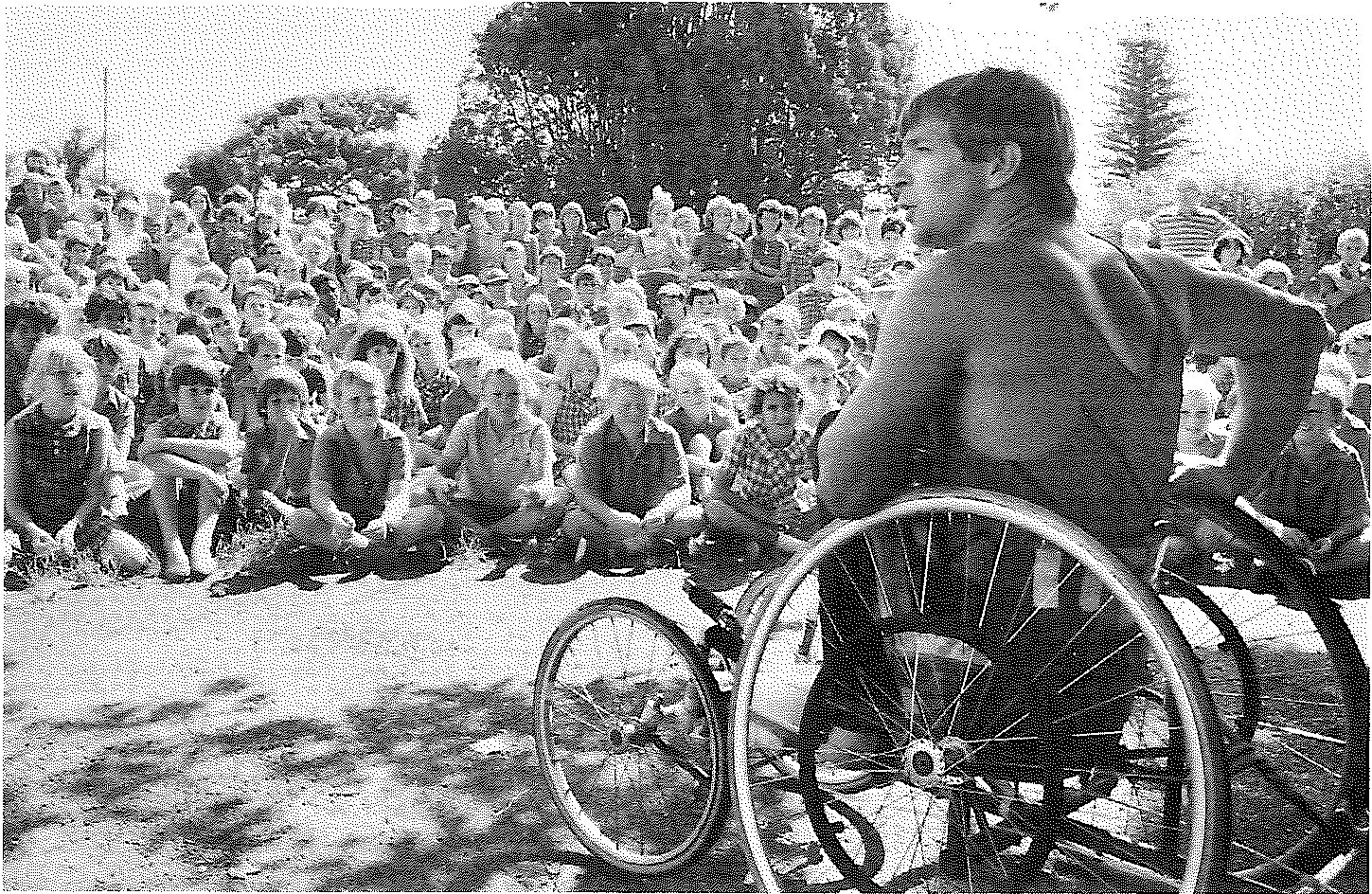
I was shocked sometimes by the beauty and awesomeness of certain countries the richness of the history and cultures in countries like China. I was completely overwhelmed when I had a chance to sit symbolically on the Great Wall and wheel up to the highest point.
I was a little shocked when certain countries wouldn’t let us in and I couldn’t figure out why anyone wouldn’t want to participate in a project like ours. Of course, in retrospect I completely understand, but at the time I was a little wet behind the ears.
In general, the experiences I had were so positive and profound that when I received a dose of reality, it brought me out of the dream world and into the realization that life itself is not a straight course or one-dimensional, it’s quite complicated and varied
You had a lot of things to worry about on the tour… not only the financial aspect but the physical challenge of wheeling day after day. Were you ever concerned about being accepted in countries, given that you were both a Canadian and a person with a disability?
Having a chance to travel the world as an athlete before “Man in Motion”, I had gained a level of appreciation of what a privilege it is to be a Canadian and how well Canadians are perceived and respected in the world today. That was definitely reinforced on the tour. People look up to you as a Canadian citizen because of what Canada stands for in its role in the international community … a country of hope and opportunity. That’s a great feeling.
However, there were lots of countries where I was quite concerned about how people would respond and thankfully there was never anything negative. There were just varying degrees of responses, from neutral, with people not knowing what we were doing, to profound responses because we had gotten the message out.
There were other worries as well, like foreign terrain. I remember crossing the border in Germany and not knowing which route to take to Hamburg. Our advance person was lost and failed to meet us at the border. All I can say is thank God for the people in the consulates and embassies who came to the rescue and gave so much of their time. Sometimes you don’t realize the kind of stress they are under with budgets, staffing, and so many agendas. It made us realize that the sun didn’t rise and set on “Man in Motion” and that we were but one small project in a world of huge priorities.
For the foreign service to accommodate us was greatly appreciated and had a tremendous effect on our ability to function, especially when we were travelling commando style, mostly, through Europe. It was really nice to have an extended family there for advice, guidance, reassurance, support and direction.
Can you think of groups or individuals that helped you overcome some of the major obstacles along the way?
There was no doubt that the Soviet Union wasn’t going to let us in and didn’t really understand what we were doing in the first place. I think they thought we were fundraising. That’s when people in External Affairs who also worked on Expo 86 pulled together a press conference and a series of receptions to deliver the awareness component of our tour to the Soviet Union.
In Portugal, it was a magical sort of thing as we entered late one night and were greeted by our Ambassador and the Mayor of the border city. We had the most amazing reception attended by about 1,000 people.
I also remember our Ambassador in Japan hosting a reception, with embassy staff coordinating press conferences and places for us to stay. It was incredible! To create a greater remove some of the Do you still maintain some of these relationships today?
Well, having been involved in Expo 88 and still travelling a lot, I continue to have a chance to chat and spend quality time with people in the Service. Every time we go somewhere we’re amazed at the level of personal service people give to Canadians overseas.
What does Rick Hansen do with his time now? What keeps you on the road so much?
The message of the “Man in Motion” Tour, the reason why I committed myself to the project, was to create a greater awareness for people with disabilities and to challenge people in communities everywhere to remove some of the physical and attitude barriers that stand in the way. I want to see that dream continue. It’s not forever but I still have some unfinished business to attend to and that fills part of the calendar.
At the end of the tour I spent some time evaluating the impact we had, listening to the feedback and trying to think about ways to continue to contribute. An opportunity came along at my Alma Mater, the University of British Columbia, to fill a national fellowship position which was designed to allow the incumbent to continue to advocate, on behalf of people with disabilities, a need for positive social change on a national and international basis. Well, it was a perfect fit for my unfinished agenda. We built a program around the strength of the incumbent and around the things that I felt were important. Out of that we identified three projects.
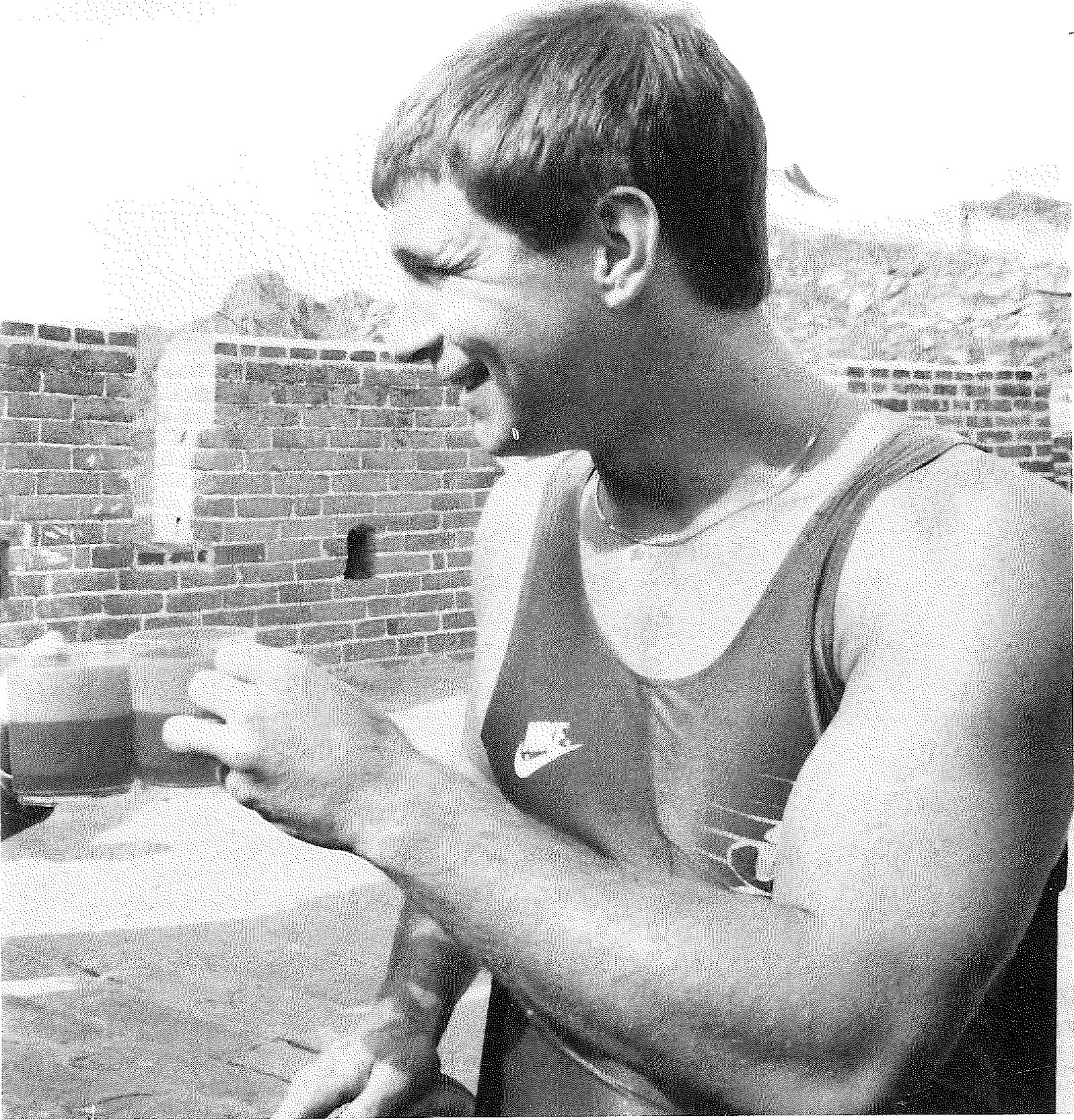
One project focuses on post secondary education. Post secondary education is a bottleneck for people with disabilities to achieve a higher level of education, better training, a higher quality of life, independence and being able to lead a life of self determination.
I wanted to develop an advocacy unit that would systematically work on change in all levels of post secondary education right across the country. So we spent one and a half years developing the concept of the Disability Resource Centre at UBC.
This unit is now functioning and I’m chairing the advisory committee to give it ongoing philosophical guidance and direction.
The second project I am working on is also international and one of major signiticance. It relates to people with disabilities on a very specific, narrow aspect and that is sport. The group is called “The International Committee on Integration of Athletes with Disabilities.” Our mandate is to lobby to gain full medal status of athletes with disabilities in the Olympics, Commonwealth and other major international sporting competitions.
Sport is such an incredible mirror of how society views itself. Just like when sport included women as a statement to the world that society had come to the age that we treated women as equals. We’re in the same relative period of time in today’s society where we still perceive people with disabilities in a segregated way in their chosen way of life and that’s sport. You don’t have special journalists, foreign affairs people, educators, and lawyers just because they have a disability. The disability is a secondary characteristic.
And the same needs to take place in relation to athletics. We’re striving to see the excellence of athletes being recognized as the most important characteristic and the disability as secondary. Still, many people think of persons with disabilities as different, inspirational… everything except as real athletes. Part of the reason is that they are not included in major competitions and if they are it’s as an exhibition. That only reinforces the statement that yes, they are disabled, special and different. That kind of message is no longer a quality one.
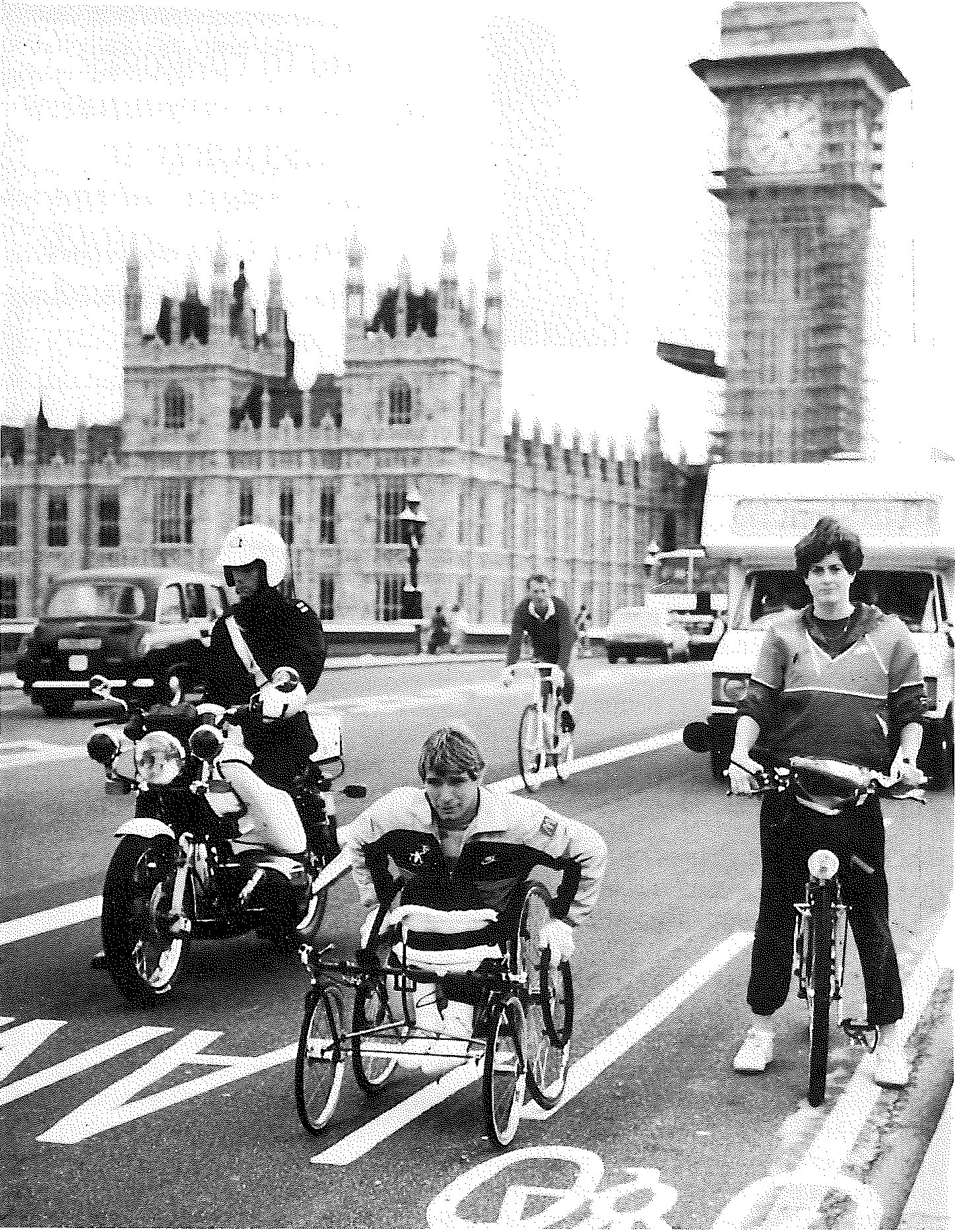
The last project and the most rewarding is INDEPENDENCE 92, an international congress and exposition on disability, scheduled for April of 1992. Because we’re approaching the closing of the U.N. Decade of the Disabled, we spent some time looking into an idea that Canada should do something internationally to celebrate the close of the decade. INDEPENDENCE 92 was designed as an ideal opportunity for all of us to take inventory of how far we’ve come and how far we have to go.
Our aims were to bring together traditionally polarized members of the disabled community, interest groups and segments of the community that drive social change, take responsibility for listening to the message of the disabled community and translating it into reality for the community and society in general.
Philosophically, it would be hard to argue in this day and age against the rightful place of people with disabilities within society to be recognized as free and equal citizens.
The implications of executing that commitment present many difficult and important logistical concerns and we all have to work in partnership to accomplish and overcome logistical concerns. That’s the significance in my mind globally of INDEPENDENCE
92. It’s not the event itself, it’s the future impact of the event. We’re bringing together the highest level decision-makers from around the world to experience INDEPENDENCE 92, then have them go back into their own communities and implement change with a new vision and a new sense of enthusiasm and direction. This has phenomenal potential and great significance.
So how did INDEPENDENCE 92 actually get off the ground?
The B.C. Pavilion Corporation in Vancouver approached me to do a feasibility study that I wasn’t all that excited about, but I thought I would look into it anyway. In talking to several people, it became obvious there was a tremendous need for some kind of a forum to take place and that Canada was ready to take a leadership role as it has done in so many other aspects of society. It was almost automatic if there was to be an international conference on disability, it would have to be one that would be more universal and that had relevance to all people with disabilities.
The feasibility study also highlighted several important facts. One worth noting is that the disabled community represents 13 percent of the adult population which translates That is a phenomenal number of people in this world especially considering that they cut across all the bounds of social, political ethnic or other special interest groups You mentioned that Canada is ready for such a conference. Generally, when you host something like this you better be doing a lot of things right. Is Canada a good example, as compared with other countries you’ve seen?
It’s pretty hard to compare countries since there are different political systems, economic conditions, climates, geography and cultures. The goal in this situation is to share information, not to compete.
We’re all on a road going in the same direction just taking different avenues to get there. I think that everywhere E ve gone I ve found people who are concerned about this issue and are supportive in some way, shape or form.
There’s no doubt about it, Canada is a leader but we still have a long way to go. Part of the reason we’re doing this conference is simply to show the issue.
If Rick Hansen were personally to invite contacts and friends from other countries to come to the conference, what would he tell them? to everyone. Anyone who is a leader in their community or in their country, who is concerned about disability issues and who desires to make a difference, then INDE- PENDENCE 92 is the kind of event you want to attend. It will help give people a vision and a direction actually to carry out and execute the awareness aspect into positive, specific action.
How can Canadians help, specifically foreign posts and embassies? What can they do for INDEPENDENCE 92?
They can help in a number of ways. For starters, by promoting INDEPENDENCE 92 and by being a communication vehicle for the event itself. We need assistance in seeking out and identifying the various governments and organizations for the disabled plus the many business entities and products that exist in countries which may wish to be a part of INDEPENDENCE 92.
We also need help from our international contacts who may be able to host some of our marketing people travelling through countries during the course of the year as they sell INDEPENDENCE 92. I’m certain our contacts will have advice on ways in which we can talk to various publics in foreign countries. In fact, that process Is already underway.
Are you happy with the things you’ve seen over the last five years and the results from the projects you’ve been involved in?
Yes, I suppose I’m very satisfied but I’m even more happy with the kind of real change that has taken place within the last decade. It has very little to do with what I’ve done, it’s what we’ve all done to respond to the challenge that has been put forward to persons with disabilities and that’s reassuring
Sometimes in the struggle to provoke change you get caught up in what you still have to do but you still have to stop and reflect on what has been accomplished. It’s like climbing a mountain… when you are struggling foot by foot, it’s nice once in a while to look back and see how far vou’ve come.
View the original scanned pages →
Originally published in bout de papier, Vol. 8, No. 4 (1991) — Fall 1991 // Automne 1991, pp. 20–23. Read the rest of this issue →



