
bout de papier, Vol. 8, No. 2 (1991) — Spring 1991 // Printemps 1991, pp. 12–15
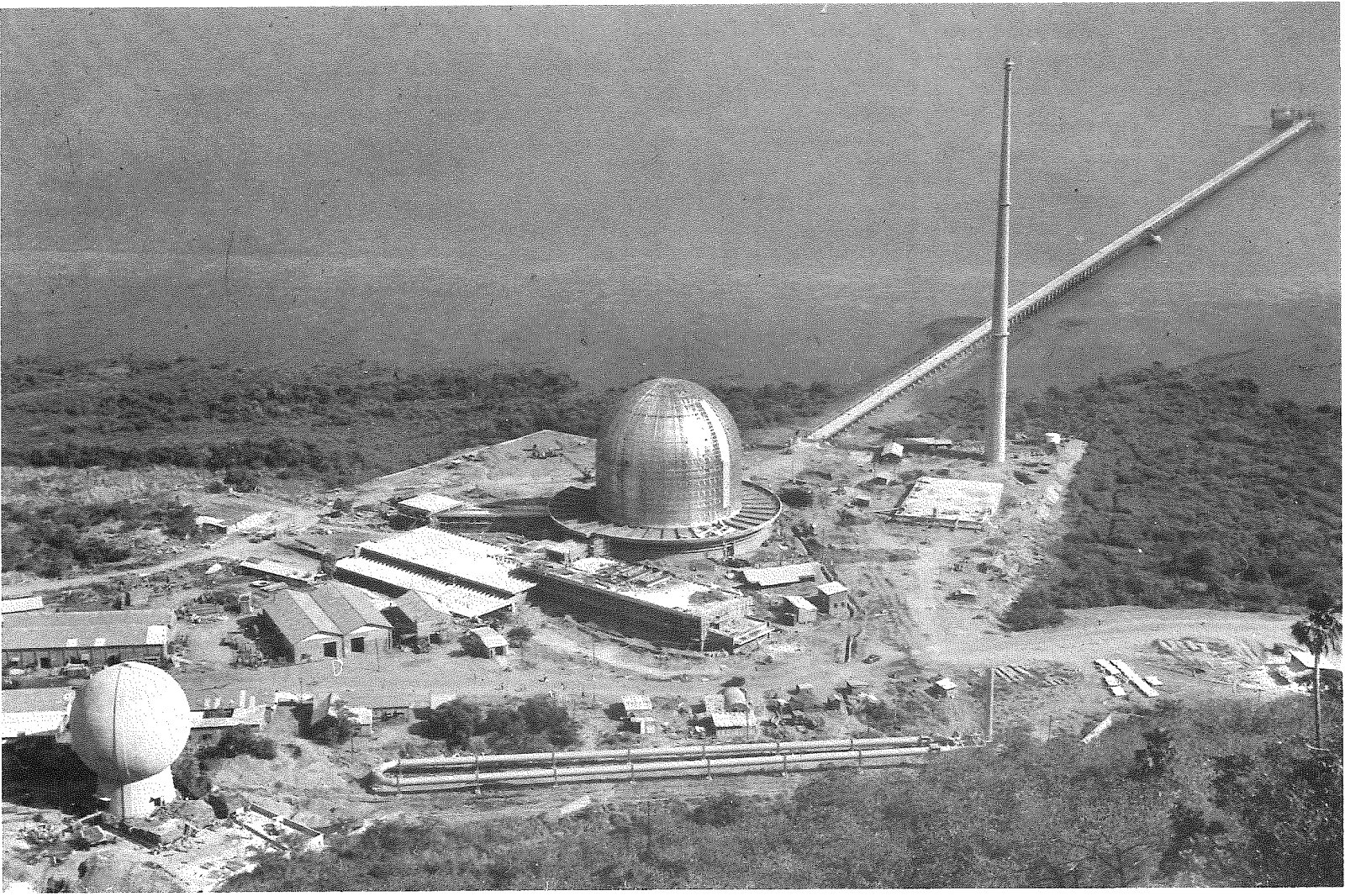
On May 18, 1974, India detonated an underground nuclear device in the Rajasthan desert. In its official announcement, the Indian government laconically stated that the nuclear explosion experiment was solely conducted for “peaceful” purposes. The experiment would help India in underground research and projects in the fields of mining and oil exploration. The test, however, had enormous significance. On that day, India crashed into a most exclusive club. It became the sixth nation to possess a demonstrated nuclear explosive capability. Newspapers all over the world carried the story.
In Canada the explosion had immediate reverberations. For years the two countries had worked closely together in nuclear technology. Their cooperation had started in 1956, when the Liberal government of St. Laurent signed a nuclear agreement with India and, under the umbrella of the Colombo Plan, supplied the N.R.X. (National Research X-perimental), a 40 MW pressure tube nuclear reactor fuelled by natural uranium and moderated by heavy water. The 1956 agreement is crucial to understand why India could covertly manufacture an explosive device. The C.I.R. (Canadian-Indian-Reactor) agreement imposed no international safeguards on the use of the spent fuel generated by the N.R.X. After the explosion the project became a source of acute embarrassment, because, by all evidence, the fissile material (plutonium) had been processed in the N.R.X.
Initially, the C.I.R. had been praised as a vital commercial venture and a significant foreign policy achievement. The project symbolized goodwill and cooperation towards the emerging countries of the southern hemisphere. The project was truly notable. Thirty-five years ago there were no precedents for nuclear cooperation between the West and Asia and there existed no international agency to monitor peaceful nuclear activities. Aid was only in its infancy and Canada, like the rest of the world, had no concrete experience of international development.
For Canadians the C.L.R. held the promise of reaching out further than immediate history, beyond the neat and secure political and social neighbourhood in which Canada had been born. Pearson used the concept of “participatory internationalism” to describe Canada’s foreign posture in the post-war period. Canada simultaneously pursued two objectives: its own national interests and the maintenance of world peace. Participatory internationalism was not a slogan that could be found strewn across countless speeches and declarations or memoranda and telegrams. It was a broad principle or an underlying theme that inspired Pearson and his colleagues because it summarized what the world needed and what contribution Canada ought to make. Ambitious and innovative projects such as the C.I.R. were undertaken in this spirit and to demonstrate Canada’s independence and constructive role in international affairs.
The C.I.R. seemed a perfect vehicle to put participatory internationalism into practice. In the early 1950s, atomic energy was perceived as a vital tool for under-developed countries. It would be a powerful stimulus for the advancement of scientific and technical knowledge and enable poor countries to industrialize. Power reactors would generate cheap and abundant electricity while research reactors would encourage scientific research in medicine and agriculture.
Canada’s self interest would be served because the project had manifest scientific and commercial advantages. The scientific community would gain experience from having the N.R.X. function under different climatic and topographic conditions. Canadian firms would oversee and build the reactor thus demonstrating their capabilities outside Canada. Nuclear technology sales would diversify Canada’s trade and reduce its commercial dependency on the United States. The successful completion of the project would also establish Canada as an independent supplier of high technology in a very competitive field. Canadian officials were confident that they could present a challenge even to the American and British nuclear technology industry. They were now ready to play in the major league.
The C.I.R. would also fortify the special relationship that Canada wanted to build with India and demonstrate to the world that different cultures and countries could learn and benefit from one another. Canadians responded very positively to India because, like Canada, it had recently emerged on the world scene, had a parliamentary system of government and pursued an independent foreign policy. India’s willingness to play a positive role in the international forum appealed to Canadians because they saw it as the natural complement of their own efforts. Their common interest for the peaceful resolution of international problems made a new generation of internationalists from both countries eager to work together.
Building a bridge to India, harnessing nuclear technology and creating a new and more equal world were not fantasies but the various aspects of a single vision held by men who at heart were builders. Canadians were embarking on a major project and fulfilling a vision of Canada’s place in the new world order. The C.I.R. was thus a unique and innovative undertaking in the spirit of “participatory internationalism’. It was ambitious, dynamic and idealistic.
The C.I.R. was first seriously considered in the early months of 1955 by Ed Ritchie, who headed the Economic Division, Gerry Stoner, who handled the Colombo Plan File, Nik Cavell, the Head of the Colombo Plan Administration in Canada (Department of Trade and Commerce) and W.J. Bennett, the President of A.E.C.L. In a memorandum to Lester B. Pearson, the Minister, the Departments outlined the many commercial, technical and political advantages that Canada and India would derive from the project. (Subject: Colombo Plan Technical Assistance India: Provision of an Atomic Energy Reactor by Canada. The file consists of six parts. RG 25, Vol. 353, file No. 11038-1-13-40. Department of External Affairs, National Archives of Canada. Unless otherwise specified, all documents quoted in this essay come from this file.)
They also proposed that the N.R.X. be offered to India under its yearly Colombo Plan allotment and that scientists from member states of the Plan be allowed to train at the reactor site. The ownership of nuclear fuel and non-proliferation were not treated seriously. The Department argued that with the N.R.X. reactor, “there would apparently be no significant security problem”. It was reasoned that in any case “a country like India will acquire a reactor from some source (friendly or otherwise) and will be producing this material”. Also sooner or later, an international agency would be established to verify the peaceful uses of nuclear energy. These assertions are surprising because they reveal a fundamental lack of understanding for the technology and for the controls that should govern its use.
Pearson was convinced and a few days later Escott Reid, Canada’s High Commissioner to India, was informed. Reid enthusiastically welcomed the proposal because it would have a very favourable “impact on public opinion in India” and immediately suggested to Ottawa that the reactor be an outright gift.
On April 1, Reid informally presented the Canadian offer to the Indian Foreign Ministry To his surprise the Indians reacted cooly and raised three objections: 1) if the project were to be regional, as Canada wished, its cost should not be borne solely by India; 2) it might be “politically embarrassing” for India to train scientists from other Colombo countries; 3) India’s acceptance should not be at the expense of other Colombo Plan projects undertaken with Canada. Furthermore, the Indians indicated that they were interested in British and American nuclear technology. They hinted that they were about to obtain a swimming pool reactor from the United States and a somewhat more advanced facility (an E-443 reactor) from the British. The Soviets were also in the game promising to assist them, as they had helped China. In revealing that they were negotiating with other suppliers, the Indians were acting rather mischievously, probably in the hope of getting a better deal from Canada.
The unexpected Indian objections and the British and American and even the Soviet Union bogies seemed to throw the Canadians into a state of apprehension. In order to ensure the successful conclusion of the project, they sweetened the offer. On July 15, Louis St. Laurent wrote to Jawaharlal Nehru that the reactor would be funded “in a manner which would leave virtually unchanged the amount of funds available for assistance to India in financing conventional development projects”. St. Laurent, however, insisted that India should “permit scientists from other Asian countries in the Colombo Plan” to use the facilities.
From August to November the Canadians lived in constant fear that the whole project might collapse. Nevertheless project planning went on and issues such as the training of Indian scientists in India or at Chalk River were considered. The spent fuel question however was not addressed until August 24, when Bennett raised it with officials of the Department. The result was instantaneous. The documents which until then had been silent on this question (except for the initial and brief mention in early March) stand in marked contrast with later correspondence which addressed the issue with great vehemence and urgency.
On September 2, 1955, India formally accepted that foreign scientists from Asian countries, including those belonging to the Colombo Plan would have access to the reactor site. The Canadians feared that this new proposal by India could enable Chinese, as well as Colombo Plan scientists, access to Western nuclear technology. However, they felt locked-in. “It would appear to me,” Ritchie warned, “politically impossible for us to reject this change [the addition of scientists from non-Colombo countries without endangering the whole project and creating a good deal of unhappiness in relations between India and Canada”
India’s acceptance set the stage for a visit to Canada by the eminent Indian physicist, Homi Bhabha. Bhabha had been made a Fellow of the Royal Society in 1947 for his work on cosmic rays and was considered a “brilliant scientist”. In 1948, Nehru had appointed him Chairman of the Atomic Energy Commission of India and had given him the mandate to bring his country into the nuclear age. Bhabha was a well-known figure in multilateral fora. During the summer of 1955 in Geneva, he had presided over the first Atomic Energy Conference.
The two sides were to discuss the financial and technical aspects of the cooperation agreement. The Indians pressed so hard on the first issue that, at one point, the Assistant Deputy Minister of Finance, A.F. W. Plumptre said that the Indians “were not only looking at the gift horse in the mouth but insisting that we supply a complete set of gold-filled teeth for the beast as well — together with replacements as the teeth wore out.”
If, eventually, the financial question was resolved satisfactorily, agreement on the safeguards issue proved unachievable. On October 7, Bhabha was presented with an offer that Canada supply the initial fuel load and the fuel stock required for a period of three years. The irradiated rods would be returned to Canada for reprocessing. Bhabha reacted sharply: these were terms to which India could never agree. Its position on the safeguards question was straightforward: no nation or group of nations should have a privileged position and nations should not be expected to abdicate their sovereignty. India wanted to have the same access to nuclear technology as the US or Britain. Canada, on the other hand, did not want to accept Bhabha’s terms. There is evidence that the Canadian side was sensitive to the uneasiness and suspicion this would create in the international community particularly in the United States and Pakistan.
To resolve the impasse, Pearson proposed to raise the matter directly with Nehru during the visit he would make to New Delhi in November 1955. No doubt, Pearson hoped that Bhabha could be side-stepped and that technical details, such as the spent fuel issue, could be avoided. In a brief to the Minister, Ritchie urged that the bilateral agreement between Canada and India avoid compromising “the basic concept of agency control” Pearson was also advised that both the United States and United Kingdom considered the C.I.R. negotiations as serious and were generally concerned. A bad precedent would be established if India’s position were accepted and if it were given “clear and absolute title” to the N.R.X. fuel. To overcome the difficulty, Ritchie suggested an interim agreement in which:
Canada would lend India the fuel charge for the reactor to India and in due course would extract the plutonium from the irradiated rods and lend this plutonium to India for its research programme. As soon as the International Agency [the I.A.E.A.] was functioning effectively, the arrangement would be recast and made firm in accordance with the principles established by the agency.
The discussion between Pearson and Nehru was not fruitful. The charm of this intuitive Irish Canadian politician was insufficient. Although he had met Nehru before, Pearson was not prepared to deal with this rather intractable and complex man, who was both at home in the intellectual environment of Cambridge and the self-indulgent splendour of his Gangtok palace. Pearson found his host in an expansive and lofty mood, preferring to discuss the problems between the West and the East. When finally Pearson became insistent on discussing the C.I.R. project, Nehru called in Bhabha, who happened to be waiting outside.
Bhabha overwhelmed Pearson with his technical knowledge and the strength of his political argumentation. He first stated that uranium was widely available and that he was convinced that no international agency would be able to regulate its sale as long as major suppliers, including Canada, continued to supply the nuclear weapons states. He added that the extreme complexity of the physical process of obtaining fissile materials was control enough against the risk of proliferation. It was impossible to devise a “perfect security system” and the only realistic policy was to aim for “reasonable security”. Finally, even if a few weapons were manufactured clandestinely, they would not have any global strategic significance.
Neither Pearson nor Reid, who had accompanied him, had counted on India’s unyielding position. Although technical, the question of safeguards had enormous political consequences. By bringing Bhabha into the room, Nehru had allowed a scientist, albeit a trusted friend, to make a fundamental policy decision. No doubt, Nehru knew exactly what he was doing. He may have wanted, in this instance, to put distance between himself and the decision, and thus avoid appearing as just another Machiavellian politician. Pearson, like Reid, did not understand Nehru’s strategy. By the end of the meeting, Pearson still had “a good deal of sympathy” for India’s position. He remained optimistic, writing, “We will work this out all right, in spite of India’s sensitiveness, and the reluctance of Washington to help.” (Diary on Pearson’s Visit to the Soviet Union, South and South- East Asia and the Middle East, September 30 to November 12, 1955, MG 26 N 8, Vol. 1, L.B. Pearson papers, National Archives of Canada.)
At a second meeting on November 5, Pearson and Bhabha decided that the nuclear cooperation between their countries would be “silent” on the provision of the fuel. Reid agreed with his Minister. “It could … be argued”, ’, he said, “that the agreement would not establish any precedents which would affect the principles or procedures of the international agency”
By the end of the year, the C.I.R. was beginning to face tight deadlines. In the region of Bombay, where the reactor was to be built, the monsoon would start in April and further delays in the negotiation of the agreement might mean missing a full construction season. The question of the spent fuel had still to be resolved. The Canadians had to weigh the risks of defaulting on the safeguards issue against the advantages of completing the project. In the final analysis, for the men of the East Block, the risk of proliferation did not appear to be overwhelming. India would, in any case, soon be capable of building its own reactor. Undoubtedly they reasoned it was better that India acquire its nuclear expertise and facilities through cooperation with countries like Canada than as a result of assistance from the Soviet Union.
In early December 1955, Cabinet was informed, for the first time, that Canada and India could “not resolve the conditions on which the fuel elements for the reactor should be provided”. Ministers were told that India’s decision to reject anything less than “complete and absolute ownership” of the fuel was based primarily on political considerations and Pearson urged his colleagues to sanction the project immediately. On December 7, Cabinet authorized the signature of a bilateral agreement with India. The final text had serious loopholes. There was no provision for any type of verification by Canada or the future international monitoring agency. India was only subject to a voluntary restraint. The agreement assumed that India would be willing to obtain its nuclear fuel from Canada. Finally, nothing would prevent India from refusing to conform to the safeguards “principles” of the international agency, once it came into force.
Throughout the negotiations, Canadian officials were severely handicapped by their lack of experience with safeguards and nonproliferation treaties and by inadequate technical expertise. The initial memorandum in March 1955 reveals that Canada’s diplomats were not sufficiently apprised of the security and proliferation risks of nuclear technology. Five months later the Department still failed to recognize the key consideration: the control of fissile materials and the disposal of spent fuel rods. It may have been that External Affairs was incapable of asking the right questions because its officials had only a peripheral knowledge about atomic energy and they did not fully appreciate the significance of the small amounts of plutonium produced in the N.R.X. The same lack of knowledge cannot be attributed to the officials and scientists of A.E.C.L. Somehow, and this is a crucial point, the proliferation significance of the spent-fuel, which would be clear to any nuclear physicist, was not impressed on the officials of External Affairs before August 24, when finally the issue was raised by the president of A.E.C.L.
The documents also reveal that the Indians were shrewd negotiators. They pursued their objectives selfishly without caring for Canada’s concern for future proliferation or for the deleterious impact that a loose agreement might have on the establishment of an effective international system of safeguards. The Indians had immediately observed that the Canadians were “hungry” for the deal. They were emboldened to seek greater concessions and, when they obtained them, acquired the upper hand. This set the trend for the negotiations. Whenever a difference of view appeared, the Canadians would yield to India’s objections or demands. On all key issues, for instance the financing of the project above the normal Colombo Plan appropriation and the safeguards issue, the Canadians compromised. As for the access of foreign scientists to the site, they obtained an impractical clause whose implementation could not be enforced. The Canadians certainly did not examine whether they had any alternatives to signing an increasingly unsatisfactory agreement.
Ultimately, to close the deal, the Canadians accepted that the text of the agreement be silent on safeguards and that matter be passed once the agency had been created, in spite of the fact that there was no guarantee, and perhaps no real hope, that Indian would be more cooperative with the agency than it had been with Canada. The Indians had obtained the “gift horse” ’, the “gold-filled teeth and their replacements”
Perhaps they were intoxicated by the mirage of a “special relationship” with India. Maybe the “special relationship” had never existed, or only so far as it espoused national self-interest In the context of the C.I.R., the relationship was exploited by both parties to achieve basic foreign policy objectives. India came out a winner. Canada obtained no more than a foothold in the international nuclear market and the dubious prestige, difficult to quantify at any time, of being a generous and cooperative country. In the final analysis, the two countries cooperated on a basis of business rather than on mutual trust and friendship. The 1974 explosion underlined how fragile both trust and friendship are in international affairs. India has military pretensions and regional ambitions. Its interests are global and centred on the United States, the Soviet Union and China. Canada, after all, is a middle power.
View the original scanned pages →
Originally published in bout de papier, Vol. 8, No. 2 (1991) — Spring 1991 // Printemps 1991, pp. 12–15. Read the rest of this issue →



