
bout de papier, Vol. 8, No. 2 (1991) — Spring 1991 // Printemps 1991, pp. 17–18
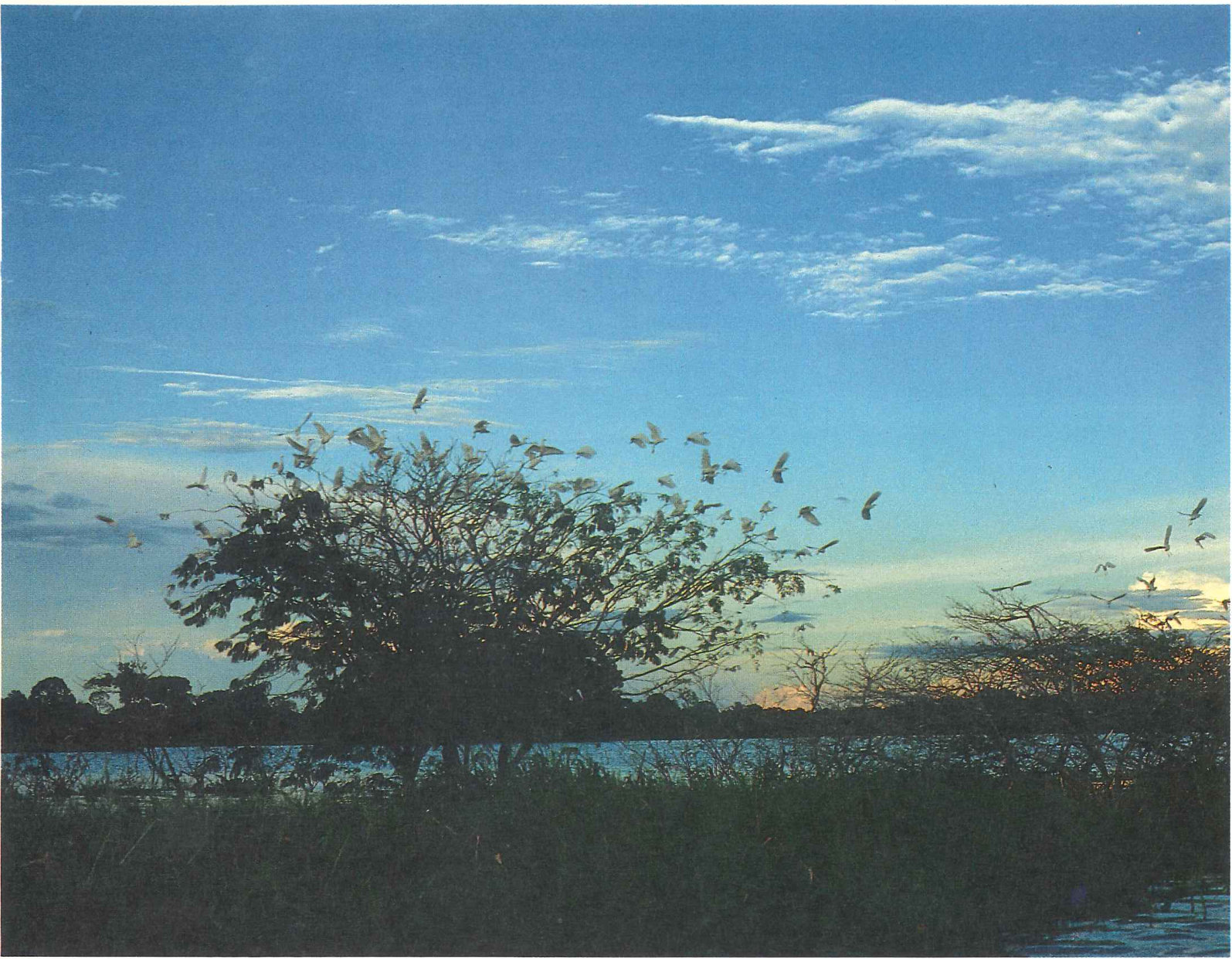
I knew it would not be an easy trip. The Amazon I set out to visit was very different from what it is today. Then no highways pierced its close. Then no mobs attacked it with flame throwers and diesel power. Nature, alone, ruled a vast mysterious realm where heat, humidity and disease sapped the strength and crushed the will of those who sought its change. Still, a Trade Commissioner’s got do to what a Trade Commissioner’s got to do, and I found, somewhat paradoxically, that I was being carried into the heart of this particular darkness, not in a litter or a dugout, but in a Caravelle jet, complete with in-flight movie. Imagine my surprise when the feature presentation turned out to be the National Film Board’s “Trans Canada Journey” and my strongest impressions on entry into the Amazon turned on Nova Scotia fish and Saskatchewan wheat, and other clichés of Canadiana. Well, perhaps not quite the strongest.
When I travel, and particularly when I travel to outposts of foreign language civilization, I make sure I have some light reading with me for solace in the lonely hours. On this trip it was a novel, the latest enthusiasm from North America. Unfortunately, I left it on the seat during a brief absence and found, on my return, that someone had relieved me of it. So on my arrival in Manaus that Saturday evening, I too had the beginnings of a sense of personal siege.
I don’t know what wakened me at four o’clock the next morning, but whatever it was, it did a good job. After a few futile attempts at resumed sleep, I had to acknowledge that I was awake, period! The diversions offered in the room were limited. I tried reviewing the notes I had prepared for my visit, but found I could almost recite them from memory. The only other reading material with me was the Canadian Trade Index. Now, I don’t know about others, but I find that I can only read the Trade Index so many times before, quite frankly, it begins to pall. It was a relief, therefore, when light began to gather outside, and I could prepare to sally forth and experience the city at first-hand.
Manaus at that time was a city in the thrall of melancholy reflection. An aging opera house reminded of the days when rubber was king and everyone sent their laundry over to Europe. But the good times by and large had gone, and Manaus while generally down at the heels was the epitome of sobriety and restraint. On a Sunday, it was positively petrified.
I walked through deserted streets and stared at great wooden shutters that covered every window and doorway. This town was closed, fechado!!! The sun and humidity rose in equal measure. Heat began to radiate off the cobblestones and cement walls, and to converge on anything that moved, which principally was me. I recall coming upon a time-worn donkey that first froze at my appearance and later bolted away screaming in apparent asinine terror. There was also a three-legged dog that tracked me for some time at a furtive distance.
Suddenly, a distant bell began to toll and I thought, “Now it will happen. The doors and windows will open, gaily decked people will parade to church and later gather on the greensward to gossip and engage in harmless games of skill and chance.” If that bell tolled for the living, none within my ken responded. The town remained as still as ever and I shuffled back to the hotel, which too seemed vacant.
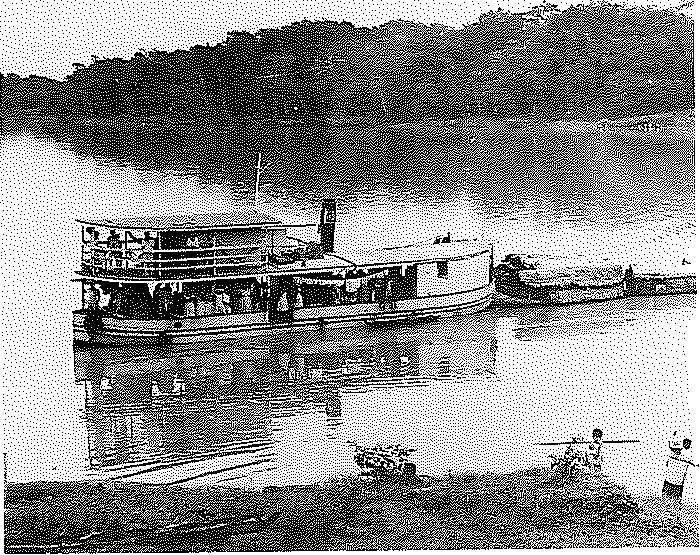
I had one contact in Manaus, the manager of a foreign bank, with whom I had had one brief, formal exchange of correspondence pertaining to my visit. By noon I felt I could, without undue presumption, phone him on the pretext of “program consultation”. He might welcome me to his home, seek news of the outside world, and insist that I fill the gap at dinner so lately caused by an ailing guest. The actual reception was more like that of the medieval mayor on learning that a plague carrier was approaching the village square. With the least grace I was directed to present myself at the rear of the bank, over which he lived, at three o’clock that afternoon. I spent some of the intervening period playing mental games based on philosophical models of trees falling in forests. If no one sees you, do you exist? A gloomy train of thought.
The streets were still deserted when I set out, but by now the sun had burned away every cloud in the sky and every earthly mist so its rays smashed down in full, crashing fury. I remember that when I first encountered the tropical sun, I felt betrayed. I had expected heat. I knew heat. Blast furnaces, forest fires — that was heat. But no one had explained that the tropical sun falls like a million hammers, slowly driving you into the earth. Being on the equator and close to sea level, the sun in Manaus was a doozer. By the time I reached the bank, both my spirits and a few litres of perspiration were in my boots.
I walked down the alley beside the bank and into a small, concrete courtyard at the back. The whitewashed walls caught the sunlight and hurled it around in a blinding frenzy. The only slight relief was an open stairway that spiralled up to the floor above and on which two very streetwise tomcats were engaged in some sinuous, malevolent play.
I rang the bell beside me and waited in the stifling heat. Finally, a window above me was flung open and a head appeared. No “Hello”, no “Come on up and have a cold beer”. Just “Stay there. I’ll be down”.
I sat on a cement ledge, partly to forestall fainting and partly to reflect better on what madness had brought me into the situation in the first place. Suddenly I felt a small shower of raindrops. RAINDROPS? Like hell!!! I looked up at the cloudless sky and gazed around in puzzlement. And then I saw one of the tomcats poised on the stairway above me. And it was grinning.
Later, everything was fine. The manager turned out to be a gruff, but kindly Scot, my business contacts were friendly and the trip turned out to be a great success. But that time beneath those stairs remains the moment of greatest despair in my whole career notwithstanding automatic rifles jammed in my face, being guest of honour at a St. Andrew’s dinner and spending two days with a particular minister of the Crown…
Robert Burchill has had postings in Sao Paulo, Rio de Janeiro, Kingston, Chicago, and as Consul General in Sydney. He is currently Director General, Agri-Food, Fish and Resource Products at EAITC.
View the original scanned pages →
Originally published in bout de papier, Vol. 8, No. 2 (1991) — Spring 1991 // Printemps 1991, pp. 17–18. Read the rest of this issue →



