
bout de papier, Vol. 8, No. 1 (1990), pp. 20–23
“What is Soweto really like?” I couldn’t count the number of times I’ve been asked that. Soweto resonates in the imagination of Canadians as the very symbol of black suffering under Apartheid. But how do you describe the largest township in South Africa, a polyglot city of 3 million, so that Canadians can understand? Let me take you on a guided tour of Soweto:
The word Soweto stands for South-West township.
It was created as a bureaucratic amalgam of several smaller townships built in and among the mine compounds south and west of the city of Johannesburg. The first blacks to settle there were miners, installed in hostels on the mine compounds. The inevitable services — prostitutes, beer halls, bootleggers, food peddlers — assembled at the gates of the compounds. Later the miners’ numbers were swelled by black families forcibly removed from the townships of Sophiatown and Coronationville. The new families coexisted uneasily with the gamier elements of the mining community, a tension that can be felt to this day in Soweto, which has more churches and more “shebeens” or speakeasies per capita than any other community in South Africa. This tension contributed to the tragic violence in August of this year, which claimed more than 500 lives.
In later years, Soweto became the destination of choice for thousands of rural blacks anxious to find work in Johannesburg. Today, Soweto is an agglomeration of 26 residential suburbs sprawling over 100 square kilometres of dusty veld. Although Soweto was not the only black township near Johannesburg — Alexandra, to the North of city, is older — it was the one black population centre that was permitted to expand under Apartheid. There are even “garden suburbs”: the nouveau riche live in Diepkloof on the edge of Soweto, a community affectionately known as Beverley Hills. Dube, where such prominent citizens as Archbishop Tutu, Nelson Mandela, and Walter Sisulu have their homes was first built in the Fifties. By Soweto standards, Dube is old money.
There is a cynical belief in Soweto that the authorities let blacks live there because the land is unfit for human habitation, riddled with disused mine shafts which make it foolhardy to build multi-storey buildings. Every so often a shaft collapses and huge crevasses scar the landscape. Other parts of Soweto are built on dolomite: according to Sowetans whole houses (and their occupants) have vanished from the face of the earth during a dolomite collapse. We thought this was an urban legend, until a crash took place in a squatters’ camp, and three families vanished from the face of the earth.
Partly because of the mine shafts and mountains of mine tailings which dominate the skyline, and partly because of Apartheid, Soweto looks odd. There is no centre, no downtown district, in Soweto. There is no “there” there. Most of the township remains a vast drab bedroom suburb, with only a few schools and churches rising up from the sea of houses. Until the eighties, the government blocked any attempt to build community facilities for Soweto, arguing that as the community was only intended as a temporary housing site for workers permanently based in the rural homelands there was no need for libraries, community centres, or sports facilities. The new facilities that have been built in recent years are strung along the highways intersecting the township: the old Potchefstroom and Roodepoort Roads. The irony that the major arteries in the city are named for two small, obscure Afrikaner communities on the edges of Soweto escapes no one.
Soweto is perhaps the finest example of apartheid landscaping. Several highways skirt the huge township, but unless you know what to look for you could easily miss it. It is surrounded on three sides by coloured and Indian townships, which act as a kind of buffer between Soweto and the nearest white neighbourhoods. As the South African writer Gus Silber commented, neighbourhood planning in South Africa is like “cappucino: rich, whipped cream on top, earthy malt in the middle, bitter black coffee at the bottom.” In another refinement of apartheid planning, Soweto has also been designed with a limited number of gateways, making it very easy for the police to seal it off, but playing merry hell with the traffic flow.
To get to Soweto from Johannesburg, we generally took the aptly named Golden Highway, which wends its way through giant mine tailings, glinting in the sun. Lending piquancy to this drive is the sight of Gold Reef City, an amusement park built on one of the oldest mine compounds. The ferris wheel competes with a visit down a mine shaft and a meal in a “gold rush saloon” as the most popular attraction with tourists. Soon after Gold Reef City, you come to Diepmeadow Station, a huge army barracks that serves as the major gateway to Soweto. Diepmeadow was once the site of Diepkloof Reformatory; Alan Paton was the Principal of this famed school for juvenile offenders and it featured prominently in his classic novel Cry the Beloved Country. The National Party’s education critic, Hendrik Verwoerd, was bitterly opposed to this “dangerous liberal experiment” and closed it down in 1948. The children were transferred to white farms where they worked as indentured labourers. There is not even a plaque to commemorate Paton’s great social experiment. More often than not, riot policemen are stationed in front of the army camp waving their submachine guns to flag down incoming traffic.
Today we get lucky: there are no roadblocks and we pass Diepmeadow without incident. The road narrows and we enter a stream of honking, noisome, overcrowded minibuses: the pirate taxis of Soweto. Justly celebrated as black entrepreneurs, the taxi men are also appalling drivers, famed for suddenly slamming on the brakes when they sight customers, darting across traffic lanes and running the red light at the “robots” traffic lights are called in South Africa. The congestion is at its height in front of Baragwanath Hospital: very convenient for the ambulances cleaning up after the frequent collisions.
Bara, as Sowetans call their hospital, is the second largest hospital in the Southern Hemisphere but far too small for the needs of Soweto. The wards overflow with patients; beds are made up on the floor under the regular hospital beds and in the hallways. The mobile and convalescent patients roll up their bedrolls and find a sunny corner outside to spend the daylight hours. Although nursing conditions are grim, Bara is a fine teaching hospital which can and often does offer state-of-the-art surgical procedures to its patients. The problem is not with Bara, but with a health system that tolerates overcrowding in black hospitals while refusing blacks access to half-empty white hospitals.
Bara is only the first of a series of showpieces along the highway: the Lesedi clinic, the first black-owned private hospital in South Africa; the Funda Centre, a large education and cultural centre set up by white business after the 1976 Soweto Massacre; the Soweto College of Education and the Soweto campus of Vista University. But the real landmark along the highway — perhaps the symbol of Soweto itself — is the giant thermal electric power station. For Sowetans, the power station is their favourite metaphor for apartheid in action: at a time when there was no electricity anywhere in the township, this facility generated power for neighbouring Johannesburg, while dropping industrial pollution on Soweto. Out of bounds behind a barbed wire fence was an attractive lake, stocked with fish, and “Power City”., a cluster of attractive bungalows which used to house the white employees of the power station. The white families have been moved out, and the homes are now reserved for two thoroughly unpopular (but powerful) groups in the township: senior black policemen and municipal politicians.
Straight ahead at the crossroads is Regina Mundi Roman Catholic Church, the largest hall in Soweto and the site of many of the most important political protests in Soweto including the annual memorial service for the 1976 Soweto Massacre. Last year the protest meeting was disrupted by police, who blocked the exits, fired teargas into a crowd of over 2,000 milling in the church grounds, then stormed the church itself where they beat up one of the officiating priests at the altar. Regina Mundi has huge expanses of stained glass, which makes it easy for the police to break up meetings by shooting tear gas through the windows; the other major church in Soweto, a short walk away from Regina Mundi, was designed to overcome these security problems. St. Paul’s Anglican Church is completely windowless and is built like a round crusader tower to withstand police attack. During the August 1986 police shooting of 29 people, the people of White City-Jabavu streamed to sanctuary at St. Paul’s.
Let’s get out of the car here and go for a walk. St. Paul’s is known as the “Canadian church” in Soweto. There is a strong historical relationship between the Embassy and the parishioners at St. Paul’s. The Anglican Church of Canada was one of the principal donors to the Ipelegeng Centre adjoining St. Paul’s, which houses one of the few libraries in Soweto; an elaborate training centre for workshops, seminars and adult literacy programs; a dormitory for seminar participants; and offices for a wide range of community groups. Its dormitories (known as the Archbishop Scott wing, after the former Anglican Primate of Canada) have been regularly used to house ex-detainees undergoing psychological rehabilitation after long-term solitary confinement. Canada also sponsors a series of cross-cultural seminars at Ipelegeng which bring white people to Soweto for the first time.
Not far away from St. Paul’s is another institution with Canadian connections. The Orlando Children’s Home was the first orphanage in Soweto. It was set up in defiance of the authorities in the Fifties and kept open through the determined efforts of one woman, Maggie Nkwe, the wife of the pastor at St. Paul’s. Long before Canada had an aid program in South Africa, the “Embassy ladies”, as they were known in those days, organized fund-raising events for the Children’s Home and made the journey from Pretoria to work as volunteers in the Centre. The original derelict building has since been replaced by a beautiful, airy facility, but the first iron cribs bought by the Canadian Embassy ladies are still very much in use. I often used to wonder, as our aid program billowed to $10 million a year, if we brought as much heart to our development work as the Embassy ladies had in providing those cribs.
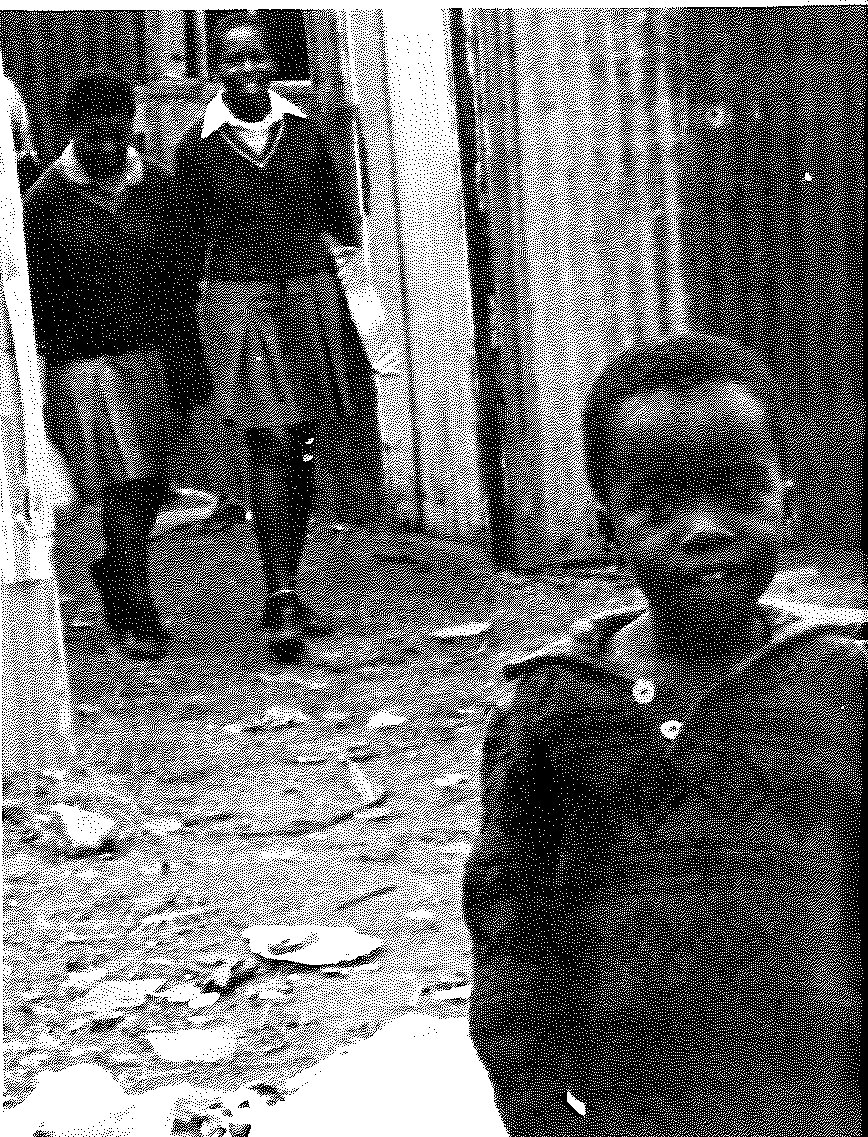
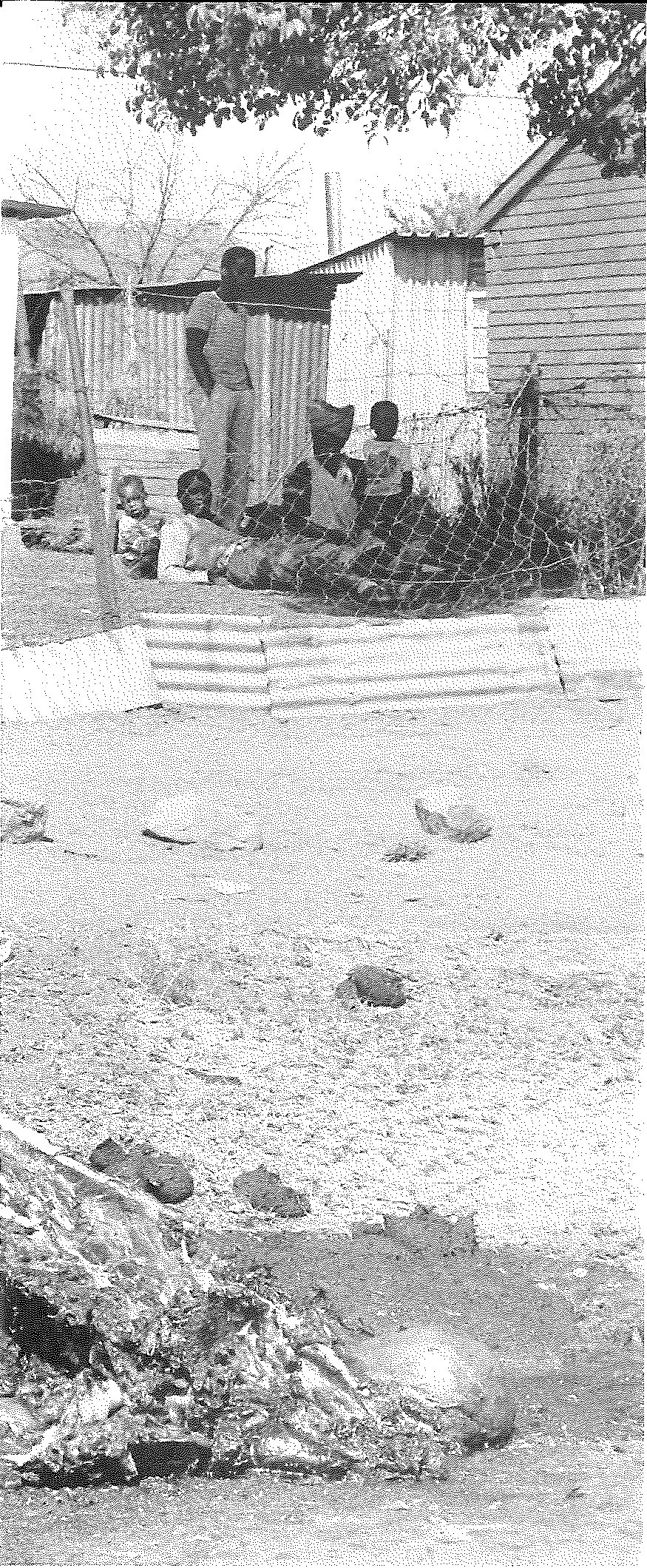
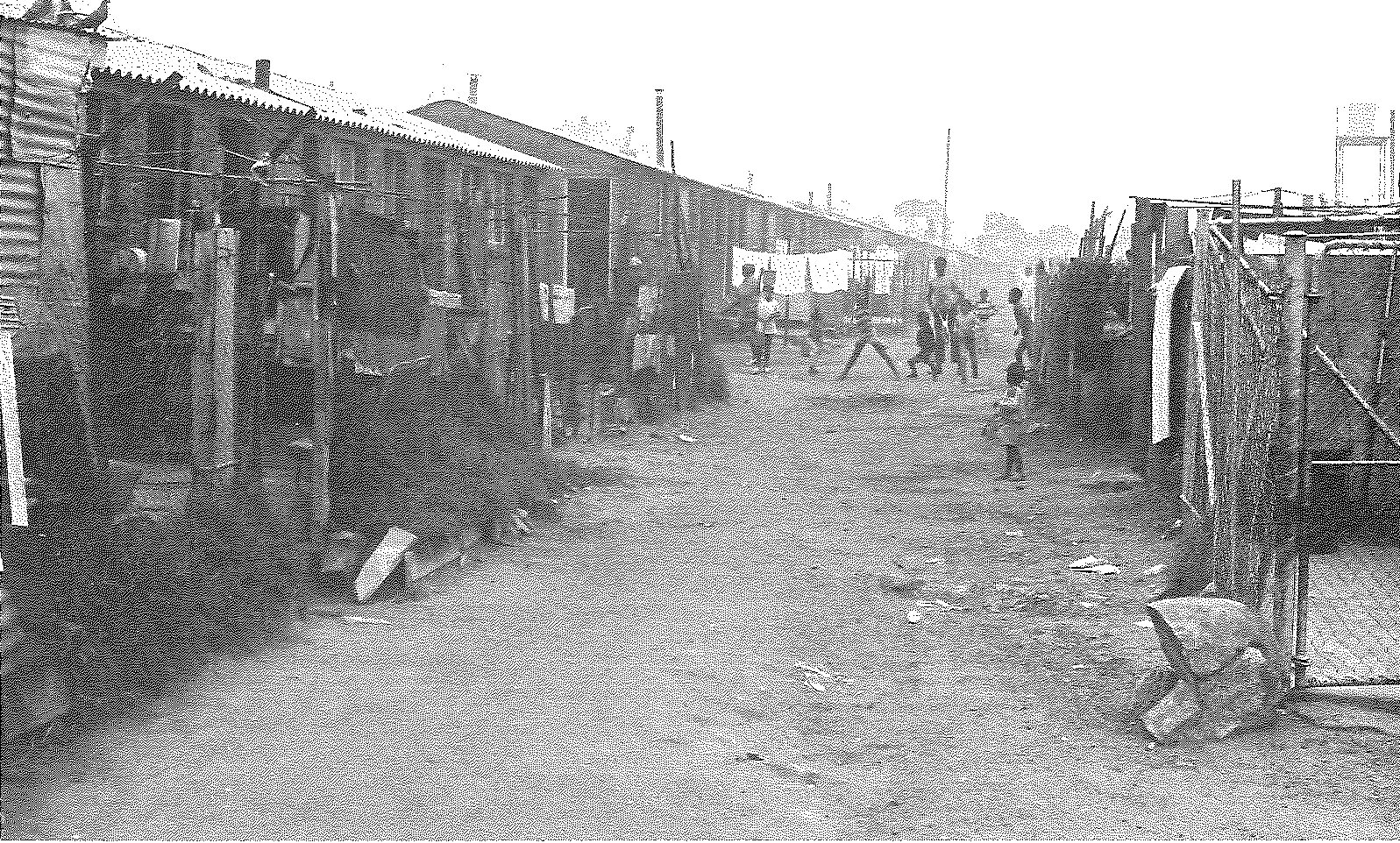
White City-Jabavu is one of the oldest communities in Soweto. Its streets are unpaved and most of the houses still don’t have electricity, but they do have sewage facilities and running water. Garbage pickup and maintenance are a big problem: watch out for the hills of garbage and the pools of sewage beside the road. The houses in this community are virtually all rented: very few Sowetans have taken up the Municipality’s offer to buy their council houses. Most of the houses are the standard Soweto “matchbox”: 2 rooms in front and 2 in back. But in White City the authorities built a variant: the matchboxes are semi-detached. The average number of occupants in a Soweto matchbox house is 10; in White City, the population density approaches 14. The families cope by building sheds out the back; these are often rented out to other families at a price exceeding the official rent for the property. The waiting list for housing in Soweto runs to the thousands, and desperate people are willing to take any shelter they can find in Soweto.
Two squatter communities, the Chicken Farm and Mshenguville, have sprung up within Soweto to provide housing for the most desperate. Mshenguville, the home of over 2,000 families, is the more notorious. It was set up on recreation land leased from the municipality by a former mayor of Soweto. You can smell Mshenguville well before you reach it: the only sanitation facilities are a rampart of “johnny on the spot” portable toilets along the perimeter of the community. The only water taps to be found in the community are interspersed among the portable toilets. Cholera is an ever-present danger, as are fires from the charcoal burners used in the crowded tin and tar-paper shacks. (Fire is an ever-present danger in the township, but there are only two fire trucks in all of Soweto). Mshenguville most closely approximates Canadian visions of Soweto as one of the lower circles of Hell.
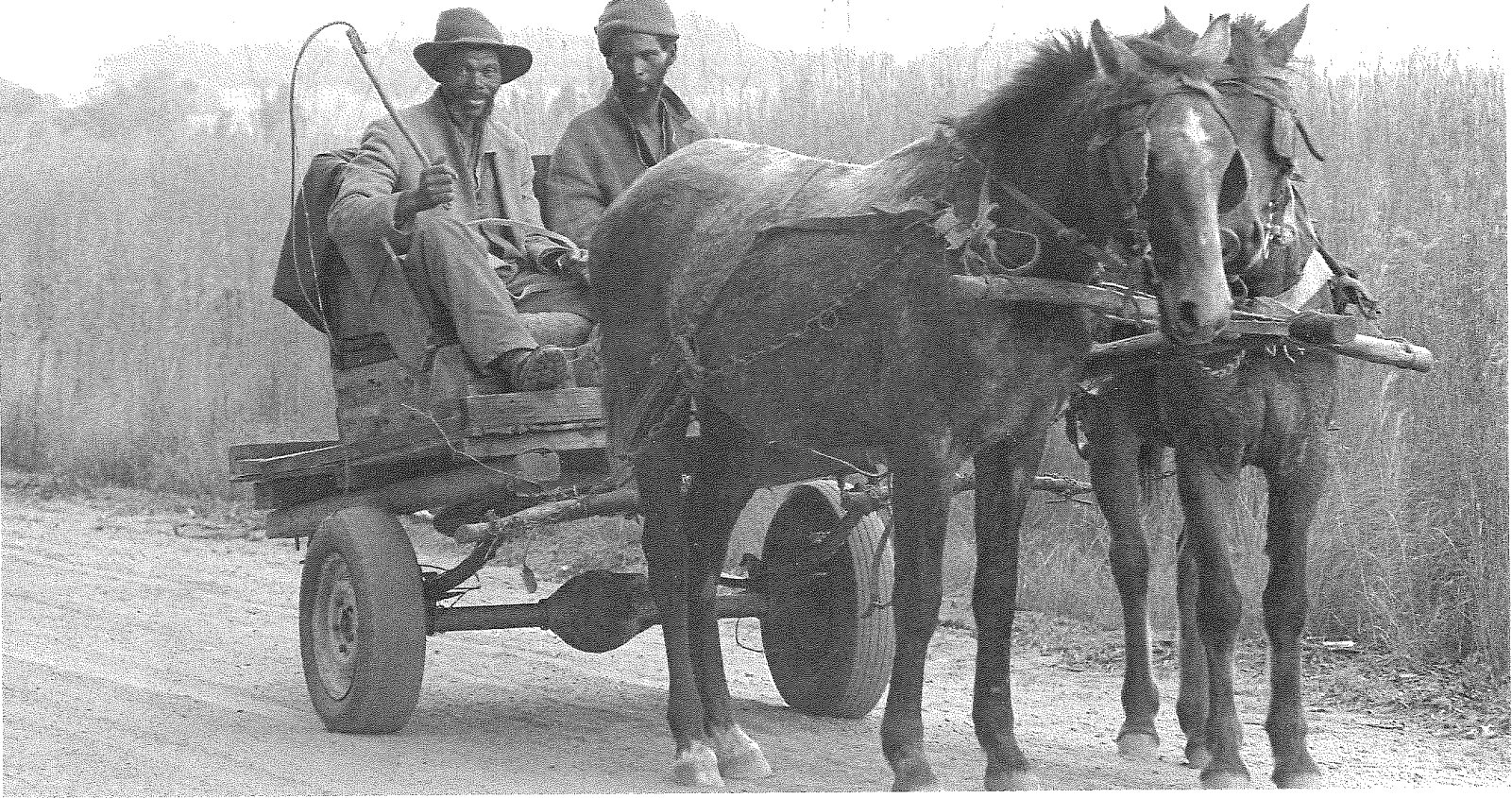
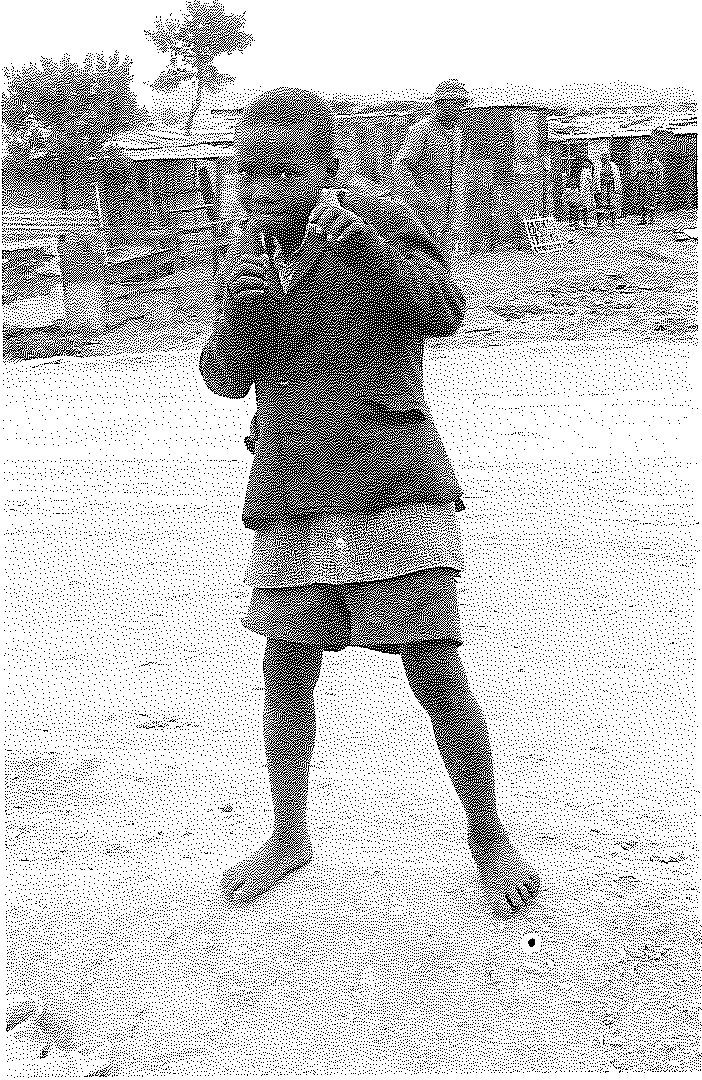
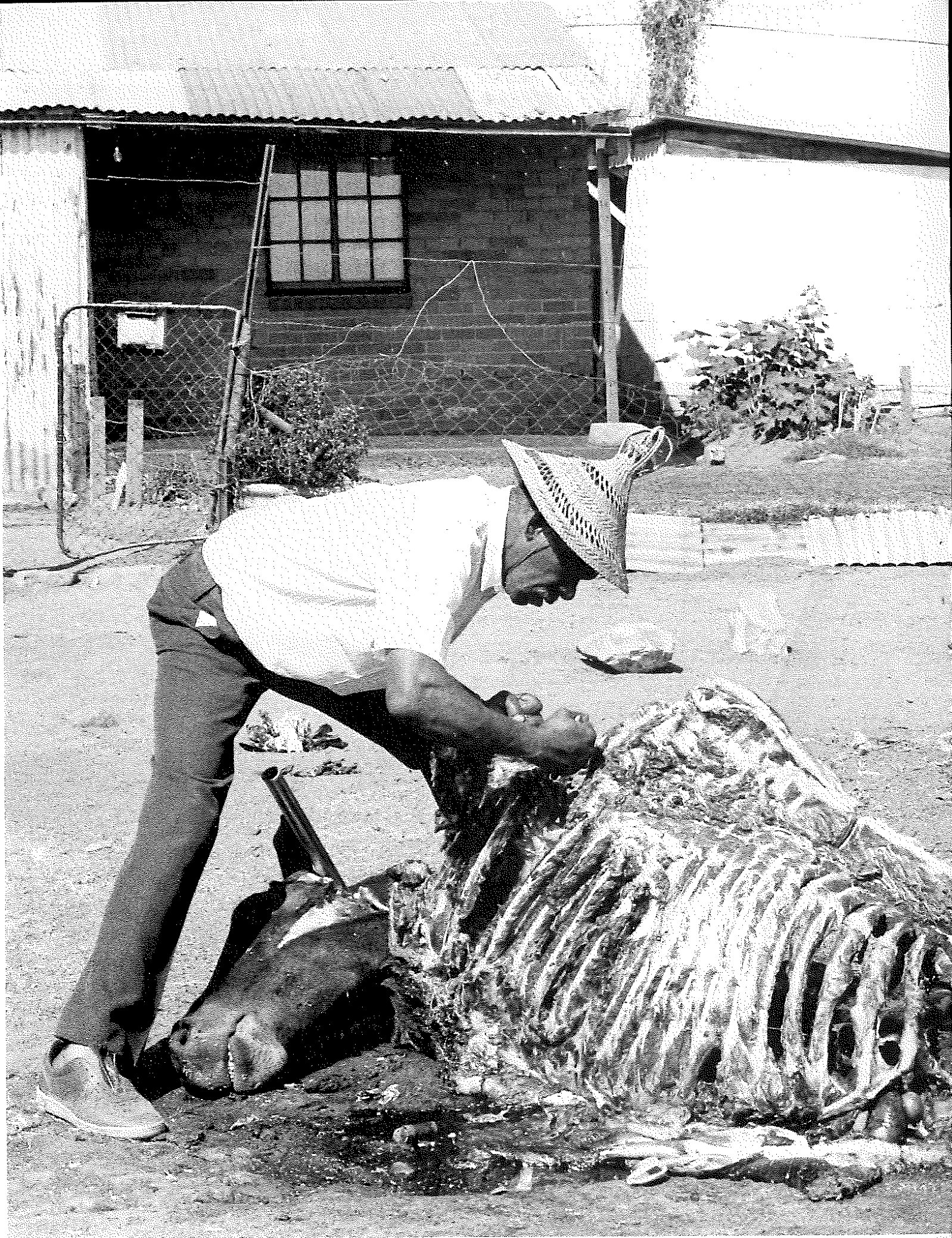
But most of Soweto is not so much hellish as dreary. The basic matchbox house looks like a child’s drawing of a house: gray cement walls, 2 small windows flanking the front door, a chimney to one side, a tin roof glinting in the sun. Multiplied by several hundred thousand, the effect is claustrophobic. You have to take a walk to see the signs of vibrant life: children in school uniforms playing stickhall in the streets: lean doos nosino the butcher cutting up an animal in his backyard; hot take-out meals being ladled from the back of a horse-drawn wagon; ladies clustered in front of a house looking over a new shipment of used clothing. Until very recently the authorities blocked any attempt to set up commercial enterprises in Soweto. The Sowetans responded by setting up businesses in their homes. As a result, you can get just about anything you want from the “stanzas” or backroom shops of Soweto.
Running out of time? Let’s get back in the car and take a quick run past a few more landmarks. The ruins of Orlando High School, known in Soweto as “the Rock” ’, a once fine educational institution which was burned down in the 1984 riots. The authorities have refused to rebuild it, thereby exacerbating the overcrowding problem in Soweto high schools. A community group is raising funds privately to rebuild it. Orlando soccer stadium. Nothing — not even politics — inspires such passion in Soweto as soccer. Soweto has two powerful teams, the Orlando Pirates and the Kaiser Chiefs, in the national football league. The stadium at Soccer City was the only venue large enough for the 100,000 supporters who welcomed back Nelson Mandela last February. A day Sowetans will long remember. Winnie Mandela’s ruritanian mansion, built with the proceeds of the sale of her memoirs to the movies. Winnie built it as a “presidential palace” for Nelson Mandela on his release from prison. For years it stood half-finished and abandoned. On his release, Nelson Mandela refused to live in it. But his modest bungalow proved impractical, and now the house is a hive of political activity.
We’ll finish with the cemetery, and the tomb of Hector Peterson. Hector was the first person to be killed in the 1976 Soweto massacre. At dawn on June 16 every year the matriarchs of Soweto accompany his mother to lay flowers on Hector’s grave. Last year, they arrived to discover his tombstone had been smashed and the grave desecrated. Soweto Day lingers most in my memory: the cloak of smog, 2 parts coal dust to one part diesel exhaust, slowly lifting from the city; the horse-drawn carts moving through the gloom; the piercing cold of the cemetery and the churches; the gentle sobbing of the grieving mothers; and the eerie quiet of an exuberant, cacophonous city of three million who mark the anniversary of the massacre every year by — staying home. Soweto — silent!
View the original scanned pages →
Originally published in bout de papier, Vol. 8, No. 1 (1990), pp. 20–23. Read the rest of this issue →



