
bout de papier, Vol. 7, No. 2 (1989), pp. 24–26
Story by Hugh Stephens Photos by Fredericka Gregory
It was December, 1975 and Canada had just closed its Embassy in Beirut for the first of several times. Like the rest of the Embassy staff, I had been evacuated to Athens to await reassignment; unlike many of them I was still there almost a month later. The immigration officers had set up shop in Cyprus, the trade officers were off to Baghdad, and it looked as if I, the Third Secretary and Vice-Consul who had completed just I months of a first posting, was headed back to Ottawa. Finally, the “Confidential-Pers.Info.” telegram came. I prepared for the worst and opened the envelope.
“We are offering you immediate placement on a two year Chinese language training course in Hong Kong, followed by assignment to Peking”
I was really dumbfounded. I had no particular background in Chinese or Asian Studies and I had never indicated an interest in specialized foreign language training. My knowledge of Chinese was confined to “chop suey” and “kung fu”. In fact, just a few months before leaving for Lebanon I had been forcibly bilingualized at the Carson Road Academy, where my Vancouver high school French had been turned into something usable. More language training was the last thing on my mind. But maybe someone in Personnel saw something in me that I didn’t see in myself and the alternative was to return to Ottawa in December. Viewed in this light, the offer looked increasingly attractive. It would certainly be a challenge, a new experience, culturally broadening, etc., all the things for which we joined the foreign service. So I accepted by return telegram.
A fortnight later, I was carefully studying the landing card I had been given by the airline hostess prior to arrival in Hong Kong, comparing the English with the Chinese and Chinese back to English. Finally, I was able to identify the two characters which represented Hong Kong. There was the one which looked a bit like a plant growing in a flower pot and the one with three little dots to the left. Yes, that was definitely Hong Kong. Flushed with success, I moved on to the airplane safety instructions only to discover after about half an hour that I had been looking at the Japanese version.
Once settled in Hong Kong, with the designation of Attaché to the Commission for Canada, I first had to find the school at which I was to spend the next two years. All my predecessors had attended the British Army Language School at Lei Mun on Hong Kong Island. While an excellent school, run with true military discipline and efficiency, it had not proven to be quite what the Department wanted. A lot of time was spent learning the Chinese term for “self-propelled rocket launcher” and so on. So I was to be the first Departmental initiate at the “Yale-in-China” language program of New Asia College, Kowloon (the old Trade Commission Service, always in the forefront, had already tried New Asia with success.
No one at the Commission was too clear as to where the school was located, but they were confident that I would find it. I was buoyed by their confidence. I made it across the harbour to Kowloon all right, and took my first Hong Kong taxi. No one in the wilds of Kowloon where I was headed seemed to speak a word of English, least of all the driver, and no one seemed to have ever heard of my language school. I made an extended tour of Kowloon that morning, visited some dozen schools until, by accident, I finally stumbled on the one I wanted. The language centre was on the top floor of New Asia Middle School, a most unprepossessing building on a small side street. I waded through the courtyard full of Chinese pre-teens and lurched thankfully into the Director’s office.
You must remember that I was a complete novice. Normally Departmental Chinese language students start off with an introductory year in Ottawa, at that time at the Canadian Forces Foreign Language School — CFFLS -not so affectionately pronounced by its inmates as “syphilis”. By the time they arrived in Hong Kong they could ask directions, recognize some characters, and carry on simple conversations. Not me. I began at New Asia at Lesson 1.
The methods were very traditional, but very effective. You memorized. Every night you memorized the next day’s lesson. The teachers went over the lesson, repeated it, corrected your efforts, but if you wanted to survive you had better have memorized the new words and characters for that lesson. It was a train that was moving down the track at a fast pace. If you didn’t keep up, you fell off. Having recently experienced Carson Road, where we were walked through each lesson several times, with audio visual aids, until every member of the class understood the vocabulary, I was totally unprepared on my first day. I hadn’t memorized the lesson in advance and was completely lost. I went straight home after class and put in 8 hours of nonstop work on the next day’s lesson. The following morning, to my relief, I held my own. I stayed above water. I was on my way to learning Chinese.
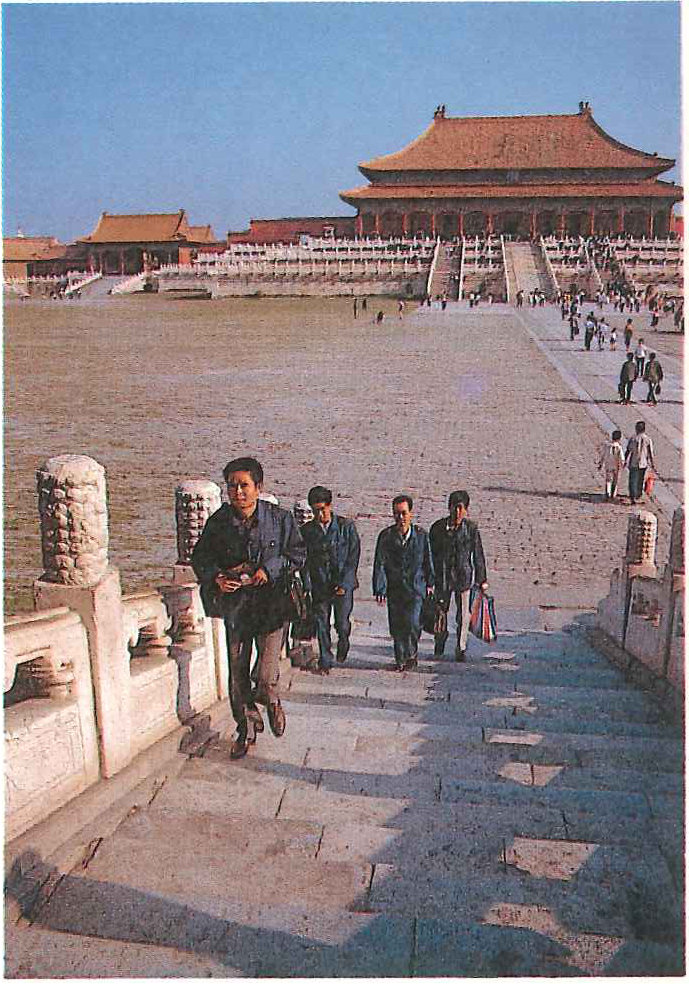
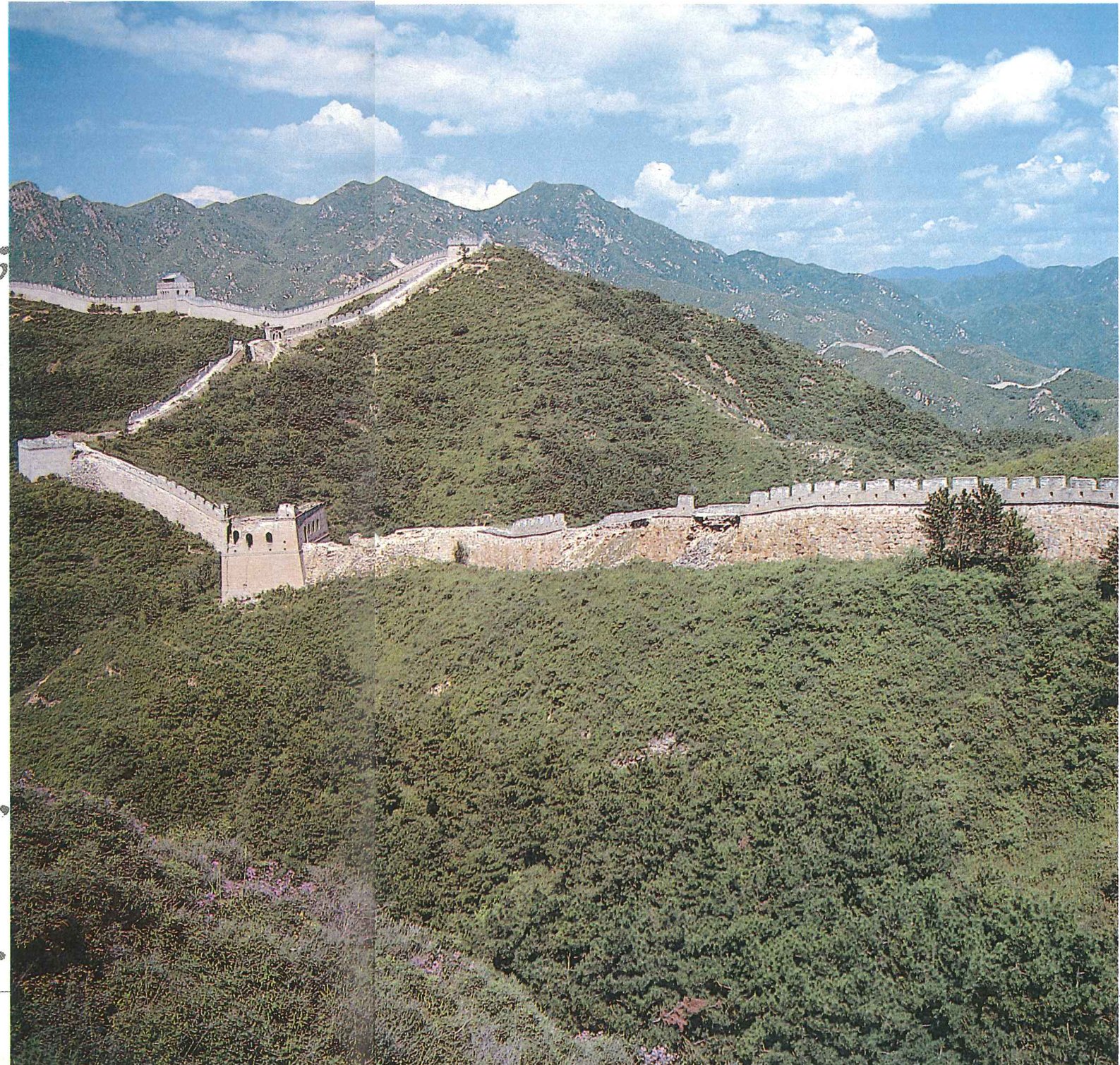
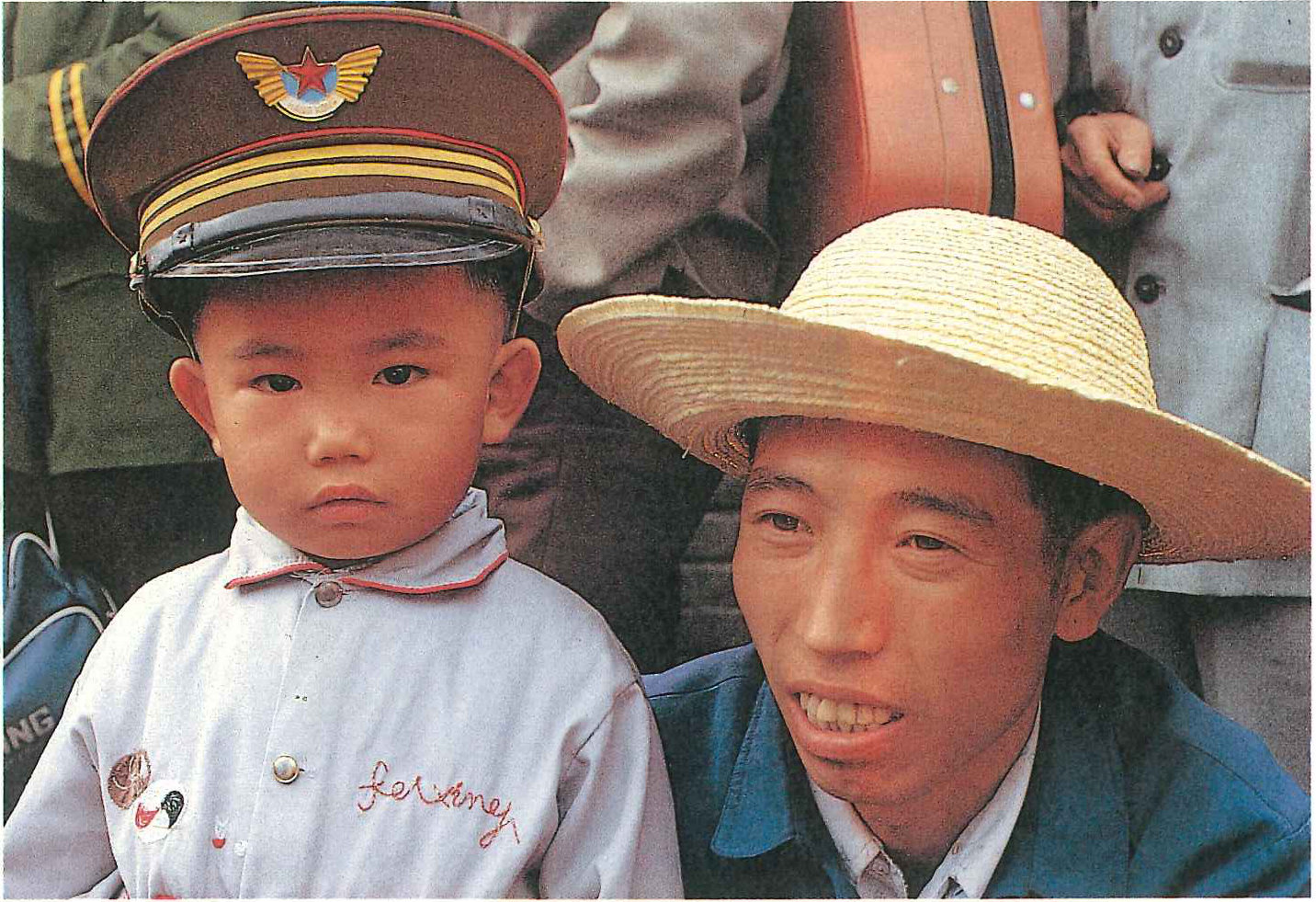
Our first few days were spent trying to master the intricacies of Mandarin pronunciation. For hours we recited such incantations as poodz, woodz, sh wadz, chew, wadz, fada, chwanghoo, boo without having a clue as to their meaning. We were a mixture of Western devils (Europeans) and Eastern devils (Japanese) and I soon found out that we each had our own particular problems. I had not known that Chinese had an “R” sound (otherwise why were all Chinese supposed to say “flied lice”) but, in fact, it is strong and pronounced in the Peking dialect, much to the dismay of my Japanese classmates to whom “R” was an unknown quantity. Mandarin has a similar sound formed by saying “R” while at the same time gritting the teeth. It is this latter sound which forms the first syllable of the Chinese name for Japan — Riben – and is a word I’m sure no Japanese can pronounce correctly. I’ve often wondered if this is coincidence or Chinese irony.
We Westerners had much less trouble with pronunciation but were soon put in our places when we started dealing with Chinese characters. The Japanese students would read so quickly and pronounce so badly that we never knew what they were saying. On the other hand, our painful stumbling over the characters must have been hard for them to bear.
Before I really plunge into highlighting some of the idiosyncracies of Chinese, I should explain a bit about Romanization, or writing out Chinese in Western script according to its sound. For example, “Beijing” is the Romanization of the two characters for what we used to know as Peking, “bei” meaning north or northern and “jing” meaning capital. Of course “bei” could also be written “bay” or some other variation. Unfortunately, in one form of Romanization it was also written pei. I discovered that there were several systems of Romanization in use, Pinyin, used on the mainland, Wade-Giles, the old missionary system, and Yale, developed during the Second World War by the U.S. Army, but not much used since – except at New Asia College. But when I first started, all these distinctions were esoteric refinements that I would learn one day. To my untrained ear, if a sound resembled an English word, I wrote it down that way. Thus “ni bubi qu” (you needn’t go) became “knee booby chew” in my notebook.
In almost any European language, the English speaker has some word association he can draw upon, but such cognates are virtually non-existent in Chinese. Because of the way in which the language is structured, Chinese does not need to incorporate Western words, but can create its own. Thus airplane became “fei ji” by combining the characters for fly or flying (“fei”) and machine (“ji”). Locomotive is “huo che” the combination of the characters fire and vehicle. The only direct borrowing from a Western language I can recall is “ka fei” for coffee.
Failing word associations, the student of Chinese has to fall back on other devices. In some cases, this meant remembering that the meaning of the Chinese word was the exact opposite of what it sounded like in English. Thus the Chinese word “toe” of course means head, “roe” means meat and when children “coo”, they are crying. Some associations did prove quite useful. Once I learned that “joe” stood for wine or liquor, I had no difficulty in remembering that “pee joe” was beer.
The next obstacle to overcome was tones. In Mandarin, the same sound pronounced in a different tone can convey a totally different meaning. One memorable day, we were discussing the word “wen”, meaning “to ask” The pretty young teacher said it was our turn to ask her some questions. Being a glutton for punishment, I lead off, saying in Chinese “Wo yau wen ni..” (I want to ask you), only to have her blush a little and ask if I really wanted to kiss her. I tried again using another tone, “Wo yau wen ni…” Now you want to smell me, she said to the great amusement of all concerned, except me. Another classic gaffe was the “yehu” incident. I had brought a Cantonese musical instrument to decorate the wall of my apartment. Its name, I was told, was a “yehu” ’, ye meaning coconut from which the base was carved and hu meaning a stringed instrument. I proudly explained to my teacher what I had purchased. Spoken with different tones, however, “yehu” becomes night pot or chamberpot and she thought it most strange that I should have one hanging on my wall.
If tones were difficult, we had yet to face characters. It took us a week to learn our first fifteen, and a week for the second fifteen by which time we had already forgotten half the first batch. Characters are either friendly or unfriendly, the friendly ones giving you something to remember them by. They are not necessarily the easiest to write and in fact some of the most complicated characters are among the easier to remember, simply because they are so unique. The non descript devils, the ones you see day after day, are often the most difficult.
Nonetheless we persevered. Thirty characters became 300 and 300 eventually became 3000. Of course, just to complicate matters there are two different ways to write many characters, the old way and the “simplified” way, introduced by The Peoples Republic in the 1950’s. Our teachers were purists (as well as anti-communists) so we first had to learn the traditional way and were only allowed to write the simplified characters near the end of our studies. That was a major plus, though because virtually all menus in Chinese restaurants in Canada are written in the old script, and if you can’t read a menu, your friends and family just won’t believe that you have really learned Chinese.
It’s not just learning the characters that presents a problem, but also learning to recognize them in their various longhand forms, known as cursive script. Just as scribble in longhand is far different from the printed page in English, (ask any secretary), so too is Chinese scribble hard to decipher. I remember one of my teachers, who had obviously never taken a teaching methods course, who scribbled a whole board full of characters. “You’re learning the printed form. When we write we do it like this” Then to reassure us, he added, “Chinese is really hard. You must be crazy to study it”
Not all aspects of the language are as difficult as characters, however, and I am eternally grateful to the Chinese for dispensing with all verb endings. There is a great deal of internal logic in a language where the concept of size is formed from the two words “big-little”, price becomes “dear-cheap”, width “wide-narrow” etc. One realizes how many words we use in English that convey little or no meaning. One of the few expres sions we’ve probably adopted from the Chinese is “long time no see”
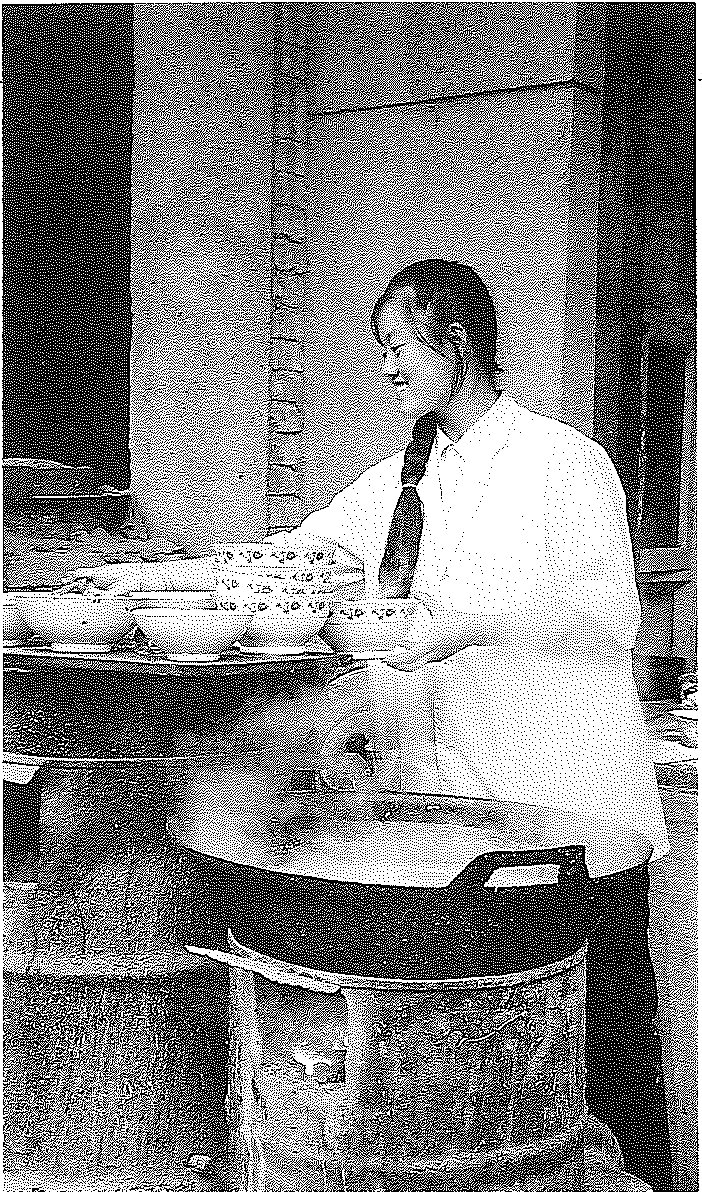
One of the activities I most enjoyed was lunching with my teachers and fellow students at nearby restaurants. There we were introduced to the world of Chinese cuisine. On one of our first outings, I enquired about a particular substance (for that is what it was) that I was eating. “Haishen” came the reply. I should have left it at that but I had to know the English translation. “I think they are called sea-slugs”, said the teacher with obvious relish.
Through it all with the help and support of my wife, I kept my nose to the grindstone and survived. Gradually, my fellow students dropped off, or went on to other pursuits or got prematurely posted to Peking if they were diplomats from other countries. By the last semester, many of my classes were individual and I could design the sort of program that I wanted. At the end of my stay, I too went on to Beijing. There I read the Peoples Daily every day to the point of being almost brainwashed. I read wall posters denouncing Mao. I spoke to Chinese officials and Chinese workers, in formal, setpiece situations and in completely relaxed, spontaneous encounters. Without the language, going to China would have been like having no eyes or ears. It would have been as if I could never reach out and touch China.
Learning Chinese unlocked a new world for me. I was fortunate that I was able to spend 2 years of my life devoted so single-mindedly to one particular task. Most of us don’t have that luxury. But if the opportunity ever comes knocking, open the door.
View the original scanned pages →
Originally published in bout de papier, Vol. 7, No. 2 (1989), pp. 24–26. Read the rest of this issue →



