
bout de papier, Vol. 7, No. 1 (1989), pp. 15–17
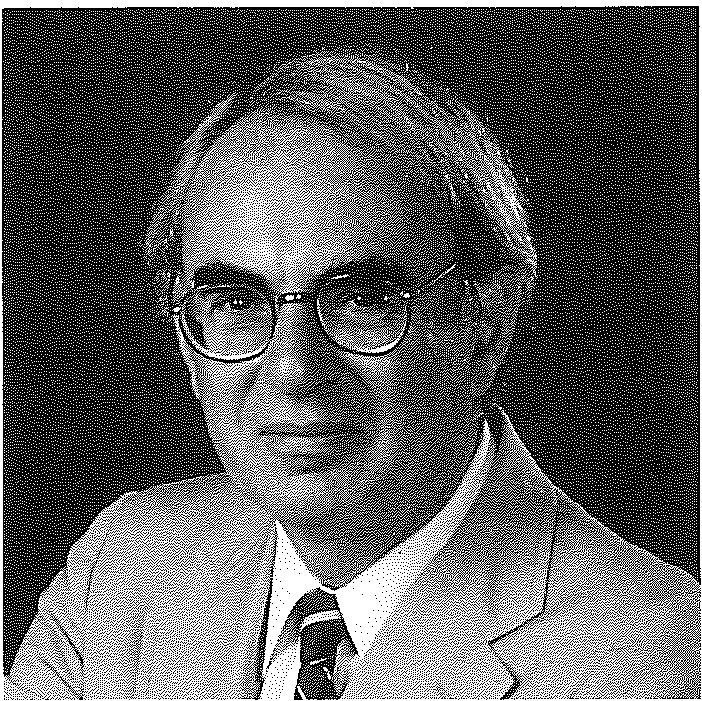
The following speech was given to the National Press Club in Washington on December 20, 1988, just before Mr. Gotlieb ended his 7 year assignment as Canada’s Ambassador to the United States.
Washington insider defined what it takes to be a successful diplomat here
– these days. He said a diplomat needs to be one part pundit, one part lobbyist and one part saloon-keeper. He argued that, while diplomats are paid to carry out all three of these functions, it was really only the last one for which they were appreciated locally. I have spent seven years now at the intersection of Canadian and American affairs, the cross-roads of Interdependence Avenue and Indifference Street. To keep traffic moving through this thoroughfare, I have had to learn some new rules about diplomacy. What I learned are the following propositions on the really NEW diplomacy as practised in Washington.
Proposition Number One
The exercise of political power in Washington is so extraordinarily complex that the only way one can understand or describe it is through a metaphor. Everyone has his own. This is mine.
Imagine RFK Stadium. Only imagine also that the field is a magnetic field. Each player is an atom or unit and carries an electrical charge. All of the particles are moving about, seemingly at random. Some particles have more power than others, but all have some. Some particles attract. Others repel. The field is full of players, hundreds of them, thousands of them. Several teams take the field at a time, several kinds of games are in play at once, players from one team, without changing uniforms, occasionally play for another. There are no referees. The cheerleaders, dressed in power suits and Gucci loafers, send in plays from the sidelines. Political Action Committes, (PACs), dressed as trainers, dispense the steroids of modern politics — money — to the players on all sides. Meanwhile, the crowd’s attention is riveted on the media, not the field. The media sometimes describe what happens on the field, sometimes play their own games.
Who are the particles? First the President, the Cabinet, the 4000 political appointments made direct by the President and the 350,000 federal civil servants. Then the 535 Members of Congress, the 18,800 Congressional staffers, the 47,834 lawyers, the employees of the 11,000 associations and seventy-five think tanks located in Washington, the 4,196 PACs, the 9127 lobbyists who have registered in the last year, the 18,348 lobbyists who have not registered in two years and last, but not least, the 4,326 journalists located here — a cozy community of some half a million people, all shooting off electrical power charges. The biggest charge is given off by the President. But there are many other particles of heavy voltage in the game — the House Speaker, the Senate Majority Leader, the Secretary of State, the Chairman of the Federal Reserve Board, the committee chairmen, the subcommittee chairmen, the principal staffers and so on. Occasionally the power-particles form into large harmonious patterns. Other times, the field becomes one huge supercollider. It is the modern diplomat’s job to identify the particles whose charge can affect his country’s interest, develop a healthy respect for each and all of them, connect with them and then try to align them in such a way as to make them as benign as possible.
Proposition Number Two
The United States is the only country that has two executive branches of government.
Whatever the Constitution says about the doctrine of the separation of powers, the reality is that power is not separated but shared, and shared more or less evenly, depending upon the popularity of the President himself, the size of his electoral margin, the length of his coattails, if any, and so on. After the U.S. election, the media were full of punditry about the President-elect’s lack of mandate. At the same time, paradoxically, the media were also saying that both the President and the Congress had their own, quite distinct, mandates. Liberalism and conservatism had both won.
You will appreciate that many foreign diplomats found all this perplexing. Imagine the ditticulty their governments, and their peoples, at home, had in fathoming it. But it all becomes clear when you see that in the United States, you elect two executive branches. Here, as in other countries, the executive proposes and the legislature disposes. But here, often, the Congress proposes as well as disposes.
Proposition Number Three
To find the true locus of power, look to the Chairman of the Congressional Committees and Subcommittees. If a Chairman is astute enough and persistent enough, he or she can write the law of the land.
The Presidency of the United States is, of course, a uniquely powerful institution. On the cosmic issues of the age – war and peace, hunger and pestilence, — the President personifies the power of America and exercises it, assuming that a measure of consensus exists among Americans on the issue in question. But on the less cosmic issues, the real bread and butter of politics, foreign ambassadors soon learn that to perceive the exercise of power clearly, you need a microscope, not a telescope. Washington is full of the lore of the powerful Congressional bosses. Buildings bear enduring witness to the power they had — the Rayburn Building, the Cannon Building, the Hart Building.
But, what some diplomats miss is that the Congress has transformed itself. The retorms of the seniority system, the impact of television and the explosion of PACs and private funding have had the effect of decentralizing power in both Chambers. These changes have also had the effect of making the Senate bout de papier Vol. the cockpit of democracy and the House, the body of sober second thought. If you are worried about the control — or decontrol — of pipelines or of gas, for example, go right to the focal point of political power, the Chairman of the relevant Congressional Committee or Subcommittee or to his staffer.
Proposition Number Four
In Washington, a foreign government is a special interest, and not a very special one at that.
Returning to the metaphor of the playing field, a foreign diplomat is not some distinguished invited guest, with seats in the stands, looking down at the play. A diplomat, instead, is one of the particles on the field and not one of the bigger ones. He carries no great electrical charge. A diplomat has no votes to the game to guide him in its complexities. But, in the end, if he is to do his job, he must go out on the field and play the game himself.
For example, in the dying hours of the 100th Congress, the legislature was working on the Omnibus Drug Bill. It was a bill whose goals we fully endorsed. We are concerned in Canada about drug abuse and have our own strategy to counter it. But there were some elements of the bill that caused us serious difficulties. Essentially, the bill tried to impose U.S. regulations on Canadians in Canada, for example, by requiring Canadian contractors doing business with the U.S. government to meet U.S. regulations for drug-free workplaces. We sympathized with the goals of the bill, I repeat, but we did not think it appropriate that the U.S. Congress legislate for us, extraterritorially, on how to handle the problem.
We took our problem to the State Department. State referred us to the Department of Transportation. DOT gave us a good hearing. They sympathized and acknowledged that we had a problem. They agreed to help, but they also had some serious problems of their own with other parts of the bill. Effectively, our number one priority was their number ten priority. We could either rest on tradition and propriety and risk seeing our interests being damaged. Or we could go out on the field to protect them. It was not a difficult decision. We had to go out on the field ourselves.
But, as soon as we did so, we were surrounded by the swirl of battle. We made our case to sympathetic players wherever we could find them. Some did not want to hear what we wanted to say, although all listened courteously. Most recognized we had a problem. But, as we were to discover, few were playing the same game we were playing. Ultimately, and with difficulty, we did succeed in finding the players with their hands on the right ball. They took our point and drafted the relevant parts of the bill in such a way as to preserve the bill’s objectives while meeting our legitimate concerns. It was a fairly happy ending. But had we stuck to traditional diplomacy, the outcome would have been a lot less happy, for both sides.
Proposition Number Five
U.S. domestic policy is often more important to foreign governments than U.S. foreign policy. Tound wandering ine turner icacuts un mo Administration and all over Capitol Hill. This is, obviously, more true for this country’s nearest neighbours but it is also true, in varying degrees, for many others. It is obvious that, U.S. fiscal policy and its eventual impact on the dollar would be of interest to every country. Less obvious is the fact that other U.S. domestic policies are also of extreme interest and relevance, such as transportation deregulation, uranium enrichment programs, interstate banking law, environmental regulations, securities regulations, gas pipeline regulation, even oil drilling in national parks.
The choices facing a diplomat are stark. Lobby on these issues and you may well be accused of interference in U.S. domestic affairs — a big diplomatic no-no, by the usual reading of the Vienna Convention. Or don’t lobby, and see your country’s interests suffer. Machiavelli and Palmerston and Metternich would scarcely recognize the practice of this type of diplomacy. Nor, for that matter, probably, would even George C. Marshall, John Foster Dulles or Dean Rusk.
Acid rain is another example. For several years now, the debate has raged. The game has been centred in the Congress which has been trying to revise domestic clean air legislation. The whole context of this activity has been domestic. The debate is over which region of the country will pay for what reduction in SO, emissions. It is handled almost exclusively as a domestic, regional conflict. But if U.S. air is cleaned up as a result of domestic legislation, foreign air — Canadian air — is a major beneficiary. Pollution does not respect boundaries. Nor does clean air.
Nor can diplomats. Probably a day does not go by when I or my colleagues do not discuss this issue with Congressmen, or staffers, or interest groups, or the Administration. More often than not, we talk to all of them. Always we press our interlocutors for action. No other field of public policy in which I have been active has been so controversial. Testimonials to my wisdom lie side by side in the Congressional Record with censures of my interference, including one Congressman’s request for my recall. Meantime, back in Canada, the Government is excoriated for its impotence and I am criticized for reluctance to work the U.S. system. How the U.S. acts on this problem is, of course, of direct and significant interest to Canada. Were I to observe antique diplomatic niceties, I would not be doing my job.
The fact is, these days, the flip side of one country’s domestic issue is another country’s foreign policy. In such circumstances, there no longer is any discernible line between domestic and foreign affairs.
Proposition Number Six
It’s never over till it’s over and, in the U.S. system of government, it’s never over.
This proposition, otherwise known as “the Yogi Berra insight” means that there are no final decisions. Defeat, delay, reorganization and re-engagement are intrinsic to, not to say endemic in, the power games on the broad field of action. Particles collide, reform, particles are never in repose, never at rest. How many times have I proclaimed victory in a fight to save a particular product, eg. softwood lumber or fish or steel, only to find the fight was not over. A particularly good example of this peculiarly Washington reality occurred in Canada’s attempts to safeguard the use of asbestos for some, safe, applications.
The story began in the early 1980’s. At the time, EPA was the lead agency and it wanted to ban asbestos outright. We agreed that asbestos did present severe health hazards in some applications but we were adamant that it was not unsafe in all applications. Canadian industry hired a very high priced lobbyist who devised a strategy for them. This strategy eventually paid off. Canadian asbestos producers celebrated. Too soon, Congress intervened, the regulatory agencies regrouped and the decision was reversed. Those who favoured an outright ban celebrated. Too soon, again. Other power particles invaded the field and deadlock ensued. Five years later the battle is still going on. Perhaps the only clear winner has been the lobbying firm. They keep on celebrating.
Proposition Number Seven
Alliances must be built issue by issue. Or, in Washington, countries have no permanent friends, only periodic allies.
With the possible exception of Israel, no country can count on friends in the U.S. Congress to protect it from harm. Even Israel has been surprised recently. But remember the Yogi Berra insight. On a given Canada- U.S. issue, for example, uranium imports, I go to see numerous Senators and Congressmen. I can describe one such Congressman — a composite of my imagining. Typically, when I call on him, he tells me his great-grandmother was a Canadian; he still has cousins in Canada; he spends a week or two at a northern lake each year, if he can. He even has a little Canadian flag in his office. On acid rain, we have no firmer ally. He loves Canada. But when I try to talk to him about uranium, forget it. He wants to have his yellow cake and eat it, too. His constituents’ interest come first, last and always.
While this composite describes a fictional Congressman, there are scores of real life examples. Persuasion is utterly impossible in circumstances where a Congressman’s choice is between his constituents and mine. The game has to be played differently. We assess who, in Congress, wins and loses if, for example, uranium quotas are imposed. We try to identify Congressmen whose constituents’ interests dovetail with our own and to work with those people. Sometimes we prevail; sometimes we don’t. And, in our case, the stakes are often enormous.
Lobbying by foreign governments on an issue by issue, ad hoc, basis is a long, difficult and, ultimately, quite unpredictable business. This uncertainty was one of the reasons Canada wanted a bilateral free trade agreement with the USA.
Proposition Number Eight
Institutionalization in bilateral relations is an idea whose time has come.
I used to share what was a widely held view in Canada that institutionalization of relations between Canada and the United States was not a good thing. It implied, somehow, a constraint on the political handling of disputes, a bar to the injection of the political impulse. Mark me down as a convert. Institutionalization is perhaps the best way open to foreign governments to get the power particles in Washington to align themselves long enough to get some things done. Here I am thinking of regular formal meetings of Heads of State, Foreign Ministers and so on.
Institutionalization in the form of the Free Trade Agreement between Canada and the United States will take some contentious trade issues out of the middle of the field and put them into a more quiet corner. The issues will remain part of the Washington power game. But, removed from the game’s hurly-burly, binational panels and commissions will, we hope, deal with problems that arise between us in a calm, more predictable and, to the extent possible, apolitical way. Bringing the rule of law to an otherwise power-based bilateral trade relationship is obviously of special interest to the smaller country.
Proposition Number Nine
Every country is famous for 15 minutes.
It is a fact that one of the groups of particles on the Washington power field that foreign governments must address is the media, print or electronic. A diplomat must recognize that the media are powerful particles in the U.S. process. They are, also, permanent, a quality they share only with the House of Representatives. When the media come onto the field of action, they influence and sometimes even determine the U.S. national agenda. Sometimes they are active participants in it. So an Ambassador cannot do his job without focussing on them. There are hundreds and hundreds of media stars in the game — a thousand points of blight, as it were.
And as with politicians, there is not much that diplomats can give the media stars, beyond helping them to validate their celebrity. On the scale of independent-mindedness, moreover, reporters are exceeded only by statisticians. Consequently, foreign governments don’t get far in charming them. And it is usually feast or famine, so far as coverage is concerned. And when the media do interest themselves in events abroad, they do so from the American angle. Earthquakes and typhoons possibly excepted, it is not what is happening abroad that interests the U.S. media the most, but how those events affect the U.S. agenda.
A good example is the recent Canadian election. This year there was an unprecedented amount of coverage of the Canadian elections. This was not, however, because of some touching, fraternal interest in the democratic processes in the Great White North. Nor was it because of a sudden attack of conscience after years of neglect. It was because the Canadian election affected the U.S. agenda. The central issue of the Canadian election was a decision on the nature of our relationship with the USA. That is what provided Americans with the essential point of reference.
Now that the Canadian election is over, and the outcome was benign, Canada is, once again, erased from the media mind. It is the journalistic equivalent of a computer virus. Every time you meet a foreign country, your monitors are empty. “No country is so provincial” to quote Gunnar Myrdal in another context, “as a large country”
Proposition Number Ten
To succeed, you have to excel at the power game. Or, that’s entertainment!
I started by saying the Washington field of action is infinitely complex. There is a lot at stake in the games that are, at best, imperfectly understood. The key is to get to know as many players as quickly as possible. Doing so is not easy. No one has a lifetime to form friendships. Patience is not its own reward. Nor is liquor necessarily quicker. Diplomats do not keep saloons. If they are smart, they keep salons.
How do you get your phone calls returned if you are unknown to the players? What do you do if you are not married to a columnist of the Washington Post? How do you carry conviction with your interlocutors if they have no knowledge of your credibility?
Friendships and relationships of common interest and trust are forged through socializing. This means when issues come to the crunch, an Ambassador has his phone calls returned. It also gives him the opportunity to pre-brief key figures so that those 2:00 a.m. Congressional decisions are reached in the knowledge of the interests of his country. It is also true that, in Washington, gossip is not gossip. It’s intelligence!
In conclusion, there is one over-arching piece of advice I would give to my newly arriving foreign counterparts. “If you want to be a successful diplomat in Washington, forget what you have ever learned about traditional diplomacy. Get up, get out on the field, and play the American game.” And remember – there is no friendlier people anywhere than the American people, none warmer, none more open, more hospitable, more fair-minded. Count yourself fortunate to be here and savour every moment of it.
View the original scanned pages →
Originally published in bout de papier, Vol. 7, No. 1 (1989), pp. 15–17. Read the rest of this issue →



