
bout de papier, Vol. 6, No. 4 (1989), pp. 19–21
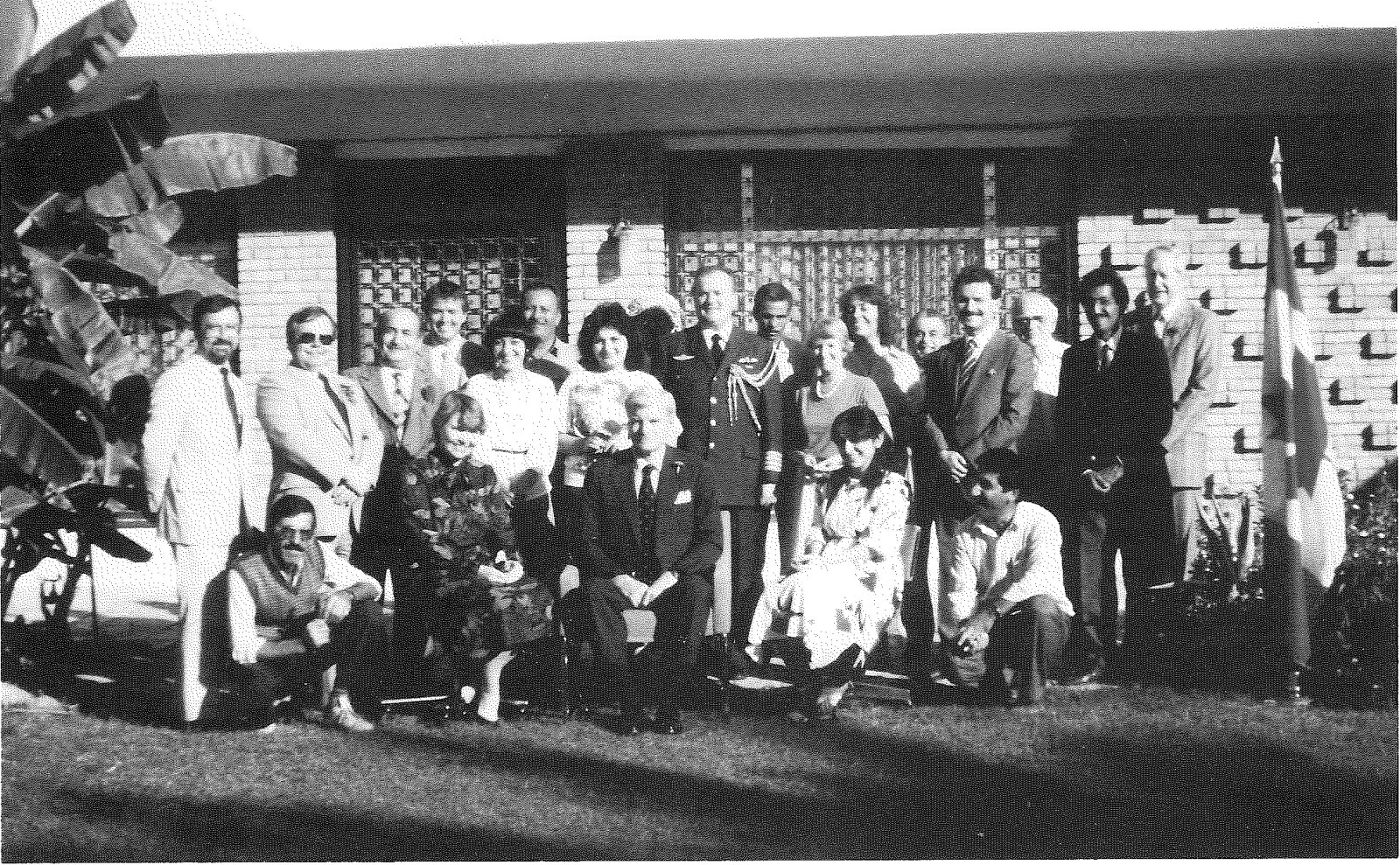
“This isn’t our war — should we really be here?” The question was voiced by an Embassy staff member one morning last March after an Iranian missile had struck our residential neighborhood about 500 meters from the chancery, demolishing five villas and killing eleven Iraqi residents. It was a question we couldn’t help asking ourselves from time to time as the war between Iran and Iraq intensified into the “war of the cities”, with repeated missile attacks on Baghdad and Tehran.
In August, the two exhausted belligerents agreed to a UN-brokered cease-fire and to negotiations towards a peaceful settlement under the auspices of the Secretary-General. After eight years of war, Iraqis greeted the cease-fire with spontaneous celebrations, singing and dancing in the streets, fireworks and feu de joie from the multitude of weapons, big and small, which had become such a normal feature of life in Iraq.
The sense of relief was fully shared by foreigners in Baghdad. They had also shared with the local population some of the risks and privations through the darker days of the war.
How did the war affect our day-to-day life in the Canadian Embassy?
For much of the war, visitors to Baghdad were often struck by a sense of normalcy. The city of 4½ million inhabitants went about its business without disruption, at least on the surface. Buses ran; trains and planes arrived and departed. Businessmen came and went. The Baghdad International Trade Fair was held annually with only slightly diminished participation by countries and firms, including many Canadian firms, determined to maintain a presence for the longer haul in the potentially rich Iraqi market. The Iraqi authorities made every effort to maintain a “business as usual” atmosphere in spite of the constraints of the war effort, which absorbed the bulk of Iraqi manpower and foreign exchange earnings.
Concerts and poetry festivals were staged; major development projects moved forward
At the same time, however, there were frequent reminders that Iraq was at war. Poets from around the world (including six Canadian poets) who gathered in Baghdad for the Mirbed Poetry Festival last year were rudely awakened one night shortly after their arrival by a missile striking the bank of the Tigris river a few hundred meters from their hotel. Some left on the next flight home. Most reacted in accordance with the dictum: there is nothing as exhilarating as the sensation of being fired at and not being hit. Canadian poet Henry Beissel was inspired to take pen in hand and compose a lyrical tribute to the courage and steadfastness of the ordinary Iraqi.
The war intruded on daily life in less dramatic ways. The local economy was severely stretched and food supplies were frequently scarce, with priority for the one million Iraqi men under arms. For a few weeks, butter might disappear from the market. Then, no potatoes; and after they reappeared, suddenly, no tomatoes. There was no rationing system and the shortages were usually brief but unpredictable. As a result, one kept one’s larder full and depended heavily on periodic orders from the freeport in Copenhagen. Periodic visits to nearby Kuwait — a difficult eight-hour drive past the war zone by Basra and across the desert — were joyful occasions to stock up on all the consumer goods unavailable in Baghdad. The Canadian Embassy staff in Kuwait won our affection and gratitude for their unfailing support on our shopping expeditions.
The war inevitably meant restrictions on movement. Embassy staff had to apply for permission from the Foreign Ministry four days in advance in order to travel outside of Baghdad. Routes were prescribed and many areas were closed to foreigners including, of course, the front with Iran, as well as large areas of the mountains in the north where Kurdish guerrillas were active.
On one occasion, I had obtained permission to visit Erbil, the capital of the Kurdish Autonomous Region of Iraq to call on the Governor and other officials. While travelling by car accompanied by my daughter and driver, I was stopped at one of the numerous military check-points and told that I would need additional military escort for the last hundred or so kilometers in to Erbil. After a few minutes, an escort formed up ahead of and behind my car. With progressive reinforcements en route, by the time we arrived in Erbil, we were being protected by 54 battle-ready Iraqi troops riding in three trucks, three jeeps with heavy machine guns and one armoured personnel carrier. They were on full alert. The escort officer, a young Lieutenant, apologized for the inconvenience and explained that (unknown to us) Kurdish insurgents, backed by Iran, had ambushed a convoy on this road the previous day and killed eleven Iraqi soldiers. He said he had received “strict instructions not to lose the Ambassador and his daughter”
One became accustomed to the presence of soldiers on guard duty throughout Baghdad, at the ready with their Kalashnikovs in front of major public buildings and outside embassies and residences. They were well disciplined, and incidents seemed to be rare, but it was clear that these weapons were for use, not decoration. From time to time, the military set up check-points on major thoroughfares to look for deserters or draft evaders. On one occasion, our registry clerk happened to be walking through a populous shopping area not far from the chancery when gunfire erupted from a check-point. A young man in civies came running along at top speed, weaving in and out of shoppers, with two soldiers in hot pursuit with guns blazing. Luckily, no one was hit and when the fugitive ducked down a side alley, people picked themselves up from the sidewalk and continued on their way largely unperturbed.
From time to time, the Foreign Ministry organized diplomatic outings for heads of mission and wives. They were always accompanied by heavy security. On one occasion during a parade and folk festival in the town of Baquba, the corps was seated in the reviewing stands when terrorists attacked the Iraqi Governor and associated Baath Party dignitaries in the adjoining stand. Bullets flew in all directions as Iraqi soldiers returned the fire, and participants took refuge under seats and behind pillars. A number of by-standers were killed in the cross-fire. The assembled officials and diplomats escaped with bruised shins and injured pride.
Tight censorship and war-time restrictions imposed on information had an inhibiting effect on our contacts with ordinary Iraqis, who were generally discouraged from mixing with foreigners. Officials were discouraged from accepting diplomatic hospitality except when approved on a selective basis for official purposes. Concern about security sometimes went to extreme lengths: there was no information published about the weather in the Government-controlled media. Such information might be of some use to the enemy. News from the front and outside world was carefully filtered in accordance with the government’s perception of its possible impact on public morale and the war effort. Foreign magazines and newspapers were unavailable locally and our subscriptions arrived anywhere from one to three weeks late. We depended heavily on short-wave broadcasts from the BBC, Voice of America or the CBC, when we could bring it in.
In spite of this restrictive climate, all Canadians in Iraq could cite instances of the kindness and friendship of individual Iraqis. I travelled as much as I could throughout Iraq to gain a better understanding of its culture, problems and potentialities. I was invariably received and welcomed in the best traditions of Arab hospitality.
Our locally-engaged staff felt the full, sometimes devastating impact of the war. From the early years of the war, the men of prime military age had departed into the army, some never to return. All members of our dedicated local staff of twenty-two had sons, relatives or friends at the front. There were heart-breaking moments when we grieved with them on the loss of a loved one. News of a major offensive would always cast a shadow of apprehension.
Baghdad was only 110 kilometers from the front lines to the east. On still nights, when conditions were right, one could sometimes hear the faint rumble of artillery to the east. There were Iranian air raids on Baghdad in the early years of the war, but as Iraqi air defenses became stronger, and as the Iranian air force ran out of spare parts for their American-made aircraft, these became rare in later years. It was the missile which brought the war to Baghdad and Tehran in a very emphatic way.
The “war of the cities” consisted of sporadic bouts of missile bombardment on capitals and other major cities. Up until the beginning of this year, it was a one-sided affair, to Baghdad’s disadvantage. From 1983, Iran had struck intermittently at Baghdad with a medium range missile of Soviet origin known as the “Scud-B” thought to be of 1950’s vintage and to have been acquired by Iran second or third hand from Libya or Syria. Although Iraq also had the Scud-B in its inventory, Tehran was beyond range of this missile.
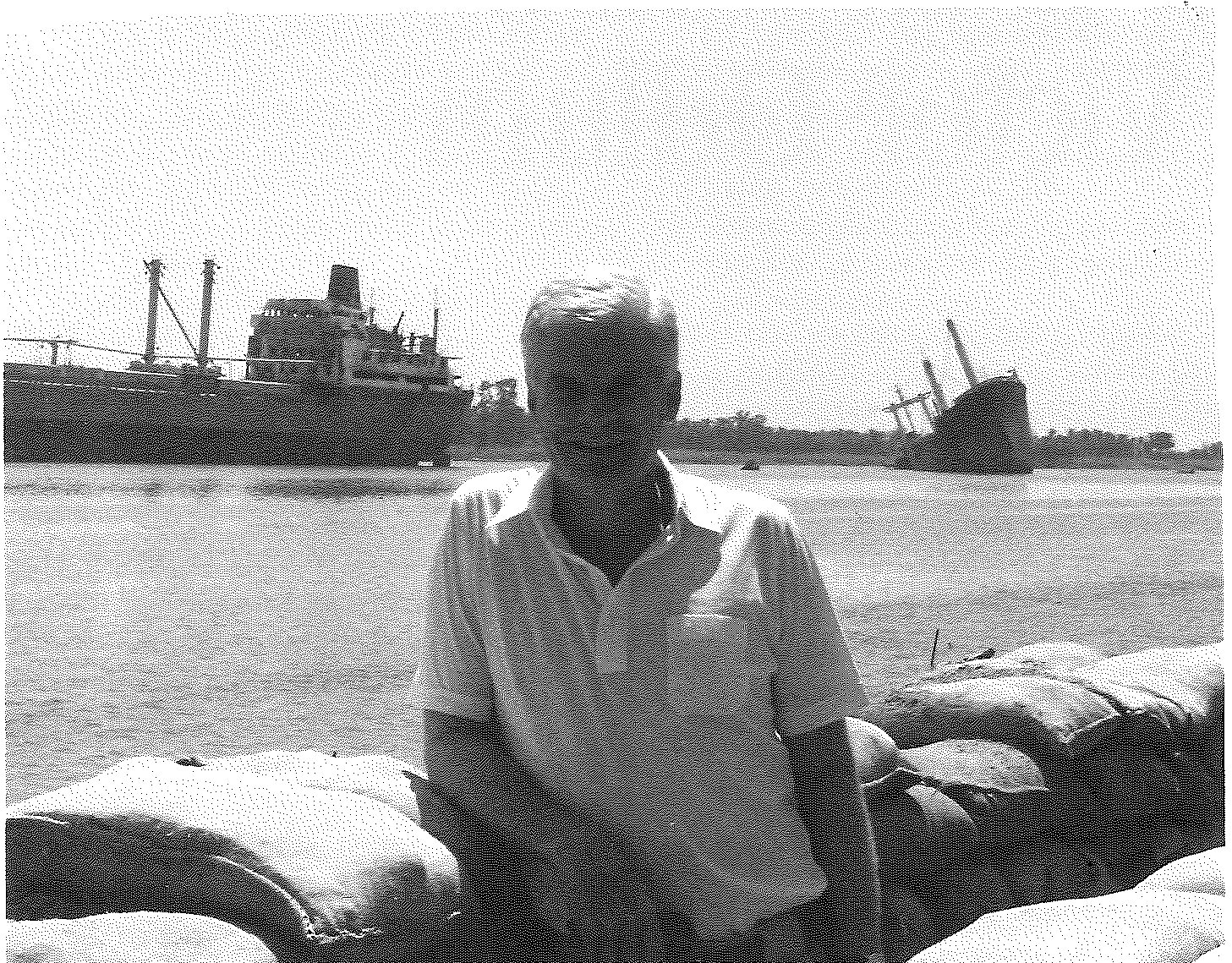
The Scud-B was originally designed for use with a nuclear warhead in circumstances where it did not need to be particularly accurate to achieve its purpose. Given this inaccuracy, probably compounded by its somewhat shop-worn history, it was difficult for us to discern any clear targeting pattern or to predict where the next one might strike. They tended largely to fall in the south-east quadrant of the city where there were oil refineries and military camps as well as residential areas. There were, however, unsettling exceptions, and clearly no neighbourhood was immune to attack. Most Embassy staffs lived and had their chanceries in the central or (in the case of Canada and others) western part of the city. The missiles fell usually late at night, presumably because the Iranians preferred to bring them out of safe-keeping for the launching procedures under cover of darkness. Because the Iranians seemed to have limited stocks and few launchers, we rarely received more than one missile on any one night. After a few days or weeks, there would be a pause or moratorium of weeks or months before they resumed. The thundering impact of several hundred kilos of high explosives could be heard throughout Baghdad but unless one was unlucky enough to be at the point of impact or within fifty meters, one could roll over and go back to sleep.
Most Embassies felt that, at this tempo, the risks were tolerable. The East Europeans had a policy of not posting staff with children to Baghdad during the last three years of the war. Otherwise, it was largely business as usual in the diplomatic corps, enlivened from time to time during missile bouts by active consultations as to whether any particularly. threatening pattern was developing.
The lack of symmetry in missile capabilities was finally overcome by Iraq when it was able to produce and unleash, at the end of February 1988, a longer range modified version of the Scud-B capable of reaching Tehran. During the period of seven weeks between February 28 and April 19, Baghdad and Tehran experienced missile exchanges of unprecedented intensity. Thirty-eight fell on Baghdad during this period, often two or three per day, while three times as many fell on Tehran and other Iranian cities. In Baghdad, several Embassies including the Canadian, had near misses. Windows were blown out of several of our staff quarters. The wife of our communicator escaped serious injury, or worse, thanks to the protective film and blast curtains which the Department had authorized us to install on all windows of our chancery and staff quarters. A large picture window shattered and collapsed into the room in which she was standing, but the film and curtains held.
The Canadian Embassy, like other embassies, had temporary and partial evacuation measures in place, including “safe-haven” bungalows rented for our staff in a tourist village one hundred kilometers west of Baghdad, beyond Scud-B range. In close consultation with Ottawa, we trimmed down our personnel and dependents to the extent possible, while maintaining basic consular and other Embassy services. Many foreign companies evacuated their personnel to camps outside of Baghdad or to Jordan or other neighboring countries, or brought them home on extended leave. Most western airlines suspended services to Baghdad. Tensions were mounting and a number of embassies were actively considering total evacuation when, after 52 days of intermittent missile attacks, Iraq and Iran decided to accept an undeclared moratorium on the war of the cities. Fortunately, no diplomatic personnel had been killed or injured. There had been a tragic toll of casualties amongst Iraqi (and Iranian) civilians. Four months later, Iraq and Iran accepted the UN cease-fire.
At the time of the cease-fire, we were down to a modest community of sixty-one Canadian souls in Iraq, including 20 staff and dependents at the Embassy. Our community had been shrinking gradually through the war years, as the economy went more and more onto a war footing. Several Canadian companies, including Bell Canada International and General Motors of Canada, maintained throughout at least a minimum presence.
Iraq has now embarked on an ambitious program of post-war reconstruction and development. Canadians familiar with the market will be well positioned to participate in an economy which has enormous underlying strength and resilience, based on rich oil reserves. If the cease-fire with Iran can be converted into a durable and comprehensive peace, the future prospects for Iraq should be glittering.
This is part of the answer to the question: “Should we really be here?” Canadian businessmen depended heavily on Embassy support and assistance in their dealings with Iraqi state enterprises through these years. Not only in terms of trade potential but also taking into account Iraq’s important place in the Arab world and vital role in regional stability, it seemed very much in Canada’s interest to continue to maintain that presence. All Canadians who served in the Canadian Embassy in Baghdad through difficult times over the past eight years can take satisfaction from knowing that they contributed to that objective.
View the original scanned pages →
Originally published in bout de papier, Vol. 6, No. 4 (1989), pp. 19–21. Read the rest of this issue →



