
bout de papier, Vol. 6, No. 3 (1988), pp. 10–11
The question of how it is that the Soviet Union fields so many English-speaking officials while our side fields so few came out in stark relief last June when the Soviet authorities pulled their service staff out of our Moscow embassy in retaliation for our no-nonsense stand on their espionage over here.
Our key embassy staff were left woefully exposed and disarmed not only on the communications front but also in catering and coping generally. A critical dearth of Canadian personnel sufficiently competent in Russian led to a serious crisis whose longer term implications have now to be addressed.
Proferred answers to the above-cited question are usually couched in self-deprecating twaddle to the effect that it just goes to show how diligent the Russians are in seeking East-West understanding, and what laggards we are. When it comes to the crunch of our learning Russian the way they have learned English, we are, so to say, softies who would rather play golf or engage in other sybaritic occupations. Ignored is the fact that the post-war period brought English to the top spot among the world’s most worthwhile languages to learn, largely through the American industrial and technological colossus, not to mention the influence of American entertainment culture on liberated and would-be-liberated youth the world over.
It’s not because English is so easy to learn (it isn’t, except at the very outset), or that Russians are any more concerned about international understanding than the rest of us (they aren’t, or at least weren’t until recently). It is because of an all-pervading U.S. influence on world affairs, because of America having what the Second and Third worlds want so badly, in almost every sphere you care to name. That is why the Soviet Union latched on to English as a second language with such impressive results. Circumstances in the real world have not motivated our side anywhere nearly as much in the reverse direction, for obvious reasons that have nothing to do with peace and understanding
However, this is precisely what is changing as the new-look, participation-hungry Soviet Union emerges on the international scene. As contact with ordinary Soviet citizens becomes easier, our lack of Russian in the face of such a salutary development will deny us precisely the personal, professional and political benefits we have always sought.
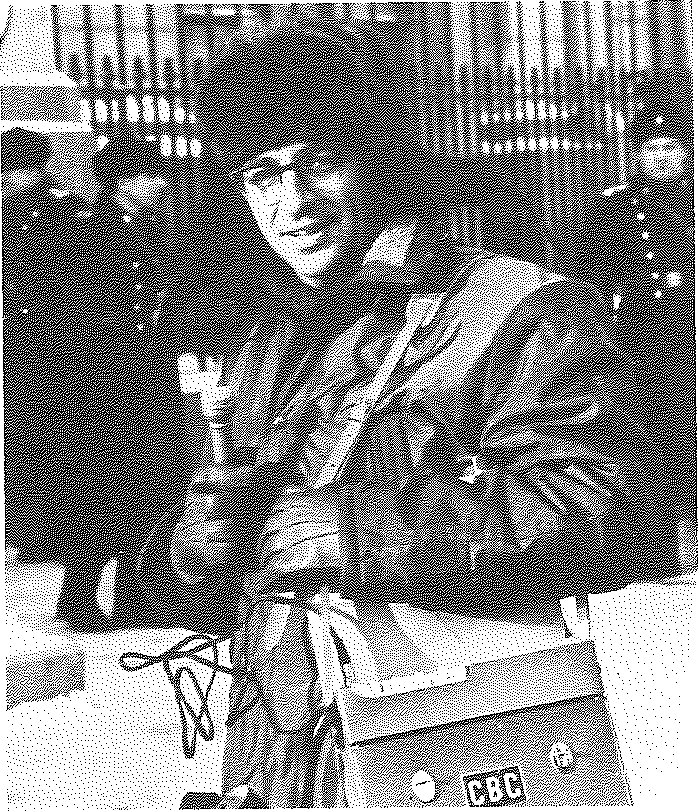
For, having described the Soviet achievement in learning English, it must be pointed out that we are really only talking of official Soviets who have mastered it so well. The rest of the population of the USSR is far behind them, despite the status English enjoys throughout the Soviet schooling system as the first foreign language taught, and despite its general underground popularity in the USSR. If you address Ivan Ivanovich in English you will generally draw a complete blank. Soviet citizens who know English well are ipso facto pressed into official service. They learn English precisely to obtain the plum jobs to which it is the key, jobs they do not then propose to jeapordize by agreeing with you that parliamentary government is superior to one-party rule.
At the other end of the spectrum, those who will agree with you are not likely to know English. During my many years covering the Soviet dissident story as a Moscow correspondent, hardly any dissidents knew English, from Sakharov, whose English is hopeless even though he might know it theoretically, on down. This remarkable handicap under which the dissident movement thus laboured was only slightly offset by the ministrations of such English speakers as Anatoly Shcharansky who knew English well, and who was singled out for a special penance on that account, for uttering his heresies in our language.
Russians, moreover, have been notorious throughout history for holding English in pained contempt, and for being virtually possessed by an awed fascination with Russian, a vehicle of expression with which no other language could possibly compare. A jolly specimen of this traditional species of Russian is Alexei Pavlovich Makarov, Minister-Counsellor of the Soviet Embassy in Ottawa. Alexei Pavlovich has a truly exceptional command of English which he speaks with a rare combination of ease and precision. Yet he once came out with the same vituperative lament to me which I have heard almost all my life from other Russians about the inadequacy of English as a medium for the expression of feelings, of subtle nuances, of emotional attitudes and so on. He compared the way of saying something we happened to be talking about in Russian with the way it had to be said in English as bozhii dar s yaitchnitsoi, a gift I from God compared with fried eggs.
Though sprung from the loins of an r English Lit. M.A. from Oxford who knew 1 Shakespeare and Chaucer by heart, I found myself agreeing with Alexei Pavlovich on many counts, if not all. Russian is not my mother language, but it is certainly my other language. Ilove it, and can’t get enough of it. Seldom do I get through a gregariously spent day without at some point rueing the inability of an interlocutor to respond to a Russian word or expression which has come into my mind before the English. If only I could at least throw in the odd Russian word as one can the odd French word. But it would fall on deaf, not so say deprived, ears.
What’s Russian like to learn?
I think Russian is easier than French for anglophones once you get past a few initial obstacles. French is only deceptively easier because at the outset so many of the words seem so similar, not to say familiar. But e i vocabulary is only a small part of learning any language. It’s the one part you can measure quantitatively. By the time you reach 500, you’re almost there, as far as everyday vocabulary is concerned. In Russian, once you are past the 500, life gets much easier because (a) there are so many Latin appropriations, and (b) the big words are conglomerates of small words you already know, unlike English’s upper vocabulary which is French. An example of both types of Russian words is the Russian for “presumption of innocence” — prezumptsta nevinovnosti. That second word, obviously, is the word for innocence. Not so obvious is that its “i” ending denotes its genitive form, just as if in English we had no separate word for “of” but said “innocence-of”. What’s so hard to understand about that? Even less obvious to you now, but which would be glaringly obvious once you would have acquired the basic vocabulary, is that the word nevinovnost is made up of the negative prefix ne- plus a variation of the word for guilt, vina, plus the suffix for “ness”, nost. Similarly, glasnost comes from the basic vocabulary word for voice, golos (or glas in Old Slavonic) and literally means “voiceness”, an impossibility in English which we have to get around with the very approximate translation “openness”, and which helps you understand what Alexei Pavlovich was going on about! Indeed, the Romanian Ambassador in Ottawa was heard to describe a particular group as “voicier” than another. I don’t know any Romanian, but no doubt one can say “voicier” in that language. You can say glasniy in Russian, but unfortunately it’s restricted to phonetics, and means a vowel, that is, a voiced sound. It also means public, or open, as in an open trial.
Russian has no article at all; no “a”, no “the”. Gender, of which there are three, is over 90 percent obvious from the way a word ends. Unlike English, French, German and so on, tense is ridiculously simple. There is only past, present and future. No fancy 12-speed gearshifting as with our Western languages. But, just as we are so fussy about tense, Russians are fussy about whether a verb is meant to indicate a one-shot action or an ongoing, general action — perfective or imperfective. So there are two forms of every verb. This eliminates the ambiguity we have in English when we say “I’m going to university” ’, which means either “I’m off to university right now” or “I am a university student”. The English particle “off” “, by the way, as well as other such particles, is the nearest we come in English to a mechanism for making a verb perfective. The need for one is there. Those concerned with good English usage often chide those who say “head up” when “head” will do quite nicely, thank you. But the “up” didn’t come from nowhere; it came from an urge to make the verb perfective, which the formal language thwarts.
One seemingly special difficulty about Russian for English speakers is the implausible multisyllabicism of so many words. English, like Chinese, has a remarkable number of monosyllabic words. But while Russian is by no means at the other end of the scale on that score, its system of building up complex words from simple, basic-vocabulary words, or from Latin words, does lead to a lot of long though easily decipherable words. You can’t have it both ways — easy-to-understand complex words that are also short. I once marvelled at a humble Moscow delivery van driver’s phonetic agility when, having reached a screeching stop beside me just in time not to go through the red light at which I was waiting, he shouted over to me with a grin: “Samouregulirushchiesa” which meant self-regulating, referring to his brakes. The word breaks down as follows: samo = self; regul- comes from the imperfective verb regulirovat meaning to regulate (note the Latin, and note that it is imperfective because it describes a condition rather than a one-shot action); -ushchie (in Russian, the shch is just one letter) is the normal present participle ending, the equivalent of English’s -ing; the sa (actually sya but pronounced sa) is the reflexive ending which the French put before the verb instead of after — se or s.
The truly hard part about Russian, though only at the outset, is the case system, which is along the same lines as Latin. But once mastered, it soon becomes indispensable, and you begin to wonder how any language gets along without it. It makes every Russian sentence far easier to figure out, no matter what order the words are in, than a sentence in, say, French, which is as uninflected as English. This is just as well, because Russian has to use word order to get around not having an article. The standard example, used in teaching Russians how to use our article (which few of them ever master), is: “House stands on corner” = the house is on the corner. And “On corner stands house” = a house is on the corner.
Another encouraging thing about Russian is that, being spoken by so many non- Russians within the Soviet Union itself (half the population speaks it as a second language), as well as in the satellite lands, Russians are quite used to non-Russian accents. Much the same as in English the way we regard a French accent as just one more of the many ways English is spoken. The nearest I ever came to being laughed at in the Soviet Union over the way I speak Russian was when a well-meaning violinist told me I pronounced the “sh” like the criminal element in Odessa. He worked on me for some time trying to get me to change, but on that I fear I was as hopeless as Eliza Doolittle. I also notice that if you listen carefully there is something different about the way Russians pronounce their “m’s” and their “b’s”, but I have never bothered to master it. It just doesn’t matter. I spoke my own Russian and, because it is grammatical and fairly colloquial, it led non-English-speaking Russians to forget I was a foreigner and take me for some sort of Soviet – curiously enough, not from Odessa but usually from one of the Baltic states. And it is the non-English-speaking Russians who you want to meet if you want to plumb the real character of the country.
Besides everything else, Russian is a marvellous language, a delightful and intriguing instrument to play and tinker with. Once you get into high gear as a learner, you soon appreciate why our English translations of the Russian classics are such weak tea compared with the original.
®Copyright David Levy 1988. First North American rights only.
A Language for All Occasions
Russian has been compared to a Swiss watch – a fine mechanism, with many delicate niceties but an instrument of incomparable excellence. The great Russian poet and scientist Lomonosov wrote in 1754:
Charles V, the Holy Roman Emperor, used to say the Spanish language is appropriate for conversing with God, French for conversing with one’s friends, German for one’s enemies, and Italian for conversing with the opposite sex.
But if he had been adept at Russian, he would of course have added that it could suitably be used for conversing with all of these. For he would have found in Russian the magnificence of Spanish, the vivacity of French, the strength of German, the gentleness of Italian, and in addition the wealth and economy of expression of the Greek and Latin languages.
View the original scanned pages →
Originally published in bout de papier, Vol. 6, No. 3 (1988), pp. 10–11. Read the rest of this issue →



