
bout de papier, Vol. 6, No. 3 (1988), pp. 35–37
One of the last things I had to do, before I ended my tour of duty in Kenya, was pay a final site visit to the Mobile Pastoral Training Unit (MPTU), a CIDA-sponsored development project located in central Kenya. The drive north to the MPTU headquarters in Isiolo, from Nairobi, takes approximately five hours and entails going from the southern to the northern hemisphere and around Mt. Kenya. About halfway, there is a small monument marking the Equator. Local wisdom has it that the marker was originally several hundred metres north of its present location until a few enterprising merchants decided to put it next to their row of small shops and increase their profits considerably by selling their wares to unsuspecting tourists who stopped to have their picture taken at the Earth’s midway point. I had gone this route before and decided that this time I would fly to Isiolo in the morning and return by nightfall. In this way I planned to cut my time away from the office by half and get in a few hours flying experience on a four-seater Cessna. In a small plane this trip takes just under one and one-half hours. “What could happen in that short amount of time?”, I reasoned with my supervisor, the last of the white-knuckle flyers. “Hmmph!” was the response. More convinced by the reduced cost of the trip than by my reassurances, he agreed that I could leave by plane the next morning.
At six-thirty a.m. I met the pilot, Peter Streets, on the tarmac at Wilson Airport in Nairobi, just two hangars down from Pegasus Flyers where I had recently earned my private pilot’s licence. He was attending to a rather well-worn Cessna 172 owned by a missionary group. The plane, 5Y-ARD, or FIVE YANKEE ALPHA ROMEO DELTA, had definitely seen better days! The upholstery was stained and more importantly, there had been problems with a faulty alternator and oil leaks. Still, Peter maintained that it was airworthy and there was nothing to worry about. We waited for the morning fog to lift just enough for us to sneak out under it and begin the trip north.
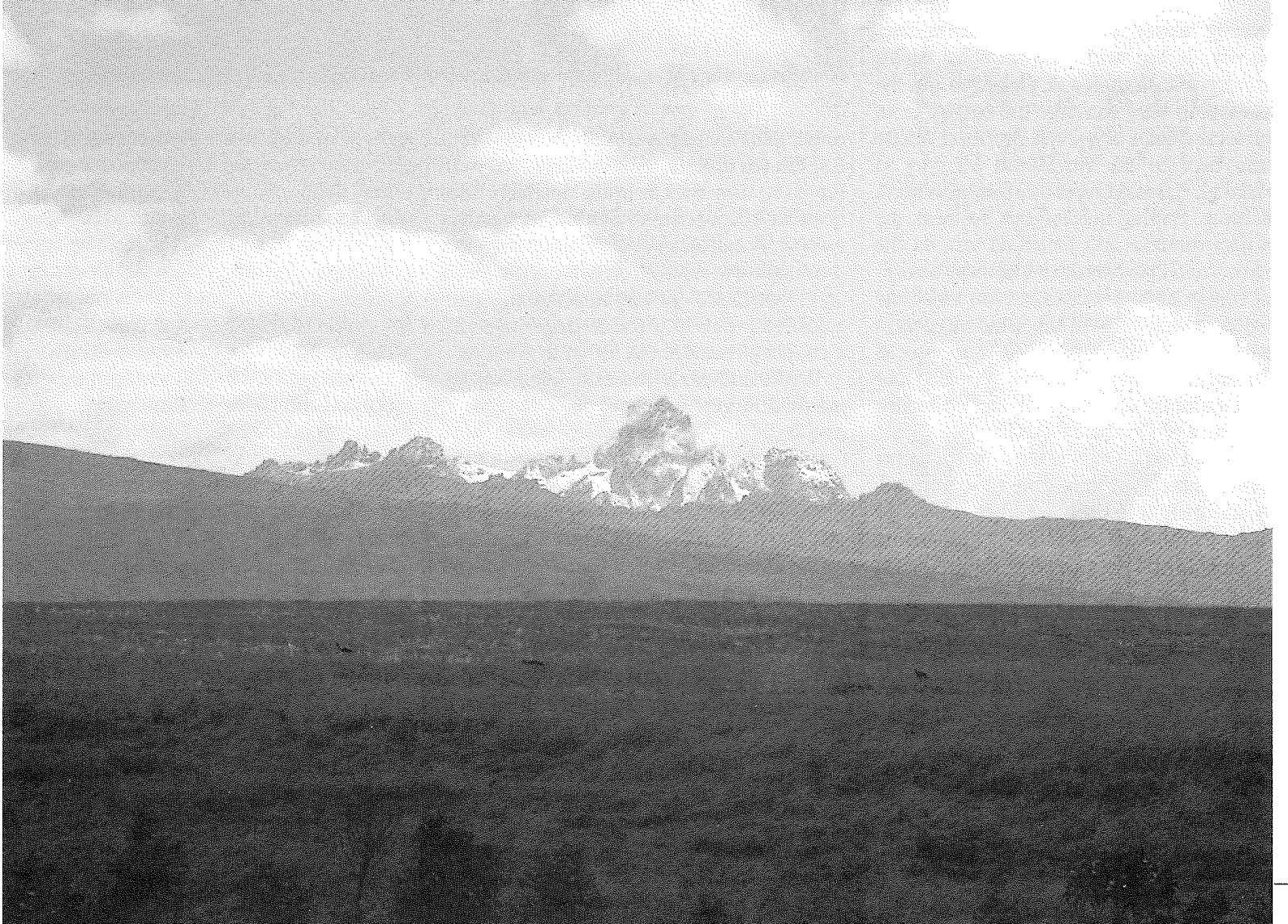
On the way up to Isiolo we were forced to fly quite low, because of the inclement weather, which, if nothing else, afforded us a good view of the terrain below. Between Nairobi and the southern reaches of Mt. Kenya there are lush rice paddies and small farms and rivers and busy roads. We chose to go to the east of the mountain as it is impossible to go over its snow-capped peaks in a small unpressurized craft. Beneath us, the landscape changed dramatically from well-tended plots to thick forest and deep ravines and rushing mountain streams. In other words, a spectacular view, but not a very hospitable place to have to put down in an emergency, a fact which was to take on enormous significance on our return journey. Past the forest, the sharply sloping foothills have been heavily cultivated by local villagers. Small tea gardens, tree nurseries and square postage-stamp-sized private holdings extend from 7500 feet above sea level (asl) down to the base of the mountain. Then, as suddenly as the rice paddies turn into forest and the forest to farmland, the farms disappear and are replaced by desert for as far as the eye can see. We are north of the mountain now and almost in sight of our destination.
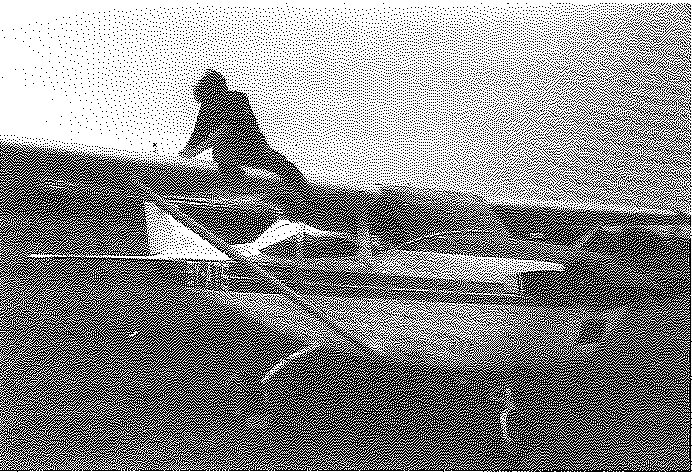
Our flight north was fairly uneventful, although the alternator was acting up. Peter tried to find the source of the problem but eventually he just covered the offending red light and we agreed to ignore it. As Isiolo came into view, we prepared to land but it was to be a landing without benefit of flaps, radio or lights as the battery had apparently died during the flight. Once safely on the ground, I climbed out of the plane to meet my party and Peter hopped on the back of a friend’s motorbike with the battery in hand. We agreed to meet several hours later for the return trip to Nairobi once he had flown supplies to Wajir and Malakal, nearby towns.
I went with my hosts for a general tour of the project and then we retired to lunch at one of the two local restaurant/hotels. This particular spot was run by a Somali and served a variety of hot curries and greasy chappaties. The rooms were in a three-sided building attached to the back of the restaurant with a concrete courtyard in the middle. A few children and the odd chicken were running about between the clotheslines heavily laden with the establishment’s laundry. Finishing lunch, I glanced out the window to see Peter take the battery from the local Indian dry-goods shop and finally head back to the airfield on his way to Malakal. It was going to be a long afternoon in Isiolo. Having finished our business, the project director and I walked around the market and I purchased one of those beautiful copper and wire bracelets for which the region is well-known; the kind we always joked were made of CIDA sponsored transmission lines. Then we retreated out from under the scorching sun and waited for the return of Cessna 5Y-ARD.
The sun sets quickly at the Equator and at approximately the same time all year round By six-thirty it is dark, so when 5Y-ARD finally reappeared overhead at just before 5ơ’clock, I was already worried that I might not make it back to Nairobi before nightfall. This was of some concern because I was supposed to be hosting a dinner party for twenty people that evening. As soon as Peter hit the runway we were ready with the jerry cans of aviation gas and quickly started refuelling the plane. He reported that there was a very strong headwind which had slowed him down considerably from Malakal to Isiolo and we might not be able to make it to Nairobi in time. With my dinner party in mind, we decided to give it a try, but ten minutes into the flight we were forced to turn back because the thirty knot headwind brought us to a virtual standstill in mid-air. A call to my cook, Christopher, and the dinner was set to go on without me. Peter and I then found our way back to the Somali restaurant, while local missionaries organized a couple of extra bunks for us to sleep on.
Bright and early the next morning, we grabbed our gear and drove out to the airfield one last time. The plane seemed to have survived the night in one piece and the wind had died down. As we were packing the plane two Kenyan student missionaries asked to hitch a ride. While instructing them on airplane safety procedures, Peter confided that he was a little uneasy. He had a feeling that he was likely to have a flying accident in the near future. I might have laughed at this premonition had I not been plagued the previous night by nightmares of emergency landings.
The take-off and climb out of Isiolo was routine. Below us, we watched the desert slip by and gradually disappear under a thick layer of low-lying cloud. The rules of visual flight prescribe that a pilot must always be in sight of land or water. By choosing to climb above the clouds, as it was impossible to fly under them, we were in contravention of one of the basic cautionary rules of flight. I was starting to sense that something might go wrong. To distract myself from these thoughts I looked out the window and followed the progress of the plane’s shadow which could be seen on the clouds below. It was surrounded by a halo of colour that reminded me of the rainbows that form in puddles of oil. The mountain loomed to our right as it rose majestically out of the soft carpet of cloud that obscured its base and up into the brilliant sunshine. I revelled in the beauty of the day knowing full well that once we descended we would be faced with mist and rain and would have a hard time imagining what a wonderfully sunny day it really was.
There was only one small break in the cloud cover from Isiolo to Nairobi and that was for three or four miles on the east side of the mountain shortly before the forest. As we were over the middle of this gap, my reverie was interrupted by a sudden increase in rpm of the engine from 2400 to 3200, well over the red danger line. I yelled to Peter, over the noise of the engine, that there seemed to be a problem. He grabbed the pitch control and wound it out as far as it would go reducing the rpm to 2800. “Get down!”, I warned, pointing out a small dirt road below. Peter shook his head in disagreement and indicated that he was turning back. No sooner had he reset course than the engine began to run roughly. It coughed and sputtered, the whole plane shook and then there was silence. The one and only engine was dead and the propeller had stopped on a diagonal across the nose. Peter and I looked at each other in horror as he announced the inevitable, “We’re going down!”
We were at 9400 feet above sea level (asl) when the engine quit. The few minutes it took to reach our final resting spot, at 6900 feet asl on the side of Mt. Kenya, seemed like an eternity. We experienced a state of suspended animation as we followed through on all the checks that we had diligently learned in case of such an emergency and had always hoped never to have to use. Peter attended to the business of flying and getting us down safely. Miraculously, the only field in a fifty mile radius presented itself. Peter set up a circuit and prepared to land. We had one and only one chance and it did not look good given that the surface of the field was rough and it was situated between two hills and two fences. I assisted by calling out all the safety checks (seatbelts fastened, sharp objects out of pockets, false teeth out, glasses off etc.). I made sure that our passengers were seated in the proper position and tried to reassure them. Then I called out the remaining engine checks and wedged open the door. We were all depending on Peter’s flying abilities to get us down safely. He must have been feeling in need of a little extra help because he turned around to look at the two missionaries in the back and said, “Start praying now, guys!”
I was not frightened until Peter turned the corner to line up with the field and came, what seemed to me, perilously close to the trees and cows scattered on the hill below. “Don’t undershoot!”, I screamed. He brought the plane close to a stall over the hill and then went straight down towards the field pulling back at the last second before bringing us to earth. We raced down the length of the field, dipping in and out of ruts and almost flipping onto our nose. Peter somehow managed to keep the plane upright and stop it just short of the fence at the far end of the field. He and I jumped out and ran a safe distance away. The two passengers could not figure out how to undo their seatbelts so I ran back to rescue them. Once clear, we all looked back at the plane, half expecting it to explode, but only a tiny wisp of white smoke curled up from under the cowling over the engine.
Peter grabbed me, yelling “We made it, we made it!” But, although we were unharmed, we had only ’made it’ to a small field in the middle of nowhere, a long way from our destination. A large crowd of local villagers mysteriously materialized and descended on the plane. We took a quick look around before they disturbed any of the evidence of our misfortune. To our surprise, we found that the undercarriage was completely covered in oil. For some reason all the oil seemed to have leaked out of the oil sump during flight, thus explaining the engine seizure. Pondering this, Peter and I left the two passengers to guard the plane and our belongings and then the two of us fell into line behind and old man who had broken away from the crowd and offered to help us.
First, the elderly villager took us to the house of a former member of Parliament who happened to live in the area. Unfortunately, he was not there. The next available phone was more than an hour downhill. We walked down small hard-packed dirt paths that ran between the many individual farm plots. Finally, we came out on a small dirt road and were led to a local branch of the Kenya Tea Marketing Authority. There were at least ten trucks sitting idle outside the main office, one of which we thought could be used to transport us to the local police station. We also looked forward to a good cup of tea. We entered the main office to find six officers there but, unfortunately, no manager. This meant that while they would let us call the local police they would not let us make a collect call to Nairobi, use any of their trucks or have a cup of tea unless we paid for it. Our patience was running thin at this point and we pleaded with them to be reasonable. However, in the absence of the manager, no decisions were to be made.
Frustrated, we left with the old man again. He had barely spoken a word to us since he had taken us under his wing, but he seemed to know where he was going so we followed along. Not far down the road we came upon a large farmhouse. The inhabitants, wealthy landowners, were very hospitable. They offered us tea and cookies and allowed us to call the owners of the plane in Nairobi. It happened that some contractors were doing a little landscaping on the property that day and they agreed to drive us into town.
We reported to the police station and then hitched a ride back to the plane to get the two passengers. We then returned to town and I got up the nerve to call the High Commission. I explained to my boss that we would need a vehicle in Meru because there had been a small problem with the plane. “Nothing serious”, I explained, “just a complete engine failure on the slopes of Mt. Kenya, a crash landing.” “Hmmph!”, he replied, an utterance that sounded a lot like “I told you so!” ’, but I could not be sure. The rest of the afternoon was spent making out police reports and waiting for the High Commission driver to appear. Peter kept on going over the flight to see if there was anything that he might have done to avoid our mishap. I tried to convince him that he had done all that he could, and that in any case he had gotten us down safely. By lunchtime he started to shake, reacting to everything we had been through. I was fine until later that evening. It was only then, travelling home on darkened roads rutted by construction, that I thought I would meet my end, a bit ironic given my experiences earlier in the day. Much to my relief we made it back to Nairobi safely.
I took my leave of Peter and slowly drove back to my house. There, on the table were little notes from my guests of the night before: “great food; terrific company; had a lovely time; wish you could have been here.”
Epilogue
The Directorate of Civil Aviation in Kenya ruled that the locking wire on the oil sump plug had been missing when we took off so that the sump plug loosened and fell out during flight. They believed, but were unable to prove, that the mechanics, who fixed an earlier oil leak, had forgotten to seal the sump properly. A year later, after my return to Ottawa, someone commented on the lovely copper and wire bracelets I was wearing. They asked where they were from and I responded, “Isiolo.” Suddenly, it occurred to me that the real source of our problems that day might not have been negligence but was more likely to have been some enterprising young craftsman who climbed under the plane during the night and took the locking wire to fashion into a bracelet, not unlike the ones I was wearing.
View the original scanned pages →
Originally published in bout de papier, Vol. 6, No. 3 (1988), pp. 35–37. Read the rest of this issue →



