
bout de papier, Vol. 6, No. 3 (1988), pp. 26–28
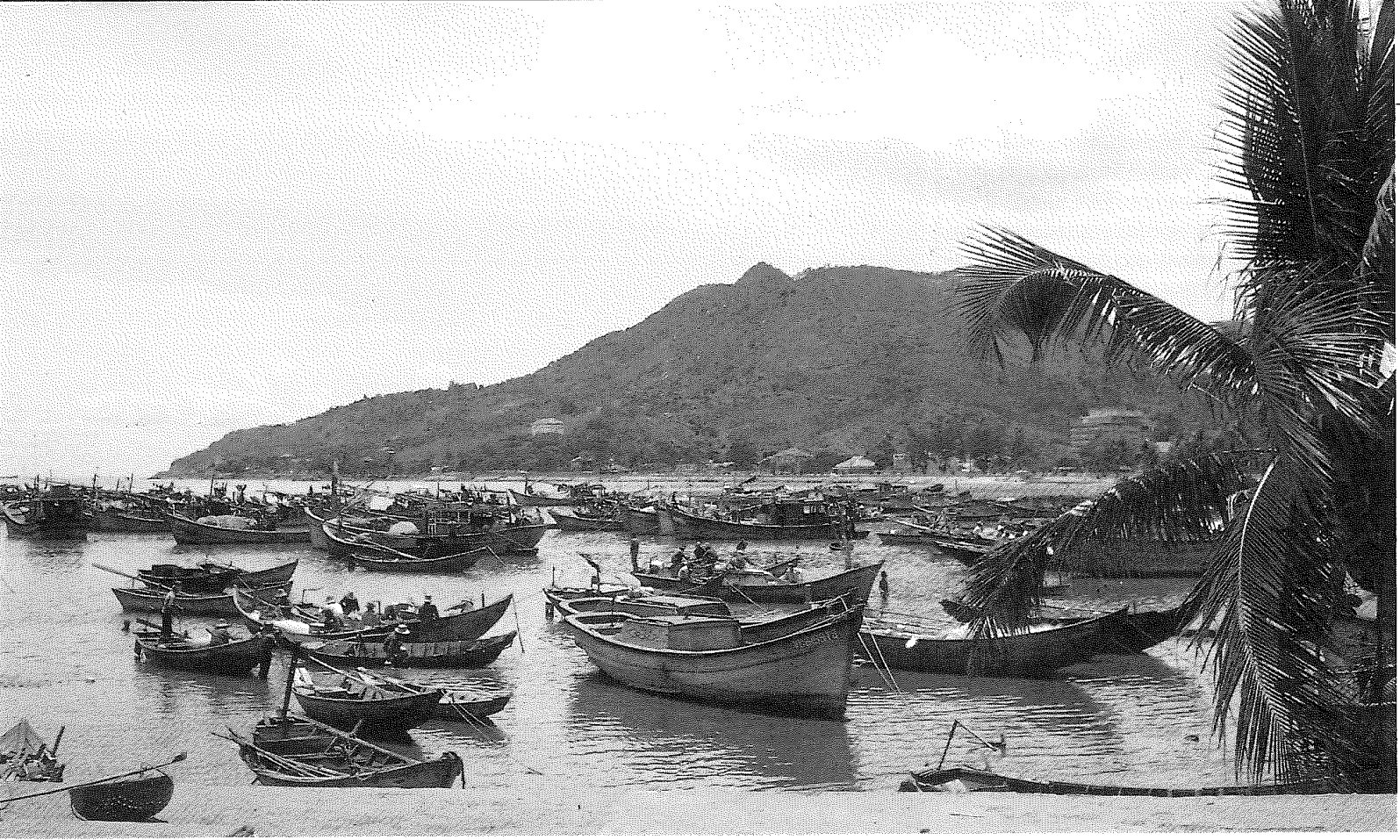
From April 27 to May 12 a delegation of 12 Canadian academics visited Vietnam to examine conditions and prospects with a view to compiling a book on Vietnam in the 1990’s: Canadian Perspectives. They also had talks in Bangkok, Thailand before and after their visit. Two of the academics, Professor David Wurfel and Professor Bruce Burton of the University of Windsor, have written short articles on the impressions they formed about Vietnam. Impressions of Perestroika, Vietnamese Style by Professor Wurfel is the first of a two part series. From Vietnam, Looking Outward by Professor Burton will appear in the Winter issue of bout de papier.
Vietnam today is a scene of depressing poverty, overbearing bureaucracy and crumbling discipline. But the leadership has finally turned policy in a direction that allows hope for the next decade. Many Vietnamese have not yet grasped that hope, however. The ordinary citizen sees corrupt, inept cadre at the local level who stand to lose from the liberalizing I reforms that have been announced, and thus try to block them at every turn. The man in the street or the rice paddy has also heard so many promises from on high that all now ring hollow. Indeed, a country once mobilized by revolutionary zeal to achieve almost superhuman feats has become a nation of materialistic cynics.
But, of course, every revolution eventually runs this course. In Vietnam, the length and intensity of the struggle, which required so much sacrifice, have contributed to the present depth of moral exhaustion. What is now a cause of hope, however, is the apparent recognition by the ascendant faction in the leadership of the reality of the situation, the willingness to reconstruct Vietnam unfettered by most ideological constraints of times past, and to admit the necessity for individual material incentives to spur production.
For a visitor returning after two years, an additional ray of hope is found in the growing awareness — not yet present in 1986 — that to carry forward liberalizing economic reforms requires political reform as well. The fresh breezes of perestroika wafting from Moscow have undoubtedly speeded this awareness, though the proud Vietnamese would never admit it. In fact, they have probably also been scrutinizing carefully the bold steps of Deng Xiaoping. But the new directions are now proclaimed by Vietnamese, for Vietnamese, with justifications drawn from Vietnamese experience. In Hanoi, where less than ten years ago the petty-bourgeois mentality of South Vietnam was seen as an evil to be eradicated, many leading cadres now speak of the need, when drafting reforms, to “learn from the South”. Only in July, in fact, the South, chaffing at the bit despite reforms announced in Hanoi, was explicitly given the right to develop distinct economic policies. The recognition of regional difference which the NLFSV has urged, but Hanoi in 1975 had rejected, is now imposed by economic necessity. Southerners are often disdainful of northern incompetence in both technology and management. Entrepreneurship in the South is a much stronger tradition than in the North, with causes dating back at least to the colonial era.
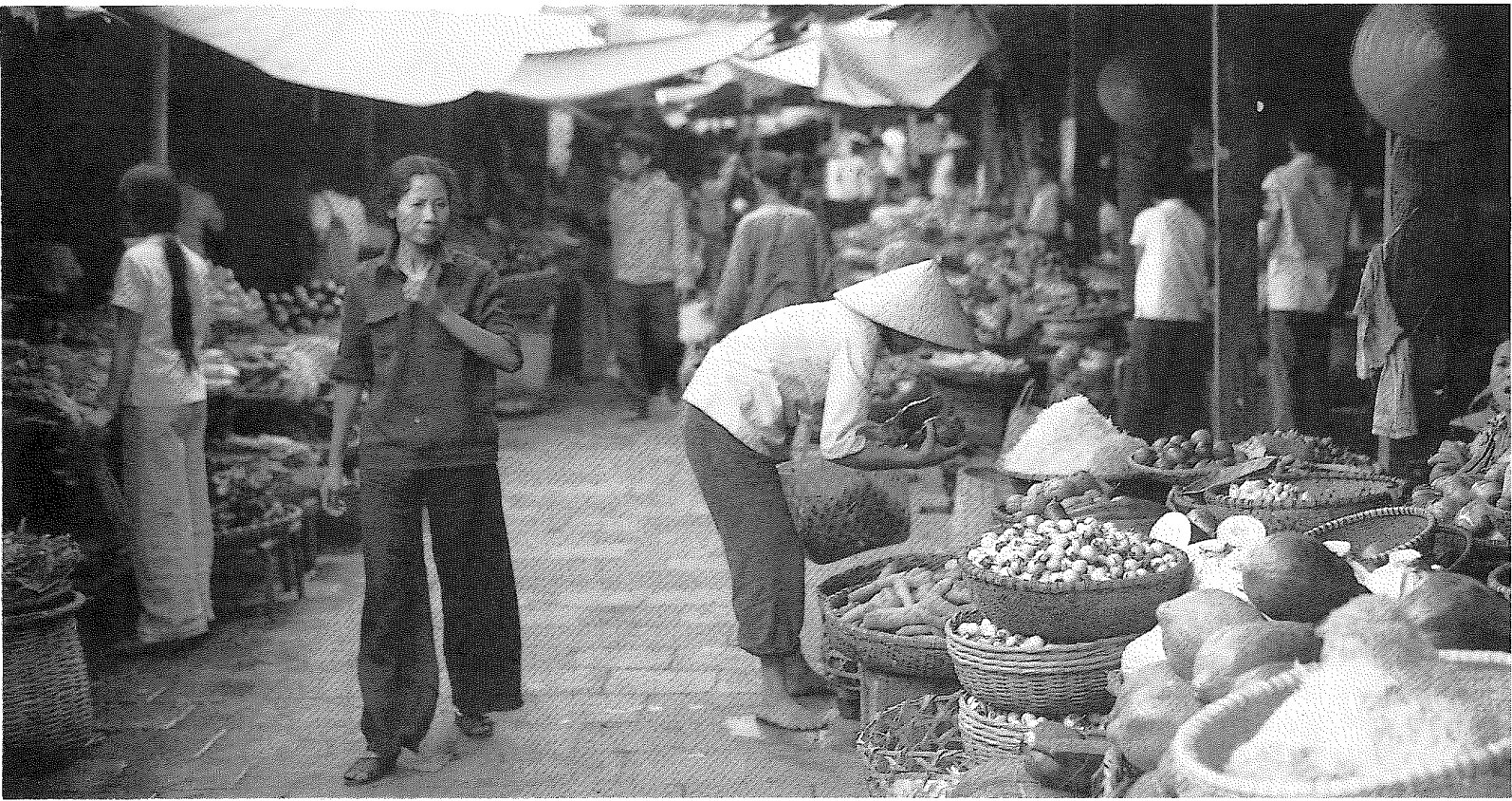
One example, observed in 1986, may help illustrate this point. The Thong Nhat Hotel in Hanoi and what is still known by foreigners as the Majestic in Saigon/Ho Chi Minh City were jewels in the colonial crown. Since 1975, both hotels have been state corporations, though, of course, this was A bustling free market in Hanoi. true of the Thon Nhat for a much longer period. By 1986, both were attempting to attract Western as well as East European tourists and invited delegations. In the Thong Nhat, the French-installed elevator had long since been abandoned. One climbed two or three flights of stairs, shirt and spirits wilting as one rose, to a room in which the mattresses had been through at least two wars, the air conditioner did not function and the plumbing more often than not met only basic requirements (which did not include dry floors or hot water). As one hit the bed with a thud, one was reminded of the pile of new foam mattresses in the corridor which seemed to have acquired some permanence. In the Majestic, on the other hand, at approximately the same price one entered the newly installed Japanese elevator to a room pre-cooled by a new Japanese air conditioner, and a bath equipped with new Japanese plumbing fixtures, to rest on a comfortable foam mattress. The hotel managements, both working in the same industrial framework, both with comparable revenue, clearly exhibited different styles. (Two years later there were some small signs of improvement in Hanoi.)
Despite the leadership push for suspiciously capitalist-style reforms, more than thirty years of revolutionary armed struggle have not been forgotten overnight. Those accustomed to command, and to being swiftly obeyed, are still prominent in the party and bureaucracy, especially at middle and lower levels. They are unfamiliar with “socialist accounting” which is required of all enterprises, no longer able to call on state subsidies to cover their mismanagement. They are understandably resistent to attempts by an “unleashed” press to call them on the carpet for various indiscretions, including money-making schemes designed to supplement salaries and allowances which cover a smaller and smaller portion of a family’s daily necessities.
This old guard could succeed in frustrating efforts at reform. But what is encouraging in 1988 is that the top leadership seems to understand this danger and has devised strategies to try to prevent it from happening. A reinvigorated National Assembly, an unleashed press and a new National Peasant Union are among the most noticeable of these strategies.
The last National Assembly election produced a large turnover — though not as large as in the 6th Party Congress, where 50% of delegates were new. In some instances this happened because incumbents did not receive local party nominations, but more often because the party presented more than one candidate for election and voters preferred the new faces. In Ho Chi Minh City, for instance, there were 80 candidates for 35 seats; one minister, also a party central committee member, was rejected by the voters. Membership of the present National Assembly still has a majority of Communist Party members, however, and only 17% women.
The committee system in the Assembly has been strengthened, with standing committees formed for foreign affairs, education, agriculture, budget, defense, health, and science and technology. In between sessions, committee members, both individually and jointly, hold public hearings which, according to a member of the education committee, sometimes produce lively debates and sweeping criticisms of government policy. Said he: “Everything in the curriculum is politicized, even math. Many teachers cannot tolerate this. In face of the additional problem of salaries being reduced to a pittance by inflation, more than 2,000 teachers in Ho Chi Minh City alone resigned in the first four months of 1988”. He added that his committee was pushing the government to allocate 10% of the budget to education.
Changes in tax policy have also been extensively discussed in the Assembly. The foreign investment bill was stalled in the previous Assembly for months while extensive revisions took place. (At that point it was apparently the conservatives who were flexing legislative muscle.) Yet out of discussions with some legislators we learned that they are still not satisfied and are pushing for more influence on policy. Their chorus:
“We must democratize”
28 bout de papier Vol.
A remarkable change has taken place in the press just in the last year, i.e. since the 6th Party Congress. Nhan Dan, the party newspaper is no longer subject to prior censorship by the Central Committee. Though views, such as on the early 1988 draft of Politburo Resolution #10 on agricultural reform, which was significantly revised after input from around the country, are carefully considered.
A major participant in that discussion was the newly formed National Peasant Union, which held its first national congress in March 1988. (There had previously been only a union of peasants in cooperatives/ collectives; the new one includes all farmers, and even fishermen and forestry workers.) One of its main policies is to “concentrate on the family economy”, according to a provincial official of the new Union in the Delta. The NPU (most of whose officials are party members) helps to explain party policy to farmers, acting as “a bridge between government and peasant”, but its “most important task” is to understand the plight of the poor peasants and to protect them against “exploitation” by cadre of local governments and cooperatives. (We were given no Marxist-Leninist exigesis on that one!) Often illegal exactions on peasant production frequently leave the farmer with no more than 20% of the rice delivered to fulfill the quota which he can sell. Other sources indicated that peasant resistance to such exactions is so strong that it sometimes erupts in violence. Local cadre, in turn, sometimes use force to collect them — but such incidents were not admitted by officials we met. An officially sponsored peasant union to take the farmers’ side against these cadre clearly comes none to soon.
Despite the increasing importance of institutions other than the Party and the various signs of liberalization, there is little doubt that the Party and its security police are still in control. Press “freedom” has its limits. A new wave of peasant mobilization is still under party direction. To be sure dissident intellectuals are now allowed to speak to foreigners, and foreigners may stay in the homes of Vietnamese friends — but only with police approval. The number of Catholic and Protestant theological seminaries – long a point of contention in church-state relations — has recently been augmented, but the Party must still screen the students applying, and again those recommended for ordination. The number of persons in “re-education camps” has been dramatically reduced just in the last year, but there are still arrests for essentially political reasons.
Though we heard, even from national officials, such phrases as “Everything is in crisis”, and admissions that the Party itself had lost a clear sense of direction, the change taking place is not out of control. Nor are dissidents in the near future likely to attempt the boldness of their counterparts in Poland or Hungary. The recency of a prolonged revolutionary struggle cannot be forgotten. And most Vietnamese believe that a powerful enemy on their doorstep, China, will move whenever possible to exploit any signs of weakness. Nationalism still produces some circumspection, even though it no longer elicits great sacrifice.
View the original scanned pages →
Originally published in bout de papier, Vol. 6, No. 3 (1988), pp. 26–28. Read the rest of this issue →



