
bout de papier, Vol. 6, No. 3 (1988), pp. 16–21
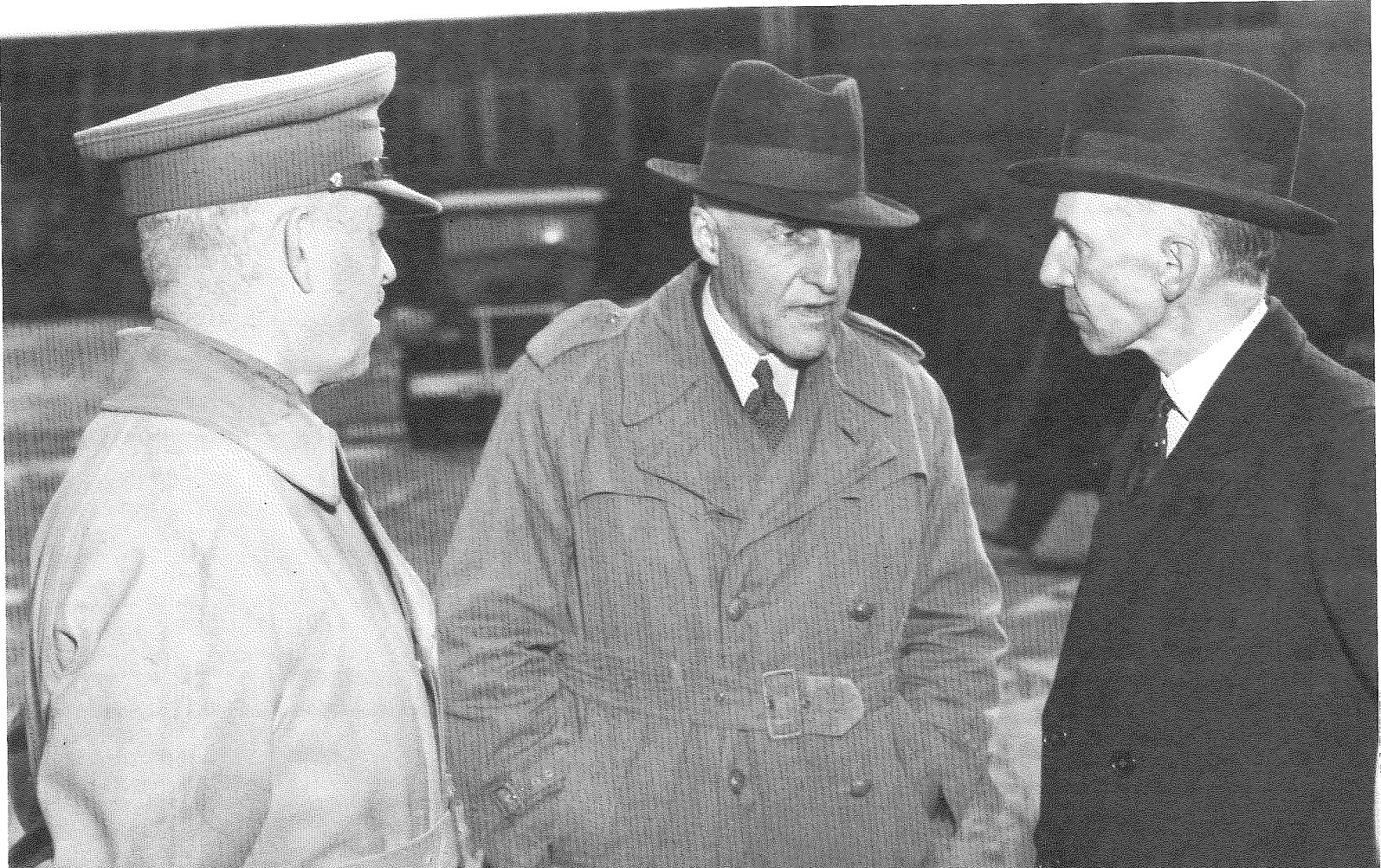
One of Canada’s most distinguished commentators and scholars in the area of foreign policy and external affairs, John Holmes died on August 13, 1988. In this article, originally a lecture delivered at Carleton University, he explored some of the foreign policy conundrums of the 1940s, when he was a senior officer in Ottawa, London and Moscow.
This will be more of a nostalgia trip than a history lesson. It is about the year 1945, as perceived largely from Canada House in Trafalgar Square. It is history recollected in tranquility. My approach is impressionist – post-impressionist perhaps, and a bit surrealist. I have been going through bundles of personal letters and official despatches from that year, and I offer what I hope might be a few flashes of insight into how we saw things in a very confused time.
I admit that one motive for doing so is concern with the way in which orderly historians, unborn in 1945, are diligently deconfusing the issues. I keep wanting to say, “Don’t you know there was a war on?” or “Don’t you know there was a war off?” or “Don’t you realize that many things were going on at the same time?”. Of course there is a little pique at the lofty way in which scholars and editors pour scorn on people groping with vast uncertainties for their lack of consistency and foresight so obvious now to any computerized postgraduate. Historians have, of course, made clear the consequences of mistaken judgements, as they should. From my perspective, they are less good on the motives which they too often simplify.
Of course I don’t recollect in sublime tranquility. I confess exasperation with those who, for example, denounce the West for handing over the east end of Europe without considering the position of the Red Army; with those who see an Anglo-American desire to provoke a fight with the Red Army without considering the attitude of politicians, diplomats or soldiers after six years of slaughter; with those who complain of the failure to move displaced persons in the hundreds of thousand without regard for the means of transport; with those who denounce the failure to make security checks in a continent where law, government and records were in shambles; or even about the often cruel deportation of people caught up in the crossfire without realising the very human, if in the light of history uncharitable, contempt for anyone who had fought with the despicable Nazis. We had supped full of horrors, and justice was bound to be rough. There were desperate problems of sheltering, feeding, even protecting prisoners or refugees, not to mention the more or less innocent citizens of allied or enemy countries. What was innocence and what was guilt? I suggest that those who reconstruct the history of that time steep themselves first in those early Bergman films to get the feel of what Europe was like in 1945.
The horrors I had supped during the war were not all that gruesome. Dodging V-bombs and eating bread sausages were very minor discomforts. Still, war does breed callousness, even if one’s suffering was vicarious. It still bothers me that I used to listen with satisfaction to our bombers filling the night sky and noting pretty casually which cities had been attacked without paying much attention when Dresden was listed. In judging what was innocence and what was guilt we all need humility.
There was the other side of 1945, and that always leads me to Wordsworth: “Bliss was it in that dawn to be alive, and to be young was very heaven.” If you had survived, that is. My work has been involved in what we called post-hostilities planning. Now peace was upon us. It was daunting but exhilarating.
For most of 1945 there were two first secretaries at Canada House. Doug LePan covered economics and I tried to cover most international political issues. As we had few missions of our own in Europe or anywhere else, I had to keep in touch with things in the Middle East, with East-West relations, the peace settlements, the UN in process of formation. It was frantic but exhilarating. Because so much of the history of this time has been written by Americans from American archives, it is forgotten that the British were playing an equal part in postwar planning, and their views mattered to us very much. Being dependent on British sources for so much of our information might be thought to have warped our vision, and maybe it did. Canadians tend to be suspicious of the susceptibility of their feeble-minded diplomats for foreign seduction. In those days, the Dominions Office circulated to the ’doms’ a broad assortment of telegrams and memoranda from all over the world. In addition, the men at the F.O. and D.O. talked to me very freely, and, on the basis of these sources, I passed on Westminster views to such innocents as Norman Robertson and Hume Wrong.
Needless to say, the word from Downing Street was supplanted with reports from our missions in Washington and Paris. Even with our limited resources overseas we could be eclectic about what we believed or thought. By far the strongest influence on our views of the USSR was our own ambassador in Moscow, Dana Wilgress, and the British also paid attention to what he thought. The glib assumption that we were pressured by the Americans to adopt their lugubrious views of the Soviet Union is not only an insult to our intelligence but also a misunderstanding of the ferment of the times.
Our principal Canadian concern was to get a seat at the peace conference appropriate to a country that had fought the Germans for six years. We were happy that the Americans were taking a lead. We were haunted by what had happened to Wilson after Versailles. Britain was exhausted, we knew, and it was essential that the US remain committed, but by no means certain that it would. At the same time, there was subterranean resentment of the way the late arrivals had assumed command. It was the Russians and also the Americans who presented the problem over the peace treaties. In the past, Canadians had tended to see their struggle for a voice in an imperial context, but after 1941 we had learned that this was the inevitable and perpetual problem of lesser powers in the company of greater. The British had been browbeaten over the years by aggressive Australians and Canadians into some understanding of the sensitivities involved. They had some interest, furthermore, in magnifying their status as a failing great power with the aura of a Commonwealth, and that required good will. The Russians bluntly wanted three power hegemony, and even if the Americans and British had been willing to concede all we wanted, they could not have reached agreement with Moscow. These were the facts of life, and although we kept up the pressure, we never doubted that the maintenance of agreement among the triumvirate was the highest priority.
The Americans irritated us by arguing that what was conceded to us would have to be conceded to the Brazilians. We had a perhaps excessive pride in our war effort and found that hard to take. In tranquility, I recognize that the Americans did have a problem with their Latin friends. Although we always said that we were fighting for the rights of smaller powers, we did regard ourselves as rather special, and at that moment in time we were. Mr. King resented our being grouped with Mexico. Even more irritating was the implicit American message that we small powers had nothing to worry about, ’cause Uncle Sammy would take care of the little ones. The United States, we should know, was not like other great powers; it had been divinely created to look after the peoples of the world.
I was much engaged in the campaign to persuade the Council of Foreign Ministers of the four great powers in Europe to let us participate, or at least be heard, in the negotiations, on the peace treaty with Germany. That proved a humiliating experience, to be told in the end that we could make written presentations to their deputies. We had done better than that in 1918. There was, of course, no peace conference or treaty with Germany, and the issue subsided. We had a seat at the peace conference in Paris that dealt with Italy and the minor enemies. At that gathering the raucous Australian, Dr. Evatt, rather discredited our common cause by putting forth an all-Australian proposal for almost every conflict on the agenda. For the most part, however, we had an effective Commonwealth team which, having a strong moral position from our part in the war, made substantial gains, if not on the peace treaties at least in changing the shape of the United Nations. The Labour governments in Australia and New Zealand hollered loudly, and we, the men of Mackenzie King, were always polite but firm, if perpetually aggrieved. At San Francisco, the Canadians gained some of their burgeoning reputation for mediatory massaging by cooling off Dr. Evatt on the pleading of the Americans and British.
There were some problems in our sudden expansion into world politics. On a visit to Rome I was stoned in the Piazza Venezia — in the biblical sense, of course — by a neofascist mob while riding in a British Embassy car the day after the Council of Foreign Ministers had hedged on Trieste. Aside from a cheek scratch I was unharmed, but I have always regarded it as useful in the education of a diplomat to have stared at least once into the eyes of a malevolent mob.
In this period before the Cold War alignments were strengthening, it was the division between small and great powers that often seemed more important. My time was taken up with our effort to transform the proposed United Nations from the great powerbout de papier Vol. dominated, hierarchical structure the triumvirate had in mind into something more likely to endure because it recognized the interests of the rest of the world. I had been involved in post-hostilities planning in Ottawa and carried this on in liaison with the British team headed by Gladwyn Jebb. I found the Foreign Office, on the whole, sympathetic. They were caught in the manoeuvres of the three great men, often exasperated by their own prime minister whose weird plan for a world of regional councils was described by Sir Charles Webster as ’ideas of the more futile kind of international wallahs of the last twenty years’.
I think the most substantial Canadian contribution to the UN was made by Escott Reid in the Preparatory Commission in London during the summer and autumn of 1945. I was supposed to advise him, but I had too many chores at Canada House and he needed no help at all. As a compulsive and immaculate draftsman, concocter of structures and deviser of acceptable rules, not to mention a formidable fencer with the great power representatives, he left his mark on the procedures of the UN. I thought of him fondly in New York recently when I watched a harried chairman of the Third Committee use those rules to put some order into a raucous session on human rights.
What about the Russians? It seems to me that the actuality is confused by tendencies to personalize or even to nationalize certain attitudes, to identify hawks and doves, to honour or blame them. The British and the Americans alternate as the wise or the foolish. There is also the tendency, not just on the left, to talk of the Cold War in the abstract as a kind of miasma which settled on us like the influenza of 1918, an irrationality which explains everything. What I recall is my own and others’ reaction to what was happening in Poland. It was as simple as that. We were very reluctant to believe that at that time in history the Russians had spirited away a delegation of Polish Jewish socialists. Only a few fanatics actually wanted to find similarities with the Nazis, but it was often hard to stifle the deadly parallels. It was only a few years since we had watched Hitler suborn neighbouring governments. As for the complaints on the right about a sell-out, the core fact is that at the time of Yalta the Red Army was heading straight for Berlin and we were stalled on the Rhine. It was the Western powers who had most to gain by sticking to the division of occupation zones that had been agreed upon with the Russians. I believed that strongly at the time and still do. As for Poland, there was no way the Western powers could impose their will; all they could do was try to get a promise of good behaviour from the Russians. It didn’t work, but what would have? We were, of course, frightened by the power of the Red Army, but we were also grateful. Their incredible fortitude made us loth to deny them the fruits of victory and willing perhaps to excuse their brutality too readily.
What is too often forgotten about the final months of the war is that the priority was to defeat the Germans. To do so, Allied solidarity had to be preserved at almost all costs. Things could not be allowed to fall apart with victory within our grasp. We were extremely anxious lest the Russians sign a separate peace, and we knew that they were even more afraid that we would do so. There was great fear of the way the war would end, with particular concern lest the Nazis retreat into a mountain fortress taking our prisoners-of-war with them. We may know now that that would have been impossible, but we did not know it then. Maintaining even a troubled alliance was important in order to get a peace treaty which would preserve at least Western and Southern Europe from Soviet domination, to get our prisoners in Western Europe home safely, and to get agreement on a United Nations which seemed the only hope of collective security after the war. There was also increasing anxiety to get the Russians into the war with Japan. Very few people knew of the atomic bomb and even they could not count on a swift end of the Pacific war. Particularly in Britain, the thought of sending the troops off to a long and bloody campaign against the Japanese after triumph and relief in Europe was almost unbearable. Canadians, having been in Europe longer than the Americans, were prepared to send only those who volunteered for this extended and probably fatal service. The arguments for keeping faith with the Russians were overpowering even for those who had the gravest doubts about Soviet good faith.
In retrospect we may be inclined to think that the British were pretentious in assumptions about their continuing role as a great power. But in 1945 they had little alternative. With war expected to rage in the Far East for several years and Western Europe in disarray, the Russians would have a very free hand. Britain was still the only power of consequence in Western Europe and they had to contemplate maintaining a balance of that continent with uncertain support from the US.
It was not only in Europe that the British would be stretched. Whatever historical view one might take of the Empire, the British were stuck with it at that moment in history. They eventually did dismantle the imperial structure by subliminating it into a Commonwealth, but it would have been morally and strategically impossible to abandon outposts and colonies in a hurry — and the Americans would have raised hell. The British also had the delicate caretaker job for French and Dutch possessions in the Far East and the terrible burden of the sterling area to which they were deeply indebted. So the moral fervour about colonies was hard to take. However right the Americans might have been sub specie aeternitatis, they were not inclined to realize the difficulties of instant decolonization. Their insistence on the anti-colonial theme in plans for the UN was a major cause of strain, and of worry for Canada with its perpetual anxiety to keep transatlantic relations sweet. We were noting ironically the imperial tone of the American crusade for removing all barriers to international trade to permit the swift establishment of American economic hegemony, however paternal its intentions. Was it the dawn of the American empire?
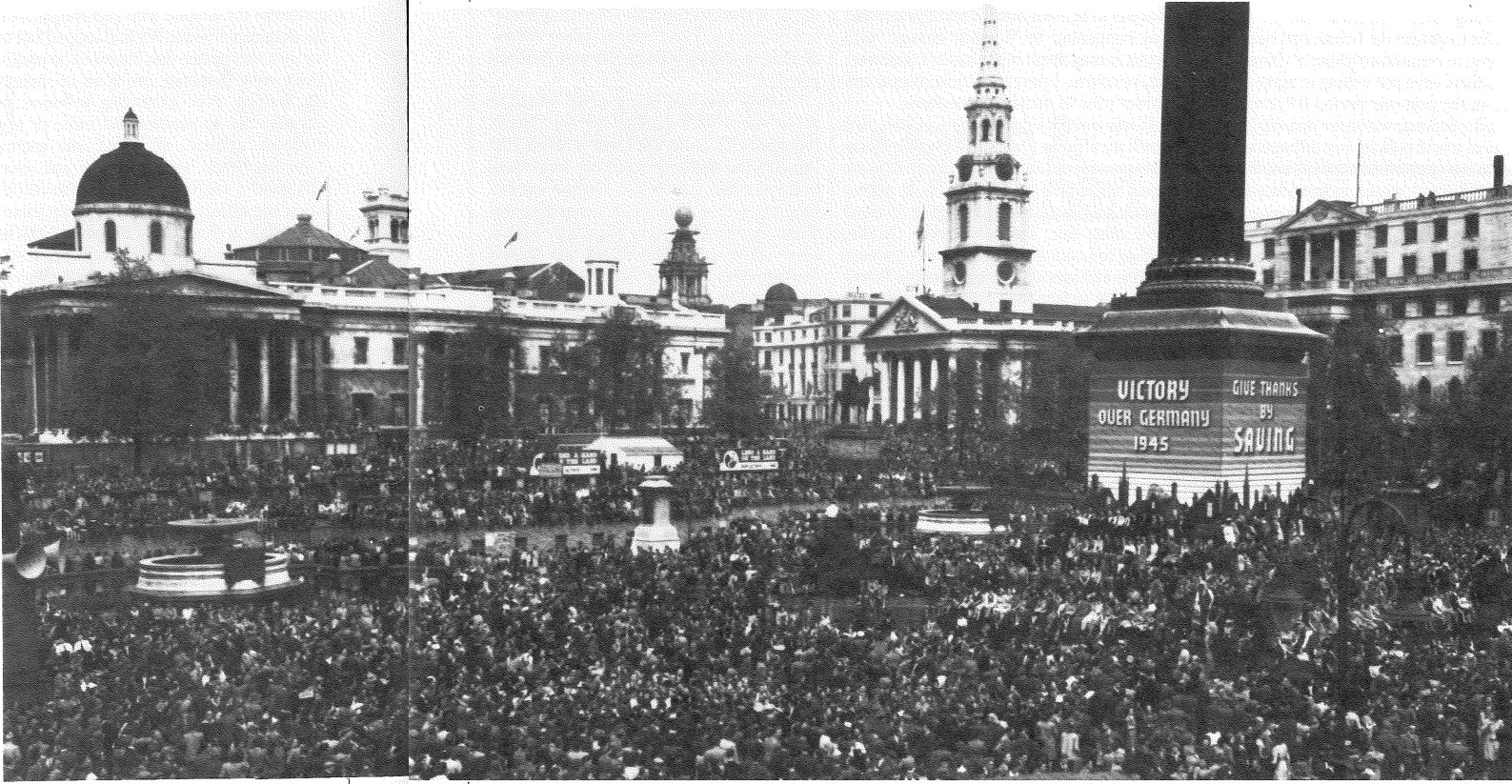
This new kind of high-minded liberal imperialism was more evident to Canadians after we had had to counter it at the Chicago conference on international civil aviation, where Adolf Berle wanted to make the skies Trafalgar Square on Victory Day, London, Englan safe for democracy and Pan American Airways — to the greater benefit of mankind, of course. New Dealism was showing another face. FDR, citing Seeley’s Expansion of England, told Mr. King that the United States was becoming the United Nations. In the argument over colonialism we were annoyed by the fanaticism of the Americans and, as ever, unsympathetic to the Tory right wing in Britain. We were in the process of transforming an empire into a Commonwealth in our image and more confident than ever that evolution was better than revolution. I think we were right, and I don’t think we have had enough credit for our part in the more or less peaceful evolution of the largest of the empires. The British don’t recognize that if the Commonwealth had not been converted by Canada and the other dominions from an anglo-centric league for common action into an association for consultation, they would never have had at their command the formula which enabled them to quit India without disaster. The Americans regarded the Commonwealth as nothing more than an unfair trade practice.
This progressive side of empire they could not see at all — possibly because its earliest manifestation in Canada had cut their manifest destiny in half.
Ottawa showed less understanding of the British strategic dilemma than they did of the financial. We were generous in our loans, partly in hope of restoring an essential market and partly because we felt that the British had suffered more in what we insisted was a common cause. Mr. King was persistently flattered by perceived plots of imperial centralizers. I note that a good deal of my correspondence from London at this time was devoted to reassuring colleagues that the campaign for a single Empire voice was largely wind, part of the rhetoric of victory, a conviction held more fervently at The Sunday Times than in Whitehall. The Foreign Office, even though they sometimes used the language of empire to bolster their shaky status as a great power, had no desire whatsoever to have their foreign policies made in Canberra. The British knew very well that Canada would not join in any firm plans for imperial defence. They had, however, to respond to the Australians and New Zealanders in their lonely outposts, worried about Singapore and with a different, but by no means colonial, view of imperial defence when the American direction was so uncertain.
We were very egocentric. As Mr. King had been reluctant to let Mr. Massey attend meetings of high commissioners lest he commit us to imperial plots, he now placed absurd restrictions on the Canadian military staff in London. Mr. Massey had, incidentally, always defended the Canadian right to a voice in allied policy.
The British War Office lived in a world of its own and occasionally put out antediluvian schemes for empire defence which were not pressed by the Attlee government. Mr. Attlee spoke of the need for help in maintaining the thin red line but it was out of desperation over the economic and military strains on a very weak state and not out of any intention to revive ideas of a united empire. Mr. King exploited the issue as he had years before exploited the clumsy British request for assistance at Chanak. The Canadian tradition of calling these ’demands’ ignores the fact that for a century the British had been in no position to demand anything of Canada that Canadians were not willing to agree to. The need in the post-war period for us to assert our independence was never pressing because on most world policies our differences were rare, and in the post-Skeltonian era, External Affairs did not regard independence as an end in itself.
In any case, the nationalists were beginning to be more concerned about asserting independence from another great power. As for defence, we argued that the only sensible strategic scheme would be one that included the United States. We argued that not only for Canada but for Britain and the rest of the Commonwealth. That view was accepted by Attlee and Bevin after fears of American withdrawal diminished. It was Canadian and British agreement on that score that led to bringing the United States into a North Atlantic alliance, the real begetters of which were Ernest Bevin, Louis St. Laurent – and Escott Reid. I exaggerate only a little.
There was, however, a great difference between Britain, mutilated but never occupied, and the continent. I very much wanted to know what it was like over there, but it was 1946 before I made it. I was sent to Rome to represent Canada at the winding up of the International Institute of Agriculture to make room for the FAO. We had no embassy in Rome, and I took advantage of the opportunity to take soundings on the state of a country in which left and right and the allied powers were angling for dominance. As for the British, a Labour Government, as would be expected, was hoping for the emergence of a regime roughly social democratic — the medium formula for all the restored governments of Western Europe. The Foreign Office was of that mind and the State Department too, I think. But it seemed evident to me that they were not running Italy. Not surprisingly, the British and Americans on the spot were perturbed at the offence to the Italians of their governments’ neutrality on Trieste.
Perhaps I was naive, but the picture I got from talks with British, Americans, Italians and others was of a country whose fate was being decided largely by its own people. The British Ambassador complained that his American counterpart had been absent for a long time and their presence was weak. He wanted a Canadian Ambassador to bolster the team. Of course, there was allied intervention in Italian politics, much of which was possibly not obvious to the allied diplomats. i question, however, the easy assumption that the allies were running the country. Italians are not easy to run in any circumstances. I question also the tendency in some quarters to be even-handed and equate what was happening in Western Europe with Soviet management of the Eastern countries, but, of course, I never got to Bucharest and I never tried to manage Romanians.
It was not only the sunshine of Italy that struck me after the grayness of London; it was all the wonderful food and the supplies in the stores and all the things I could get with a packet of Macdonald’s Exports. It didn’t seem quite fair. I recall Brooke Claxton coming to London after the peace conference in Paris and speculating whether the British were wise to face their problems with such disciplined austerity. This was heresy. We in London thought he was dead wrong, but I have wondered since about the Crippsian discipline which I admired at the time. I doubt if we would have given the British such a generous loan if they had been behaving as unpuritanically as the French and Italians. I am not sure whether masochism pays in the long run. I got to Paris in time for the Quatorze. The rich were dining well in Category A restaurants. On a salary of about $4,000, I could afford to dine only on roast boar. Still the tricolour lights shining straight through the Arc de Triomphe and right up the Champs Elysees to the Tuileries were glorious. Already in Britain the mood was turning sour, disenchanted.
In Rome I had had dinner with General Anders, head of the Polish forces marooned in Italy and unwilling to return home. The British Ambassador, Sir Noel Charles, put me beside him at dinner because General Anders spoke only Polish and French and he assumed somewhat rashly that any Canadian diplomat would speak French.
Where Anders was most impressive was in his dedication to his boys. He took me seriously because he hoped I could persuade Ottawa to take them to Canada. Poles were to be seen everywhere in the streets of Rome. Stranded and unhappy and hating Communists, they had become embroiled in Italian politics with not a little violence. Sir Noel was much concerned at this and also by the European Jews who had been enabled by United Nations Relief and Rehabilitation Administration (UNRRA) to proceed to Spezia en route, as they hoped, to Palestine. In Spezia they were venting their frustration in hunger strikes. It was all very human but unsettling in a country seeking stability. I became much more vividly aware of the threat of anarchy from the wandering homeless of Europe. There were so many contradictions in dealing with people who were not enemies.
Canada was not being at all generous about the Polish soldiers or the Jewish refugees. There was the basic problem that shipping was tied up bringing our own troops home and then their brides. Ottawa was still haunted by fear of depression and post-war unemployment. Pre-war prejudices against alien immigrants lingered, or the leaders thought they lingered. Some time later, I accompanied C.D. Howe to Frankfurt to look at the Displaced Persons (DP) camps. Young men came up to us to say that they had been granted visas to Canada because they could do farm labour, but they could not abandon their elderly parents. Mr. Howe was a humane man and he got the message. By 1947, shipping was becoming available. Even the trade unions were shifting from old fears of unemployment to the beliet that Canada needed a larger population to sustain an expanding industry. We had not been without concern for refugees, but we put our efforts into the International Refugee Organization where we were conscientious and generous. That was, of course, easier than making way for large numbers of displaced persons.
There was a prevalent fear in Canada, rarely stated bluntly and hard to recall now, that Europe was doomed to a hungry and anarchical future, that millions of Europeans wanted to flee westward and that we would have to dole out relief indefinitely. It was a fear hard to resist. Germany, in the heart of Europe, was a cesspool. After defeating the Germans, we had to keep them alive. Desperation, we feared, might drive them to Communism, and to prevent that, they had to be better treated than we had intended. No one, I think, foresaw the German economic miracle, and we had convinced ourselves that they could never recover from Nazification to govern themselves democratically. It is hard for people in the time of NATO to reconstruct in their minds a Western world in which Germany was a vacuum and the United States uncertainly committed. That was, however, the picture that grand strategists, especially in Britain, had to contemplate.
I was a reporter, not an original thinker. If I conclude now with some of my thoughts at the time on the major issue, East-West relations, it is because they undoubtedly reflect what I was hearing at the Travellers’ Club. I have resisted the temptation to edit them. I wrote “Any appeasement of Nazi Germany was wrong because the Nazis had an unshakeable intention to destroy us and profited by any concession on our part. If it is true that the Soviet Union has an equally unshakeable intention to destroy us, then we must not appease her in any way. Our present policies are, however, based on the belief that Russia has no such intention — or at least if she has it in the back of her mind she can be argued out of it. It is a point on which we must be very clear. We must decide now whether or not we think Russia intends to work with us or against us. If we come to the latter conclusion then we should not play into her hands by entering into treaties with her or even planning with her a world organization which could become an instrument of her nefarious design.”
In reading that youthful pronouncement, I feel less satisfaction at my foresight than uneasiness over the fact that I am still saying some of the same things, especially about selective appeasement and the perpetual struggle for peace. The quotation, however, is from a draft despatch which was neither finished nor sent, and I can’t remember why. Perhaps I realized that I was getting pompous and the High Commissioner wouldn’t sign it. I quote it, however, to illustrate the lack of certainty at the time about East-West relations, which has been my main theme in this lecture. There were few people who felt certain about the Russians one way or the other. What is not always understood now is that we created our defensive alliance not because we were convinced that the Soviets would eventually drive to the North Sea but because we were not at all confident of their intentions. What I wrote from Moscow in 1948 reflects that same uncertainty, looking for reasons for assurance but constantly troubled by contrary evidence. Most of us are still uncertain and I think we are wise to be so, as Soviet policy is not foreordained — well, certainly not by God.
I tell the political scientists I have no certainties because I was trained as a historian. A group of my former students, all political scientists, have identified my most insistent homily as ’an acceptance of paradox.’ When I mentioned that to that remarkable post-bureaucrat, Len Legault, he said that he had long adopted as his own Blake’s observation: ’Say what you will, this life’s a fiction and it is made up of contradiction.? In balance, however, he added Blake’s other observation: ’If the sun and moon should doubt / They would immediately go out.’
View the original scanned pages →
Originally published in bout de papier, Vol. 6, No. 3 (1988), pp. 16–21. Read the rest of this issue →



