
bout de papier, Vol. 6, No. 2 (1988) — Summer 1988 // Été 1988, pp. 13–14
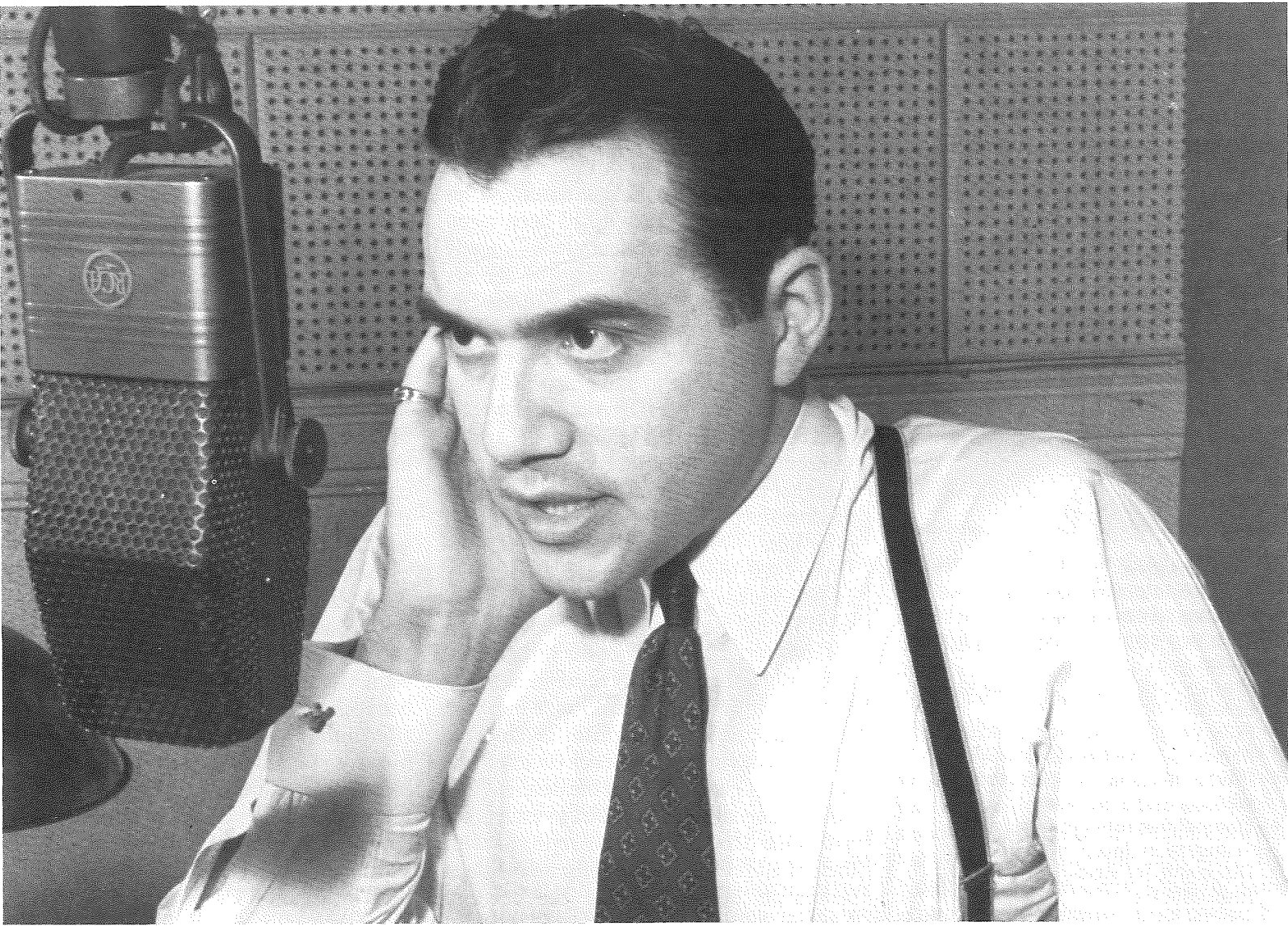
Every time I hear another tirade about the evil and sinister pervasiveness of American cultural imperialism, I think back to some bizarre things that happened when Canada’s Lorne Greene showed up in New York in 1967 and asked me to show him around the United Nations and, especially, to get him into a meeting of the Security Council. This was in June, in the middle of the Six Day War in the Middle East, and Canada was a member of the Security Council, which was meeting around the clock seven days a week. At that time, I was Counsellor at our Permanent Mission to the U.N.
Lorne Greene was an Ottawa boy who had become a famous CBC radio correspondent and announcer during World War II. He had been sent by CBC to New York in the early postwar years to study television, which had not yet come to Canada. We had been friends in Ottawa and neighbours while he was in New York. By the 1960’s, Lorne had become North America’s outstanding TV personality because of his weekly show, Bonanza, which he had created for an American network and in which he starred as Ben Cartwright, the robust owner of the sprawling Ponderosa Ranch. Bonanza was not only No. I in the ratings, but was so popular internationally that it was dubbed or sub-titled into dozens of foreign-language versions and was appearing on TV screens around the world. Lorne, walking down a street in any American town, would have been recognized by more people than the Governor of the State, possibly even than the President of the United States.
To digress for a moment, I should point out that working at the U.N. gives one extraordinary proximity to, and sometimes familiarity with, many of the movers and shakers on the international stage, as well as our Canadian masters. A few months’ U.N. exposure to sultans, beys, ayatollas, princes and presidents serves (or certainly should serve) to immunize Canadian Foreign Services Officers — if not their visitors – from celebrity consciousness. A prominent Torontonian whom I had taken to lunch in the Delegates dining room nearly fainted when British Foreign Minister Anthony Eden, lunching at the next table with U.S. Secretary of State Dean Acheson, asked if he could borrow the salt from our table. One day Fidel Castro, clad in battle fatigues and chomping on a cigar, plopped down beside me on a couch in the Delegates’ Lounge and, discovering that I could speak Spanish, practically put me on his lap to tell me how much be admired Canada’s enlightened policy towards his country. The Ottawa visitor I had with me was indeed impressed. You rapidly get used to this kind of thing (or you shouldn’t be serving at PERMISNY).
In 1952, when Mr. Pearson was President of the General Assembly, we found ourselves meeting with national and international leaders from the five continents, shuttling them in and out of the Presidential offices on the 38th floor and behind the Assembly hall with rapidity and agility or, if they were leaders of opposition or independence movements, meeting with them in less auspicious surroundings. Surely then, Lorne Greene, from a totally strange planet – Hollywood and US national TV — would be incognito and incident-proof in the United Nations ambiance.
When Lorne arrived at the new United Nations building on First Avenue for his visit, the Security Council had been meeting — in public and private sessions — nearly all the previous night, coping with the Six Day War. To my surprise, I found the UN guards on First Avenue and at the UN guards on First Avenue and at the UN entrance doors asking Lorne to autograph their hats or any piece of paper they could find in their pockets. I quickly led him to the crowded visitors gallery of the Security Council chamber to an inconspicuous seat on which I had earlier placed my briefcase so as to hold it for him.
As I led him down the visitors gallery steps to his seat, members of several delegations on the Security Council floor began pointing up at him in joyful recognition. Normally impervious UN Secretariat members began to look up, recognize him and smile with delight. The normally unflappable simultaneous interpreters, each enclosed in a soundproof glass booth for the different UN official languages, gesticulated to each other and pointed to Lorne while carrying on with their rapid-fire translation of the momentous statements being made on the Security Council floor.
Delegation members began leaving their seats, walking across the chamber floor and climbing the steps of the visitors gallery to Lorne’s row, holding out their copy of that day’s Security Council agenda for him to autograph. When I got down to my Canadian delegation seat on the chamber floor, members of other delegations came over to ask whether I would be bringing Lorne down to sit with us (strictly forbidden), as they too wanted autographs. The inscrutable Burmese U.N. Secretary General, U Thant, broke into a rare smile when an aide whispered in his ear what was causing all the commotion. Otto Borch, the Danish Permanent Representative, who was Security Council chairman that day, finally rapped his gavel to bring the meeting back to order.
When I took Lorne to lunch in the overcrowded Delegates’ Dining Room, maitre d’s vied with each other to lead us to a choice table, doubtless previously reserved for some visiting Head of State. Delegates and their guests, as well as waitresses and busboys, came over to our table with that day’s luncheon menu for Lorne to sign; word must have gotten through to the kitchens because even a couple of UN cooks surfaced at our table and took off their chef’s hats to be autographed. We ate splendidly. I had never received such good service in the Delegates Dining Room before – and I never had it since.
After all these goings-on, I thought it wise not to take Lorne to the Delegate’s Lounge for an espresso and so I led him down the busy corridor leading from the Lounge to the Council chamber to put him back in the visitors’ gallery for the resumption of the meeting. The Soviet Ambassador and Deputy Permanent Representative to the U.N., Nicolai Federenko, and his dour boss, USSR Foreign Minister Andrei Gromyko, were strolling along the corridor towards us. I was No. 3 at the Canadian Permanent Mission at the time and Federenko had never had the time of day for me before. But that day, with Lorne Greene in tow, he greeted me effusively and, turning to Lorne, clasped him with out-stretched arms.
“My distinguished representative from Ponderosa, my dear Ambassador Cartwright from Bonanza.” Federenko exclaimed to my, and to Andrei Gromyko’s, astonishment. “I want you to know that for years you have been one of my own family. You are with us after dinner in our family living room in Moscow. You are with us in our family living room here in New York. You are one of our very own. You must autograph something for my children.” He searched his pockets and finally pulled out a copy of that afternoon’s Security Council agenda, which Lorne signed, with a few extra words, in front of the amazed Gromyko.
Before we headed off to the Visitors’ Gallery entrance, Federenko urged Lorne to visit the Soviet Union and to be sure to let him know if he was coming to Moscow, so that he could be taken home to meet the Federenko family. I gather that Lorne subsequently did make a visit to the USSR but, as I did not see him again after that unbelievable day at the United Nations. I don’t know whether he ever got in touch with Federenko and met his family.
But I do know that I have never had a more striking example of the all-emcompassing, sinister, malevolant pervasiveness of American cultural imperialism.
Editor’s Note: Sadly, Lorne Greene died on September 11, 1987 in California.
View the original scanned pages →
Originally published in bout de papier, Vol. 6, No. 2 (1988) — Summer 1988 // Été 1988, pp. 13–14. Read the rest of this issue →



