
bout de papier, Vol. 6, No. 2 (1988) — Summer 1988 // Été 1988, pp. 20–21
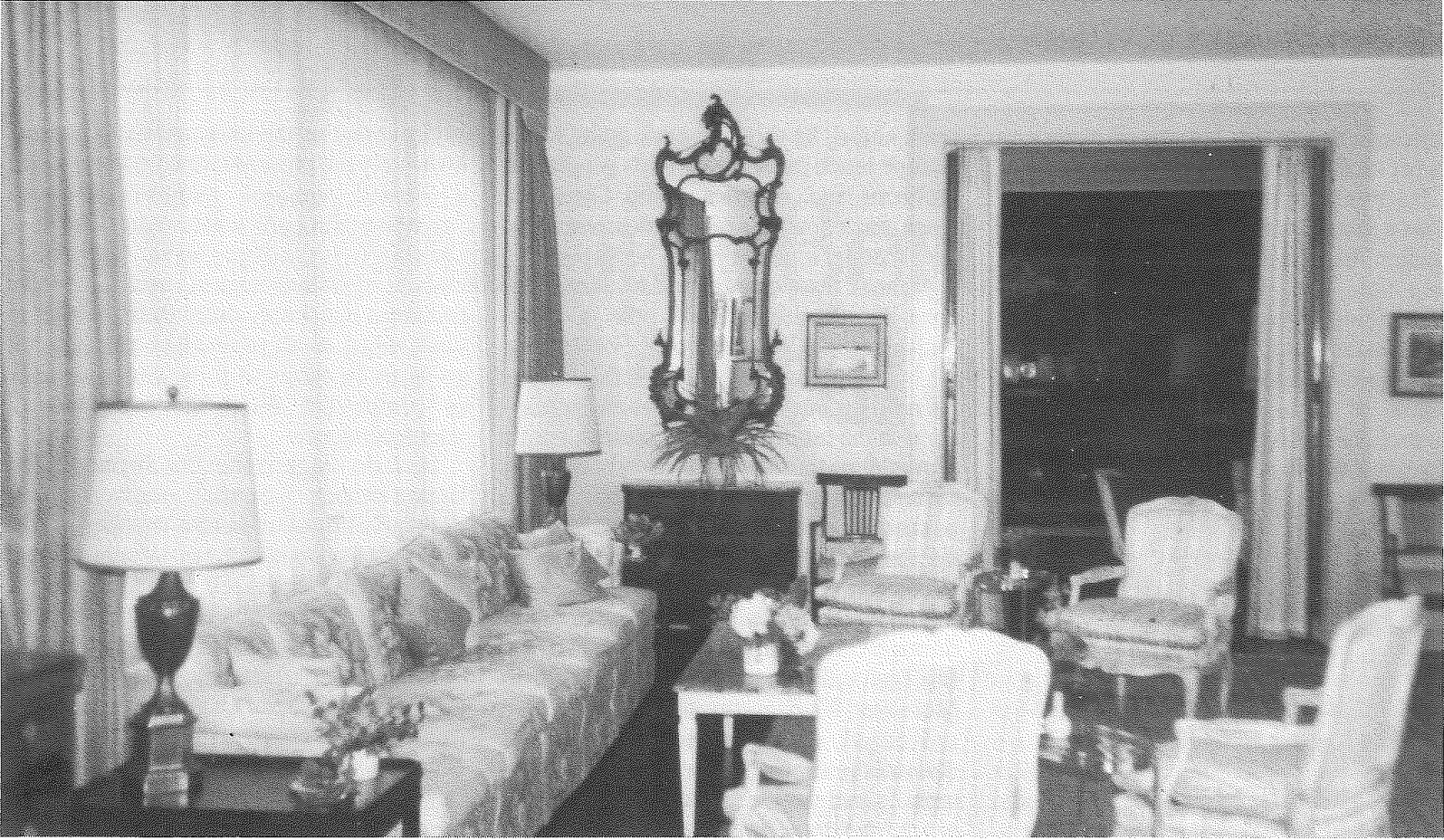
Since the end of the Second World War, Canada and the Netherlands have enjoyed harmonious and close relations of a unique character. These are symbolized by an attractive well-located Chancery designed by a Canadian architect in the neo-classic or Beaux Arts style, and above all by a handsome ambassador’s residence sited in a magnificant estate. This is worthy of a particular account.
The property called “Groot Haesebroek” in the suburban community of Wassenaar has, as might be expected, a long history in a long-settled country. It originally formed part of a much larger estate whose roots stretch back to the 14th century. Prince Frederick of Orange-Nassau, brother of King William II, bought Groot Haesebroek around 1850; it passed out of the Royal Family in 1907.
However, the history for our purposes begins with the purchase in the late twenties of the property by a wealthy prominent businessman of Rotterdam, Mr. A.G. Kröller. He, and especially his wife were active collectors of modern art. To house their growing collection they had the old house torn down and replaced by the present house in 1930. It was designed by a famous Belgian architect, Henry van de Velde, a recognized and versatile leader of the Art Nouveau movement. Consequently, the residence is not a romantic chateau with turrets and gabled roofs, but a large two-storey building in brown brick with rounded corners and strong horizontal lines.
The flat effect suggests the style of Frank Lloyd Wright. Professor A.M. Hammacher in his definitive book “Le Monde de Henry van de Velde” (French translation, Librarie Hachette, 1967) says the project of this country house may date in the architect’s evolution from about 1921. Hammacher says the design is of a sober character, not wishing to give an impression of richness. “It is a careful construction of reserved charm, thoughtfully measured: the work of a resigned maturity, opposed to any vain search for exterior effects”. Incidentally, there is a Belgian group or club of admirers of van de Velde who still like to visit the house from time to time.
Mrs. Helene Kröller was clearly a strong character with great perception in acquiring paintings before their value and quality had been fully realized by the rest of the world. Van de Velde had been her art adviser from the early Twenties. Mrs. Kröller collected a very large number of paintings and drawings by Vincent van Gogh and was influenced by van de Velde to acquire paintings by Georges Seurat, the leading pointilliste. A senior officer of the Dutch foreign service told me how, when he was a student at Leyden University in about 1936, he visited Groot Haesebroek to borrow some paintings for a special exhibit; there he found paintings by van Gogh, Seurat, Signac and others casually stacked against the walls of the garage.
Groot Haesebroek soon proved too limited for the growing art collection. Kröller decided to construct a special museum building in his vast park near Arnheim, also designed by van de Velde. The collection went formally to the state in 1935 and has been housed in the Kröller- Müller Museum since 1938. This is a world-famous gallery to which lovers of modern paintings and sculpture make pilgrimages in vast numbers.
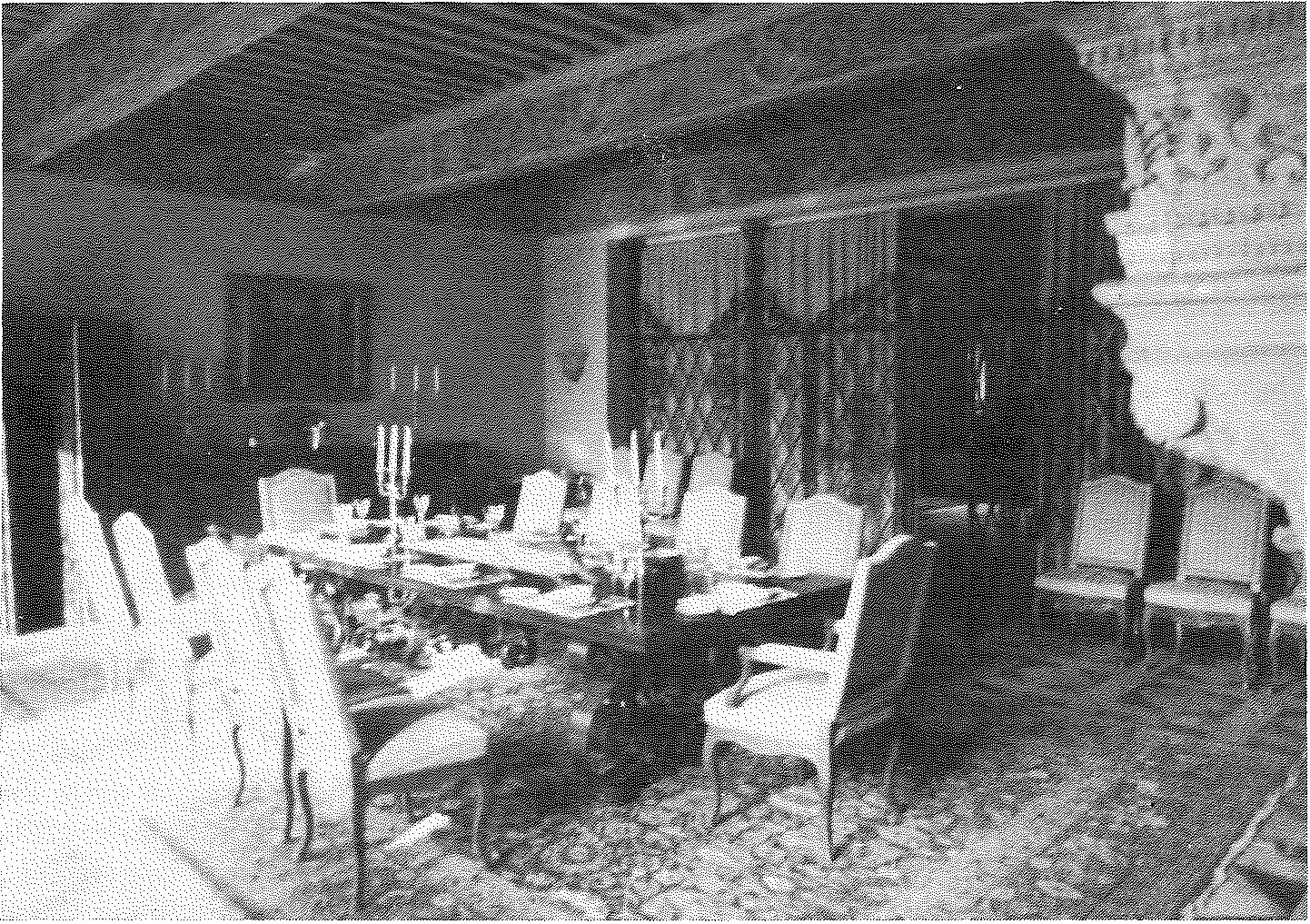
Groot Haesebroek was sold in 1937 at a good price to Daniel Wolff, a somewhat controversial nouveau riche. Wolff redecorated the house substantially so it is not possible to know exactly what is attributable to the original builders. The marble staircase with the massive sweeping brass handrails, topped by a handsome domed skylight, clearly shows the lines of van de Velde. The dining room has an old Renaissance painted ceiling and a big fireplace which must both have been taken from a chateau in France or Italy, but by which of the owners? One would like to think that the striking black bathtubs date from Daniel Wolff.
Wolff escaped to England just as the German forces rolled in. He died in 1943, shot, it is said, in a New York nightclub. The German Air Force General Frederich Christian Christianse installed himself in Groot Haesebroek with his senior officers. He was the Gauleiter headquartered in what was renamed The Eagle’s Nest.
The Canadian Army, in perhaps its happiest and finest hour, liberated most of the Netherlands in the spring of 1945, after five years of German occupation and a particularly cold winter with virtually no fuel or food. The Dutch expressed their appreciation then and repeatedly since. A people that celebrates annually the relief of Leyden, after a long Spanish siege, on October 3, 1574, will not soon forget the events of May 1945. In fact, an impressive Dutch-Canadian exhibit, called “The Sweetest Spring” covering the war years and the liberation was opened by Queen Beatrix at the Canadian War Museum, Ottawa, on May 9, 1988.
The Canadian Army with active support from Dutch leaders, both military and civil, readily sought a suitable residence for the first Canadian Ambassador, Pierre Dupuy. Several eminent Dutchmen claim they were personally responsible for suggesting Groot Haesebroek – nothing but the best for Canada. It was rented from the estate of Daniel Wolff from January 1946 and purchased in March 1949. We acquired some 22 acres that did not include the Jagershuis — the hunting lodge and stables – which remained with the family and is separated by a small drainage canal. The price was reasonable and was paid from blocked currency obtained from the local sale of Canadian relief supplies. Effectively, it cost nothing. The Dutch generally believe that the property was a gift to Canada.
The property had naturally been neglected by the Germans in occupation. The house was largely denuded, but not vandalized. Perhaps we lost some van de Velde chairs, which are collector items, but not to everyone’s taste.
Some items certainly went to Germany and were never recovered. An important large wrought-iron screen between the dining-room and the central hall was dismantled and moved towards Germany. It seems to have ended up as a chapel grill in the great Gothic Cathedral of ’S Hertogenbosch (still in the Netherlands!). It is graceful and ornate, with gilded highlights.
Pierre Dupuy had a knowledge of furniture and good connections in Paris. He had an eminent Paris designer make a fine replacement screen with a maple-leaf motif, as well as a new base for the banquet table and a set of massive tools for the Renaissance fireplace. He had custom-made a beautiful round cherry-wood table and matching chairs for the smaller dining room, each with a petit point back representing Canadian wild flowers.
The grounds required much work, including the extensive lawns and flower beds, as well as woods calling for a disciplined European treatment. One Dutchman told me accusingly, that we had employed Nazi sympathizers after the war. It turns out that our Dutch friends in authority, ever anxious to help, had assigned a group of Dutch collaborators to the hard work of clearing up the grounds.
Over the years the gardens have been something of a showplace. The long driveway with its tailored linden trees presents a lovely display of rhododendrons in spring. The tulips are a special link with Ottawa. Extra efforts are made to have the lawns and paths in perfect shape for the July Ist celebrations. Frequently, pheasants wander in from the neighbouring dunelands and mallards are semi-domesticated inhabitants of the surrounding canals and ditches. The two tennis courts are a special feature much appreciated by the Foreign Ministry and other distinguished guests.
The house though large is not without some domestic charm and cosy corners. It is too modern to have any ghosts or spirits. Though I cased the nooks and crannies, there were no traces of abandoned works of van Gogh, but who knows what might be tucked away behind the toile of the morning room or the rosewood panelling of the library? I did have a concealed wall safe opened by a safe-cracker but, alas, it contained nothing.
The upkeep of this house, its grounds and gardens, is not without cost in these days of Dutch prosperity and a strong guilder. However, it is a small price to pay in terms of the maintenance of a monument and symbol of Dutch-Canadian friendship.
View the original scanned pages →
Originally published in bout de papier, Vol. 6, No. 2 (1988) — Summer 1988 // Été 1988, pp. 20–21. Read the rest of this issue →



