
bout de papier, Vol. 6, No. 2 (1988) — Summer 1988 // Été 1988, pp. 9–11
For many years, the importance of our universities as a training resource for developing countries has been clearly understood both by our institutions and by government. It has only been in the last decade, however, that our colleges and technical institutes have emerged as an equally important resource in Canada, and more recently, in the developing world.
While in no way diminishing the traditional role of universities and their graduates, colleges have responded to the needs of the home economy in two key ways. A primary thrust has been providing young men and women with educational opportunities, distinguished by a clear hands-on orientation, in areas as diverse as business management, nursing, electronics and graphics — the very skills that are now in demand in most countries. Colleges and institutes have strengthened Canada’s manpower base through the creation of a vast corps of practitioners highly skilled in all aspects of technology.
While engineers may design new products and systems, it is the technicians and technologists, whether in industry, business, or health, who translate the concepts into reality, who make things work and keep them working. The well-known ratio between the numbers of nurses and doctors in a hospital bears some resemblance to the required ratio between technicians and engineers in industry. Few countries design and build micro computers or numerically controlled machines, but as the technology is imported, countries must acquire the knowledge to install and maintain them, and it is the technicians who fulfill this function.
Academically, our colleges and institutes offer secondary school graduates programs of one, two or three years duration. An engineering student, for instance, can be trained as a tradesman, technician, or technologist within this framework. Instruction is available in over 100 programs, ranging from health, agriculture, business, and applied arts, to fisheries, food processing and basic literacy. The key element in all of these programs is that they lead to defineable employment.
While students must master skills to help them find a first job, the rapidly changing nature of so many fields necessitates that graduates be equipped with the fundamental knowledge to enable them to continue learning. Therefore, college programs include major components of theory, math, language skills and general education.
The second major role of our colleges and technical institutes is the retraining and technical updating of the existing work force and adult population. A large college in Canada, in any given year, may have an enrollment of 10,000 full-time students and up to 80,000 part-time adult students. Many university graduates come to colleges for short courses that enable them to enhance their employment skills or upgrade special talents. A large percentage of the part-timers are sponsored by their own employers to master new skills, learn new technologies, or adapt to new techniques.
This interaction between colleges and institutes and the private sector is not a new, or isolated phenomenon. Many institutions across Canada have advisory committees for every program, comprised of practitioners of the trade, craft, or para-profession. For instance, in each of the four institutes offering programs in international trade, the curriculum reflects the input of those currently involved in this sector. Ambulance/ emergency care programs are advised by professionals in the field, as are Entrepreneurial and Accountancy programs. Therefore, when colleges and institutes work with Canadian companies on international development projects, they are often building on a long-standing relationship.
Although our institutions meet many other community needs, it is their services in technical and technological training, retraining and updating that are currently being sought out by over 50 governments around the world. Since colleges are provincially funded and work within provincial educational structures, educators from developing countries often find it difficult to understand or access the considerable resources within the Canadian college system. The Association of Canadian Community Colleges (ACCC), a national organization representing virtually all of Canada’s 140 colleges and institutes, provides a vital link between its membership and the international milieu, acting as a single voice to at least simulate an integrated national front in college-level education.
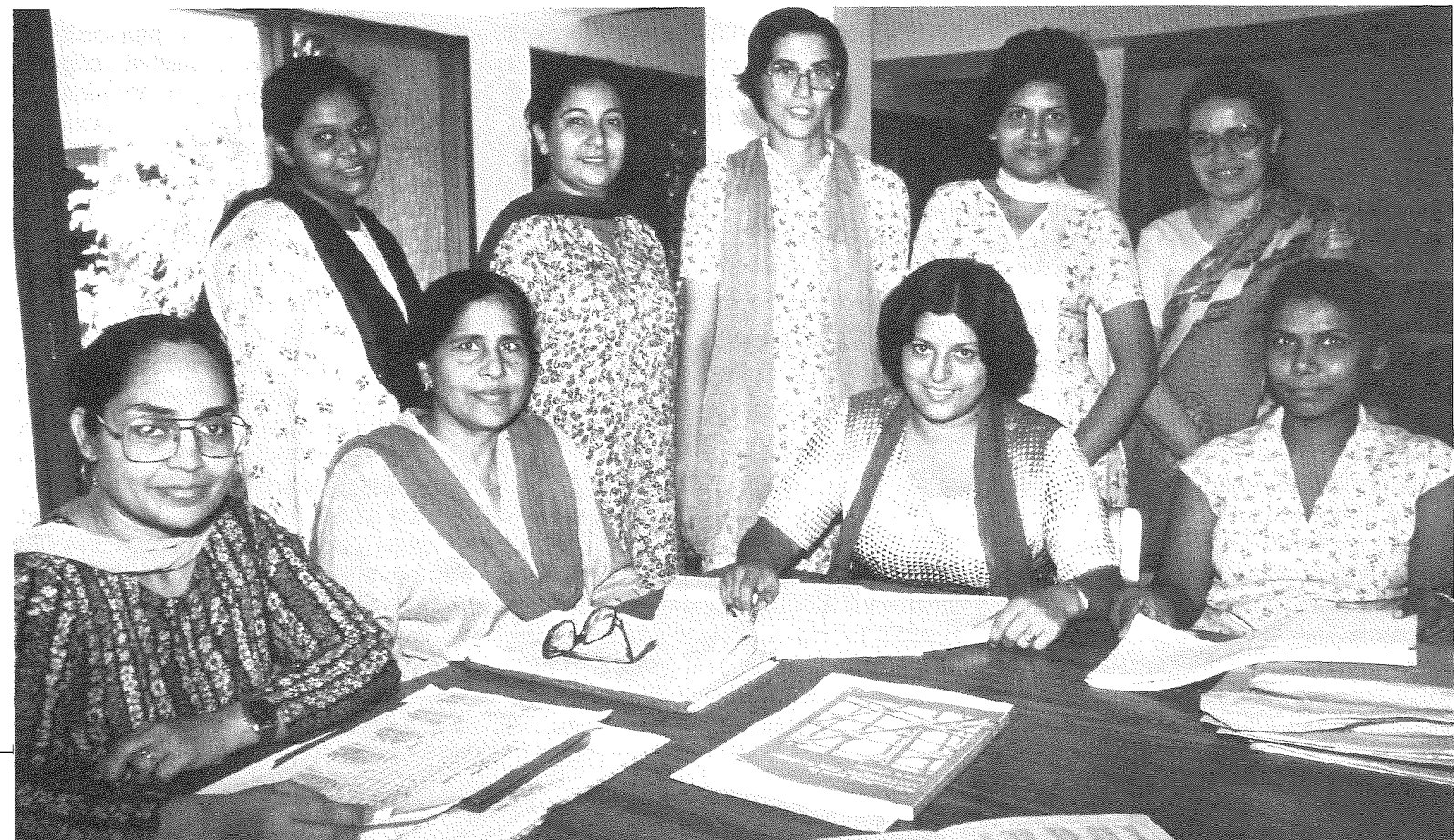
ACCC has no product to sell, or process to market. Our interest lies in lending support to our college colleagues in other countries through sharing the experience of our members in developing vocational education in environments that usually understand and accept universities more readily.
Because our institutions in Canada have been established primarily over the last 20 years, the people who participated in the challenge and enthusiasm of building them, still run them. This special expertise in institutional development can be of substantial assistance to countries just beginning to develop or redesign technical/vocational education systems. Our memories of our own struggles in creating new institutions elicit smiles of recognition from our counterparts in developing countries.
Just as crucial is the overall issue of managing an academic environment. Even if all of the pieces are in place — the equipment, the teachers, the students — a college may still not be effective. To be successful, an institution must be imbued with a spirit of co-operation which can only be developed by thoughtful, experienced administrators. The unique background of our colleges in creating and maintaining such a sense of common purpose is yet another invaluable asset which can be imparted to colleagues overseas.
The most frequently heard remarks from the hundreds of international visitors, both official and unofficial, who pass through our colleges and institutes each year, relate to the spirit, enthusiasm, and energy that they find around them. The most frequent questions are how to recreate this feeling in institutions in their home countries.
Through its various activities and programs, ACCC tries to provide the answers. ACCC is headquartered in Toronto, with a Secretariat staff of over 50 professional and support workers. For the past 10 years, the Association has had three primary functions:
1. To provide a forum for our members to discuss, share and learn from each other;
2. To represent the priorities of our members to the Federal Government and its agencies; and 3. To develop projects and contacts for our member colleges in other countries. It is this third function which has led us into a strong relationship with the Canadian International Development Agency (CIDA). ACCC manages a multi-million dollar program development fund on behalf of its members, focusing on small institutional development projects that have helped create long-term associations between Canadian colleges and their counterpart institutions in Africa, Asia and the Americas. Typically, such twinning arrangements include a faculty upgrading or updating component, and often involve a shared learning element in local industries.
On a grander scale, ACCC assists its members in becoming implementing agencies for major bilateral projects funded by CIDA or international financial institutions. From staffing a management development institute in Chengdu, China, strengthening faculty and curriculum in the Harambee Institutes of Kenya, to advising on the development of an integrated examination council in the Caribbean, Canadian colleges are increasingly recognized as a major resource in supporting co-operation between Canadian educators and their colleagues around the world.
More importantly, these relationships are leading to a major transfer of technology and expertise from Canada to the developing world. Our colleges and institutes facilitate skills growth, whether in plumbing, air conditioning, computer assisted design or micro computer business applications, in over 50 countries. Since college staff are virtually all hired from industry and business, it is the applied, practical, hands-on nature of our system which others seek out and adapt to their home environments.
The ACCC has also helped Ministries of Labour and Education in many countries develop apprenticeship courses in such areas as construction, automotive repair and manufacturing. Apprenticeship works well in some environments and can be a vital factor in training skilled tradesmen. It can be an equally effective tool in the hospitality/ tourism trades, for jobs ranging from chefs to travel counsellors/guides. Once again, this is a major growth industry in Canada and one that often has substantial potential in developing countries. Working with Ministries of Tourism, our colleges have provided expertise on all levels, from policy development to hotel school design.
The non governmental organization nature of ACCC has enabled us to establish informal contacts with both government and industrial leaders in much of the world. As an example, Arab-Can-Access, our consortium in the Middle East, puts Canadian private sector companies and our colleges in touch with government and industry throughout the Arab world. ACCC is as conscious of the relationship between education and trade development as it is of the social responsibilities of Canadian institutions.
CIDA also supports an in-Canada program in which individuals and institutions acquire and refine skills in the field of international development. Workshops on activities ranging from cultural sensitivity to project management are sponsored in colleges across the country. Those who have developed successful projects share their experience with other college staff or institutes, and year by year, the colleges gain a more comprehensive and professional delivery capability. Adding these international skills to the training competence of our members is a key role for ACCC.
Colleges have broadened the scope of Canada’s international activities in several other significant ways. Recently, ACCC withdrew from its Associate Membership with the South East Asia Ministers of Education Organization (SEAMEO) to make room for the Canadian Government to become a full member of that organization. Our early relationship with the new government in the Philippines supported the development of stronger ties between Canada and that country. In Nicaragua, our Women in Development program was a focus of interest during recent visits by Canadian officials.
Of equal importance is the legacy of friendship created between individuals and institutions around the world through the ACCC-Canadian involvement. The many teachers from developing countries who are trained in our institutions, and our own teachers who serve in short- and long-term consultative posts abroad, bring back memories, experiences and contacts that can last a lifetime. Our regional officers from the Secretariat are often in the field, working with our embassy and high commission staff to find ways in which the skills of our institutions can further the development objectives of other countries.
ACCC and the colleges and institutes it represents are a major new factor in the repertoire of resources that Canada can offer to the developing world. Many countries are just now discovering, as Canada did only 25 years ago, that economic and social development are built on the skills and capabilities of the average citizen/ worker, as well as the leadership elite. ACCC’s member institutions can play an important role in development, sharing their unique experience with the world.
View the original scanned pages →
Originally published in bout de papier, Vol. 6, No. 2 (1988) — Summer 1988 // Été 1988, pp. 9–11. Read the rest of this issue →



