
bout de papier, Vol. 6, No. 1 (1988) — Spring 1988 // Printemps 1988, p. 15
by Laurel Pardy
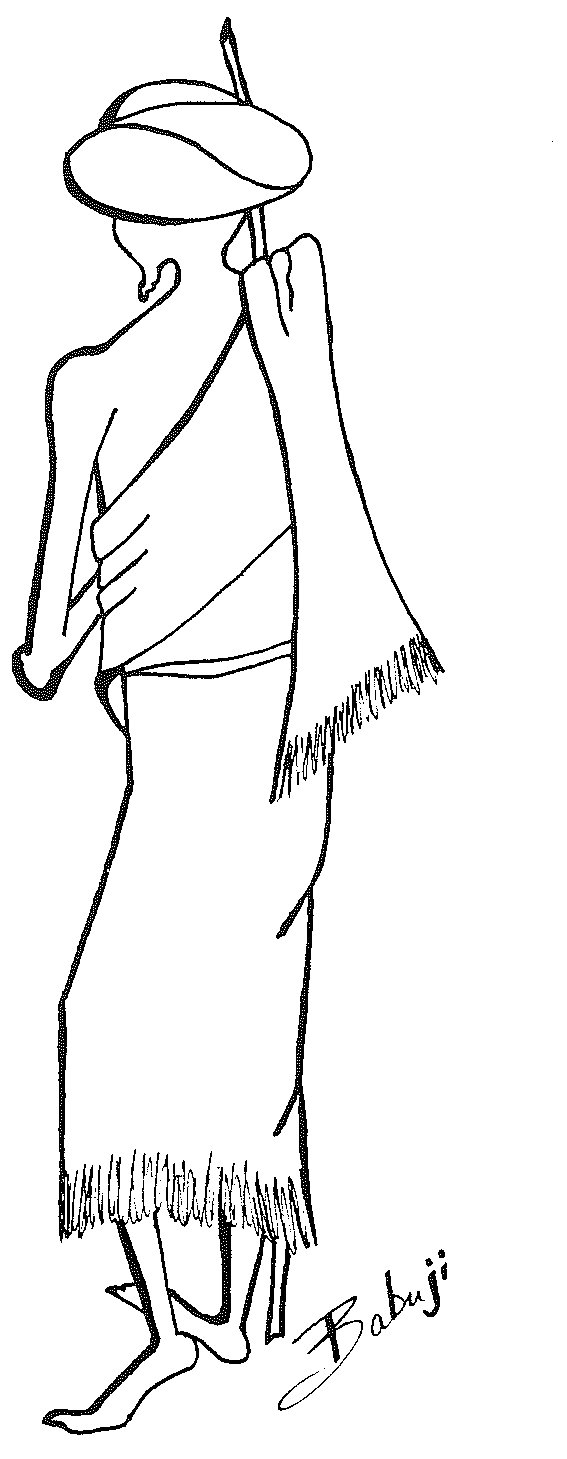
I remember his eyes, calm and steady as they gazed through the bottle-bottom spectacles. When he looked at you, you did not see the wrinkled face or the dusty, once-white rags that fluttered from his emaciated limbs.
In another incarnation he might have been a miniature St. Nicholas but, in this existence, he was an old story-teller, begging out his life streets of New Delhi.
He was a tiny man, shorter than my five foot two, fragile-looking under his load of cloths. His garments could hardly have been called clothes, yet they wrapped him round in familiar comfort; garments by day, bed clothes by night.
He carried a small bundle, a bamboo walking stick and a black umbrella. The bundle contained his life’s possessions, the stick gave steadiness to his faltering steps, and the umbrella provided a roof against the sun and rain.
He was waiting for me one day, sitting quietly on my front steps. Usually the gate to our yard was locked so that beggars could not wander in off the streets. I went over to shoo him away and instead brought him tea — hot, milky, and full of sugar – the way old men like it. In doing so, I knew that I was only encouraging him to return but I had not the heart to refuse such a small thing to someone with such a tenuous hold on life.
Inevitably, he returned. This time my young sons were in the garden and, certain that at the very least he carried lice and tuberculosis, I hurried to bring them inside.
They were seated on the steps at his feet, enthralled by his words. The language was irrelevant. Only their eyes moved as he unfolded the tale of Humayun, the monkey god, and his search for his beloved Sita in soft, fluid Hindi, a language of which they barely knew a smattering of phrases.
Once again, instead of sending him away, I went inside to see to his tea.
He accepted the tea and some small coins with a slight nod of his head. This was no hand-out; he had rendered his service in the telling of the tale and the payment was his due.
He was a regular visitor during the remainder of our stay in India. It did not seem necessary to leave the gate unlocked for him and, although I watched, I never saw him enter the grounds. I would find him resting patiently in the shade of our porch until someone took notice of him.
If the boys were not there to provide him with an audience, he told his stories to the canna lilies so that the tea and the coins could never be called chairty.
I do not regret the coins or the endless cups of sweet tea; however, I will regret forever that I never even asked his name.
View the original scanned pages →
Originally published in bout de papier, Vol. 6, No. 1 (1988) — Spring 1988 // Printemps 1988, p. 15. Read the rest of this issue →



