
bout de papier, Vol. 5, No. 4 (1988) — Winter 1988 // Hiver 1988, pp. 23–24
Members of the Canadian foreign service have, over the years, received many honours national and international. In the following articles, we look at two persons recently honoured in two different ways. Mark Schacter prepared a piece on Sylvia Ostry on the occasion of her receipt of the highest award available within the Canadian public service. And Arthur Menzies reviews a recent publication of memorial essays in honour of the late Genji Okubo, a scholar/ translator/analyst in the Canadian Embassy in Tokyo for thirty-five years.
Sylvia Ostry
On December 9, the Governor General presented Mrs. Sylvia Ostry, Ambassador for the Multilateral Trade Negotiations and the Prime Minister’s Personal Representative for the Economic Summit, with the Government of Canada’s “Outstanding Achievement Award” highest honour given within the Canadian public service. The award recognized the achievements of a career spanning twenty-two years in the public service, from her appointment in 1965 as Assistant Director of the Labour Division at what is now Statistics Canada to her current post as a Deputy Minister in External Affairs.
As a senior Canadian and international bureaucrat, she has made outstanding and lasting contributions in the fields of statistical analysis, economic policy and international trade relations. Equally, Mrs. Ostry’s achievement is marked by the personal impact she has had on her colleagues, who are quick to recount her freshness, energy, commitment and intellect. Between 1972 and 1975 she was Chief Statistician at Statistics Canada, where, according to Ivan Fellegi, who eventually succeeded her, she influenced the agency’s statisticians to overcome “a tendency to regard themselves as uninvolved technicians. She urged them to be aware of social issues, and to respond with data and analysis.” In 1975 she became Deputy Minister of the Department of Consumer and Corporate Affairs, and oversaw intensive work on intellectual property law and competition policy. During 1978/79, she was Chairman of the Economic Council of Canada.
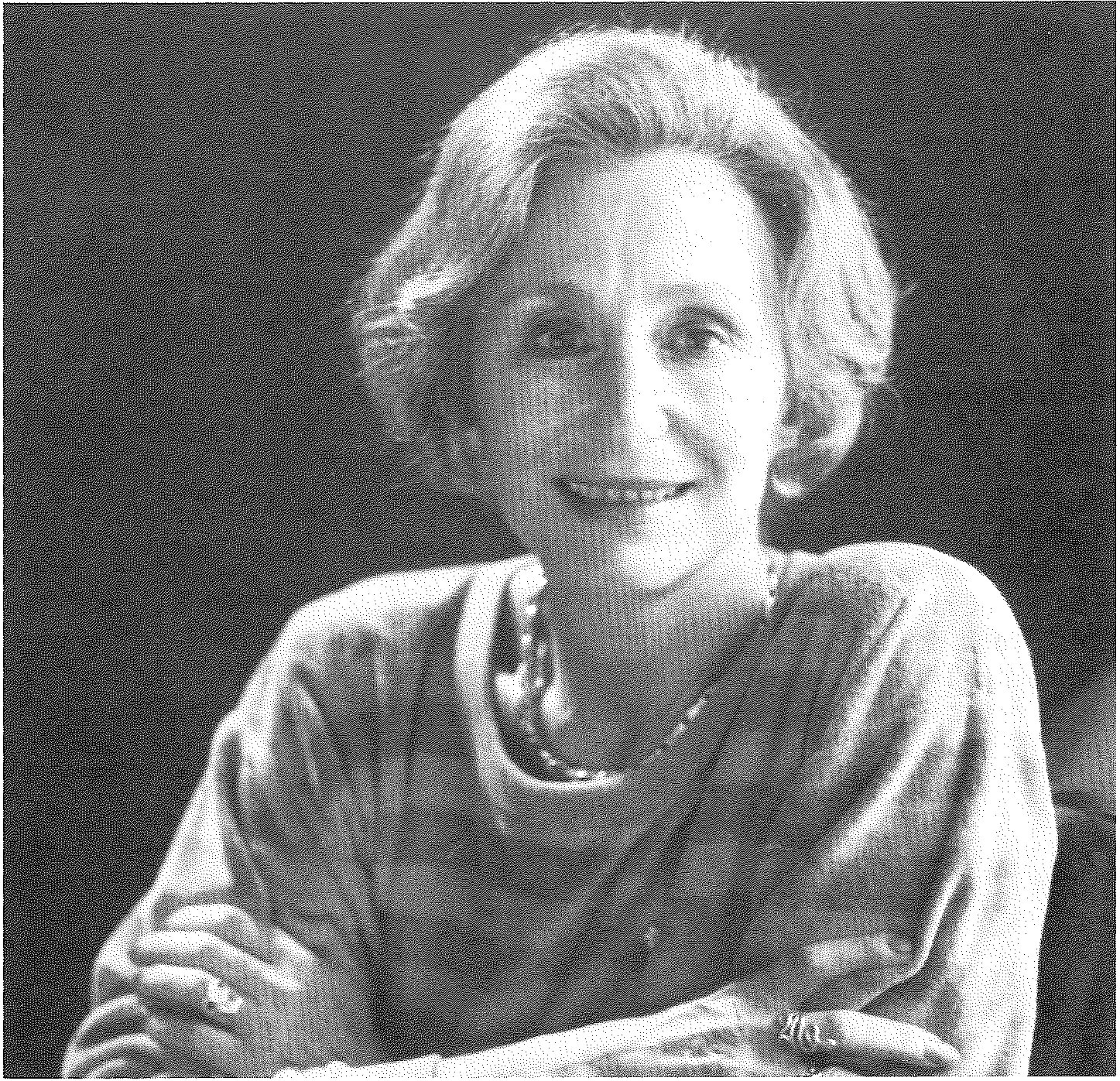
In 1980 Mrs. Ostry moved to Paris to become head of the Department of Economics and Statistics for the Organization for Economic Cooperation and Development. Responsible for producing the OECD’s widely-regarded economic forecast, she concentrated on making it more relevant to the needs of policy-makers at a time of increasing economic volatility. She also focussed attention on the need for economic policy coordination among the major Western countries. “Sylvia’s contribution to international cooperation cannot be measured in traditional terms,” said Jean-Claude Paye, the Secretary-General of the Organization. “All of us in the OECD — Secretariat and member countries alike — are in considerable debt to Sylvia Ostry.”
Mrs. Ostry joined the Department of External Affairs in 1984 as Deputy Minister of International Trade, and moved the following year to her present post. As Ambassador for the Multilateral Trade Negotiations, she is steering Canada through the Uruguay Round; as the Prime Minister’s “Sherpa”, she is currently preparing the groundwork for the Toronto Economic Summit in June of this year. “As a fellow ’Sherpa’, I can vouch for Sylvia as a friend and companion when it comes to scaling summits,” said Sir Robert Armstrong, Secretary to the British Cabinet. Clayton Yeutter, the United States Trade Representative, described Mrs. Ostry as “Canada’s living national treasure in the field of economic policy.”
In September, 1987, Mrs. Ostry delivered the prestigious Per Jacobsson Lecture on the occasion of the International Monetary Fund/World Bank Annual Meetings in Washington. The first speaker in the 23-year history of the lecture to be invited to talk about the multilateral trading system, she argued that the Uruguay Round comes at a period of unique transformation in the world economy. The outcome will affect growth, exchange rates and debt. She urged governments to seize the opportunity to strengthen the General Agreement on Tariffs and Trade (GATT) and its role in multilateral decision-making alongside the IMF and the World Bank.
Mrs. Ostry is an Officer of the Order of Canada. She holds honourary doctorates from seventeen universities and has published more than eighty papers and reports on economics and related subjects. She is married and has two children.
Genji Okubo: Japanese Scholar
Local employees of posts abroad are the unnamed stage hands supporting Canadian diplomatic actors whose names appear in the programme notes. It was gratifying, then, to receive a small volume entitled Remembrances of Okubo Genji, a book of forty commemorative essays by Japanese, Canadians and Americans attesting to the scholarship and human qualities of one who served the Canadian Embassy in Japan for thirty-five years. Genji Okubo died in 1986 in a car accident.
When I went to Japan during the Occupation in 1950 to succeed Herbert Norman as Head of the Canadian Liaison Mission, Okubo had already been on the local staff for a year as a translator/analyst. He was a shy, bespectacled, chain-smoking researcher, just the sort of anonymous local employee who might be used and forgotten. But behind his self-effacing manner I found a man of shrewd intelligence, well connected with Japanese scholars and politicians and able to present orally or in writing insightful comments on Japanese politics.
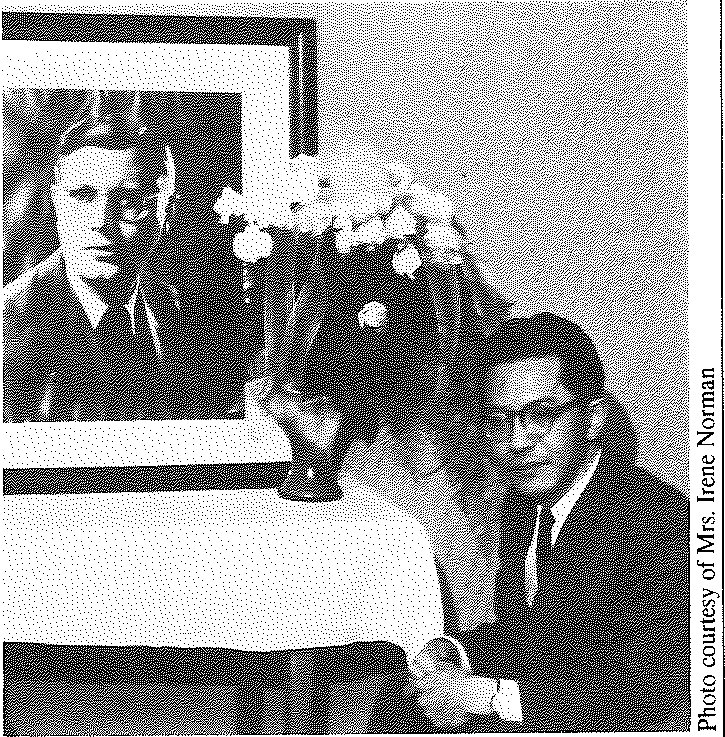
Okubo had specialized in English at university and in 1938 became a translator in the Japan Council of the Institute of Pacific Relations, a federation of national councils (C.I.I.A. in Canada) formed in 1925 to examine common problems of the Pacific Rim. The Japan Council was dissolved by the military in 1943, revived in 1945 and came under attack in 1951-52 by the McCarthy Committee in the United States. It was Okubo’s plan to write in retirement a history of the Japan I.P.R.
It was the I.P.R. connection that brought Okubo into contact with Herbert Norman, whose ground-breaking study of “Japan’s Emergence as a Modern State” had been published by the I.P.R. in 1940. Okubo began translating this study into Japanese after the war, and it was published in 1947. When Norman went to Japan late in 1945, first to work with the Occupation authorities, and then in 1946 as Head of the Canadian Liaison Mission, he found Okubo an erudite collaborator in his research into modern Japanese history. Okubo became the favoured translator of Norman’s books. Finally, in 1977, Iwanami published Okubo’s four-volume “Collected Works of E.H. Norman.” Okubo did this translation work on his own time.
Over the years, Okubo was “a willing professor to young (or old) Canadian diplomats willing to concede that they did not know it all,” according to John Saywell. Dick Gorham says that Okubo’s political commentary on individuals “was of great significance to me and constituted fascinating lectures on the Japanese scene.”
Okubo also played a significant role in the establishment of the Japanese Association for Canadian Studies through his contacts in Japanese universities and by ensuring that Canadian visiting lecturers got well launched. J.L. Granatstein describes him as “one of the few who were at the heart and soul of the Association.”
Canadian posts abroad have benefited from the services of many able and devoted local employees. It is gratifying that the scholarship and friendliness of one like Genji Okubo in Tokyo should be attested in a book of memorial essays.
View the original scanned pages →
Originally published in bout de papier, Vol. 5, No. 4 (1988) — Winter 1988 // Hiver 1988, pp. 23–24. Read the rest of this issue →



