
bout de papier, Vol. 5, No. 4 (1988) — Winter 1988 // Hiver 1988, pp. 51–53
Northern Development: The Canadian
Dilemma, by Robert Page, Hollinger House,
$29.95.
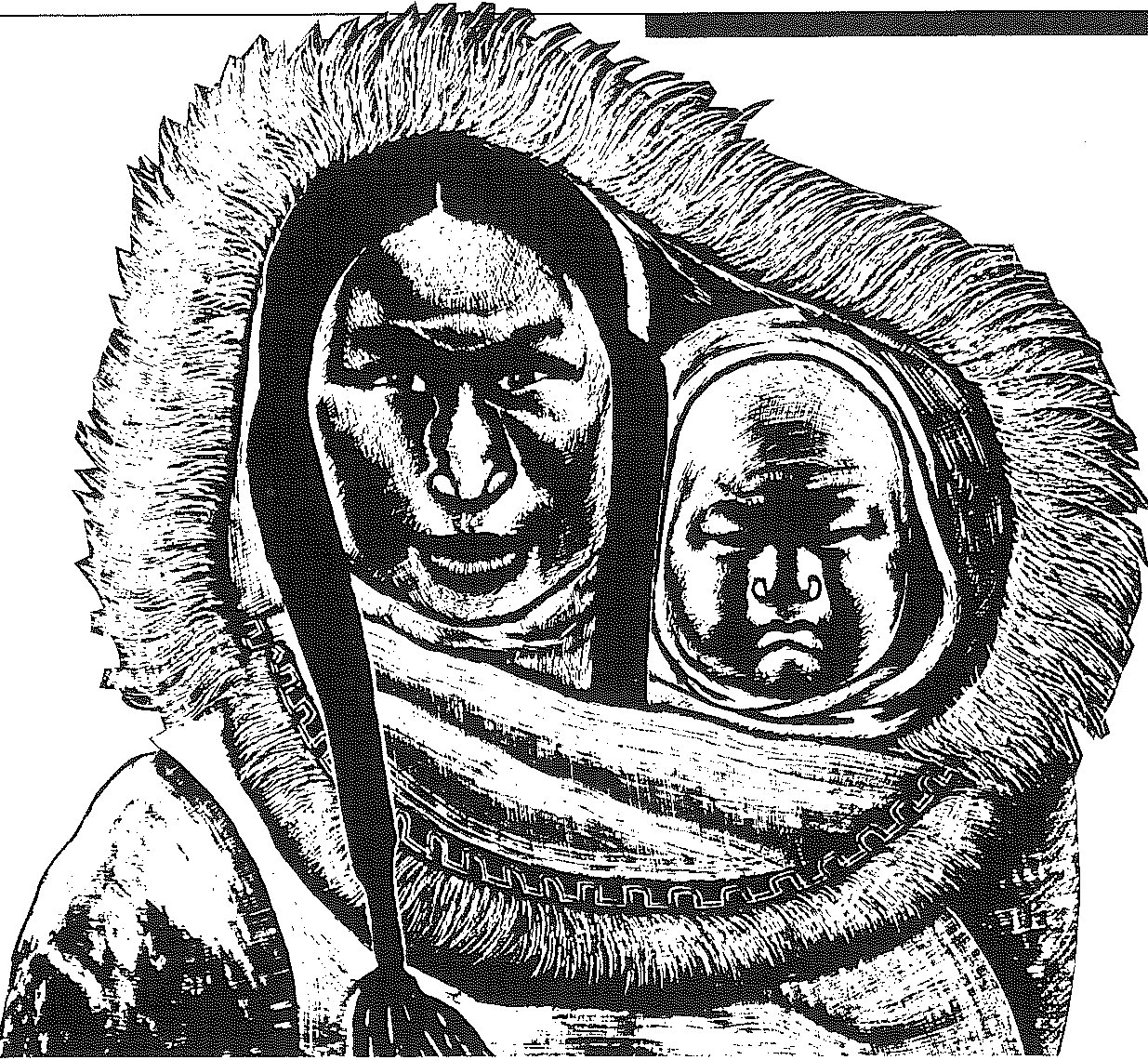
Robert Page, professor of History/ Environmental Studies at Trent University, explores in his book one of the key characteristics that makes Canada what it is: its northernness, or ’nordicity. The dilemma Page sees is in the dual attitude of Canadians toward the north, “a powerful mixture of romanticism and greed”. Our romanticism is directed at the aboriginal inhabitants of the territory; our greed is occasioned by its immense natural resources.
Along the way to explaining this dilemma and what it has led the Canadian government to do with respect to northern public policy, Page explores a number of issues that have emerged in response to southern Canadian desires to develop the resources of the north.
Pipeline building and northern economic development in general, environmental/ ecological concerns, aboriginal rights and the living conditions of aboriginal peoples, and the place of Canada vis-à-vis other Arctic nations are all discussed carefully and in a highly readable fashion in this book. Not least important in the volume is the thread of sovereignty and the actions of successive Canadian governments to lay claim to and to protect Arctic lands and waters.
It may come as a surprise to many readers to note that sovereignty over the Arctic had been a focus of public attention long before the transit of either of the American ships Manhattan or Polar Sea. Despite the strong romantic attachment of Canadians to “exotic wildlife and heroic native peoples” that flourished during the era of the great Arctic explorers such as Franklin, Vilhjalmur Stefansson and others, it never translates into bold policy making on the part of the Canadian government. According to Page, after Canada acquired the high Arctic islands in 1880, it “did nothing to establish [its] sovereignty by any effective presence in the area.”
When the discovery of gold in the Yukon in the 1890s engendered the fear of an American takeover, “following the British imperial tradition, [Canada] sent in a paramilitary police force and a bureaucracy”. And despite extreme embarrassment in Ottawa at the widely publicized misdeeds of early American whalers in the Beaufort Sea region, inaction was the order of the day at the turn of the century. Page explains the failure of the Laurier government to act decisively on behalf of Canadian interests in the Arctic as due to Laurier’s fear that boldness might provoke American concern where none existed before, and his conviction that Great Britain would not intervene on Canada’s behalf in any dispute with the U.S.
What strikes the reader in all of this is how terribly familiar it sounds, the fear of waking the sleeping giant. To be charitable there has been consistency, at least, in Canadian responses to American actions and initiatives in the Arctic. There is always a rationale for hesitation — Laurier feared unduly raising American concern, Trudeau worried about the critical import of American oil, while the Mulroney government simply refused to admit that there was any challenge to Canadian sovereignty. The “para-military police force and a bureaucracy” still linger, each one as ineffectual as the other —the widely scattered Inuit armed with aging Lee-Enfield rifles, and a growing number of federal departments and the burgeoning territorial civil service.
In Page’s mind the disputes over the north have centered as much on ecological concerns as on social or political matters such as aboriginal cultural survival or sovereignty. The bulk of Northern Development is an analysis of two landmark sets of public hearings that have shaped northern public policy for more than a decade. The Mackenzie Valley Pipeline Inquiry was known as the Berger Inquiry after its chairman, Justice Tom Berger of British Columbia. He made Canadians aware that the northern regions are populated by intelligent, determined people. Page selects excellent quotations from witnesses’ testimony to illustrate the attachment of the Dene to their homeland, and their traditions, as well as their clear recognition of the threat posed by unrestricted southern-dominated exploitation of their natural resources. The Inquiry also made Canadians aware that the north’s ecological character was such that it could be irrevocably devastated by conventional oil and gas activity, including the building and operation of transmission pipelines.
The National Energy Board’s hearings on the technical aspects of the competing pipeline proposals were much less a public concern, but the environmental interest raised at the Berger Inquiry spilled over to the NEB hearings. As environmentally-oriented organizations formed in response to the northern pipeline issue, and as other groups took up the environmental cause, the NEB hearings were forced to pay scrupulous attention to environmental evidence.
Page makes his account of the latter hearings interesting to the lay reader with no particular knowledge of construction, the effects of severe Arctic climatic conditions on building techniques, and so on. Page examines the personalities and attitudes of some of the key figures involved in both sets of hearings, giving us a hint of the flavour of the proceedings — the emotions stirred by the eloquent aboriginal witnesses, the anger of some of the pipeline proponents, the frustrations of some of the environmental intervenors. He discusses, too, the political machinations, the ‘hidden agenda’, of a federal government determined in advance to make the pipeline happen.
Perhaps the volume’s greatest strength is its insightful analysis of the emergence of public interest groups and the significant role that they played in the hearings that pondered the future of the north. Page traces the intellectual origins of such groups as the Canadian Arctic Resources Committee, with its dual emphasis on the northern environment and the need to consider a ‘national interest’ in northern resource development, and the more nationalist Committee for an Independent Canada with its important representations at and about the hearings.
The environmental movement captured the attention of Canadians in the 1960s and 1970s, according to Page, attracting those with an interest in parks and conservation, and adding weightier philosophical questions about economic growth and the ultimate ecological future of our planet. This movement drew together usually disparate groups representing most of the political spectrum. It played upon the disaffections of Canadians with ‘big government’ and an unresponsive, remote civil service. It attracted, too, those who feared big business and its isolation from ordinary people. In addition, it contained a strong undercurrent of the desire for social justice, and northern aboriginal peoples quite naturally became a focus of environmentalists’ concern.
Page notes somewhat ruefully that as national attention has been diverted from the north, so too have the public interest groups waned. His analysis of the historical roots of the “politics of ecology” is not to be missed, nor his linking of environmental concerns with foreign policy, as he points out that through environmental instruments such as the Arctic Waters Pollution Prevention Act, Canada seeks to protect the national interest by negotiating agreements with other nations, rather than directly challenging their intrusions into territory Canada regards as its own (the Trudeau government’s somewhat late response to the voyage of the Manhattan).
Finally, Page pleads persuasively for Canada to base its Arctic policies on the recognition that our northern region is but one segment of a circumpolar whole that forms a more or less integrated ecological unit while comprising several national entities. Impacts on one region are usually subsequently felt in one or more of the other parts of the whole (as the world learned after the incident at the Chernobyl nuclear installation at Kiev). For Page, “the only effective means of environmental protection is through international law, diplomacy, and cooperation,” and while there is movement in that direction there remain some difficult political barriers.
With growing strategic interest in the north bringing in more equipment and increasing traffic on the seas, there is more likelihood of an accident that will devastate the northern ecology, and for this reason Page calls for the second layer of co-operation, that is, in the realm of scientific and technological research. Page argues that Canada must do its part to assure that the “competitive economic rivalry of the current scene” is displaced by cooperative effort. “A balance of power at the lowest level of military activity, plus economic, scientific, and environmental cooperation, appears to be central to Canadian interests in the Arctic.” Page suggests that there be a close examination of the Nordic countries and Iceland that, despite many differences, have made their commitment to regional stability paramount. He issues a challenge to federal departments, most notably External Affairs and Defence, to consider a thorough review, subsequent overhaul, and realignment of responsibilities. To anyone interested in the recent history of the Canadian Arctic and in its future, this volume should be required reading.
View the original scanned pages →
Originally published in bout de papier, Vol. 5, No. 4 (1988) — Winter 1988 // Hiver 1988, pp. 51–53. Read the rest of this issue →



