
bout de papier, Vol. 5, No. 4 (1988) — Winter 1988 // Hiver 1988, pp. 48–50
Monty the Field Marshal, 1944-1976 by
Nigel Hamilton, Penguin Books Canada
Limited, approx. 800 pp. $35.00.
Hamilton’s third volume — Monty the Field Marshal 1944-1976 — is long (almost 1000 pages) and often filled with detail that could easily have been omitted. From the mass of data it is nonetheless possible to paint a fairly clear picture of Montgomery as a man and as a professional. Montgomery is painted by Hamilton as a flawed man who never really fully developed. As a professional soldier, Montgomery is cast as the equal of Nelson or Wellington. The comparison with Nelson is perhaps the most apt as he served and died as a superlative fighting commander, before being called to perform as a “military statesman”
The fighting Montgomery likely had no equal among the World War II allies. After the war, as a Whitehall warrior and as a supreme commander, the Field Marshal came very close to destroying his wartime reputation. If nothing else, Hamilton’s book offers eloquent support to the Peter Principle.
The first part of this book deals with the final year or so of the war and begins with Monty’s promotion to Field Marshal on September 1, 1944. It chronicles in often painful detail both Montgomery and Hamilton’s view of the Supreme Commander (Monty’s boss, U.S. General Dwight Eisenhower) as the fuzzy armchair general who never commanded a major unit in war.
Only rarely is Monty seen to acknowledge that Eisenhower had a range of concerns involving dozens of countries that made clear-cut strategic decisions of the type he demanded as almost impossible to give. Monty effectively lumped together Eisenhower with the U.S. generals (especially Omar Bradley) who, like himself, commanded Army Groups and condemned them as professionally inadequate. Relations with his U.S. colleagues were kept going because he realized that only the American Army was capable of winning the war and by the efforts of his very effective – and later discarded — Chief of Staff, Major General de Guigand.
Hamilton properly emphasizes that Monty’s relations with the Americans were made much worse than they might have been by the fact that he was almost always correct in his strategic judgements. A case in point concerns Eisenhower’s decision to advance across the whole front instead of, as advocated by Monty, concentrating the Allied effort and taking Berlin. As a result, the ending of the war was likely delayed, Berlin was taken by the Soviets and the shape of Europe altered likely forever.
Having noted one of Montgomery’s major shortcomings — a highly developed inability to get along — it is only fair to comment on the other side of the coin. As Hamilton repeats throughout his book, Montgomery’s strong point was his ability to think through and solve the military problems that faced him. He nurtured this skill through a lifetime of determination to delegate details to others, to insist upon excellence in his subordinates and to show a concern for the average soldier that did much to soften his austere personality. Hamilton provides example after example of Montgomery’s unassailable analysis of a problem and of its solution. Regrettably, he had also to note the Field Marshal’s almost total inability to transfer this great wartime advantage to the peacetime tasks that were given to him.
His first post-war job was as Military Governor of the British Zone of Germany and as member of defeated Germany’s governing body – the Allied Control Commission. Both required a mix of military and diplomatic skills. Controlling and feeding the Germans caused Montgomery no problem at all. However, dealing cooperatively with the other controlling powers — the USA, the USSR and France — proved to be beyond his skills. He seemingly could not accept that other than straightforward practical concerns should be considered in decision-making. With the USA increasingly conscious of its leadership of the West, with the Soviet Union acting like the Soviets again and with the French being French, it is not difficult to imagine why Montgomery began to yearn for the army’s top job in the UK – Chief of the Imperial General Staff.
In foreign service terms, Montgomery was a superlative senior ambassador who, once esconsced in headquarters, was not able to comprehend, yet alone accommodate, the competing pressures emanating from a hundred different sources. Monty had a very clear idea of what he wanted to accomplish as CIGS — essentially to transform every element of the British Army in line with his vision of what was required to meet the new threat he saw on the horizon. Unfortunately, his vision took into account neither the U.K.’s much reduced post-war condition nor Prime Minister Attlee’s disinclination to be lectured on the shape of the world to come. Relations with the Navy and the Air Force reached a point so low that the defence of the realm was at risk. Yet, in the Field Marshal’s mind, it was never he who was in error but always someone else. Notwithstanding the above he did make one lasting contribution as CIGS — he foresaw the need for an integrated Western defence. And he cajoled and bullied the U.K. Government into championing the cause of what was to become the Western Union.
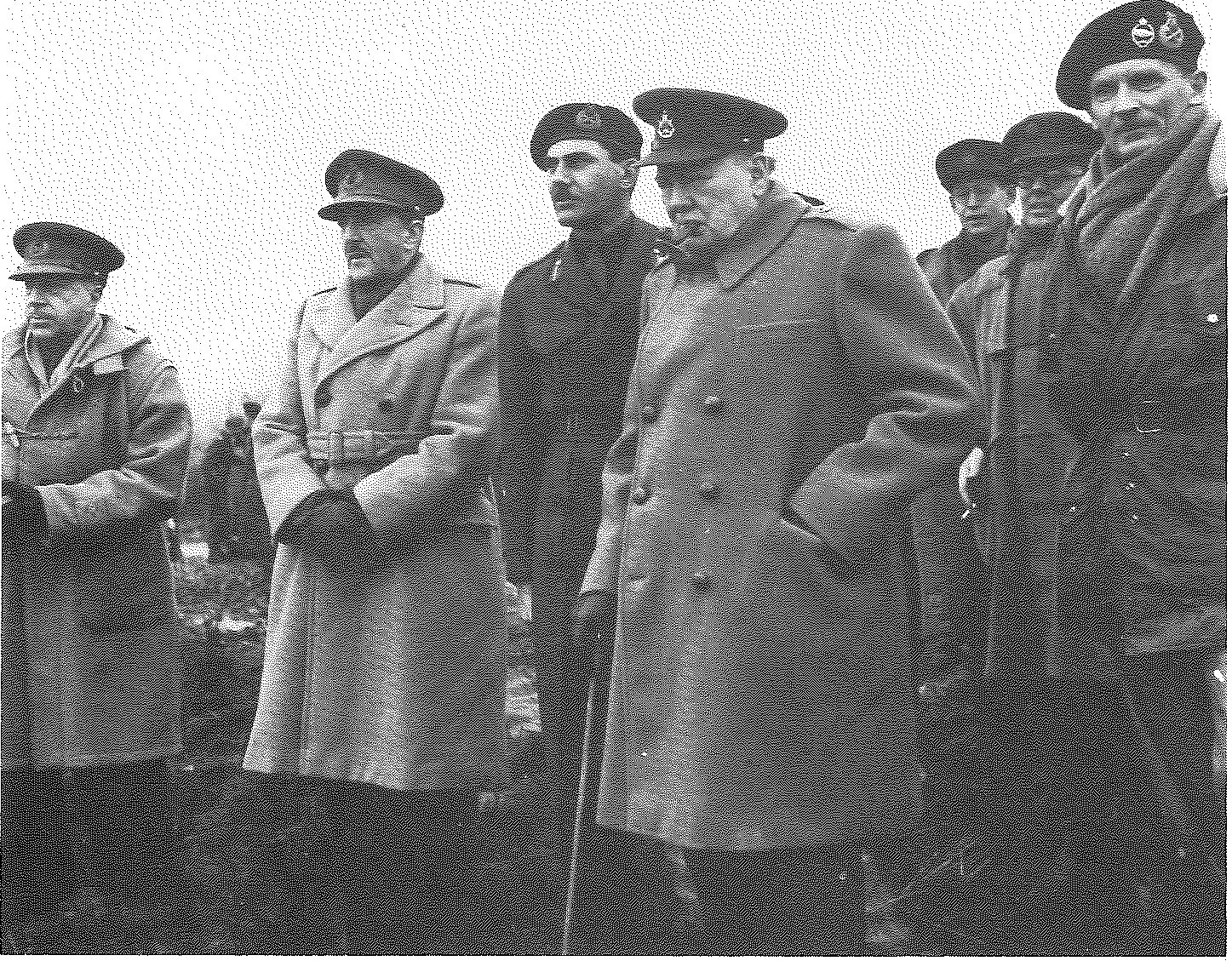
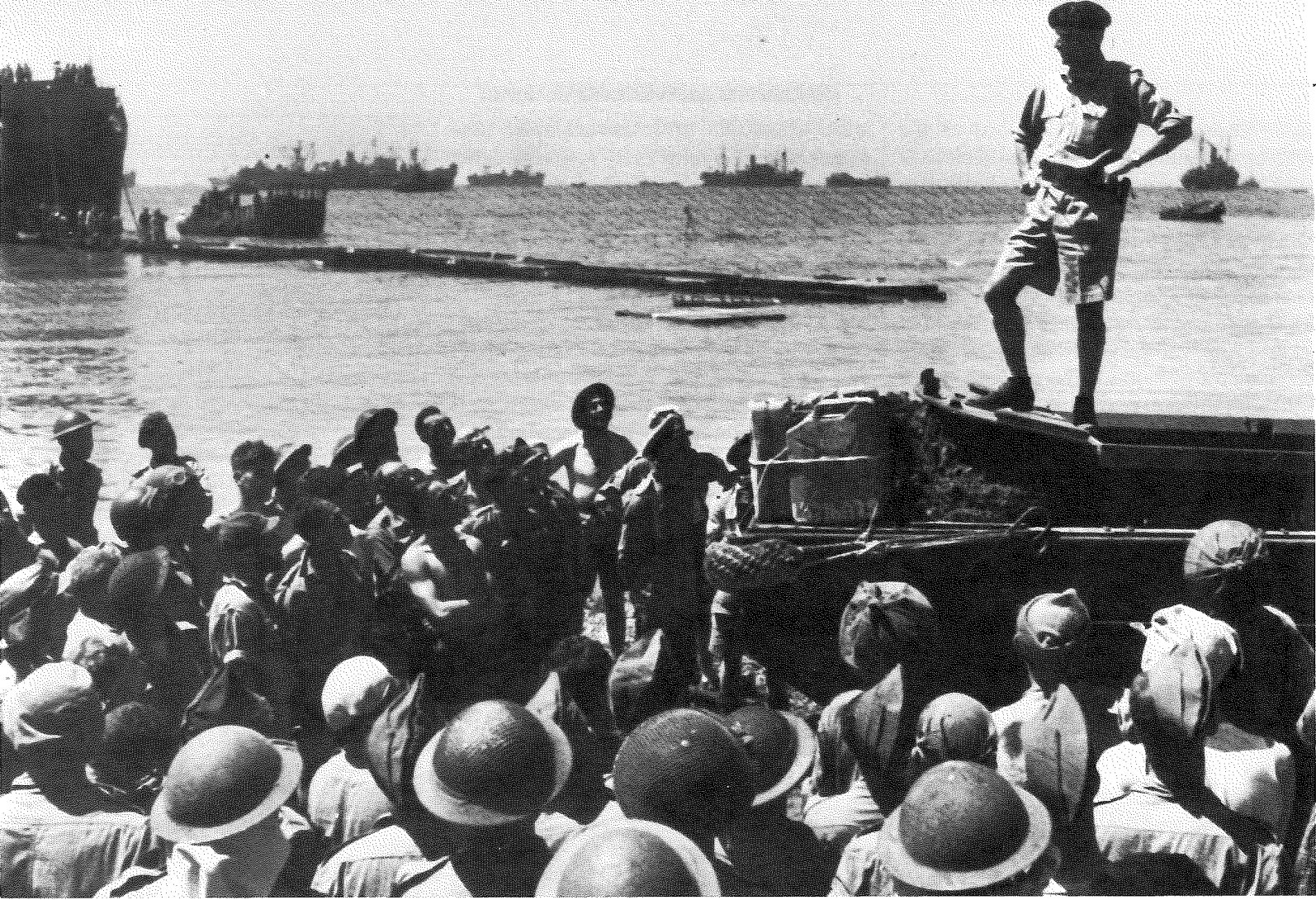
After his service as CIGS, when at least he could exercise direct command over the British Army, Montgomery was appointed Chairman of the Western Union Commanders-in-Chief Committee where he commanded not even the land, sea, and air C-in-Cs on his Committee. The Western Union was a bit of an embryonic NATO without the United States and Canada that had been set up to deal with the reality of a wartime ally’s newly found belligerence — on the other side of what Churchill was shortly to call the Iron Curtain.
Western Union, Monty’s job was to encourage co-operation between the military forces of the member states while convincing the governments of those states that the Soviet threat was a real and pressing one which only a strong and united European response had the slightest chance of resisting effectively. For these tasks, Montgomery was singularly ill-suited. His entire professional life had been dedicated to analyzing problems and then taking the required action. As the chairman of a committee of senior commanders over whom he did not exercise command, where diplomacy, timing and persuasion might have worked, the Field- Marshal’s bullying served largely to enrage those he was trying to bring along to his way of thinking. Indeed, the one clear positive result of his term was to convince everyone that NATO’s military structure required a supreme commander not a committee. As a direct result, SACEUR today heads NATO’s military structure.
Monty’s term ended as the Western Union became NATO with Eisenhower as Supreme Commander and Monty Deputy Supreme Commander. Given Monty’s views of Ike’s accomplishments as wartime supremo, it is no small an indicator of how much he had come to accept the U.S. lead position — and how much he had mellowed — that he was delighted with his assignment. Monty had accepted that he could no longer command and that he should, under Eisenhower, become the thinker and cajoler that NATO needed. Yet, he quarrelled with Eisenhower’s successors and like many “old soldiers” did not really recognize when it was time to go.
His retirement was livelier than most — his memoirs being no less controversial than the years he was describing. His recounting of the war years with Ike resulted in a final break with the man who had become U.S. President. In a way, that break symbolized much of Montgomery’s life: being right and being hated for it. As a human being, Montgomery certainly proved that great people have flaws like everyone else. As a fighting general, he was likely unequalled in this century but as a commander required to consider other than purely military factors and to deal with other than pliant political masters he was the wrong man, at the wrong place, at the wrong time.
Hamilton’s book fairly paints Montgomery’s two sides. He does so with enough detail to please a student of history. With quick skimming of some chapters, the book Is a good read for all, it paints a picture not only of Montgomery but also of many of the historical figures who crossed his path.
View the original scanned pages →
Originally published in bout de papier, Vol. 5, No. 4 (1988) — Winter 1988 // Hiver 1988, pp. 48–50. Read the rest of this issue →



