
bout de papier, Vol. 5, No. 4 (1988) — Winter 1988 // Hiver 1988, pp. 27–31
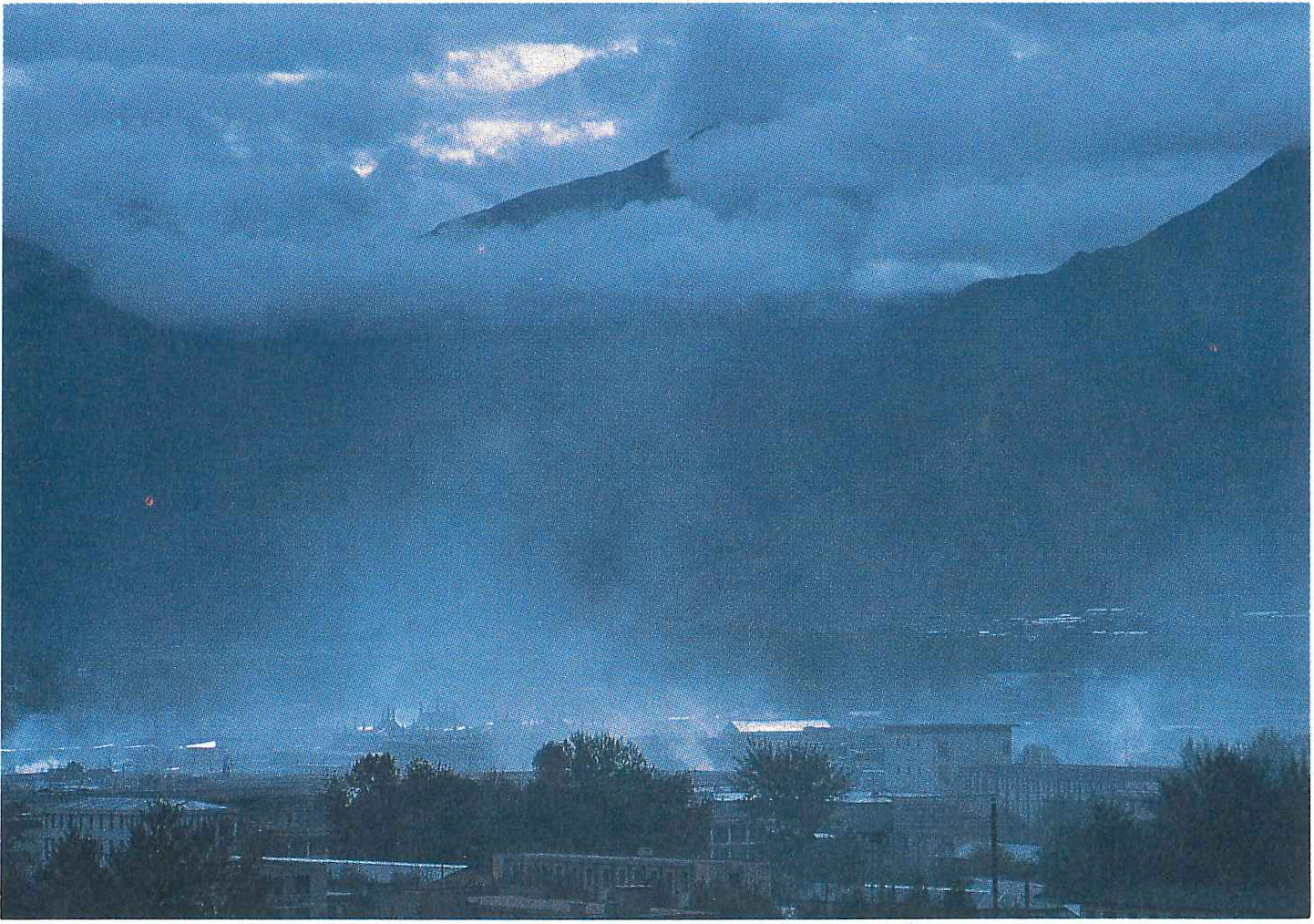
It was dark in the early hours of the morning in Tingri, Tibet.
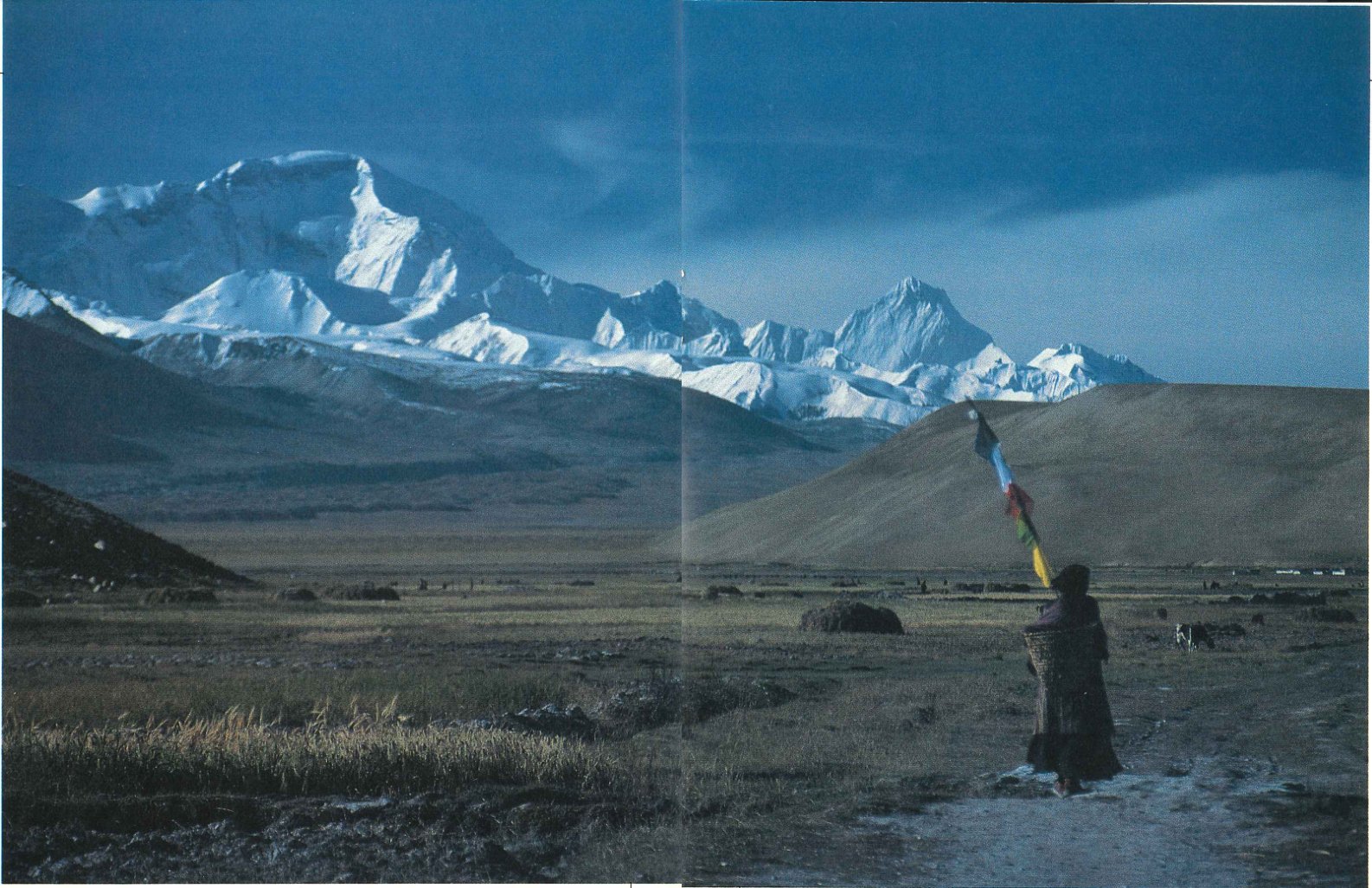
Tingri lies at an altitude 14,200 feet, just to the north of the main Himalayan range, commanding a clear view of the major peaks, including Everest, Menlungtse and the dominating peak of Cho Oyu. The Tibetan peasants of the village were just getting up in the crisp morning air and preparing to go out into the fields. Six of us travelling together from Lhasa have spent the night in one of the peasant’s spare sheds. It is below freezing, but two of us get up before dawn. We walk through the muddy fields towards a set of ruins on a grassy knoll a few kilometres south of the village in the direction of the major peaks. In a few days I will be sitting in my office at CIDA in Hull, working my way through a plethora of turgid bureaucratic documents. But, at this moment, life in the insidious confines of a bureaucracy seems like another world.
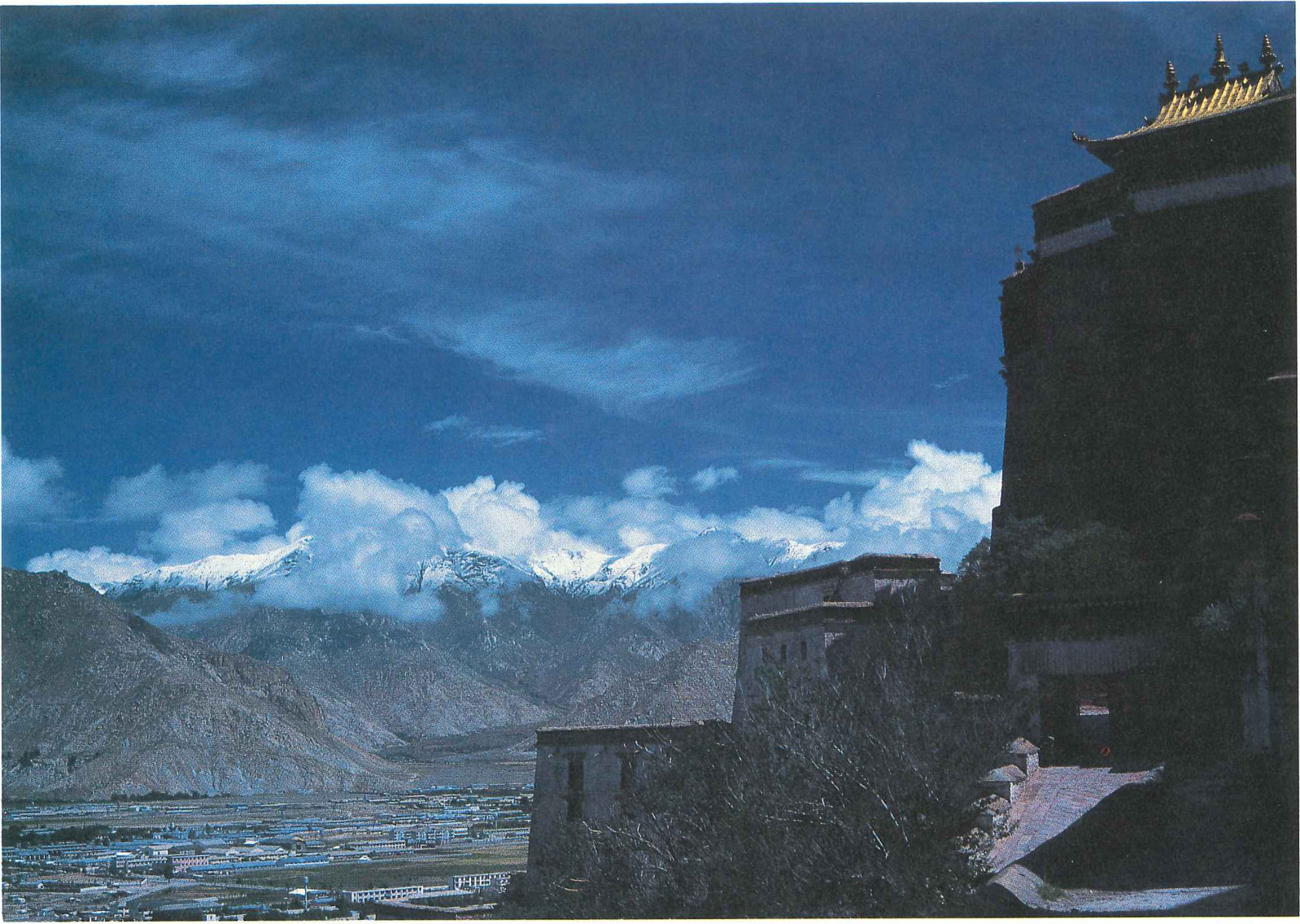
We stood for a long time at the ruins, now not more than a few pieces of rubble, looking at the peaks as the early morning sun first hit the top of Everest, then Cho Oyu, then Menlungste, then the lesser peaks of the central Himalayan range. Between Cho Oyu and Menlungtse is the Nangpa La, a 19,000foot pass leading to the Khumbu (Sherpa) region of Nepal through a great gap in the Himalayan range. The powerful array of gradually changing colours on the snows played out their full course for almost three hours.
It had been a few days since our small group left Lhasa. We had assembled together at one of the cheap lodges and negotiated for a vehicle to take us from Lhasa to the town of Zhangmu, close to the Nepalese border. Our route had taken us over several mountain passes, through the towns of Gyantse, Shigatse and the village of Sakya.
Although the towns had given us fascinating glimpses of the Tibetan way of life, nothing had prepared us for the natural grandeur which greeted us when we emerged onto the Tingri plain. This was our last day before leaving the plateau, and we lingered as long as we could before walking back to the village to take our vehicle the rest of the way to the border.
Leaving Tibet by way of Nepal was proving to be a far more impressive route than the arrival in Tibet through Qinghai. The route from the north took over 36 hours by bus from the industrial city of Golmud, crossing southern Qinghai and northern Tibet. The topography was bleak and desolate in the extreme. The mountain peaks of the Kunlun and Tanggula ranges (the two mountain ranges which are crossed on the journey to Tibet from Qinghai) are notable for their eroded, rounded shapes and glaciation. But otherwise, they are not inspiring, and much of the plateau is given over to scrub. The villages and towns along the way tend to be grubby truck stops. The towns and villages we had passed along the Lhasa to Kathmandu route were, by contrast, much more interesting, retaining at least some semblance of the old way of life. But it was the village of Tingri, right in the shadow of the high mountains, that fulfilled my romantic and idealized vision of Tibet.
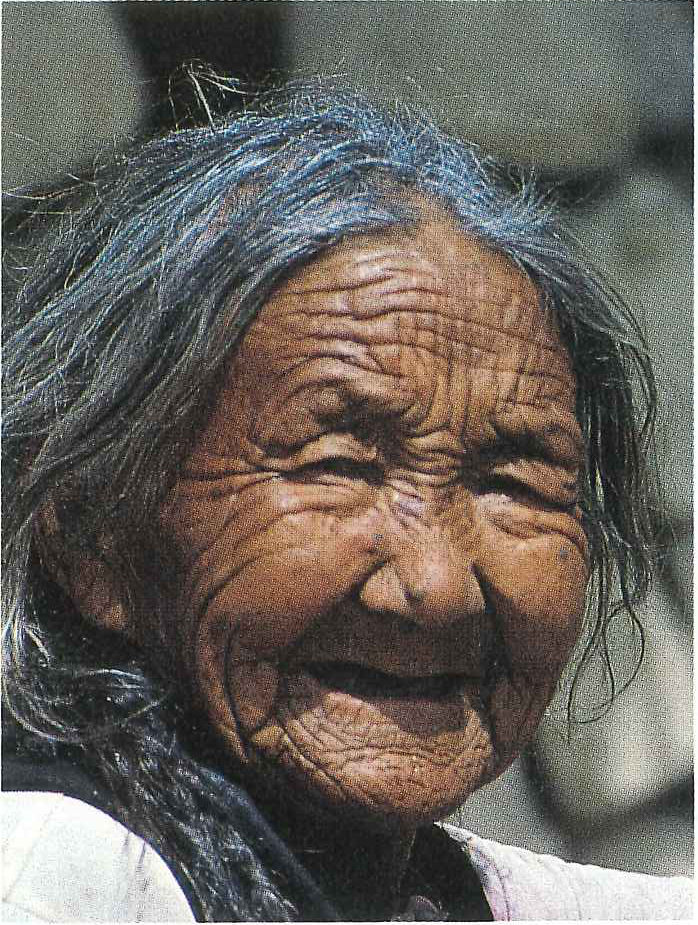
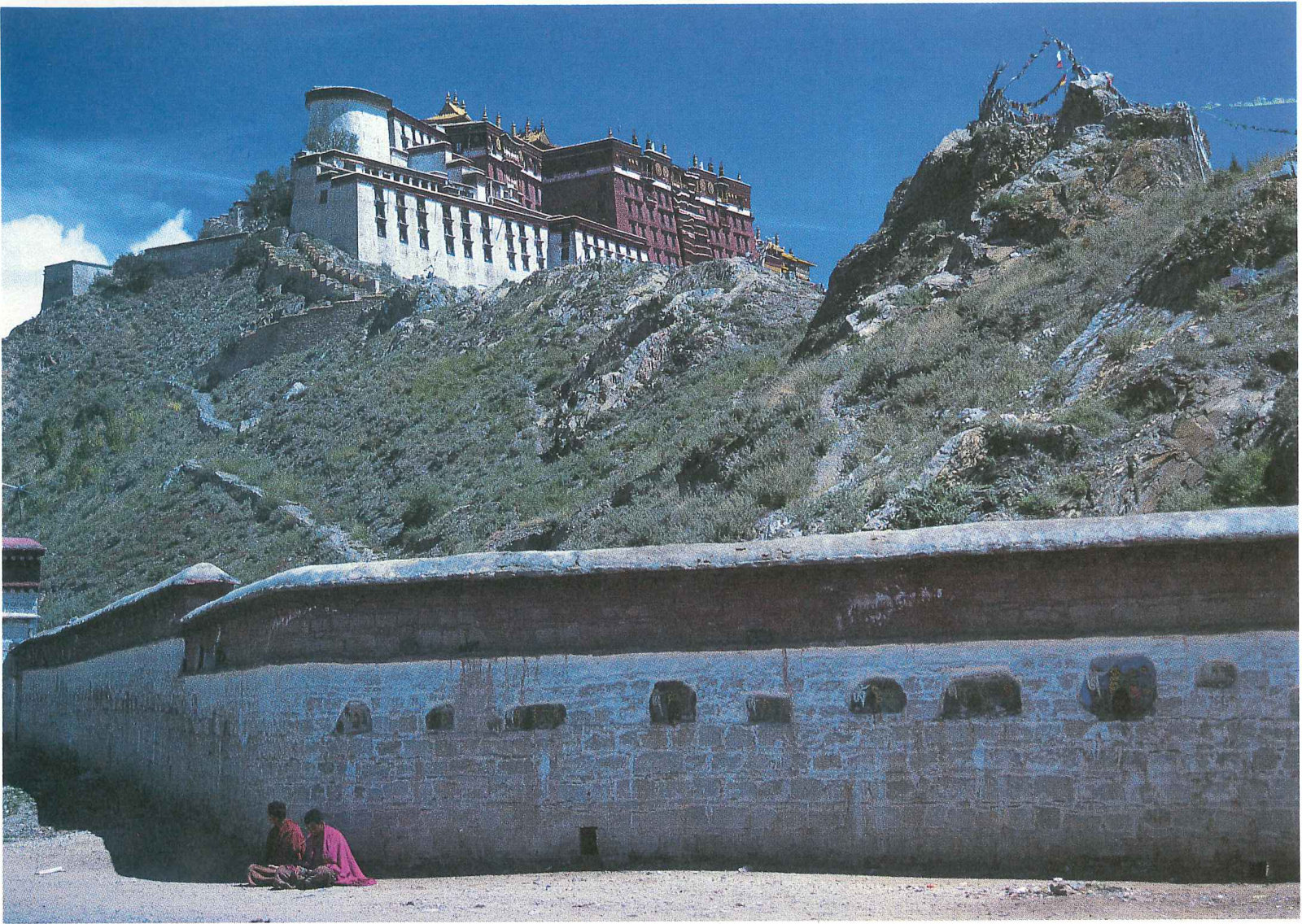
The marketing of Tibet’s spectacular landscapes and culture has now begun in earnest. Recent Chinese plans for tourism in Tibet are nothing if not grandiose. The talk is of as many as 250,000 tourists a year in Tibet in the late 1990’s. And, indeed, the current trends suggest that the potential is almost limitless. The number of visitors to Lhasa since the restrictions on entry were lifted exploded from under 1500 in 1984 to more than 30,000 in 1986. Much of the appeal to visitors has been Tibet’s hitherto off-limits status and aura of mystery.
It has, until very recently, not been easy to visit Tibet. The formidable natural barriers which had kept large areas of Tibet as blank spots on European maps were also supplemented in the 19th century by a conscious policy to keep out the intrusive element of foreigners. In time, Tibet became synonymous with the exotically inaccessible. A parade of European adventurers and explorers would make heroic and often futile attempts, frequently ending in death, to reach the holy grail of Lhasa. By the time the first tour groups entered Lhasa a few years ago, it was estimated that fewer than 1,200 Europeans had ever been to the city, including the 600-man British invasion force led by Francis Younghusband in 1904. The small trickle of adventurous foreigners who were able to make it to Lhasa in the first half of the 20th century, such as Heinrich Harrer, Peter Aufschneider, Lowell Thomas, Alexandra David Neel and others, dwindled down to nothing following the Chinese takeover in the early 1950’s. For almost three decades Tibet’s isolation from Western visitors was total.
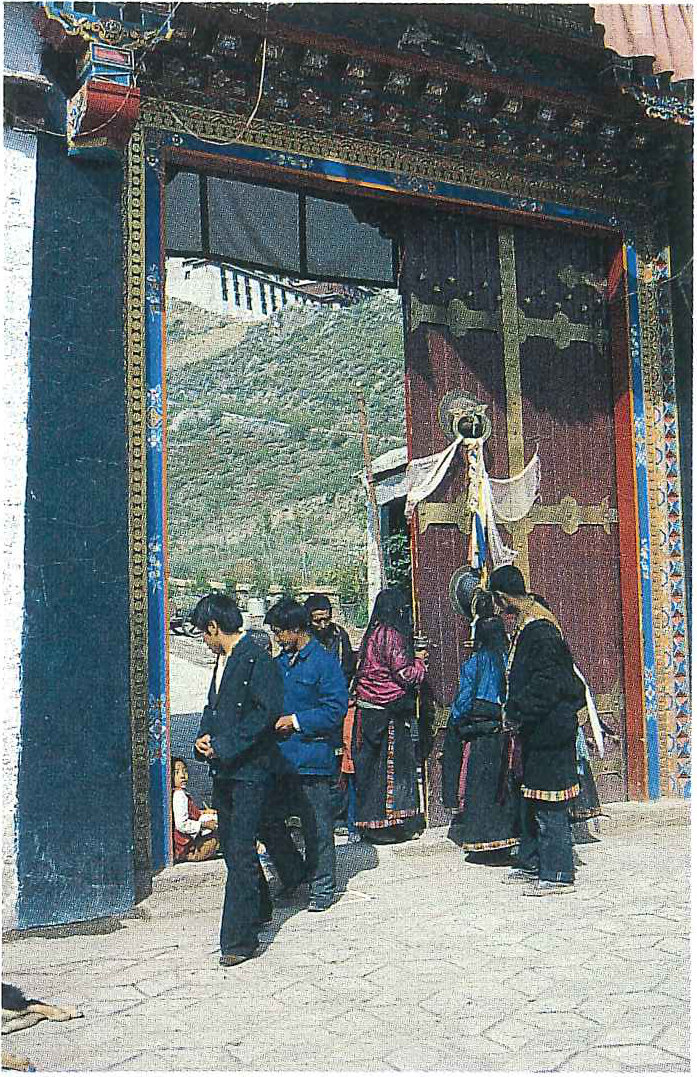
In the mid to late 1970’s, with China’s gradual opening to the West, the first cracks opened narrowly, and a few carefully chosen dignitaries were allowed to enter for a brief visit, often after extraordinary efforts to wring concessions from a conservative bureaucracy. Then virtually overnight in later 1979, price became the only barrier. The first high-priced tour groups started to come in 1980. Until 1984 the numbers were carefully kept in the range of 1,000 to 1,500 per year and then only on very pricy tours (although a few intrepid adventurers managed to sneak their way to Lhasa unofficially in 1982 and early 1983). In September 1984, Lhasa became open to individual travellers, and the lid was blown off. The travel regulations could be capricious from time to time, but basically the door to Lhasa was opened. Since then the only real problems have been logistical.
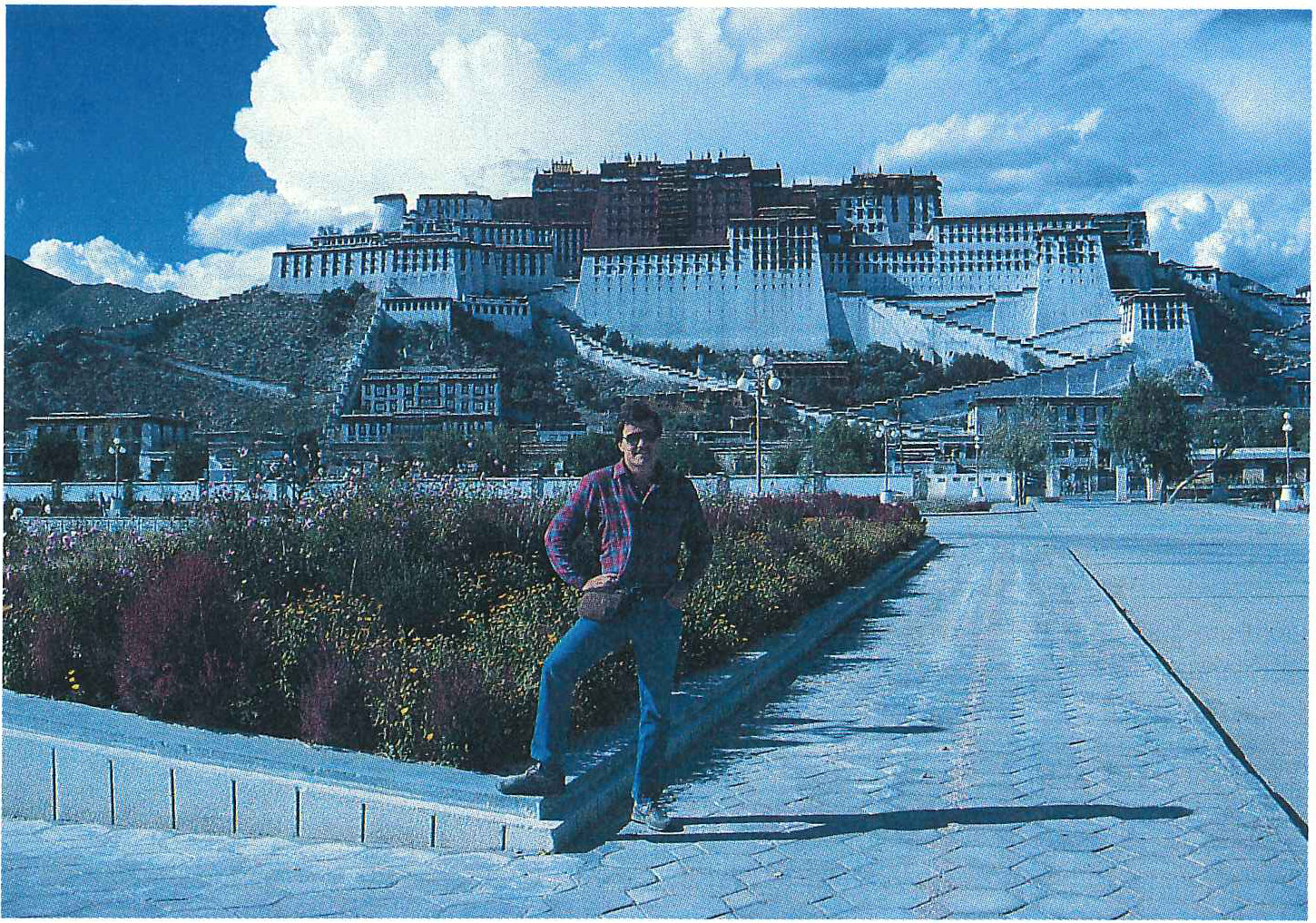
In March 1985 the land border with Nepal was opened to foreign visitors. In early 1986 all permit requirements (by then a mere formality) for Lhasa and towns along the route to Kathmandu were dropped, and the land route through Golmud was officially sanctioned. Flights from Kathmandu to Lhasa began in September, 1987. Even more unconventional routes, though not strictly legal, via Yunnan and Kashgar, are now being utilized by adventurous travellers. Thousands of visitors now descend upon the once forbidden city, particularly in the months of July and August. The Holiday Inn chain is running a large hotel in Lhasa, and tours to Tibet now appear in the travel sections of many Canadian newspapers and magazines.
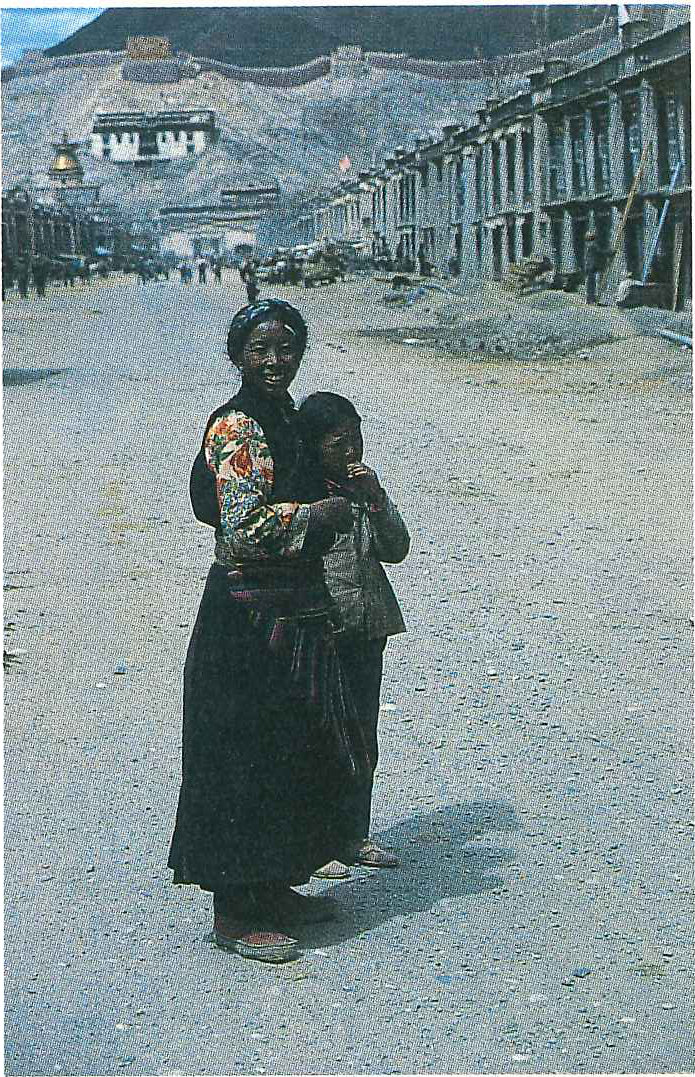
But modern-day Tibet is not the Tibet which existed prior to the 1950’s. Indeed, much of Tibet has a feeling of survival after a holocaust. A way of life which had existed for centuries underwent traumatic change. With only a few exceptions, the monasteries were destroyed, and the monks were killed, defrocked or forced to flee the country. There have been substantial changes in the administration over Tibet in the last seven or eight years, including a more relaxed attitude to religious worship. A feverish campaign of rebuilding and repairs is going on throughout Tibet. Monasteries which were abandoned and in ruins in the early 1980’s, such as the Rongbuk monastery, below the north face of Mount Everest, are now functioning again.
The rapidity of change strikes all visitors who have been to Tibet. Restaurants, hotels and lodges in Lhasa and elsewhere are proliferating. Each of the Tibetan villages along the Lhasa to Kathmandu trail is slated to have a wide variety of accommodation and restaurants.
But, as of September, 1986, in Tingri there was no restaurant, no store, and only a peasant who gave us a wooden bed and blankets for simple lodging. It had been getting colder with each night. And in the night it was well below freezing. We had no real food since leaving Shigatse two days earlier, although we were able to get some biscuits, which we shared amongst each other. Some of the group were starting to get hungry, and were keen on getting to the border. But others felt the experience to be so interesting that it was worth staying on despite our growing hunger.
In the comparatively short time that the Lhasa-Nepal border route has been used by travellers, fights and arguments between some of the Chinese drivers and passengers along the route have become legendary. Our journey was to be no exception. This last day the relationship with the driver, which had been strained but relatively civil through the earlier days, hit its nadir. No gentle blandishments had worked…not free meals and tea, not offers of more money if he could vary the route slightly. He wanted to get from place to place as quickly as possible, with few if any stops for hiking or photography. And he was insistent on getting to the border on the final day as early as possible (he was going to take passengers in the other direction clandestinely and pocket the money himself). These objectives ran directly counter to our own.
Every stop for photographs or to hike around evoked howls of outrage. Beyond Tingri there is a spot along the road where a large portion of Mt. Everest can be seen from the road. I asked to stop for a photograph. He objected..I insisted. When I returned to the car, another argument ensued A couple of the other passengers calmed me down as I threatened to throw the driver out of the Landcruiser and drive the rest of the way to the border ourselves. Somewhat later, after I had cooled down, I had to restrain another of the passengers from striking a blow at the driver for yet another incident.
The drop from the last pass to the border and beyond into Nepal is by far the most dramatic of the entire journey. Beyond Tingri an intervening range of hills blocks the view of the mountains as the more typical Tibetan scenery of dry barren hills took over. The Lhasa-Kathmandu road, which had been running in an east-west direction, turned south around a high mass of rocks, and began the climb to the first of two passes. The last stretch before dropping off the edge of the plateau is actually a double pass — the Lalung Leh. The first is 17,000 feet, almost in the shadow of Xiangbangma (sometimes referred to as Gosainthan), one of the fifteen highest peaks in the world. The second, at 16,500 feet, is a few kilometres beyond Between the two passes the plateau rises slightly in all directions, creating an astonishing “iceberg” effect with the Himalayan peaks appearing as snow-encrusted icebergs emerging clean from the barren plateau.
We reached the second pass, located directly in front of a solid wall of mountains, and began a long continuous and dramatic descent down through a crack in the seemingly impenetrable mass of mountains. First were the towering peaks directly overhead and in front of us. Then, as the road “switchbacked” in a rapid descent, our attention was drawn down to the sudden appearance of greenery and vegetation. Just a few shrubs and pine trees at first. Then just beyond the village of Nyalam the vegetation became more and more dense, as the road descended along the course of a river. In only a few kilometres there were cascading waterfalls and lush forests.
The sights, sounds and smells of nature in the rich, moist and increasingly warmer air were intoxicating after spending time on the austere plateau. We were dropped off at the last town in Tibet —Zhangmu (sometimes referred to as Khasa), which in its forested locale looked much more Nepali than Tibetan. The road beyond was broken, but the Friendship Bridge across the river, marking the official border between Tibet and Nepal, could be seen from the town. And there was even some food.
The following day, after a steep downhill hike of a few kilometres to the border, customs and immigrations formalities and a crowded, sweaty six-hour ride in the back of a landrover, we would be revelling in the comparative luxury of Kathmandu – hot showers, cold beer, restaurants with menus that go on for pages. But after the plateau and especially the sunrise in Tingri, all the rest was an anticlimax.
View the original scanned pages →
Originally published in bout de papier, Vol. 5, No. 4 (1988) — Winter 1988 // Hiver 1988, pp. 27–31. Read the rest of this issue →



