
bout de papier, Vol. 5, No. 2 (1987) — Summer 1987 // Été 1987, pp. 27–30
Nowadays state visits of the Governor General to other countries are generally accepted as normal instruments of Canadian foreign policy. It was not ever so.
Since 1867 Canada has had twenty-three Governors General, of whom the first seventeen — until 1952 — were British. The early holders of the office, prior to 1926, were in a gradually decreasing sense colonial governors. It was normal for them to return to Britain occasionally on home leave. On such occasions they were sometimes invited to address the Canada Club in London, and to take part in other Canadian events. They took with them none of their powers, which were vested in an Administrator during their absences from Canada. The Canadian Governors General have all gone to Britain to be received by the sovereign, to attend royal weddings and such, or for purely private visits. No Governor General has ever made a state visit to Britain: it would be incongruous for the Queen, as head of state of the United Kingdom, to accord head of state treatment to the person who represents her and exercises her powers in Canada.
Most of the early Governors General visited the United States, for a variety of reasons. Some of them doubtless shared the desire of Lord Dufferin (1872-78) to escape from “the solitude, desolation and incompleteness” of Ottawa. Occasionally there was a bit of Canadian business to attend to: Lord Lisgar (1869-72) met President Grant at Portland, Maine, in 1871, on the occasion of the inauguration of railway service linking Portland with Fredericton and Saint John; Lord Dufferin inspected the Canadian exhibit at the Centennial Exposition in Philadelphia in 1876; and the Duke of Devonshire (1916-21) opened an exhibition of paintings from the National Gallery of Canada in Chicago in 1918.
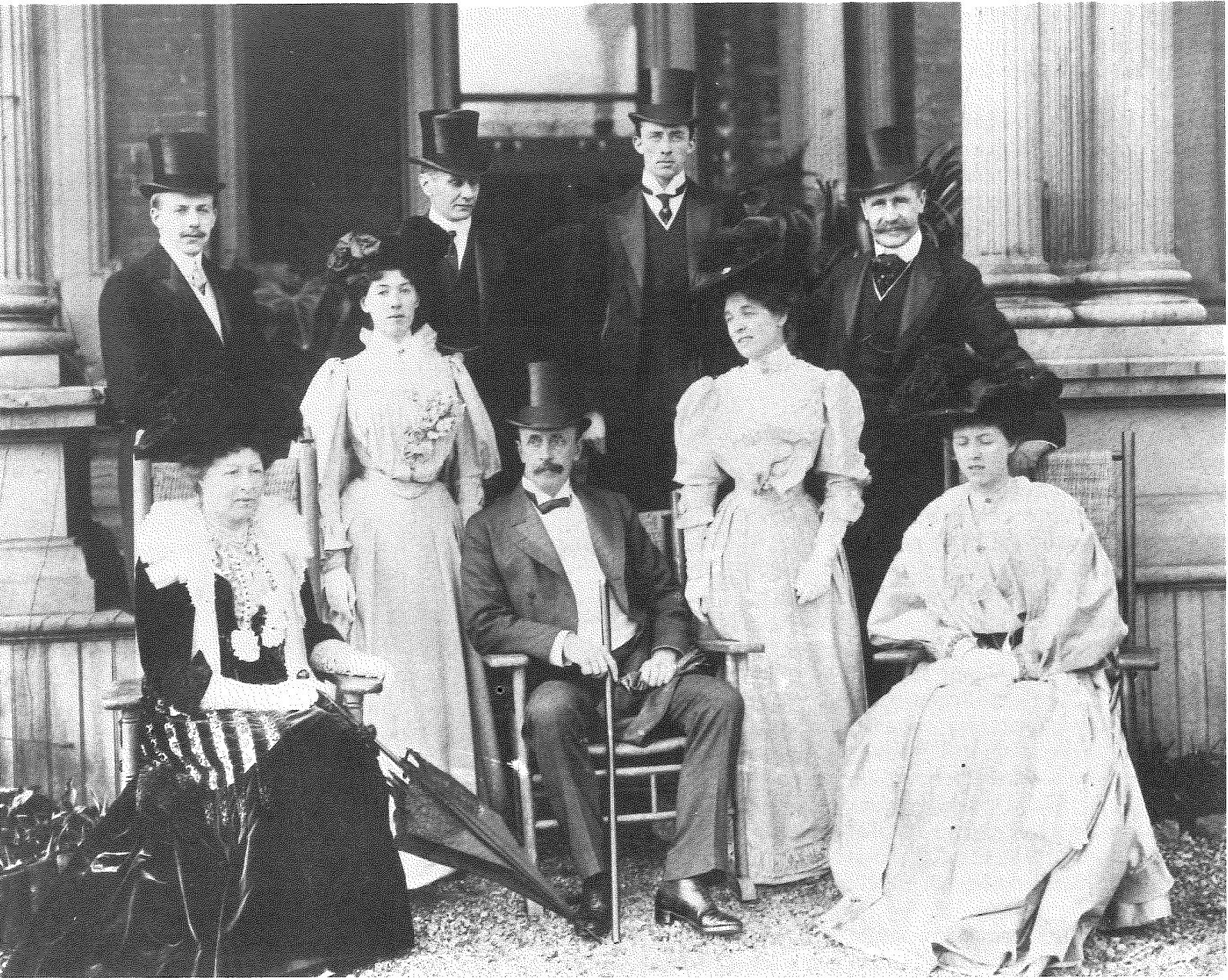
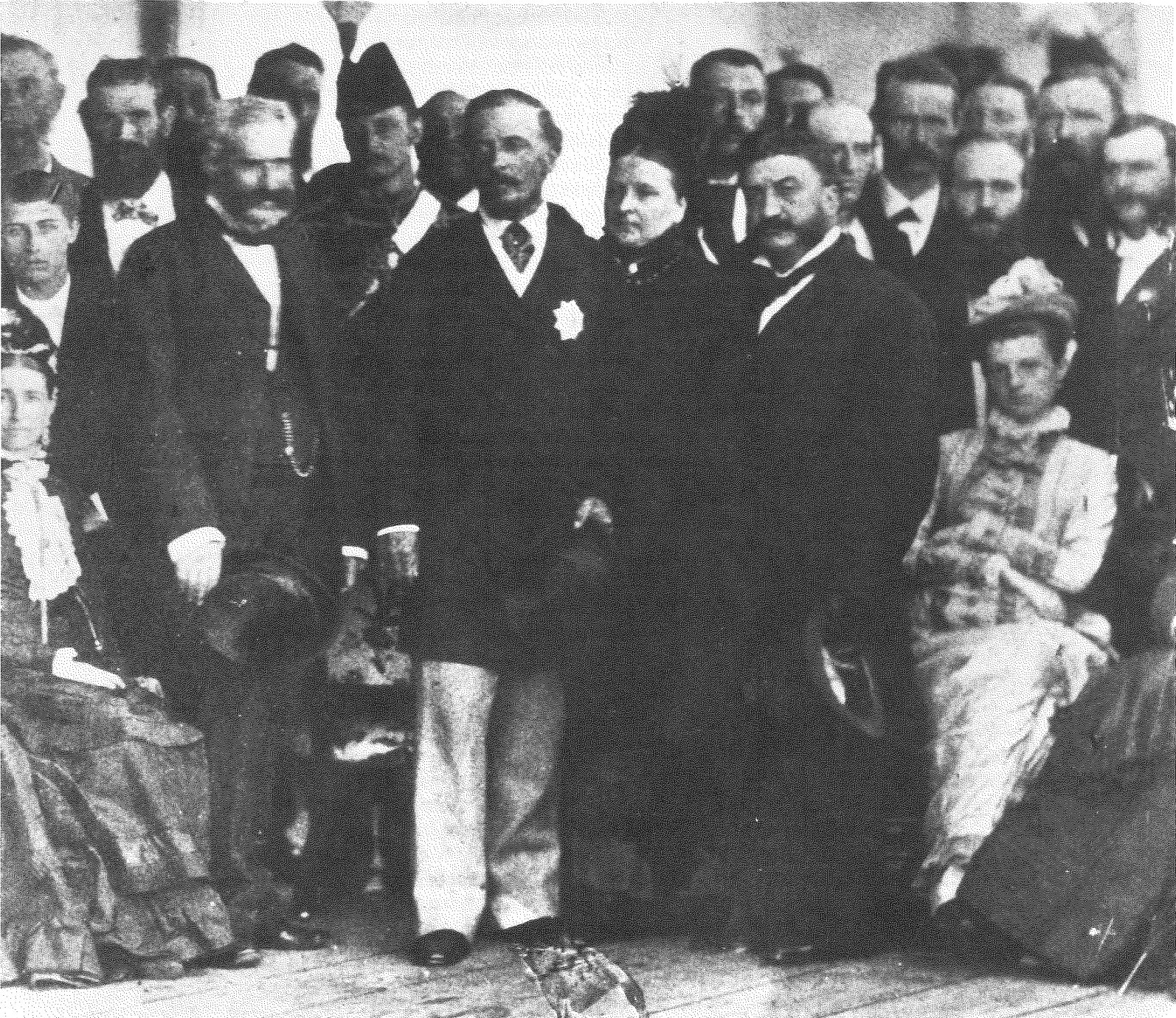
Before the completion of the Canadian Pacific Railway the Governors General had to travel through the United States en route, first, to Manitoba, and then to British Columbia, which had respectively become parts of Canada in 1870 and 1871. Typical of these trips was that of the Marquis of Lorne (1878-83) and his wife, H.R.H. Princess Louise, a daughter of Queen Victoria. In 1882 they made a leisurely progress across the continent and back by special train, stopping at various cities where they were lionized by local society. One suspects that the fact that they were real live aristocrats gave them more importance in the eyes of the Americans than their Canadian connection. His Excellency called on state governors, and ended the return trip with a visit to Washington: one morning he and the British Minister called on the President, who duly returned the call after luncheon. Between San Francisco and Victoria they travelled in H.M.S. Comus.
The previous year the Marquis of Lorne travelled across the Canadian prairies by wagon from the end of track near Portage la Prairie to Fort Macleod and thence to the U.S. border. From the border he and his party were escorted by a troop of cavalry to Fort Shaw, where the Governor General was given a salute of seventeen guns. Eventually the party made its way to a railway and travelled back to Winnipeg via St. Paul.
Several Governors General called on the Governor of Alaska before proceeding to the Yukon via Skagway. Some accepted invitations to visit cities in the northern states. The Dufferins visited Chicago and Detroit in 1874, at the conclusion of a tour through Quebec and Ontario; and in 1900 Earl Grey visited the state of Michigan, receiving an address of welcome from the two houses of the state legislature.
A good many of the early Governors General, like the Marquis of Lorne, paid calls on the President of the United States – calls which apparently were quite easy to arrange, through the British Legation, at short notice. Most of the visits were merely courtesy calls, though Earl Grey (1904-11) established such a good relationship with President Taft that they talked of having a game of golf to decide the executive championship of North America.
In July 1914 the Duke of Connaught (1911-16) visited Newfoundland and Labrador, travelling in a ship of the Royal Navy. As it is recorded that he received “a warm and loyal welcome”, it is probable that his visit was regarded as that of a royal prince rather than as that of the Governor General of Canada.
One of the first projects of the first Canadian Minister to the United States, Mr. Vincent Massey, was to arrange a viceregal visit. In view of Canada’s newly formulated dominion status, Mr. Massey insisted that the Governor General should be received with the honours accorded by custom to a sovereign. The Canadian Government, the United States Government and the British Ambassador approved the proposal, but somebody forgot to consult King George V. His Majesty’s first reaction was that no other subject visiting the United States could take precedence over his Ambassador; but he eventually relented — and the Ambassador was instructed to relinquish his precedence in favour of the Governor General. Thus it was that when Lord Willingdon (1926-31) visited Washington in 1927 he was received in accordance with the protocol established for visits of heads of state. The visit was purely protocolaire: the Governor General was not accompanied by a minister, no international business was transacted, and no arrangements were made to encourage press coverage.
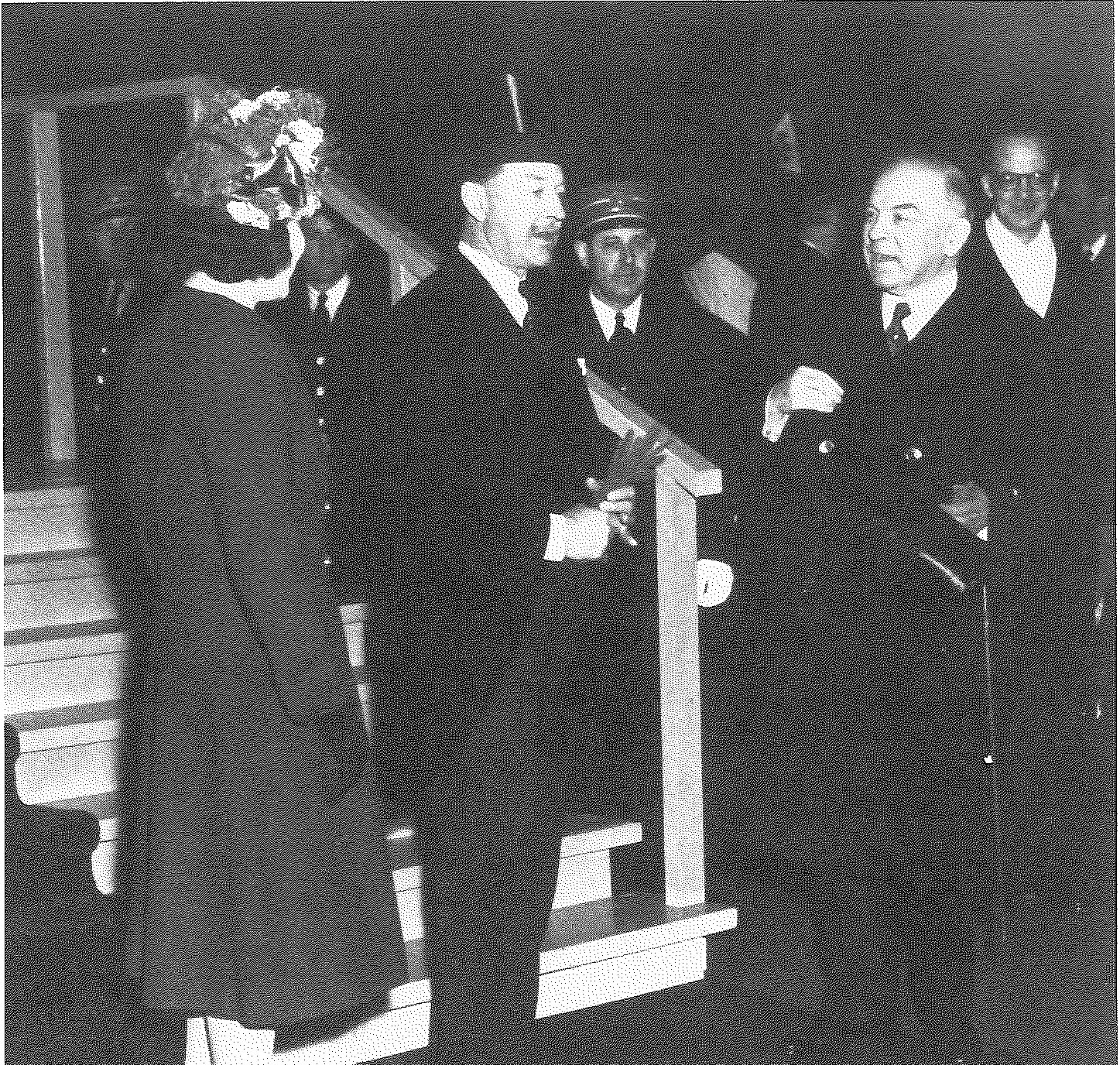
The head of state format for the Willingdon visit was followed, with some variations in detail, for the visits of Lord Tweedsmuir (1935-40) in 1937, the Earl of Athlone (1940-46) in 1945, and Viscount Alexander (1946-52) in 1947. When Lord Tweedsmuir addressed a joint session of the House of Congress, the Canadian Minister was chagrined to find that the British Ambassador and his counsellor were in the party that accompanied the Governor General; and he noted that His Excellency’s staff included only one Canadian, and that certain United States officials had remarked on this.
A somewhat anomalous state visit was that of Lord and Lady Alexander to Brazil in 1948. The Brazilian invitation made it clear that the Governor General was being invited primarily in his capacity as former Supreme Commander of Allied Forces in the Mediterranean, under whose orders the Brazilian Expeditionary Force had fought in the last war. Informally, the Brazilian authorities intimated that they wished also to pay homage to Canada and accordingly intended to accord His Excellency all the honours to which he, as Governor General, was entitled. In the event the visit was organized on the basis of the protocol established for the visits of heads of state.
The fact that the Governor General was to visit Brazil in a dual capacity gave rise to complications. When the Embassy in Rio de Janeiro reported that the British Embassy had received some decorations for Brazilian officers who had served under Lord Alexander in Italy, His Excellency expressed a desire to present them himself. The British Ambassador consulted the Foreign Office, which offered the preliminary comment that he should relinquish any precedence that he might conceivably have over the Governor General, who was also a representative of His Majesty. (This absurd injunction was probably prompted by a reading of the file on the visit of Lord Willingdon to Washington in 1927.) When it had been decided that the British Embassy would be responsible for the presentation ceremony, the British Counsellor told the First Secretary of the Canadian Embassy that the invitations would be sent out by “His Majesty’s Ambassador.” Relations between the two embassies were perfectly friendly, but there was a slight edge in the Canadian’s voice when he said: “Gerry, His Majesty has two ambassadors to Brazil.” (The Canadian First Secretary was the present writer.) A more appropriately worded invitation card was used.
The Earl of Athlone visited Goose Bay in 1944 — before Newfoundland became part of Canada. The first Canadian Governor General, Mr. Vincent Massey (1952-59), paid a brief visit to St. Pierre and Miquelon in 1957.
When Mr. Massey made a state visit to Washington in 1954, twenty-seven years after he had master-minded the Willingdon visit, some new elements were introduced into the arrangements. His Excellency was accompanied by the Honourable Brooke Claxton, Minister of National Defence and Acting Secretary of State for External Affairs, for whom, however, no separate programme was arranged. Mr. Massey delivered an address to a joint sitting of the two houses of Congress, which was a great success: the speech was interrupted by applause seven times, and the full text was published in the New York Times. He gave a dinner at the Embassy in honour of the President and Mrs. Eisenhower, which his predecessors had not done. For the first time arrangements were made to facilitate the work of press representatives, with a view to deriving the maximum public relations benefit from the visit.
Since 1954, although every President of the United States, except Jimmy Carter, has visited Canada, there have been no state visits by Governors General to Washington, and only one informal visit. The exceptional visit was that of Monsieur Léger (1974-79) who, accompanied by Madame Léger, went to Washington in 1976, primarily to see a number of galleries with a view to forming an opinion as to how a project for art and historical collections at Rideau Hall might be undertaken. Almost at the last moment it was arranged that they call on the President and Mrs. Ford.
The failure to use state visits to Washington as instruments of foreign policy clearly reflects policy decisions by Prime Ministers who have considered that working visits by themselves are much more likely to serve Canadian interests than ceremonial visits by Governors General. There is probably also a feeling that giving prominence in the United States to the role of the Governor General might have the effect of raising doubts in American minds regarding Canada’s status as an independent nation. Governors General have acted as hosts when Presidents of the United States have come to Ottawa; but on the occasion of the so-called Shamrock Summit at Quebec in 1985 the person who performs the functions of head of state in Canada was deliberately excluded.
Since the early 1950’s all of the Governors General, like their predecessors, have made private visits to other countries, including the United States. In 1976 Monsieur and Madame Léger visited the Governor of Alaska to present the good wishes of the Canadian people, and especially those of the residents of the Northwest Territories and the Yukon which Their Excellencies had just visited
Following Mr. Massey’s visit to Washington in 1954 there were no state visits to other countries until Mr. Roland Michener (1967-74) visited four Commonwealth countries in the Caribbean in 1969. Efforts to arrange a visit to France during the term of General Vanier (1959-67) had foundered on the unwillingness of General de Gaulie to accord full head of state treatment.
It was in Mr. Michener’s term that official visits abroad by the Governor General were first consciously undertaken for policy reasons, with External Affairs playing a leading role in their planning and organization. A large number of heads of state visited Canada in 1967, and it was anticipated that some of them would invite the Governor General to return the visits. With a view to getting experience and to establishing firmly the principle that the Governor General should be accorded head of state treatment, it was decided to take the initiative in seeking invitations from carefully selected countries.
Before the governments of Jamaica, Guyana, Barbados and Trinidad and Tobago were approached it was thought that some of them might be reluctant to receive as a head of state a person who was a representative of their own sovereign. In the event, no questions were raised.
It had been hoped to arrange for a political ersonage to accompanv the Governo teneral on his Caribbean tour but this wa not done because, as it was explained, “the present burden of government business, including a forthcoming federal-provincial conference, does not permit this at the present juncture”. The best that could be done was to attach to the party the head of Commonwealth Division, External Affairs.
Two years later Mr. and Mrs. Michener made state visits to the Netherlands, Belgium and Luxembourg. These three countries – monarchical states with which Canada had very close ties — were deliberately chosen with a view to establishing precedents for the reception of the Governor General with all the honours normally accorded to a head of state. It was intimated to the governments concerned that the Queen approved and encouraged visits abroad by the Governor General, and that they should feel free to consult Buckingham Palace in order to obtain confirmation of Her Majesty’s views. Dutch and Belgian officials at first expressed some doubts as to whether a Governor General should be accorded the same honours as the Queen, and were concerned about setting a precedent that might give rise to requests for visits by Governors General of lesser Commonwealth countries; but their doubts were rapidly overcome.
For the visits to the Benelux countries the Governor General was accompanied by the Secretary of State for External Affairs, who took part in the main events and, in addition, had his own programme of meetings with ministers and officials. Since that time it has been established policy for the Governor General to be accompanied on state visits by the Secretary of State for External Affairs or by one of the junior External Affairs ministers.
In recent years viceregal visits to other countries by Mr. Schreyer and Madame Sauvé have been playing an important foreign policy role. They provide opportunities for projecting an image of Canada as a vibrant cultural community and an important economic power. They provide favourable circumstances for ministerial discussions on matters of common interest. They supplement the international activities of perpetually overburdened Prime Ministers, who have tended to undertake the more sensitive visits themselves, while inviting the Governor General to undertake visits of lesser political importance.
It should be noted, in conclusion, that successive governments have pursued a policy of building up the head of state functions of the Governor General, and of reducing the active participation of the sovereign in Canadian affairs. Having the Governor General received as head of state by other countries is thus very much in line with this policy.
View the original scanned pages →
Originally published in bout de papier, Vol. 5, No. 2 (1987) — Summer 1987 // Été 1987, pp. 27–30. Read the rest of this issue →



