
bout de papier, Vol. 5, No. 2 (1987) — Summer 1987 // Été 1987, pp. 14–21
As Simon Reisman and his team enter the final laps of the current free trade marathon we might remember the first time Canada entered into a free trade deal with the United States. Like today, the free trade move was sparked by a recognition that there was really no better option for Canada.
In 1846 the British Government of Sir Robert Peel had introduced the first of its free trade budgets thus ending trade preferences for the colonies and embarking the Island on an unprecedented period of economic prosperity. Unhappily for the colony, the navigation laws which compelled trade to travel in British ships (it had the same effect as the Jones Act in the US today should logically have gone overboard with protection, remained in place for another three years to hamper colonial traffic and increase the cost of shipping out of Canadian harbours. As often proved the case through the history of the Empire, consideration of the colonies’ interests took a back seat to the interests of England. Canada’s Governor General, Lord Elgin, complained to Colonial Secretary Earl Grey, ’I care not whether you be a Protectionist or a Free Trader, it is the inconsistency of imperial legislation, and not the adoption of one policy rather than another which is the bane of the colonies.”
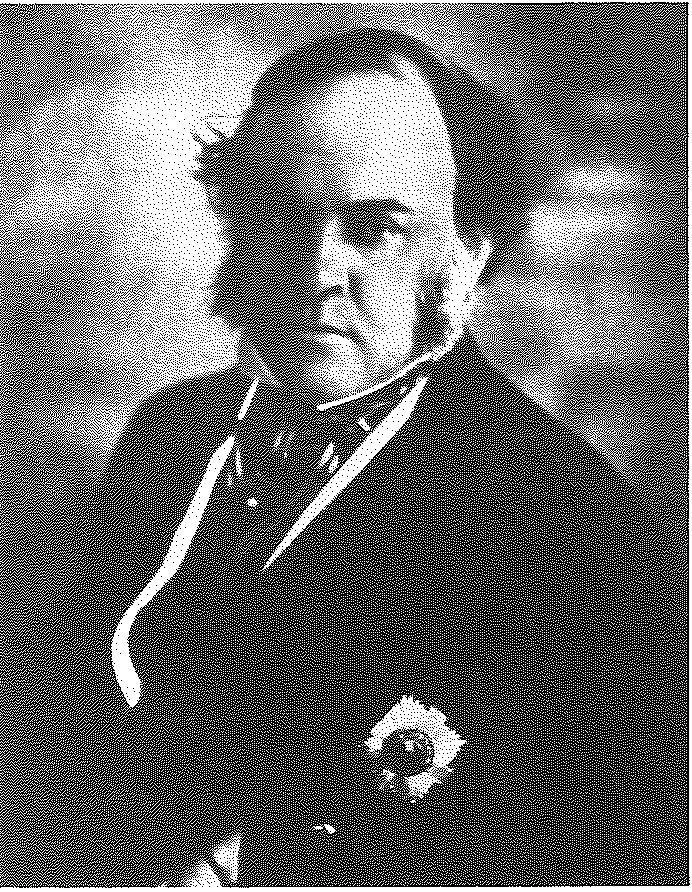
James Bruce, the eighth Earl of Elgin, is the hero of this tale. Like most Scots he was a very canny fellow, highly intelligent, shrewd and capable; one had to be when dealing with Sassenachs and Yankees. Appointed Governor General in 1847 after an apprenticeship in Jamaica, he would play for Canada over the next couple of years a kind of combination Chief Trade Negotiator, Principal Minister and Ambassador Extraordinary.
The solution to Canada’s dilemma, as he saw it, lay with its southern neighbour. He worried that the economic depression caused by the repeal of colonial preferences would let Canada slip into the hands of the US. But put the economy on a solid footing and Canada would be a stronger and more reliable member of the Empire. In a subsequent despatch, sent in the spring of 1848 to the Colonial Secretary, he made his views clear:
The true policy.. is to secure for H.M. ’s subjects in Canada free access to the markets of the States and all the advantages with respect to reduction of freights which competition in the St. Lawrence and the Ocean will afford. This system will undoubtedly lead to much intercourse between the neighbouring countries, and to the multiplication of their commercial relations…So long as you adhered to the policy of protection you raised an artifical barrier between them. You enabled the Canadian to point to the preferences which he enjoyed in the mother country as the price paid for the drawback, real or supposed of the connection. Now, the least you can do for him, after depriving him of these preferences, is to put him on as good a footing as his neighbor: to enable him to say when tempted, “What should I gain by renouncing my allegiance?”
In a prescient postscript, he warned that if nothing were done it would be quite hopeless to maintain the connection with Britain:
A large proportion of the produce of Canada now pays duty to the government of the States is sold across the line. Prices are kept down at a lower level on this side of the frontier. If the impediment which prevents their rising to an equality be not removed by negotiation it will be by annexation.
His first task was to galvanize support for the initiative. Business was keen on the idea and he found in John Young, Francis Hincks and William Hamilton Merritt willing allies. Young, another Scot and Montreal merchant, was the organizer of the Free Trade Association which was formed in March, 1846 the principles of which constituted the economic creed of Canadian Liberalism for half a century. An active pamphleteer on behalf of Free Trade, he would later serve as Commissioner of Public Works in the Hincks-Morin Ministry. Francis Hincks, an Irish immigrant, gave the Free Trade movement the full support of the Montreal Pilot, of which he was editor from 1844-48, before becoming Inspector General in the Baldwin Ministry of 1848-51.
The American-born Merritt and self-described “Great Projector” — he was a kind of early-day C.D. Howe — had originally been skeptical but became convinced that reciprocity with the US would satisfy Ontario farmers while diverting the grain export from the western states to the St. Lawrence route. Promoter of the Welland Canal, Merritt devoted himself to this new challenge with all the energies of a convert and waged an effective campaign from 1846 when he first proposed reciprocal legislation through the press and in public debate. Through his column in the St. Catharine’s Journal Merritt kept up active agitation for reciprocity arguing that it would “remove the uncertainty” about the future and “make Canada prosperous, and nothing more would be heard about annexation” ’ Appointed President of the Council in the Lafontaine- Baldwin Ministry of 1848-50, he drafted a Reciprocity Act which Elgin would use as a rough model in his negotiations with the US He also joined with Elgin in seeking the support of the Maritime provinces and the US states for the initiative.
Negotiation with the Americans was no easy task. In instructing Elgin as to US habits, the Foreign Office advised him “as a principle never to be lost sight of in negotiating with the US, that no concession can safely be made to that government except in return for corresponding concession on its part”. Oras the 19th century colonial historian J.L. Morrison put it in a discussion of US trade policy:
The keenness of American bargaining was sharpened by the national habit of regarding everything desired by Americans as natural right, and everything to be expected by the other side as an attempt to defraud the Union. Nothing that Machiavelli ever taught has proved so helpful in the establishment of a great power, as the American capacity for turning rank greed into something savouring of righteousness.
And from the US perspective, safe in its home markets and secure in prosperous times, the Canadas did not appear to have much to offer. A continuing problem for the negotiators was to get the attention of the US which for the most part was indifferent to the value of trade across the northern border. While access to the St. Lawrence and canals from Welland to Montreal were of interest to the Mid-West, this offended the seaborne traffic of American routes, especially in the state of New York. But faced with the threat of losing access to the fishing grounds off Nova Scotia and the Gulf of St. Lawrence, reciprocity became a more enticing proposition.
Drawing together British North America was no small task. The movement to secure reciprocal trade agreements among the provinces themselves had only just been accomplished with much difficulty and continued slippage. Canada was the easiest to bring onside. The depression caused by the end of preferences and increasing US restrictions on the import of Canadian grains convinced them of the need to gain secure access to US markets. In their view, US protectionist measures must be lifted. Merchants in Montreal signaled their interest in the US when in the autumn of 1849, upset with the effects of British trade policy, 1100 of them, including a future Prime Minister, John Abbott, signed the Annexation Manifesto demanding union with the US.
The support of the press helped. In addition to the Montreal Pilot and St. Catharine’s Journal, George Brown’s Globe, the most influential paper in Ontario and Quebec, gave it unqualified support. “If trade is to be free”, urged the Globe in 1846, “it must be equally free between British colonies and foreign countries. A free intercourse with the US, and the use of her ports for the export of Canadian produce to European markets should form an indispensible part of the new arrangements, and also the supply of manufactured goods from the cheapest market. If these, with cheap postage and other arrangements, are completed, the friends of Canada have nothing to fear on her account.”
In New Brunswick the agitation for reciprocity developed more slowly, but the lumber industry anticipated that the repeal of the Navigation laws would enable foreign vessels to carry freight from St. John at a cost so low that local shipping could not compete. Ship builders therefore wanted the right to register colonial-built vessels when sold in the US and the lumber industry wanted free access to the US market. In April, 1850 the legislature passed a bill empowering the Lieutenant-Governor to issue, when advisable, a proclamation for the free admission of US produce. Prince Edward Island proved to be no problem and its legislature passed legislation in favour of the initiative in 1849.
Nova Scotia was another story. Initially in favour, there developed a group dead-set against any deal that would give the US access to their fishing waters. But eventually a coalition of interests was fashioned that favoured reciprocity in exchange for fishing rights, especially if it meant the repeal of American subsidies to its fishing industry, the free registration of colonial-built ships in the US and participation in the US coasting trade. In the spring of 1850 its legislature passed legislation similar to that passed in Canada to establish free trade with the US
As time went by, there was considerable backsliding, especially from the fishing interests and there was considerable agitation against any sell-out of the fisheries. In 1852, 1853 and 1854 resolutions were passed in the legislatures of Prince Edward Island and Nova Scotia demanding protection. At this point the services of Mr. Israel D. Andrews would come into play.
Israel D. Andrews was the US Consul at St. John. A native of Eastport, Maine he was a free-trader by birth and had in his youth engaged in smuggling. Required to work at night in this illicit traffic, his biographer says the experience convinced him that it was absurd that two peoples, with the same language and habits and separated only by a political line should be forced to conduct their trade in this fashion. In a galaxy of characters, Andrews was the most colourful. Elgin described him to Lord Grey as “a nice specimen of the model republic and underpaid officials.”
Andrews played the role of organizer and back-room boy. A political chameleon, he adroitly preyed on successive Administrations, successfully cutting his cloth to suit the prevailing fashions and corresponded with successive Secretaries of State in Whig, Democrat and Republican Administrations. He was a fixer par excellence with connections on all sides – Michael Deaver and Ollie North could take lessons! His longtime factotum, Thomas Keefer described his technique: “Most men appreciate a good dinner, and Andrews purposely acquired a reputation for his. Thus men who could not be reached at other hours — but who must dine somewhere — gave him his opportunity — for valuable and agreeable consideration.”
By the end of the day he was drawing his funding from both the Canadian and American governments, as well as from his own pocket for the education (or corruption) of key players in the Maritime provinces. US Secretary of State Marcy was initially dubious about the employment of such means to an end, but when he discussed them with President Pierce, he found the president more interested in bringing about a successful conclusion of the treaty than he imagined. Andrews was subsequently credited with monies.
In subsequent letters, Andrews described the disbursements, $840 to one gentleman in New Brunswick “for certain purposes of a government and legislative character” $3,900 “for election expenses of a government candidate” and other sums “paid privately and by myself to officials, leading persons and the press, and to others from whom it was not proper to ask for or to expect vouchers”. The list of those benefitting from this largesse included members of the legislative assemblies for “certain purposes of a Government and Legislative character” in Nova Scotia, Newfoundland, New Brunswick and Prince Edward Island, especially “influential persons in Fishing Districts”. He specifically named one legislator, a W.H. Needham of Fredericton, who had presented resolutions “adverse to a surrender of the fisheries” and was disbursed monies of around $1,000. After this, Andrews reported Needham’s opposition evaporated and he became an earnest supporter of the treaty.
Legislators were not the only ones subject to persuasion. Andrews also disbursed monies to various newspaper editors for “publishing editorial articles; to contributors for preparing articles” as well as for expenses relating to “presents to various parties, coach hire, dinner parties…etc”
The British Government also required continual prompting. Elgin’s correspondence with the Colonial Office became increasingly more pointed:
So long as this state of things continues, there will be discontent in this country; deep growing discontent. You will not, I trust, accuse me of having deceived you on this point… You have a great opportunity before you — obtain reciprocity for us, and I venture to predict that you will be able to point to this hitherto turbulent colony with satisfaction, in illustration of the tendency of self-government and freedom of trade to beget contentment and material progress. Canada will remain attached to England, though tied to her neither by the golden links of protection, nor the meshes of old-fashioned Colonial Office jobbing and chicane. But, if you allow the Americans to withhold the boon, which you have the means of extorting, if you will, I much fear that the closing period of the connection between Great Britain and Canada will be marked by incidents which will dampen the ardour of those who desire to promote human happiness by striking shackles off commerce or off men.
But it had the desired effect and the British Government proved obliging when action was required
The negotiations themselves were long and confused and can be grouped into three phases: 1846 to 1852; September 1852 until May 1854 when the British Minister in Washington, John Crampton, made unsuccessful efforts to arrange the project with the Fillmore and Pierce governments; and the final period when Elgin got authority from the Foreign Office to make another try.
Attempts to obtain concurrent legislation from Congress on eliminating the tariff failed in 1848, ’49, and ’50. At first, the House Commerce Committee refused to give the bill its clearance; later special interests scuttled its chances. Happily for Elgin, pressure for annexation declined as Canada developed American markets in spite of the tariff in part because of the US demand for Canadian resources, especially lumber. Nonetheless, a trade deal would present even better possibilities for economic prosperity. Negotiations were recommenced in 1851 under Sir Henry Lytton Bulwer who was sent from England to conclude a deal. While the Americans were offered free navigation of the St. Lawrence canals and privileges in the fisheries the Administration of protectionist whig Millard Fillmore was uninterested and subsumed by the growing sectional struggle between North and South. An angry Elgin threatened retaliatory measures including the closing of Canadian canals, raising the tariff on US imports by 20% and differential duties designed to draw British trade to Montreal and Quebec and, most significantly, a return of duty on US products imported into Britain. Elgin’s threats backed up by the tougher attitude to the US of the new Derby Conservative government helped to bring the Americans around. But it was another action — enforcing the Maritime fisheries boundaries, that did the trick. Indeed, Sir John A. Macdonald would later declare that the Reciprocity Treaty was “obtained chiefly by the vigorous enforcement of the fisheries which proceeded it”.
The fishing grounds had been a perennial source of dispute especially over the definition of boundaries and fishing rights. From time to time, the British navy, which had the might to enforce sovereignty, arrested American fishing vessels. In May, 1852, the new Colonial Secretary, Sir John Parkington, urged on by the Maritime colonies, announced that the British navy would enforce maritime fishing boundaries. The situation became tense as both Britain and the US dispatched warships to protect their interests. Neither side, however, wanted a confrontation. As John Crampton, British Minister in Washington put it, “The notion that a collision and rupture with England might grow out of the matter has presented it in a very different light.” Out of the discord grew the realization that a reciprocity treaty built on free access to the fisheries in exchange for free access to the US market could resolve the matter.
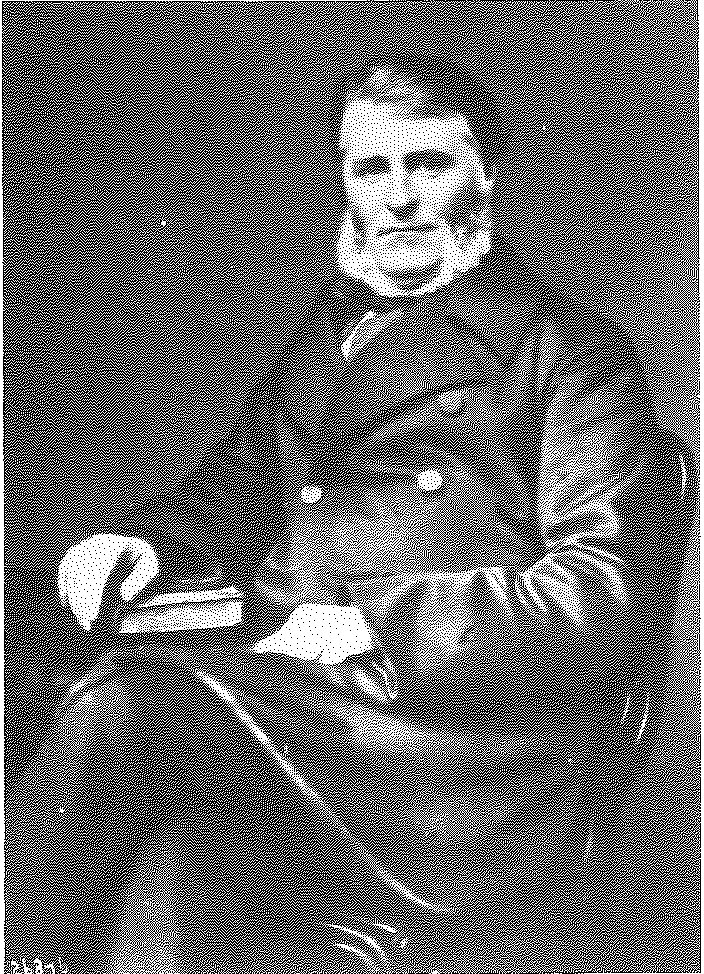
Negotiations were resumed but lapsed during the US election which saw a change in government and the installation of the Democrats under Franklin Pierce in 1853. Pierce was a former Congressman and Senator from New Hampshire. He was not a raving success as President. Harry Truman thought he had the best picture in the White House but declared that being President involved “a little bit more than winning a beauty contest”. Acclaimed the “hero of many a well fought bottle”, he depended heavily on his cabinet for support.
His Secretary of State, William Marcy, was a much more competent individual and he handled most of the US negotiation of the final treaty. A New Yorker, he had served in the War of 1812 then become a prominent member of the ’Albany Regency’, a group of Democrats who exerted a powerful influence on the state by their control of the party patronage and machinery. A senator and then Governor of the state he is best remembered as the author of the celebrated phrase, “To the victor belongs the spoils”. He was, said one observer, “gifted with a dry sense of humour, he had a way of laughing silently, while he shook like a bowlful of jelly. He was never adverse to playing his own game while smiling gently on (and at) others.”
As Secretary of State he prepared the circular that advised American diplomats that, whenever practical, they should appear “in the simple dress of an American citizen” recommendation subsequently enacted into law. He became much involved in Central = American affairs and secured the negotiation of the Gadsden treaty by which the boundary dispute with Mexico was settled in favour of the US) by the addition of New Mexico to the US. He sought to obtain Cuba for the Republic, a move which he thought would enhance his prospects for the presidency.
John Crampton, the British Minister in Washington, was a nice man but like so many political appointments in diplomatic guise, not up to the tasks of diplomats. While genial, he was considered “constitutionally indolent”. Upon one occasion he created a, most unfavourable impression by remaining seated while the American national anthem was played. Later, when ambassador to St. Petersburg, he was censured by Lord
Russell for failing to keep the Foreign Office informed on Russian affairs. He had apparently been diverted by the charms of an Irish opera singer. Lord Reddesdale later observed of Crampton:
The truth is that he was a Bohemian of the Bohemians, a man…to whom the donning of a fine coat and a star was little short of torture. I knew him well; for he was a contemporary of my father’s in the service, and there were few days — when he was on leave in London – on which he did not knock at our door. He has all the gifts of the Irish raconteur, and his stories were enhanced by the charm of a musical speaking voice — a great, handsome, leonine figure, with his silver hand and beard, whose advent we always hailed with joy… With us and very few other friends he would sit by the fire, a great tame cal, purring the lifelong winter afternoon. However great his personal attractiveness might be he was certainly not successful as a diplomat.
After carrying so much of the negotiations, Elgin felt obliged to go to Washington himself. From the outset, he had recognized the importance of dealing with Congress. Cogniscent that lobbying foreign legislators is always fraught with peril, Elgin nevertheless recognized it as essential to the success of the negotiations. As early as 1850 he had penned his observations on dealing with Congress to the Colonial Office.
The fact is that the Yankee system is our old Colonial system…there is the same absence of effective responsibility in the conduct of legislation, the same want of concurrent action between parts of the political machine. The whole business of legislation in the American Congress, as well as in the State legislatures is conducted in the same manner in which railway business was conducted in the House of Commons, at a time when it is to be feared that, notwithstanding the high standard of honour in the British Parliament, there was a good deal of jobbing. The interests of the Union as a whole, and distinct from local and sectional interests, had no organ in the representative bodies — it was all a question of canvassing this member of Congress or the other. It is easy to perceive that under such a system jobbing must become not the exception but the rule.
After consultations with the Foreign Secretary, who was preoccupied with events in the Crimea (war had been declared on Russia on March 26) and the Colonial Office, which was more consumed with events in southern Africa and dealings with the Boers, he received a mandate to have another go at it. He left London and sailed directly to Washington. His party was small: Francis Hincks, prime minister of Canada, Captain Hamilton, his aide de camp, Lawrence Oliphant, a Colonel Bruce and two other Canadian advisors who had expertise on provincial concerns.
Elgin arrived in Washington on May 26. Earlier that morning the Senate had passed the famous Kansas-Nebraska bill which created two new territories and allowed its citizens to decide whether they would be slave or free-soil states. Party strife was at high pitch and the Pierce Administration was none too popular. Secretary Marcy believed that no reciprocity bill could pass that session because of the opposition of Senate Democrats. With his objective in mind Elgin launched himself. His secretary, Lawrence Oliphant, a jaunty young man with a lively pen, has given an amusing, perhaps extravagant, tale of ante-bellum Washington society and the methods employed by Lord Elgin in his negotiations with Congress. John W. Foster, the grandfather of J. Foster Dulles, and a member of the US 1911 Free Trade negotiating team, dismissed the account as imaginary. It is colourful, but it was written by one present throughout all of the negotiations and it undoubtedly contains more than a substratum of truth.
It was at the height of the season when we were at Washington, and our arrival imparted a new impetus to the festivities, and gave rise to the taunt, after the treaty was concluded, by those who were opposed to it, that “it had been floated through on champagne. Without altogether admitting this, there can be no doubt that, in the hands of a skillful diplomatist, that beverage is not without its value. Looking through an old journal, I find the following specimen entry… “Got away from the French Minister just in time to dress for dinner at the President’s. More senators and politics, and champagne, and Hard Shells and Soft Shells. I much prefer the marine soft-shell crab, with which I here made acquaintance for the first time, to the political one. Then with a select party of senators, all of whom were opposed in principle to the treaty, to Governor A’s where we imbibed more champagne and swore eternal friendship, carefully avoided the burning question, and listened to stories good, bad and indifferent, till 2 a.m., when after twelve hours of incessant entertainment, we went home to bed thoroughly exhausted.”
Meantime, to my inexperienced mind no progress was being made in my mission. Lord Elgin had announced its objection on his arrival to the president and the secretary of state, and had been informed by them that it was quite hopeless to think that any such treaty as he proposed could be carried through, with the opposition that existed to it on the part of the Democrats, who had a majority in the Senate, without the ratification of which body no treaty could be concluded. His lordship was partly assured, however, that if he could overcome this opposition, he would find no difficulty on the part of the Government. At last, after several days of uninterrupted festivity, I began to perceive what we were driving at. To make quite sure, I said one day to my chief:
“I find all my most intimate friends are democratic senators.”
“So do I,” he replied dryly, and ndeed nis us popularuy amone in em c the end of the week had become unbounded, and the best evidence of it was that they ceased to feel any restraint in his company, and often exhibited traits of Western manners unhampered by conventional trammels. Lord Elgin’s faculty of brilliant repartee and racy anecdote especially delighted them, and one evening, after a grand dinner, he was persuaded to accompany a group of senators…to the house of a popular and very influential politician, there to prolong the entertainment into the small hours. Our host, at whose door we knocked at midnight, was in bed, but much thundering at it at length aroused him, and he himself opened to us appearing in nothing but a very short nightshirt.
“All right, boys, “ he said, at once divining the object of our visit; “You go in, and I’ll go down and get the drink,” and without stopping to array himself more completely, he disappeared into the nether regions, shortly returning with his arms filled with bottles of champagne, on the top of which were two large lumps of ice…He was a dear old gentleman, somewhat of the Lincoln type, and…evidently a great character, and many were the anecdotes told about him in his own presence, all bearing testimony to his goodness of heart and readiness of wit.
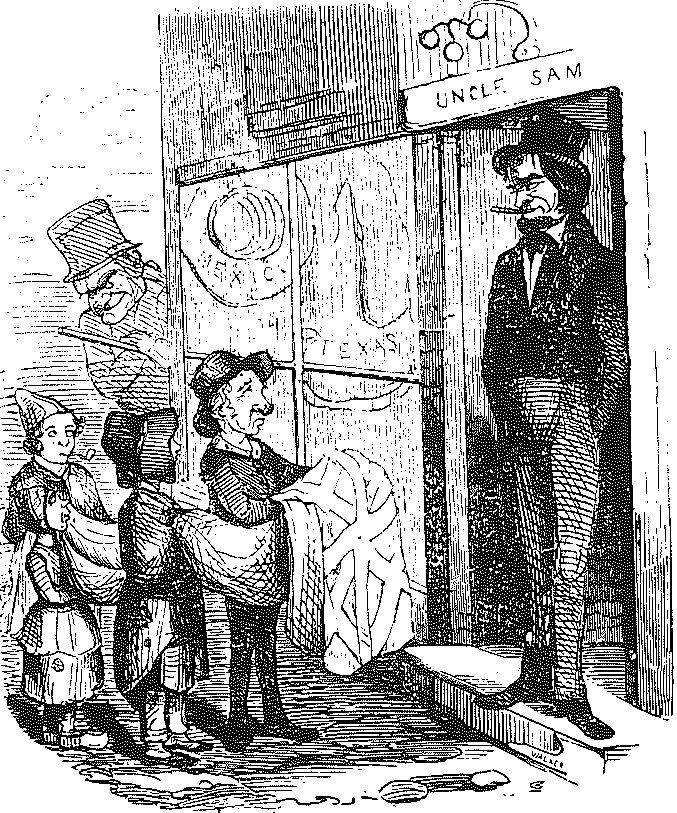
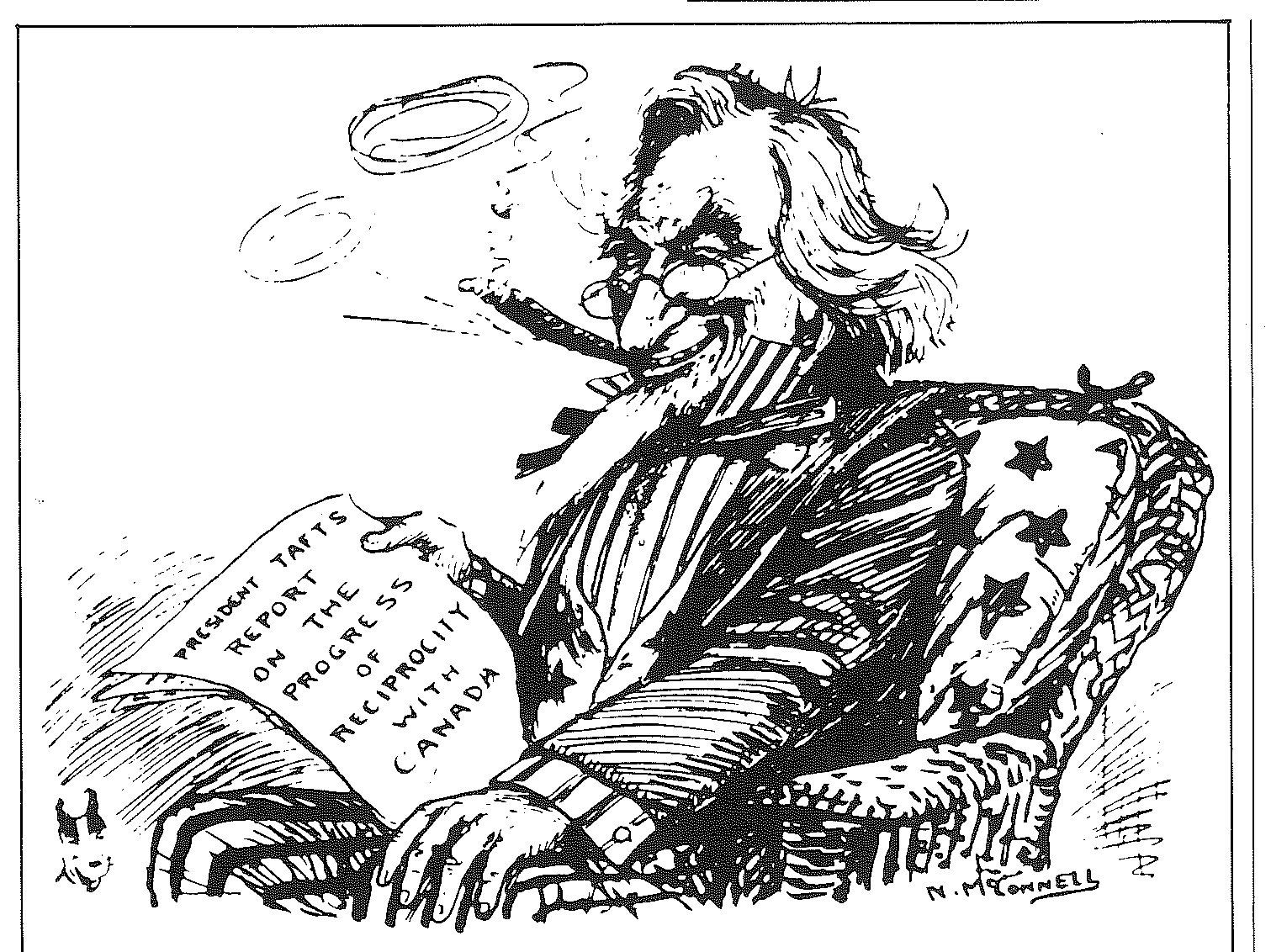
At last, after about ten days of wining and dining, Elgin announced to an astonished Marcy that if he would sign the agreement, he, Elgin, would guarantee its passage in Congress. “Mr. Marcy” wrote Oliphant, “could scarcely believe his ears, and was so much taken aback that I somewhat doubted the desire to make the treaty, which he so strongly expressed on the occasion of Lord Elgin’s first interview with him when he also pronounced it hopeless”. But Marcy kept his word and the treaty was signed on June 5. Again Oliphant:
It was in the dead of night, during the last five minutes of the 5th of June, and the first five minutes of the 6th of the month aforesaid, that four individuals might have been observed seated in a spacious chamber lighted by six wax candles and an Argand lamp. Their faces were expressive of deep and earnest thought, no unmixed suspicion. Their feelings, however, to the acute observer, manifested themselves in different ways; but this was natural as two were in the bloom of youth, one in the sear and yellow leaf, and one in the prime of middle age. This last it is whose measured tones alone break the silence of midnight, except when one or other of the younger auditors, who are both poring intently over voluminous Mss., interrupts him to interpolate an ’and’ or erase a ’the’. They are, in fact, checking him as he reads, and the aged man listens, while he…may occasionally be observed to wink from conscious cuteness or unconscious drowsiness. Presently the clock strikes twelve, and there is a doubt whether the date should be today or yesterday. There is a moment of solemn silence, when the reader, having finished the document, lays it down, and takes a pen which had been previously impressively dipped in the ink, by the most intelligent looking of the young men, who appears to be his secretary, and who keeps his eye warily fixed upon the other young man, who occupies the same relation to the aged listener with the scissors.
There is something strangely mysterious and suggestive in the scratching of that midnight pen, for it may be scratching fortunes or ruin to millions. Then the venerable statesman takes up the pen to append his signature. His hand does not shake, though he is very old, and knows the abuse that is in store for him from members of Congress and an enlightened press…So he gives his blessing and the treaty is signed.
Thomas Keefer described Elgin, Marcy, Crampton and the other colonial delegates as forming “a tableau of political glory as brilliant and as deceptive as the variegated “fizzle’ which ends a theatrical performance — made a bow to an admiring audience and dissolved the long standing partnership, leaving Andrews to wind-up the business and pay the debts!”. And pay the debts he would.
Debate would likely kill its chances of passage. Andrews recorded his experience in a long memorandum of services he later presented to Elgin.
Early on Thursday morning I saw Mr. Baily again, and met him by appointment at the committee room at 12. We remained closeted together till 2 p.m. I presented to him the features of the bill, the arguments in its favour, and urged the necessity of immediate action in the House…His final decision was that he would not attempt to pass the bill through the House at that session. Mr. Baily went to his lodgings exhausted and determined to do nothing. The bill was left at 4 p.m. this day locked up in his desk at the Capitol; Congress would adjourn in twenty hours. I remained on the ground all night, confident that by vigorous action there was a chance for the bill. I entered into new obligations for the payment of money to the extent of several thousands. At 4 o’clock, Friday morning, an attempt was made, Mr. Baily not present, to bring up the bill, which failed by about 40 majority against it. It was then generally conceded that it could not pass. I made further arrangements, sent for Attorney-General Cushing, and induced him personally to persuade members to act; and bargained with two Virginians for eight hundred dollars each, provided the bill should pass, to bring in Mr. Baily ’dead or alive.’ He had refused others. This was six in the morning. Congress adjourned until
9. At 9:30 Mr. Baily came, our forces were arranged; at a preconcerted moment Mr. Baily moved the bill, and although strenuously opposed by the chairman, Committee of Commerce, and others passed it. This great measure sought for so many years was at last consummated.
And so the deal was done. The President proclaimed its effect on March 16, 1855. It would remain in place until 1866 when the US abrogated it.
The treaty provided for the recriprocal duty-free admission of major natural products of the US and British America, including grain, lumber, coal, livestock, meat and fish and joint access to all coastal fisheries north of the thirty-sixth parallel. American use of the St. Lawrence and Canadian navigation of Lake Michigan were also included in the treaty. For Canada, the abolition of American tariffs on lumber, grain and flour were the greatest benefits.
The main inducement to the US, especially the eastern states and New York, was the fisheries, although many congressmen felt it was American anyways. The western states were passive because of the provision which opened the St. Lawrence to their shipping. Pennsylvania and Virginia coal interests were assuaged when it was pointed out to them that they would not be faced with competition from Nova Scotia. Indeed Cunard, himself a proprietor of Nova Scotia colleries, actually supplied his steamers at Halifax with Pennsylvania coal. For the south there was the convincing case that a treaty would render annexation unnecessary and thus preserve the sectional balance. Furthermore, certain commodities — rice, pitch, tar, turpentine and unmanufactured tobacco had been added to the free list to satisfy southern interests. Manufacturers recognized that improved trade with the provinces meant an enlargement of their own home market even if the free trade schedule was limited to raw products because the eyes of Canadian merchants would be turned toward the US
Canadians greeted the accomplishment with surprising nonchalance. The Montreal Gazette thought the measure of little interest “to the people of Canada East”, however beneficial to Ontario. In Toronto, George Brown’s Globe considered the measure of qualified benefit in the existing prosperity. In the months leading to the signature of the treaty Canadians had been much more consumed with internal affairs and the settlement of two longstanding issues, the Upper Canada clergy reserves and the ancient encumbrance of seigneurial dues in Lower Canada. The legislature had been twice postponed: fires had gutted the old legislative buildings in Quebec in February and then in May the convent being remodelled to house parliament. The ministry of Francis Hincks and Augustin Morin was on its last legs in the face of defections from its own disaffected supporters and attacks from the Conservatives for, as John A. Macdonald declared, “the most rampant corruption”.
The ministry was defeated on June 22 and in subsequent elections replaced by a Liberal- Conservative regime containing John A. Macdonald and many of the elements he had previously condemned. The Globe said of this new coalition: “Of all the abortions it could enter the mind of men to conceive — it is the greatest”. Abortion or not, it controlled an overwhelming majority and would evolve into the Conservative party. Led by Sir Allan MacNab, it met the House in early September and expressed its approval of the Reciprocity Treaty on September 22. It caused little stir.
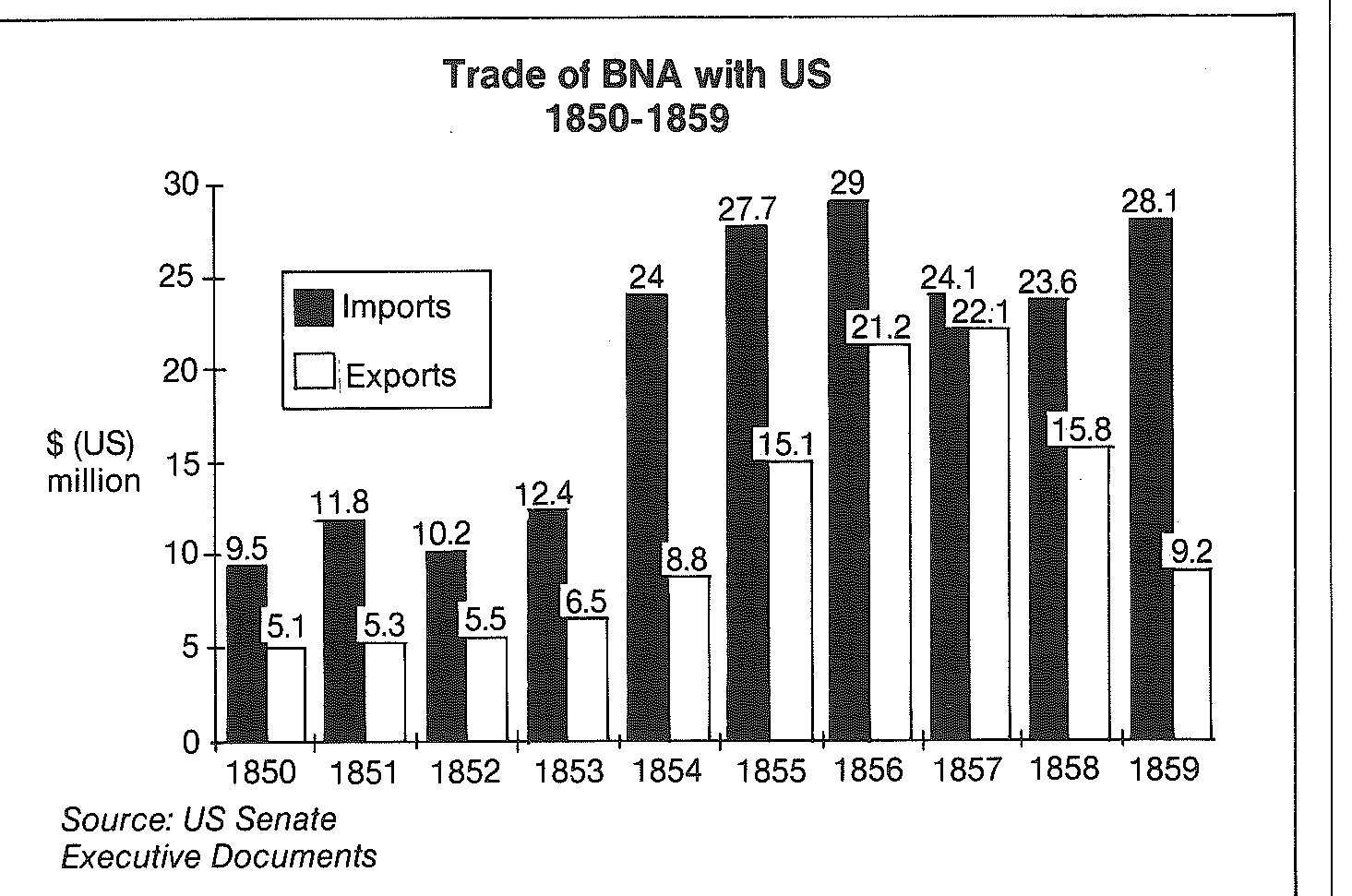
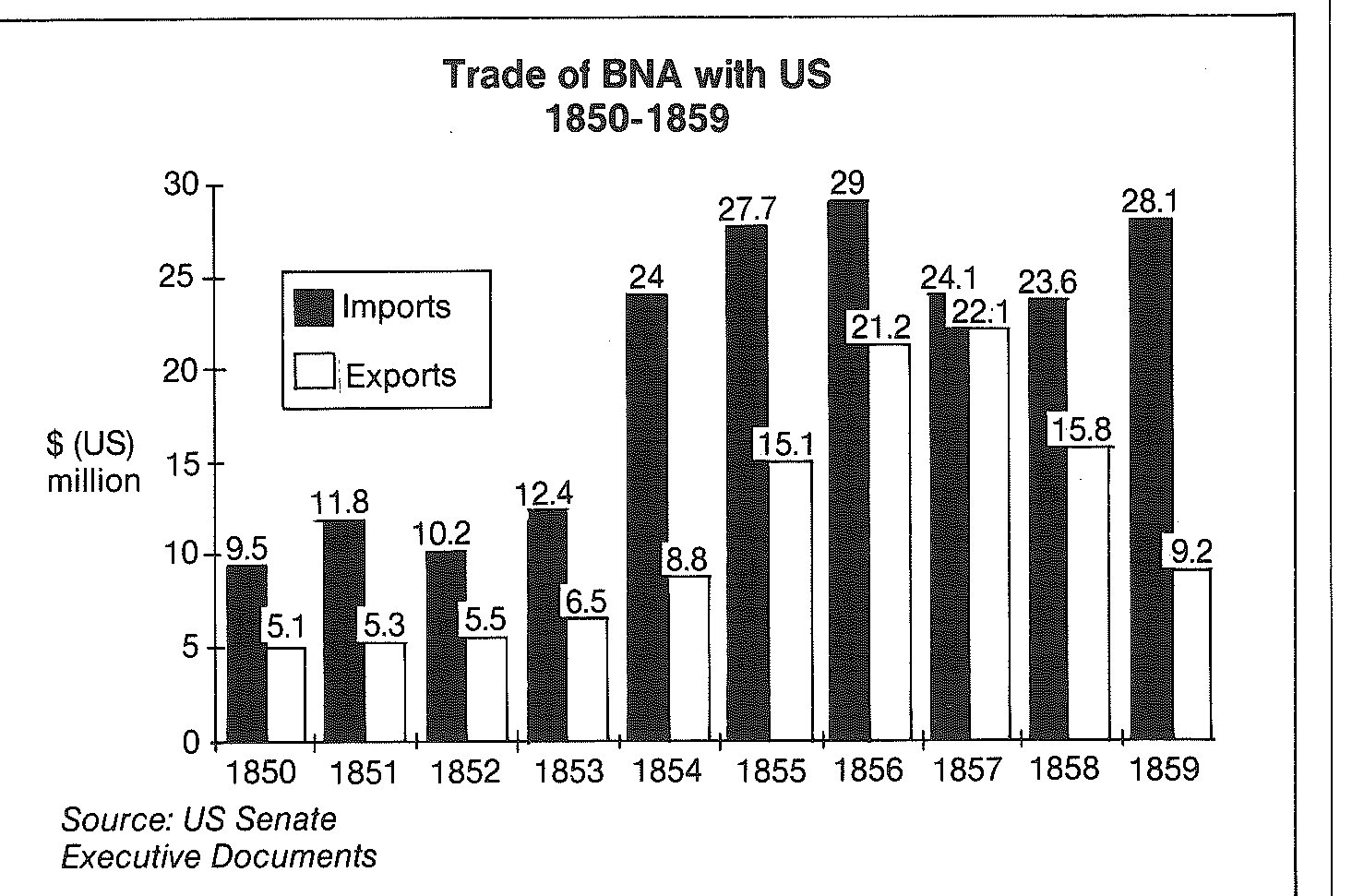
In time, however, it became clear that whatever the risks, they were far outweighed by the advantages. Exports to the US from Canada, mostly grain, flour and lumber which were valued at eight million dollars in both 1853 and 1854, jumped to $16 million in 1855 and reached nearly $18 million in 1856, before the boom collapsed. Even then, however, exports only slumped to $13 million. For the Maritimes the gains were not so great, but their exports to the US increased as well rising from $2.2 million in 1854 to $2.9 million in 1855, and by 1859, the figure had climbed to $5.5 million up from $1.3 million in 1850
The deal benefitted both countries, although Maritimers claimed that by stripping their forests to sell timber to the US, they failed to develop their shipbuilding. Some fishermen felt they had been sold down the river. But all in all, the benefits outweighed the drawbacks. The joint use of each other’s transportation systems also permitted the re-export of natural products to third country markets. As a consequence, economies were realized with the integration of Canadian and American lines of water and rail transportation. Wheat from Illinois would be supplemented by grains from Ontario and shipped out the Erie to the Ocean. Flour shipped by Boston could go on to the Maritimes. At the same time, US manufactured goods not covered by the Treaty still found their way into Canada, their use encouraged by trading contacts and buying patterns of convenience. Fledgling branch plants followed
The best summation of the resulting period of prosperity is given by historian J.M.S. Careless: “Canada thrived heartily under reciprocity — a fact which would make the era of the treaty, when it ended in 1866, look in future like a golden age in Canadian- American relations”
And what of the leading players? For Andrews, the conclusion of the treaty marked the beginning of his financial difficulties. Having extended himself substantially, the creditors began hounding him for his obligations and the poor devil soon found himself imprisoned for his debts. His experience is a lesson that most wary foreign service officers have long since learned: when on business, get yourself a sufficient advance. He sought recompense from the State Department and Elgin. From the Canadian Government he received somewhere in the vicinity of 10,000 pounds. His own Government was less obliging. His bookkeeping was creative. As time went by, his appetite for reimbursement grew • from $18,025.80 to $84,000. His personal integrity, never a strong suit, suffered further when he made a declaration in 1859 that he had “never received a penny of the secret service fund of Great Britain” ’. At the same time, he continued his activities. Through Elgin he tried to secure employment from the British to give US opinion on the Crimean war “a wholesome direction”. In June, 1867, four years before his death, he was furthering the cause of annexation by distributing speeches of US legislators on the extension of American hegemony.
For Elgin, it was one of his last achievements as Governor General. His performance, especially in the final stages, was flawless. Oliphant later wrote his wife in admiration and described his master’s methods: “Lord Elgin pretends to drink immensely, but I watched him and I don’t believe he drank a glass between two and twelve. He is the most thorough diplomat possible, never loses sight for a moment of his object, and while he is chaffing Yankees and slapping them on the back, he is systematically pursuing that object. The consequence is, he is the most popular Englishman that ever visited the US”. He would shortly return to England where he later served the Crown in diplomatic negotiations with China and India.
Elgin’s work in Canada was undoubtedly his most significant achievement. In convincing the Maritimes that they should join with the Canadas in seeking a trade deal, Elgin taught British North America the value of confederation in diplomacy. In soothing the wounds created in the rebellion of 1837 and in the promotion of Responsible Government, he behaved with courage and showed uncommon sense. Reflecting on his term, he wrote his wife: “I occupy a place here which no one ever filled before” ’ A simple verdict, but filled with truth.
And the other leading participants? William Merritt remained a legislator and died in 1861. Following his defeat, Francis Hincks was named Governor General of the Barbados by the Colonial Office. He later served as Governor of British Guinea before returning to Canada for a stint as Finance Minister in the post-Confederation Macdonald Cabinet. Marcy died shortly after leaving office, his presidential ambitions scuttled by sectional strife. Pierce was not even renominated by his party and replaced by his Minister to England, James Buchanan.
And the lessons of 1854?
• The Americans did not really pay much attention to the Canadian overture until their self interest was engaged following the British action on the fisheries. Inasmuch as there was interest, it was the desire of American industry to gain access to Canadian resources and strike down the Canadian tariff on US manufactured goods. Opposing this desire was the opposition of interests in the western and southern states to lowering US tariffs on US goods like grain, coal and fish which would threaten American farmers, miners and fishermen.
• The Administration did not and could not sell the agreement in Congress. Pierce lacked the weight to get it through, a fact admitted by Marcy. Besides, the Administration had other, and in their view, more important issues on their plate. The treaty required consummate skill and the direct lobbying of senators by Lord Elgin to secure passage. A case or two of champagne probably helped.
• The lobbying of parliamentarians and congressmen by Israel Andrews was equally important. Armed with a suitcase of cash and the scruples of a carny huckster, Israel Andrews convinced legislators and the press of the treaty’s value.
• Merritt and his coalition of business friends and their contacts in US and Canadian business circles were indispensible in helping to assuage doubts about the project. The free trade press, especially the Globe, played a useful role.
• The treaty involved compromise. Maritime shipbuilders and fishermen felt they lost more than they gained, but the treaty created far more winners than losers. Canada would enjoy unparalleled prosperity for the next decade. This served Elgin’s goal of uniting the provinces. After a decade of prosperity and growth, there was no question of annexation. When the treaty was abrogated by the Americans in 1866, the circumstances were such that it helped to create the Confederation Elgin had done so much to promote.
View the original scanned pages →
Originally published in bout de papier, Vol. 5, No. 2 (1987) — Summer 1987 // Été 1987, pp. 14–21. Read the rest of this issue →



