
bout de papier, Vol. 4, No. 4 (1986) — Winter 1986 // Hiver 1986, pp. 39–46
John Turner, The Long Run by
Jack Cahill, McClelland and Ste-
wart, Toronto, 234 pp. $19.95;
Mulroney and the Making of the
Prime Minister by L. Ian Mac-
Donald, McClelland and Stewart,
Toronto 1984, 332 pp. $21.95; Brian
Mulroney: The Boy from Baie
Comeau by Rae Murphy, Robert
Chodos and Nick Auf der Maur,
Toronto, 1984, 226 pp. $24.95.
God give us men! A time like this
demands
Strong minds, great hearts, true faith and
ready hands;
Men whom the lust of office does not kill;
Men whom the sports of office cannot
buy;
Men who have opinions and a will;
Men who have honour; men who will not
lie;
Men who can stand before a demagogue.
And damn his treacherous flatteries
without winking!
Tall men, sun-crowned, who live above
the fog.
In public duty and in private thinking …
God Give Us Men
by Josiah Gilbert Holland.
t was Carlyle who championed the biographical approach to history arguing that great events were really just the story of great men. Greatness is an elusive quality; many aspire to it but few succeed Trudeau’s long hold on office and many accomplishments place him among the great. He stands with Macdonald, Laurier, Borden, King, St. Laurent and probably, Pearson. But what of his successors, John Turner and Brian Mulroney? What manner of men are they? And can they too lay claim to the title great?
There are three good biographies available which were published around the time of the last election; the two on Mulroney have recently been released in paperback for the cost-conscious. Foreign service officers have to know about the leaders of those countries in which they are posted; they should also know a little about our own first ministers. On the surface Brian Mulroney and John Turner have a fair bit in common (this, of course, being the argument the NDP use in each election when they attack the two principal parties). Each comes from humble origins, both are Catholics, both are lawyers who have made their fortune in the corporate world, both came in third in their first leadership try, became heirs apparent and then won the next time round. They are both competent tennis players. Each has four children, the oldest a daughter followed by three sons. Each possessed, at least at one point, that ephemeral quality ’charisma’. Both have been prime ministers; the next election will disappoint one or the other.
Australian-born Jack Cahill has worked for various Canadian newspapers since 1957 and first met Turner in the early Sixties. His book The Long Distance Runner was written in the wake of the 1984 Liberal convention when fortune still smiled on the man who was always seen as one of life’s winners. It is the best researched of the trio and would undoubtedly have sold better if Turner had not lost the election shortly after the book’s release.
John Turner had a short but reasonably spectacular success as a 100 yard man during his college days. It is from this sporting achievement that the books takes its title. As such, it is a bit of a misnomer because the 100 yard dash is not usually seen as long distance. The label is probably one, however, that Turner hopes proves prescient. Thus far, he has not gone the distance. In his last big race, before he injured his knee in an auto accident, he only completed 70 of the 100 yards he set out to run. As prime minister he only lasted 80 days; only Sir Charles Tupper had a shorter tenure.
If looks counted for votes there is no doubt he would win the contest for prime minister hands down. But then so would have George Drew. The classic handsome features, piercing steel blue eyes and hair coloring of a matinee idol warrant comparison to the patriarchal Blake Carrington of Dynasty fame. And of late, his travails have matched anything a Hollywood scriptwriter could contrive.
Despite looking to the purple born, his origins are rather unpretentious. Born in Richmond, Surrey on June 7, 1929, he was the first of Leonard and Phyllis Turner’s three children. The early years were tinged with tragedy. His only brother, Michael, died shortly after birth and when he was three, his father, a gunsmith at the Ginnings factory, died of malaria and goitre. His sister suffered from polio and his mother now lives in a nursing home on Saltspring Island, oblivious to all about her, a victim of Alzheimer’s disease.
After her husband’s death, Phyllis Turner returned to Canada, first to her home at Rossland, British Columbia and then to Ottawa where she became an economist at the Tariff Board. John was schooled first at Ashbury and then at St. Patrick’s College because of slim family finances and Phyllis’s desire to have her son educated in a Catholic school. His classmates included foreign service officer Michael Shenstone. Cahill quotes Shenstone as remembering Turner for being “very bright, very athletic, and very good-looking but there was no rivalry between us. • It was a terrible pity that he had to leave Ashbury. His mother was a widow you know and she couldn’t afford it”. As a woman, Phyllis Turner was only paid two-thirds the salary of her male counterparts in the civil service.
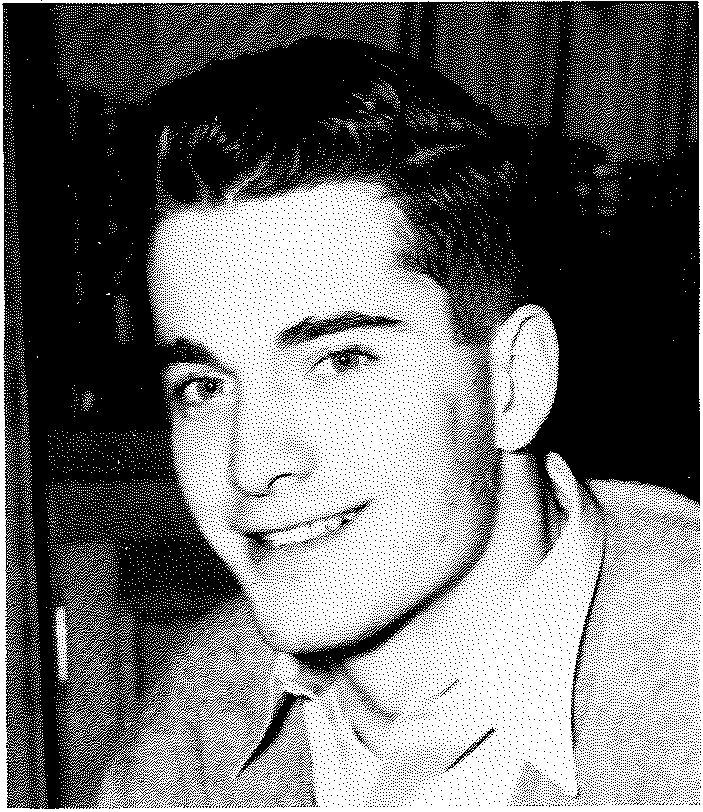
Summers were spent at Kirk’s Ferry in the Gatineau with Mike Pearson’s children. By the early Forties, Phyllis had become the country’s senior woman public servant. The wit and beauty of the young widow brought the country’s leading politicians, R.B. Bennett, C.D. Howe and Mackenzie King with his dog Pat, to the dinner table. From them, Cahill speculates that the young Turner developed a philosophy of politics that was quintessentially Forties: very male and depending more on pragmatic accomodation between elites than the intellectual rationalism of a Trudeau. Gradualism, respect for business and a sense of noblesse oblige to those less fortunate would be the Turner approach.
In 1945, Phyllis married Frank Ross, one of C.D. Howe’s dollar-a-year men and moved to Vancouver. At UBC, Turner cut quite a figure. He wrote a sports column
– “Chalk Talk by Chick’ – that was second in readership only to Eric Nicol’s humour piece, and served on the student council. The nickname ’Chick’ had been given to him during street-hockey days in Ottawa. It was so much a part of him that his lockermate at UBC, Peter Worthington, said he never learned his first name until he met him years later in Ottawa. In 1949, he won the Rhodes scholarship for British Columbia. At Oxford, he read law at Magdalen College and was part of a circle that included Roger Bannister (the famous runner), Jeremy Thorpe (later leader of the British Liberal party) and Australian Malcolm Fraser (later Prime Minister of his country). In 1953, he spent a sojourn at the Sorbonne. There, says Diana Kirkwood, now an Ottawa real estate agent, he went to mass in the morning, studied French during the day and “took some lovely girls out every night”. Life, suggests Cahill, was the stuff of which dreams are made.
Returning to Canada, Turner joined the Montreal law firm of Stikeman and Elliot. He became President of the Junior Bar, succeeding Jerome Choquette and Philip Casgrain, and immersed himself in the delights of the city. In 1958, he gained national coverage for dancing with Princess Margaret at a ball in Victoria given for her by his step-father, who had been appointed Lieutenant-Governor of the province. Politics began to beckon. Invited to the Kinaston Conference of 1960, he impressed Liberal organizers. Paul Martin took him to dinner at the Mount Stephen Club and asked him to consider a career in politics. Allan J. MacEachen, then Pearson’s special assistant, dined him at Chez Stein and persuaded him to run for the Liberals in St. Lawrence-St. George. Turner’s 1962 campaign was modeled after that run by John F. Kennedy, and the media made much of the similarities between the two men. The campaign worked and Turner came from behind to beat the Tory incumbent, Egan Chambers (husband of Gazette columnist Gretta Chambers and father of Clark aide Bill Chambers).
The campaign had another benefit: it introduced Turner to his future wife, Geills Kilgour, the daughter of the President of Great West Life Assurance Company. An attractive Winnipeger, she had been schooled at McGill, Radcliffe, and the Harvard Business School. A systems engineer with IBM helping to install the computers at the Bank of Montreal head office, Geills and another computer expert introduced computers to Turner’s campaign. They married at St. Ignatius in Winnipeg. Privacy Commissioner John Grace, then associate editor of the Ottawa Journal, was best man.
Turner’s maiden speech was an attack on the Diefenbaker government’s support of the 92.5 cent dollar and a call for new parliamentary rules. During the election, he had gone on television holding up a dollar to the cameras and blaming Diefenbaker personally for reducing its value and accusing the Old Man of “committing a fraud on the Canadian people”. Later, the Diefenbakers and the Turners met, by coincidence, during a winter holiday in Tobago. The Diefenbakers invited the young M.P. to dinner and the couples became friendly. A couple of years later, again by coincidence, they met at a beach in Barbados. One day, reports Cahill, Turner saw Diefenbaker being swept out to sea and he swam out and brought him to shore. Rivals in politics, the two were both parliamentarians who shared a love of the House of Commons. Turner was the only Liberal appointed an honorary pallbearer at Diefenbaker’s funeral.
In the 1963 election, Turner was easily reelected, once again beating Chambers, and he became parliamentary secretary to Northern Affairs Minister Arthur Laing. He was one of the Liberal’s young Turks, a group of new M.P.s that included Richard Cashin, Jack Davis, Herb Gray, Pauline Jewett, Donald MacDonald, John Munro, Jean-Luc Pepin, Gerry Regan and Maurice Sauve. For a young man in a hurry, promotion was slow, but his patience earned him the tribute of party brokers. While it sounds a bit odd in light of his recent efforts to topple Turner from the party leadership, Keith Davey, the Liberal Rainmaker, had kind words for him in Christina McCall-Newman’s classic study, Grits: “If Turner had been nothing more than the pretty boy the backbiters said he was, he would have buckled in the early Sixties. But he didn’t buckle. He learned. How to be a politician. How to roll and punch and roll again. How to be a winner.”
Named to the cabinet as Minister without portfolio in 1965, Turner became Registrar General, where he participated in the drafting of the bill removing the barriers against the import and manufacture of low-priced generic drugs. Pearson later named him the first Consumer and Corporate Affairs Minister in 1967. The next year he ran for the leadership of the Liberal Party. At the convention, he gave what Peter Newman in his second chronicle of the Diefenbaker/Pearson years, Distemper of our Times, called “a tough, gutsy speech — the toughest and gutsiest in a deliberately bland career”. Turner told the delegates that he was “not running just in this race so you will remember my name at some future date. I’m not here now for some next time; I’m not bidding now for your consideration at some vague convention in 1984 perhaps when I’ve mellowed a bit. My time is now, and now is not the time for mellow men. “Turner came third on the final ballot. Turner’s decision to hang in until the end did two things: by standing still he stopped any flow of momentum to Robert Winters and thus helped to ensure Pierre Trudeau became leader. It also created the myth of the 195 Club (named after the number of ballots he got on the last ballot), a sort of Round Table of errant knights ready to take up the call when the clarion sounded.
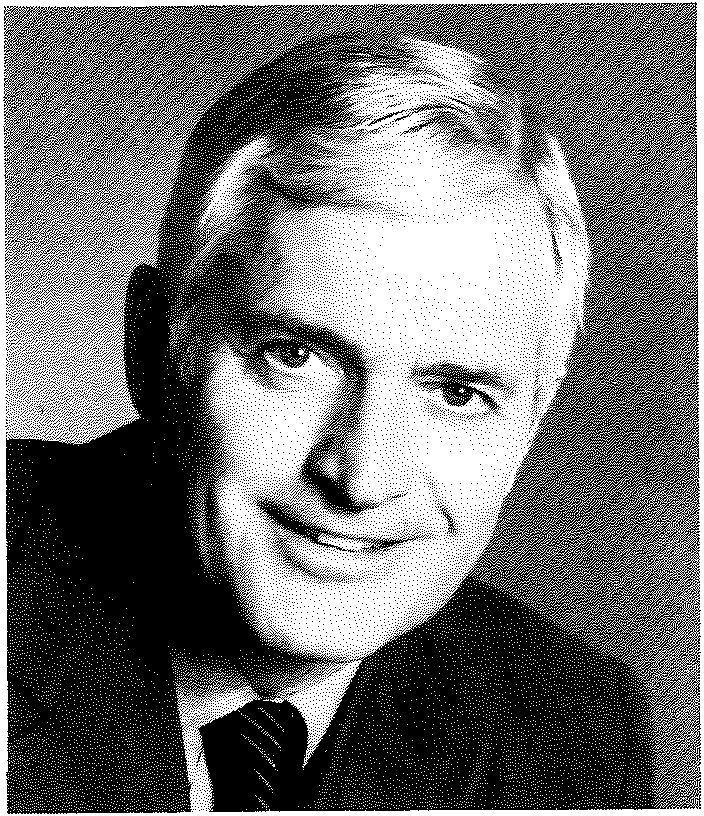
Trudeau appointed him Justice Minister after the 1968 election. There Turner enjoyed perhaps the most productive period in his political career. He pushed through a major reform of the Criminal Code and followed Trudeau’s lead by abandoning party patronage in the naming of judges. One of his first appointments was former CCFer John Osler, partner to the late David Lewis, to the Ontario Supreme Court. He created the Law Reform Commission, abolished the rich man’s Tax Appeal Board and replaced the Ottawa-based Exchequer Court with the Federal Court, and brought in the Anti-Hate law (latterly used successfully against Ernst Zundel and Jim Keegstra) and the Protection of Privacy legislation.
Turner was also responsible for making law the Official Languages Act; he took over its handling from Secretary of State Pelletier whose Cartesian method worried «the caucus and caused threats of legal action from the western provinces. Turner was more pragmatic, he felt that ramming bilingualism down the throats of English Canada was dumb politics and sure to ensure its failure. (Ironically, he thought he had adopted a similar approach in 1984 over the Manitoba language question, but that put him at odds with the official opposition and his own party. It also earned him opprobrium in French Canada, contempt and hostility from central Canadian editorialists, and indifference from anglophones who had long since recognized, if not embraced, the new reality.)
In 1972, Turner went to the portfolio that has become the graveyard for aspirant prime ministers – Finance. (Only two other Finance ministers, Sir Charles Tupper and R.B. Bennett, have subsequently become prime minister.) There he teamed up with Simon Reisman, the lion of the deputies. As Finance Minister, Turner brought in four budgets; the four year average deficit during his hold on the portfolio was $719 million. Turner also apprenticed on the international stage as chairman of the IMF’s interim committee on economic policy at a time when the problem of recycling petrodollars was paramount. The associations he made during this period were to serve him well in the future. George Shultz, for example, was the U.S. Secretary of the Treasury. After he left to become executive vice president of Bechtel, Shultz had Turner named to the Bechtel Board of Directors.
On September 10, 1975 Turner made his famous walk to Pierre Trudeau’s office and resigned from the Cabinet. While the full account of their conversation is now steeped in controversy and dispute, there is no doubt the two quarreled. Turner left for the more financially-rewarding position of partner in the Toronto law firm of McMillan Binch. There, he held court in his alcove at Winston’s, the famous Toronto luncheon spot, and came to embody for Liberals who were fed up with Trudeau, the role of King Across the Waters. Turner turned down their call in 1979, when Trudeau had first resigned, but succumbed in March, 1984.
The rest of the story is well known. The missteps on language rights, the fight with Trudeau, the bumpatting, a media which changed its tone from adulation to mocking the man with the apparently clay feet, a victory in which even the Party President identified his principal opponent as the one who had won the delegates’ hearts, the patronage appointments for which he had ’no option’,, a disastrous election campaign and the worst defeat suffered by a Liberal leader in our times. Since then, he has endured constant carping from the sidelines and his leadership has been under continued and constant scrutiny. The solid party endorsement of his leadership in their review at the recent policy convention have put these critics to rest until after the next election.
The two great influences on John Turner have been his mother and the Catholic Church. He seriously considered the priesthood and Cahill says he still goes to mass regularly and reads a chapter from the Bible daily. The Church and his mother have helped to instill in John Turner an irrevocable sense of discipline and duty to his country. “Every Canadian has a duty to serve our country” were the words he used when he announced his candidacy for the leadership in the Blue Room of the Chateau Laurier in March 1984.
Turner has been dismissed by many pundits as a tinman from yesterday, a throwback to an earlier era. Perhaps he would have been more comfortable and more successful in the era when politics was the preserve of a male elite among whom experience and connections were everything. Cecil Rhodes is one of Turner’s heroes. When asked why, Turner defined Rhodes in terms that could apply equally to himself: “He believed with Aristotle that the definition of happiness is activity in excellence, and he set forth in his final will the main characteristics he wanted in his scholars – moral character, leadership, and interest in one’s fellows.”
When last put under the magnifying glass, Turner was tried and found wanting. The players, the rules and the style of politics had changed. Turner had not. When blown off course, his helmsmanship degenerated into a series of reckless manoeuvers designed to regain ephemeral popularity but which only served to undermine further the sense of confidence required in the Queen’s First Minister. If he has had his try at the brass ring, then he will probably go down in history as the Anthony Eden of Canadian politics. Such a fate would also fulfill Donald Gordon’s definition of a Rhodes scholar: a boy with his future behind him.
Like Christian in John Bunyan’s celebrated work, Pilgrim’s Progress, Turner has certainly gone through the valley of humiliation this past two years. He has met adversity. He recently emerged from a debilitating leadership review in a stronger position, a process which also served to shake loose some of the skeletons of the last election as well as discredit the fixers and hangers-on of the Trudeau era. At least for now he is first in the hearts of his party and has the opportunity to build the party in his own fashion. But whether next time he will have what it takes to finish running the course is for the voters to decide. He must cross several more rivers and climb mountains before he reaches his celestial city. t was at a public event, on stage of the Arcade Theatre, that Brian Mulroney gave an early indication of his career … Brian got up on the stage and he sang ’McNamara’s Band’ or something recalled an old friend … Then (the emcee) leaned down to him with the microphone and asked what (Mulroney) wanted to be when he grew up. ’Prime Minister of Canada’, he replied.” Thus reads the flyleaf from L. Ian MacDonald’s Mulroney the Making of the Prime Minister. That this breathless you-are-there approach is maintained for the next 317 pages is a testament to the author, the former principal political columnist with the Montreal Gazette, who has since cashed in his chips as a journalist to become a speechwriter and consultant in the Office of Prime Minister Mulroney. His is an intimate biography for which there were probably tradeoffs of access and approval. Nonetheless, it is a better read then Brian Mulroney The Boy from Baie Comeau by Rae Murphy, Robert Chodos and Nick Auf der Maur. The first is a journalism professor, the second a writer and the third a columnist for the Gazette, well-known boulevardier, and unsuccessful Tory candidate in the last election. They wrote their book shortly before the 1984 election. Its emphasis is on Mulroney’s background and the events around which he grew up. Less flattering to Mulroney than MacDonald, their book is also less enthralling.
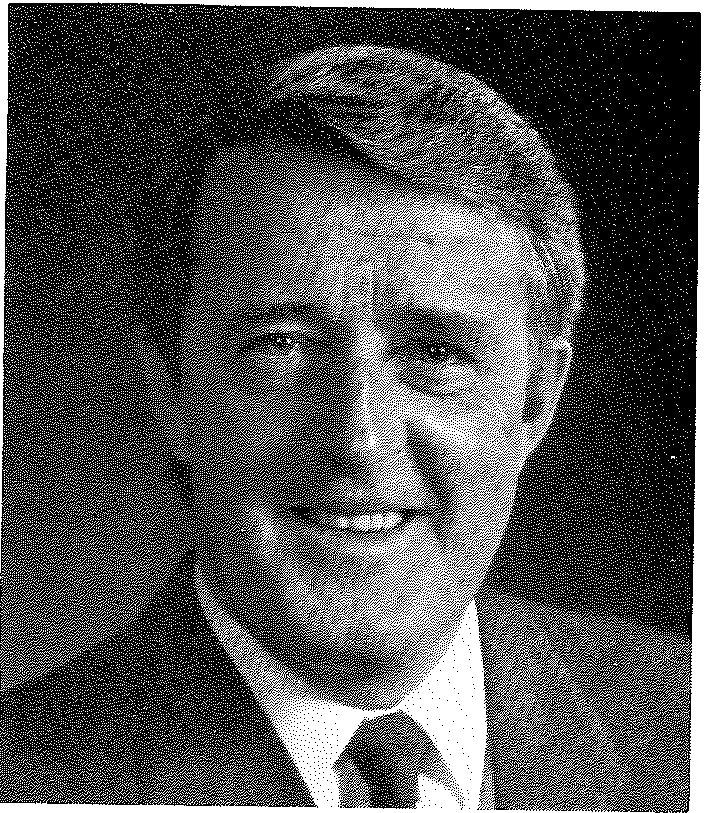
The story of Canada’s eighteenth prime minister begins in the little town at the mouth of the Manicouagan and Outardes Rivers, where in the early Thirties Colonel Robert McCormick, publisher of Chicago Tribune and the New York Daily News, decided to create a new pulp and paper operation to feed his growing dailies. Ben Mulroney and his recent bride Irene, both third generation Irish-Canadians, made the Colonel’s decision their livelihood. Ben later became foreman at the mill while running an electrical repair ship on the side. Four years after their arrival, on March 20, 1939, their first son and the third of six children was born in the local hospital.
In a town where half the neighbours were French-speaking the young Brian grew up with complete familiarity in both languages. It is a fortunate circumstance from which he has profited ever since. Around the kitchen table he also learned to sing. This skill was turned to profit rather early when he would sing, at $50 a gig, Colonel McCormick’s favourites — ’Dearie’, ’Danny Boy’ and ’When Irish Eyes are Smiling’. The latter has gained a permanent association with Mulroney ever since he joined with Ronald Reagan in singing a chorus at the Quebec Summit. Today his repertoire reputedly includes the best of Tin Pan Ally, Irish and French Canadian ballads and every one of the songs made famous by Vera Lynn in her Hits of the Blitz album. His own favourite is said to be ’Dear Hearts and Gentle People’.
Schooled by the nuns of St. Amelie and brothers of the Clerc St. Viateur, he followed the lead of his two older sisters and completed his secondary education with the diocesan priests of St. Thomas College in Chatham, New Brunswick. Summers were spent in Baie Comeau working as a security guard, a labourer in the Cargill Grain Elevator and later as a driver for one of the bosses on a big construction site and helping his father with the family electrical shop. Mulroney would later name his oldest son after his Dad. His biographers say his father, who died of cancer in 1965, was the principal influence on Mulroney. Ben Mulroney instilled in his son a “sense of dedication to whatever you are doing” utter loyalty to your friends and family. But while admiring his Dad, Brian was determined not to follow his example, says Rae. Growing up in a company town, Mulroney told his brother-in-law, had shown him that while his Dad was a “great guy” he “is not a guy who moves things, makes things happen. “ Politicians did and so, writes Rae, he began to think about his long-term goal
– a career in politics. In September 1955, the young Brian looking less college student than “scrawny, scared, baby-faced kid with a brushcut” arrived on the campus of St. Francis Xavier University in Antigonish, Nova Scotia. Politically the region was Liberal. As Mulroney later recalled, even “all the nuns were Liberals, a bunch of god-damn Grits” St. FX’s most famous graduate of that time was Angus L. Macdonald who had died in 1954 after 16 years as Liberal premier and a stint as Defence Minister for Mackenzie King. The sitting M.P. was another St. FX man, Allan J. MacEachan, who had won election in 1953. Nicknamed ’Bones’ because of his sparse physique by his pal Sam Wakim, he tried hard to make himself part of the community. Rae cites one onlooker as remembering him in almost pathetic terms: “I can still see him arriving with his cardboard suitcase … He didn’t know anybody and he wanted so hard to be liked. The older kids would shove him around a bit and he’d look at them with eyes like saucers and keep trying to be accepted.” Mulroney rapidly developed a set of chums who would remain his supporters and friends. His roommate was Lowell Murray (now Mulroney’s Federal Provincial Relations Minister, Senator Murray was the only one of the St. FX gang who did not fall behind Brian in 1976 and MacDonald says “Mulroney never really forgave him for it”). The rest of the gang, besides Wakim (now a partner with Weir and Foulds, the former M.P. acts as a legal agent for the EDC), included Pat McAdam who made Mulroney sportswriter for the Xavierian Weekly (McAdam now handles caucus liaison out of the PMO), Fred and Gerry Doucet (Fred is now senior advisor for the foreign policy in the PMO while Gerry is a prominent Halifax lawyer and former Minister in the cabinets of Nova Scotia premiers Stanfield and Smith), Bernard Lavoie (a major GM dealer who supplied Opposition Leader Mulroney with his Buick) and Paul Creaghn (a former minister in the Hatfield cabinet and now senior solicitor for New Brunswick Electric Power Commission). Mulroney worked on the successful campaign that made Robert Stanfield premier in 1956, and in December of that year travelled to Ottawa as national vice-chairman of Youth for Diefenbaker in the convention that chose the Chief to succeed the patrician George Drew. There, Mulroney worked for Diefenbaker’s national youth chairman, Ted Rogers (of cable television fame) and Hal Jackman (now a prominent Tory and Chairman of Empire Life Assurance Co.). He returned to St. FX armed with a photo of himself and Diefenbaker which he would later use in the 1976 campaign, to the latter’s horror. His relationship with the Chief had its ups and downs. He used to make great play of it while he was at Laval where he would regularly call the PM, a fact which greatly impressed his friends. Later, he was involved in the Dump Dief campaign. At the end, however, he was an honourary pallbearer at the state funeral and as Prime Minister, Mulroney has seen to it that Diefenbaker was honoured by a statue on Parliament Hill.)
Elected President of the St FX Tories, Mulroney also gained the university’s oratorical championship using as his theme the corrupt dealings of Duplessis, the subject of his final thesis. Throughout his time at St. FX, he would spar with the campus leading Liberal, Richard Cashin of Newfoundland (who went on to become a Liberal M.P. and is currently head of the Fisherman’s Union). Rosann Earl (who has since made a career as a CBC reporter on the rock and is the wife of Cashin) was his date at the senior prom.
From St. FX it was on to law school, first to Dalhousie with time out to help in the reelection of Stanfield and then to Laval to spend, as Mulroney calls them, the “golden years”. He struck up a friendship with Daniel Johnson and as he told MacDonald “many a night, many, many a night”, ’, he’d spend the evening in the bar of the Chateau Frontenac with the Union Nationale leader where they would “chat and shoot the breeze”. He also developed another set of friends that have stuck by him.
’Les inconditionnels de Mulroney’ Lucien Bouchard (now our ambassador in Paris) called them, they included Michel Cogger (now senator), Bernard Roy (now his principal secretary) Jean Bazin (cochairman of the 1984 election campaign he was named to the Board of PetroCanada, a Q.C. and now Senator) and the ’Englishmen’ from Westmount, Michael Meighen (later president of the Conservative Party) and Peter White (latterly in charge of patronage in the PMO and now with Dominion Stores). They spent their hours between classes writes MacDonald, “doing a good deal of drinking and womanizing” or, as Mulroney puts it, leading “bohemian lives in the Quartier-Latin … hell, we were having the time of our lives”. At the same time he kept his sights on his goal and maintained a political profile.
Participating in a Maclean’s panel on the future generation of politicians, Mulroney was asked what he thought about patronage: “I think his attitude is going to be drastically changed from the attitude of those who are in government today … the young people are going to strengthen the nation at the cost of partisan politics and they are going to take a much more idealistic view of things 20 years from now”. With White as president, Mulroney, Cogger and Meighen as vice presidents (and former foreign service officer Nicole Senecal as secretary), they organized the Congrès des affaires canadiennes in November, 1961. Featuring Davie Fulton, Jean Lesage, René Levesque, Andre Laurendeau, Eugene Forsey, Gerard Pelletier, and Marcel Chaput it became one of the seminal events of the Quiet Revolution. It was a time for idealism.
While Turner was running in Montreal in the 1962 election, Mulroney was out west working for Alvin Hamilton. And if John F. Kennedy was influencing the young Turner, he had even greater influence on Brian Mulroney. “In many ways,” writes Mac-
Donald, the Kennedy influence was “the most profound of all”. Kennedy was, says Mulroney, “absolutely unique… I think it was his style, the human quality, the sense of romance and public service … he did a great deal to dissipate the stereotype of Irish Catholics” Today, Mulroney readily acknowledges the influence of the dead President and his style of oratory on his own speeches.
From Laval it was on to Montreal, and the labour department of the law firm of Howard, Cate and Ogilvy. “When he wasn’t”, writes MacDonald, “cutting deals, hatching conspiracies and squiring a steady stream of attractive women around in a succession of big cars”,, he was making a name for himself as an able negotiator. He first worked for the Maritime Employers Association (MEA) and later, after he had met and impressed Paul Desmarais, for the latter’s newspaper, La Presse, and for the transportation branch of the Power Empire, Voyageur buslines and Canada Steamship Lines.
It was while engaged on one of the MEA cases that Mulroney met the 18-year-old Mila Pivnicki at the pool of the Mount Royal Tennis Club. She was, he recalls, wearing a bikini and while she could not go out with him that night because she was babysitting, the romance blossomed. They were married a year later, May 26, 1973; Bernard Roy was best man, and the ushers were Michel Cogger, Lowell Murray, and Yves Fortier (now a senior partner with Ogilvy, Renault.) Both biographers agree that Mila has become Mulroney’s perfect consort and best friend
Mulroney’s full role in the ’Dump Dief’ movement is uncertain. It was, Mulroney told Rae et al, “a sad and tragic period for the party. And one of the most tragic aftermaths of the affair was that a most decent man and brilliant politician, Dalton Camp, became a pariah in his own party”. (Camp has since found rehabilitation as a Mulroney top civil servant.) MacDonald writes he “was not remembered as having been on either side of that debate” and Mulroney says he is uncertain as to whether he was a delegate but that he “would have voted for the idea that Dalton was trying to put forward… his position deserved a hearing”. ’. The chronicler of the period, Peter Newman, writing in his Distemper of our Times (published in 1968), is slightly more revealing — he claims Mulroney was one of Camp’s chief strategists along with Lowell Murray, Flora MacDonald and Norman Atkins. During the subsequent leadership race, Mulroney was one of Davie Fulton’s campaign managers and went with him when Fulton swung the race to Stanfield on the last ballot.
In the 1972 election campaign, Mulroney was a co-chairman and played an apparently leading, if murky, role in the effort to get “ Claude Wagner to be a candidate by providing him with a $300,000 trust fund. In 1974, Mulroney was named as one of the three commissioners to the inquiry into violence and corruption in Quebec’s construction industry. His old professor, Robert Cliche, by whose name the Commission would become known, was named chairman. Mulroney hired his friend Bouchard as counsel. The Commission made Mulroney a public figure and positioned him nicely for his first run for the Tory leadership in the wake of Bob Stanfield’s decision to step down.
In declaring his candidacy, Mulroney said he could win and he started “from the premise of an indivisible Canada. There can be no compromise on this point. shall attempt to bring to the ongoing debate regarding Canadian federalism and its attendant problems (a) sense of civility and responsibility”. The “candidate from whim- ‘sy” as Fotheringham dubbed him did well, even if he personally did not have a vote, thanks to the Wagner team’s machinations. But the appearance of a too-slick and obviously moneyed campaign (the press reported the chief sources of funding were financers Paul Desmarais, Conrad Black and Charles Bronfman), the private jet and limousines, the obsequious courtiers, all contributed to the criticism he was the product of image-makers and big money. A second walk-through at the convention simply for the benefit of the TV cameras, for example, was portrayed as ‘plastic’ and opportunistic. He held second place behind Wagner on the first ballot and then was passed by Joe Clark on the third. He refused to back either of the two finalists on the last ballot.
MacDonald says Mulroney took the defeat hard. In an interview with the Financial Post’s Stephen Kimber which appeared in the June 1978 issue of its magazine, he was savage in his portrayal of leader Clark: “I didn’t run for the leadership because I needed a house (Clark moved to Stornaway from an apartment),… And] didn’t run because needed a job. I had a job. I ran because the Conservative party needed a winner.” Bitter and bored, his biographers suggest he succumbed to the curse of the Irish. Mila is cited as the principal behind his rehabilitation and his drink is now soda water over ice. He cut out the two packs of du Maurier after the 1983 leadership campaign.
After the convention, he took up the offer from the Hanna Mining company in Cleveland to become initially executive vice president, then president, of its Canadian subsidiary, the Iron Ore Company of Canada. The deal was a back-loaded five year contract which provided equity, a pension, and a dollar-a-year mansion at the top of Westmount. It assured him the financial security he sought and provided perqs like four box seats behind the Canadiens bench, a fishing camp in Labrador, the company plane and, perhaps most importantly, prestige. MacDonald skates quickly over Mulroney the CEO. The closing of the Iron Ore mine in Schefferville in November 1982 gets a paragraph. Rae goes into considerable more detail but both contend that Mulroney acquitted himself well.
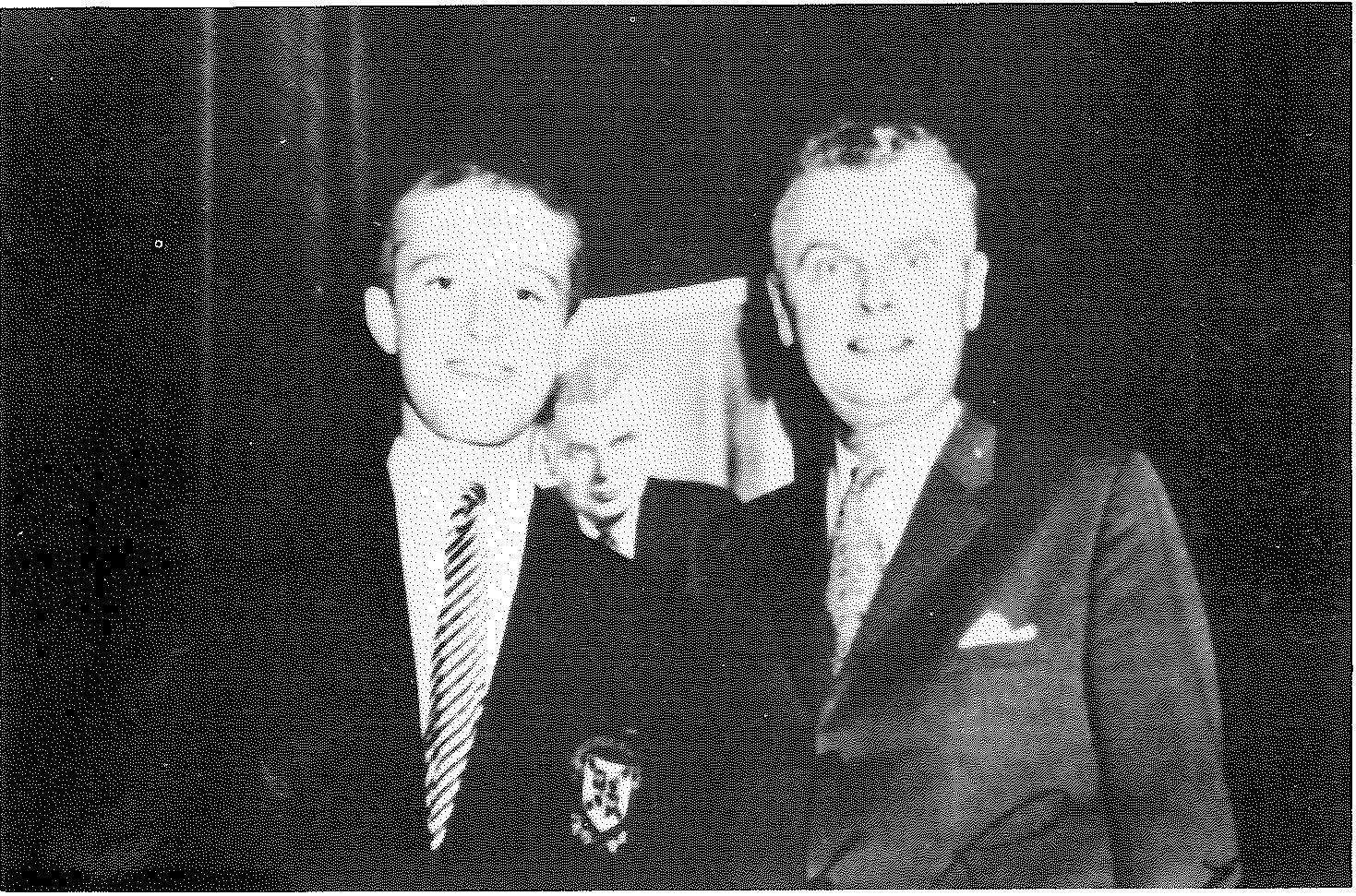
His involvement in politics circumscribed by the 1976 defeat, Mulroney’s energies were put to raising $11 million for St. FX development campaign and the occasional political event. Rae reports that Trudeau offered him a seat in cabinet, while doe Clark wanted him to run in the 1979 election. Mulroney chose to keep a low profile. Mulroney disagreed with Clark’s decision to play only a limited role in the referendum and it was the subject of his September 1980 speech, the first of importance since the leadership debacle. Sam Wakim began to send to selected friends the speeches which would later form the basis of Where I Stand. And he kept in touch with friendly journalists like Brian McKenna, Robert McKenzie, Peter Newman (who has been named Mulroney chronicler), Richard Doyle (who he named to the Senate), Bill Fox (his current Communications Chief), Allan Fotheringham, Doug Fisher, Bruce Phillips (now in Washington as Minister), Michel Gratton (his press secretary) and, of course, biographers MacDonald and Auf der Maur. Mulroney’s fixation with the media and what they are saying about him has been recorded often; MacDonald calls him a “news freak” who reads and watches everything. The contacts helped him stay attuned to the shifting sands of Tory fortunes.
And the leadership was soon to reopen. The February 1980 defeat revived what political scientists have euphemistically called the Tory syndrome. What role Brian Mulroney played in fanning the fires of discontent is open to speculation. Neither biography is helpful. Mulroney’s endorsement of Clark in December 1982, only 53 days before the Winnipeg review decision which forced Clark to call the leadership convention has, in retrospect, a certain hollow ring to it. As MacDonald points out, the friends of Mulroney were actively involved in the Dump Clark campaign. The principal ringleader was Frank Moores (named to the Board of Air Canada, Moores later resigned over appearances of conflict of interest with his lobbying firm, Government Consultants International), who had backed Mulroney in 1976 and included Elmer McKay (who would later resign his seat in Nova Scotia to give Mulroney a place in the Commons). Michel Cogger and Rodrique Pageau had been busy gathering review delegates and discussing the results, as MacDonald reveals, in Mulroney’s home in early December. The announcement by Mulroney in Montreal, two days before the vote in Winnipeg, of the generous package for the Schefferville workers was, says MacDonald, “understandably cause for suspicion as to his motives”.
On March 21, 1983 Mulroney declared once again he would be a candidate for the Tory Crown. It was purposely a less ostentatious campaign and he carried his own luggage and travelled economy. About to make the announcement, MacDonald relates how the candidate was almost thrown off by the appearance of “the only goddamn Cadillac cab in the city of Ottawa”. Aide Michael McSweeny (now an Ottawa alderman and aide to Associate Defence Minister Paul Dick), whose father was general manager of Blue line cabs, “paid the guy off”. Mulroney was able to begin his successful campaign in “an appropriate Plymouth”. Campaign headquarters be came an office in the Ritz-Carleton where hotelier Fernand Roberge (also named by Mulroney to the Board of Air Canada) kept the secret as secretary Ginette Pilotte cranked out the speeches and letters. To make it clear he was the Quebec candidate and Montreal was his home, the coming-out party had been held in the hotel a fortnight before the Ottawa announcement. The ’Friends of Brian Mulroney’ drew 3,000 and the endorsements included those of Bobby Orr (whom he had met through his friend the President of Standard Brands, Ross Johnston), Lucien Bouchard (then chief negotiator for the PQ), Paul Desrochers (a former advisor to Robert Bourassa) and Phil Cutler (prominent union lawyer).
The campaign team was made up of his old friends from St. FX – Doucet, White, Wakim and Laval: Cogger, White, Roy, Meighen, and Bazin and the “76 campaign — Nantel (as Communications chief, whose advertising firm has since been given the contract for dispensing government contracts), Moores and Pageau. The chief fundraisers were Senator Guy Charbonneau, David Angus (since named a Q.C. and to the Board of Air Canada, he is chairman of the PC Canada Fund), and Don Matthews. (His daughter Shelley is married to Premier David Peterson.) The “intellectual bodyguard” was Charley MacMillan, who had met Mulroney at a Tory policy conference in 1969 and then gone to work for the candidate in 1976. His provincial organizers included Lee Richardson from Alberta and Janis Johnston in Manitoba (now a Board member of CN, her father was recently named Manitoba lieutenant-governor). In Ottawa, he was able to garner caucus support from 20 M.P.s and a few senators.
MacDonald details well the leadership campaign and the convention although the definitive story of the ’83 convention remains Contenders: The Tory Quest for Power by Globe reporter Patrick Martin, pollster Allan Gregg and Queen’s professor and historian George Perlin. If in 1976 he was perceived as a Red Tory, this time he was seen as the choice of the Tory rednecks. Mulroney complained about the “swedenization of Canada” and promised to throw out the wretched bureaucrats with “a pink slip and a pair of running shoes” Nonetheless, Martin argues he was actually much closer to Joe Clark in ideology than Peter Pocklington or even Michael Wilson, both of whom swung their support to Mulroney after the first ballot, thus ensuring Mulroney, not Crosbie, became the best placed to depose Clark.
During the campaign, Mulroney released Where I Stand, his prescription for the nation’s problems. In it Mulroney emphasizes the family home and Canada as a civil, orderly country where there is a spirit of generosity and the community helped the individual get ahead while supporting the less fortunate. Economically, his vision of Canada is that of the 1950’s and 60’s where investment flowed in and private enterprise flourished. We had this once, he argues, we can have it again. Martin says the heart of the book and the center of Mulroney philosophy is in “A View from Baie Comeau” where Mulroney defends individualism. It is a testimony to those who took the risks in developing the North Shore: Was it a demeaning life experience – as some fancy pants leftists would lead us to believe, those who would discourage new capital entering Canada and penalize the existing pool – for you, for me, for many others who found here a sense of belonging; important degree or tolerance and pride; moral strength; a legitimate ambition to do, to build, to acquire and to share, the capacity to suffer defeat; and, to start again toward new challenges.
These are the qualities that are instilled into us, perhaps unknowingly, by an independent and audacious life on the North Shore. Such are the values and liberties we have acquired here, and which are slowly being taken away from us, quietly, gradually, surreptitiously, by our leaders behind a smokescreen called ’democratic collectivism”. For me, it is just like an insidious illness which will, inescapably, diminish our strength and our duties as independent citizens.
The rest of the story is well-known. Mulroney won the leadership on the fourth ballot and then a seat in the Commons on August 29, taking his place in the House when parliament resumed on September
12. In the months that followed, he was particularly active in defending French language rights in Manitoba and in opposing the Liberal Government’s plan (subsequently dropped) to limit provincial agencies to a 10 per cent share in provincial transportation and pipeline companies, the latter an effort to prevent the Caisse de depot from gaining control of Canadian Pacific. When the election was finally called, he was ready. Brian Mulroney is Canada’s first Irish Catholic Prime Minister (Meighen and Mike Pearson were Protestant Irish, quite another kettle of fish; St. Laurent comes closer, his mother was Irish) and his approach to life betrays his roots. A knack for politics is the one thing that many Irish Americans, pugnacious yet gregarious by nature, have inherited from their native land. Great sentimentalists, their appeal is very much based on emotion, family and community. This has been the appeal of the likes of William Marcy Tweed, George Washington Plunkitt (whose plain talks on practical politics have been well practised by Mulroney), Honey Fitz Fitzgerald, Smiling Jim Donovan, Jimmy Walker, James Michael Curley, Richard Daly, the Kennedys and Ronald Reagan. The formula has been used with varying success.
Rae compares Mulroney to Lyndon Johnson, not a terribly flattering comparison. Mulroney, they say, “believes one gets what one wants by demonstrating power, doing deals and making trade-offs”. Most pundits draw parallels between Mulroney and an earlier populist prime minister, John Diefenbaker. A political touch far superior to their rivals, a gift of human warmth, of wit and mimicry, a sure instinct for crowds and headlines, the trombone voice defending outraged virtue, downtrodden justice and the Canadian spirit are all shared in common. Like Diefenbaker in ’57 and 58, Mulroney completely possessed the Conservative Party and made it his own. He revived the barnstorming techniques of earlier times, skilfully deployed them with the able techniques of Norman Atkins, the most able of the back-room boys, and flinging promises right and left, won the biggest majority in Canadian history.
But if Mulroney has taken pages from the Diefenbaker playbook, he has also learned from his old friend; the Irish-French Canadien Daniel Johnson and studied well the style of le Ancien Chef, Maurice Duplessis. Their style of governing, characterized by a tight grip over their followers, is rooted in the belief that the essence of politics is power exercised by one man. But government, even provincial, has become vastly more complicated and sophisticated It is no longer practical or even possible to keep the affairs of state on a tight leash. In Edwin O’Connors The Last Hurrah, the defeat of Mayor Frank Skeffington, loosely modeled on Boston’s Curley, was attributed to the sophistication of government as a consequence of the New Deal. “The old boss,” he explains “was strong simply because he held all the cards. If anybody wanted anything —jobs, favors, cash — he could only go to the boss, the local leader. What Roosevelt did was to take the handouts out of local hands. A few things like Social Security, Unemployment Insurance, and the like – that’s what shifted the gears, sport.”
Son of the working class, Brian Mulroney has become rich, famous and powerful. Charming and quick, he has shown talent for the art of political intrigue. His silver tongue, touched with a generous dose of political flatulence, has generally served him well. Like the old nursery rhyme, when he is good he is very good. That there is an element of blarney is obvious. The problems arise over his penchant for exaggeration or as the pundits put it, the ’lying Brian’ factor. Neither biographer is much help in exploring this side of the man, although Rae says in doing their research they discovered that Mulroney’s portrayal of himself as a rough and ready rogue when he was a youngster was not that of those around him. He was, said his first teacher, a nice boy and a good student, “exceedingly ambitious and gloried in attempts at public speaking and other types of competition.”
The first Conservative leader since Confederation with any real ties to Quebec, Mulroney understands well that to break the Liberal’s stranglehold on power he must hold his home province. This is something Diefenbaker never fully appreciated, despite the best advice of the 20-year-old at Laval. Mulroney knows that the only times this century that the Tories have formed a majority government (with the exception of 1911) 1930, 1958 and 1984, they took a majority of the seats in Quebec. “Keep your eye on the ball” is one of his favourite expressions; his eye is on Quebec and this preoccupation can be seen in decisions like that on the CF-18, Domtar, Hyundai, DRIE grants and his Trudeau-like evocation of ’French power’
Mulroney’s loyalty and generosity to his friends have been illustrated. Mulroney defends his rewards to his friends arguing “ya dance with the lady that brung ya” They, too, now occupy positions of trust, importance and power, many on their own merits. But there is a fine line between rewarding talent and encouraging cronyism. His critics remind him that Irish-American politicians who have built their base on their friends and charm often suffer from an inability to handle power. The current senior senator from New York, Daniel Patrick Moynihan, himself an Irish-American, has warned that: “the very parochialism and bureaucracy that enabled them to succeed in politics prevented [the Irish] from doing much with government. In a sense, the Irish did not know what to do with power once they got it.” For Brian Mulroney winning the 1984 election was easy. Keeping that power will require consumate skill, a real record of achievement and the support of at least some of those ’dear hearts and gentle people’ who chose him last time.
View the original scanned pages →
Originally published in bout de papier, Vol. 4, No. 4 (1986) — Winter 1986 // Hiver 1986, pp. 39–46. Read the rest of this issue →



