
bout de papier, Vol. 4, No. 4 (1986) — Winter 1986 // Hiver 1986, pp. 46–50
Bill Dymond on Vimy by Pierre Berton,
McClelland and Stewart, Toronto, 1986,
336 pp., $24.95.
Sir Arthur Currie by Daniel G.
Dancocks, Methuen, Toronto, 1985, 332
pp., $29.95
Gas! The Battle for Ypres, 1915 by
James L. McWilliams and R. James Steel,
Vanwell Publishing, St. Catharines, On-
tario, 1985, 247 pp.
Beyond Courage: The Canadians at
the Second Battle of Ypres, George
Cassar, Oberon Press, Toronto, Ontario,
1985.
In modern memory, the Great War is the poor cousin to the Second World War. The former is remembered as war of endless mud and unmitigated, fruitless slaughter fought to a stalemate. The latter shines forth as the victory of righteousness over evil, the emergence of civilization into the broad sunlit upland plains in Churchill’s phrase.
The Great War is the single dominating event of this century. It was a tragedy for the old World and a triumph for the new. It shattered some empires and sent others into irremediable decline. It brought forth revolution and set forth a chain of events which continue to tremble the world. For Canada, the Great War made us a nation to ourselves and gave us identity and presence in world affairs.
Films and television make little contribution to bringing the Great War to modern consciousness. With the film based on Timothy Findlay’s “The Wars”, an honourable exception, there are few feature films made of the Great War and the war footage reflects the primitive state of the art in its flickering, shadowy depiction of figures moving with a Charlie Chaplin gait. Whether the expression of Canadian cultural identity or the product of the crass American entertainment industry, there is an abundant collection of documentary and feature film on the Second World War, much of it with a white hats versus the black hats view of great events.
These books mark an overdue resurgence of interest in the 1914-1918 conflict which took 60,000 Canadian lives. All of them observe Lord Trevelyan’s dictum that the narrative is the essence of good historical writing. Their aim is to penetrate the dry, detailed and dusty if impeccably accurate accounts of the official histories and biographies by combining the strategies of the commanders with personal accounts of the soldiers and in that they largely succeed. They are welcome additions to a growing Canadian library of modern Great War history written both for the amateur and professional reader.
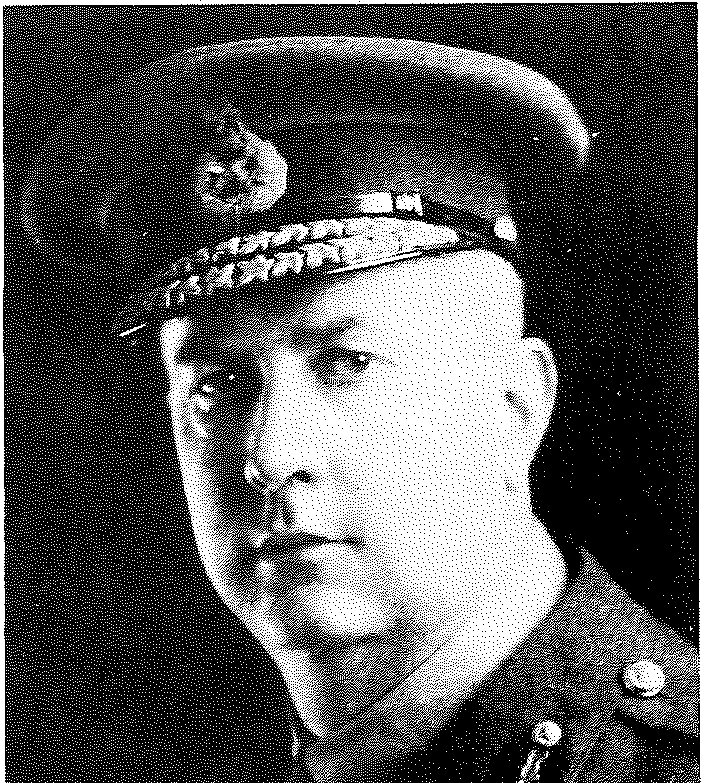
At the battle of Vimy Ridge in 1917, the Canadian Corps in one of the most brilliant feats of the Great War achieved the first decisive victory of Allied arms in three years of war on the Western Front. Berton’s latest book is the story of the Canadians who fought in the battle and what the victory meant to them and to Canada. It combines a bird’s eye view of the battlefield with the blood and guts view of the soldiers who fought in and on it.
The opening chapters briskly recount the recruitment of the Canadian Expeditionary Force and its transformation into a Corps of four divisions and 100,000 soldiers by the autumn of 1916. Berton captures the chaos of the first few weeks of war in Canada as carefully laid mobilization plans were swept aside and 25,000 volunteers rushed to a hastily built camp at Valcartier near Quebec. The character of Sam Hughes, Borden’s Minister of Militia is tellingly depicted. Hughes was bombastic, tyrannical, a would-be Napoleon. On the morning of August 4, 1914, Hughes ordered the Union Jack lowered from the militia building on Sparks St. to mark his disgust that the Imperial Cabinet had not yet declared war. In London, two months later Hughes is reputed to have faced down Lord Kitchener by insisting that Canadians fight together rather than being distributed into British units.
The Canadians embarked for England on a misty October morning in 1914. In 1915, this force of citizen volunteers with a few months of training, a British general and the imposing title, the First Canadian Division, was inspected by the King and Lord Kitchener and shipped to the Front. By 1916, there were four Canadian divisions on the Western Front. Appalling casualties had been suffered in bloody battles in Flanders and on the Somme but the Canadians had acquired confidence and the reputation as the elite of British forces. In October and November 1916, the Corps entered the trenches on the slopes of Vimy Ridge. They were commanded by General Sir Julien Byng of later Byng King fame.
Vimy Ridge, “a low, seven mile escarpment of sullen grey, rising softly from the plain below, a monotonous spine of mud, churned into a froth by shellfire, devoid of grass or foliage, lacking in colour and “ had been held by the Germans since 1914. The Ridge was the critical anchor point of the German defensive position in Northern France and its capture was essential to protect the allied left Flank for the 1917 British and French offensives. The French lost 150,000 men at Vimy in 1915. The Germans considered the position impregnable.
Berton describes the meticulous preparations through the five month runup preceding the attack. The Canadians mounted large and small scale raids on the German position to gather intelligence and keep the enemy off balance. Massive tunnels sheltering whole battalions were run up to front lines — in some places a bare 25 yards distant from the German trenches. The four divisions rehearsed the attack in the back areas so that every man knew his job. Over the previous days and weeks, artillery had reduced German front line positions to rubble and destroyed German counterbatteries.
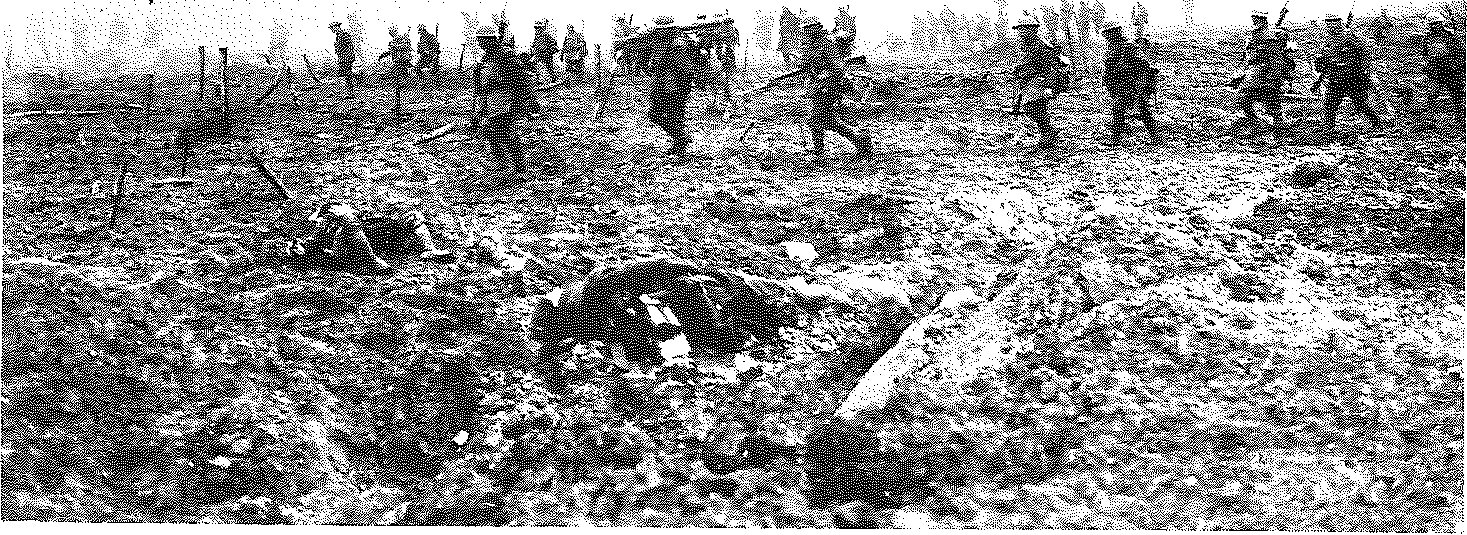
At 5:30 a.m., April 9, Easter Monday, 1917, 983 artillery pieces and 150 machine guns began the attack. “The shells and bullets hurtling above the trenches formed a canopy of red-hot steel just above the heads of the advancing troops…” Twenty-thousand men, the first wave stood up and under heavy packs walked slowly in driving sleet and snow behind a creeping barrage.
Berton devotes a chapter to each of the four divisions in the battle. For each … “the style and method of attack differed depending on the frontage, the distance to be covered and the state of the German defences. There were four simultaneous mini-battles on the Canadian front, all interconnected.” The Germans were completely surprised. Within a few hours, most of the Ridge was in Canadian hands and two days later the rest had fallen. By Great War standards, the cost was light when measured against the gain. Still, the Canadians suffered over 11,000 casualties of which some 3,500 were killed
The art of writing about battles is to explain why the battle happened, who fought in it, what happened and what were the results. By this measure, Berton has produced a fine book. He has skillfully blended the principal events of the battle from the official histories and unpublished memoirs with recollections of the survivors. Some of the battle scenes are especially gruesome. “Suddenly, a dud shell whizzed by … It sliced off the head of the machine gunner… and the headless corpse, blood sprouting from the severed arteries actually took two steps forward before toppling into the muck.” War is a grim business and Berton leaves little to the imagination.
Map making and photograph selection is a skill which eludes many editors of military history. Good maps inserted where they are most relevant to the narrative are essential to readers of both a general and specialized interest. Berton’s editors deserve high marks. The battle lines of each division are at the head of its chapter, the main features clearly set out and the progress in the day of battle succinctly presented. Of photographs, there are none, not even of the Vimy Memorial and this is a serious omission.
The book is written in the high coloratura style for which Berton is famous. He makes heavy weather of the high proportion of soldiers who were not really Canadian when they volunteered but British immigrants who became Canadian after Vimy. He describes Sir Arthur Currie, commander of the First Division at Vimy as shaped like a pear. He glories in the loose easy going egalitarianism in the Canadian divisions compared to “their stiffnecked British counterparts … and social divisions …. “ how Vimy convinced the Canadians that they were the finest troops on the Western Front. There are elements of truth in all of this but the overwriting and hype. about Canada the colony before the battle and Canada the nation after Vimy detracts from what is otherwise a fine book.
According to Berton, at the end of the battle Canada “no longer considered herself a vassal of Great Britain. And, of course, she had never considered herself a colonial vassal of the United States.” This must mean that free traders did not fight at Vimy.
Sir Arthur Currie is a genuine Canadian hero. Few, today, remember his name. Fewer still recall his deeds.
Currie was a soldier of the Great War. Full time real estate promoter and part time soldier of the Militia when war broke out, he went to France in 1915 with the Canadian Expeditionary Force commanding the Second Brigade of the First Division. After Vimy Ridge, he succeeded Byng as commander of the Canadian Corps until demobilization in 1919.
Dancocks has written an admirable biography of Currie from his beginnings in Strathroy, Ontario to Victoria where he settled and had made and lost a fortune in the great boom days of Victoria’s growth from 1909 until the crash in 1914. Currie’s war years are accurately recounted with emphasis upon his epic and successful encounters with the higher British command and its traditional ways of making war.
If I were fierce, and bald and short of breath, I live with scarlet majors at the base, And speed glum heroes up the line to death.
Those few lines, written in 1917, by the war poet Siegfried Sassoon, capture the modern image of the 1914-18 general — past his prime, professionally choleric, impeccably turned out in the red tabs of the staff officer, comfortably housed at the base safely distant from the trenches, his only contact with the troops, their passage to the killing grounds. Currie was a different kind of general.
Dancocks shares the view of Currie’s contemporaries that Currie was one of the greatest generals to emerge from the war from either side of the trenches. He won the trust and confidence first of Byng and then of Haig, the overall British Commander on the Western Front. He lived close to the line with the troops, planned his operations with meticulous care, expended artillery instead of men’s lives and in the words of his Australian counterpart delivered the goods. He was responsible for remarkable innovations in its time that today seem common sense — that troops should rehearse the battle before it was fought, that the men should be trained to fight in platoons, that anyone in a position of responsibility down to the level of corporal should be issued with detailed maps and briefed on the plan of attack.
Dancocks also reveals the meaner side of Canadian politics. Currie was continually subjected to political pressures from all quarters on appointments, on leave requests, on demands for special duty usually far from the firing line. As Corps Commander, he earned the hatred of Sir Sam Hughes, by refusing to promote his son to divisional command. During the Conscription crisis, Borden encouraged Currie to make a public statement on the need for reinforcements and when the Liberals called for Currie’s dismissal as a political general, the government was silent. Currie, unlike victorious British and French generals was granted no special vote of thanks nor given a gift from a grateful country. When he was libelled in 1928, citizens from all over Canada sprang to Currie’s defence but again the government stood on the sidelines. Recognition came only after death.
Currie was Principal and Vice Chancellor of McGill from 1920 until his death at the age of 58. He brought the same indefatigable energy and organization to the affairs of the great university and played a major role in persuading Wilder Penfield to establish the neurological institute at McGill. Throughout this period, he fought for better pensions for veterans and for that his old soldiers were grateful and remained loyal. Like our modern retired generals and admirals, he became a passionate advocate of disarmament.
Currie resembles other Canadian heroes, for example, Sir John A. in that he came to his moments of greatest accomplishment with a past. He was virtually bankrupted by the real estate crash in Victoria when war broke out. Dancocks is rather kind to Currie on this matter alleging that he borrowed, rather than as others would have it, embezzled funds from the Regimental budget to fend off his creditors. These funds were, however, paid back and if his real estate holdings were worthless at war’s end in part due to an unscrupulous partner, his war record and his principalship of McGill covered all blemishes.
Currie suffered a stroke in November of 1933 and died a few weeks later without regaining consciousness. A quarter-million people, one fourth of Montreal’s population attended his funeral in 1933.
Dancocks concludes by quoting the tribute of Stephen Leacock, Currie’s early teacher in Strathroy and colleague at McGill. From that, a fitting excerpt for a life well lived of service to his country:
“He lived, in peace as in war, with the consciousness of the imminence of death. For him, life was but a pathway to something else, and he walked that path with a sense of meaning and its end that never left him for a day.”
Most Canadians know the story of Vimy Ridge. In school, we all learned the moving poem, In Flanders Fields, by the Canadian doctor, Captain John McCrae.
Vimy Ridge was a 1917 battle fought by a Canadian Corps of 100,000 seasoned soldiers who were the elite of British forces on the Western Front. In Flanders Fields is about the battle fought by the Canadian soldiers of 1915.
The books by McWilliams and Steel and Cassar tell the story behind the poem — how Canadians troops stood fast against German gas attacks in April 1915. This was the first battle Canadians fought in the Great War and their heroic defence played a major role in preventing a German breakthrough which would have trapped 200,000 British, Canadian and French troops in a small pocket from which there would be no escape.
Like the Berton Book, the opening chapters of both cover the early days of the Canadian Expeditionary Force through recruitment and training to their arrival at the front for trench training with the Imperials as the Canadians called the British regulars. In April 1915, 10,000 Canadians entered the trenches northwest of Ypres, one of the great cloth towns of the middle ages. Its adjacent territory running in a North, East, South, arc — the Ypres salient — was the killing ground of all armies who fought there in the Great War. It is a place of grim memory and evil deed
The battle began on April 22, a warm and sunny Spring day. At 5.00 p.m., the Germans released chlorine gas from long hoses connected to pressure tanks embedded in their trenches. A green and yellow cloud rose in the air and advanced slowly carried by a sluggish wind, creeping languidly close to the ground in heavy swirling billows, ominous, patient, unhurried, portentous, loathsome, deadly. On the left of the Canadians, the gas scattered the surprised and unprotected French divisions like chaff before the wind. A huge gap opened in Allied lines and presented the Germans with a glittering opportunity.
In succeeding days, the Germans launched severe gas attacks on the Canadians. Using simple cotton pads pressed over their noses and mouths and wetted with trench water or in some cases with their own urine, enough Canadians survived to beat off massive frontal assaults. The line wavered but held in the face of a 10 to one inferiority in men and artillery. Counterattacks by Canadian and British reserves prevented disaster and the battle petered out with a reduced but secure Ypres salient. When the Canadians were withdrawn after five days of desperate struggle and replaced by fresh British units, they had suffered fearful losses of killed, wounded and missing, more than half their initial strength.
If both books concern the same events, the emphasis is different. McWilliams and Steel’s account of the complete surprise achieved by the Germans is the story of a classical intelligence failure. Abundant warnings from deserters and agents of a German gas attack were ignored by French and British generals much as the evidence of a surprise attack was ignored by the Americans at Pearl Harbour and the Israelis at Yom Kippur. McWilliams and Steel also underline how the use of gas was a strategic blunder by the Germans. The prevailing winds in Western Europe flow from West to East. As the war progressed, it was the Allies who made the greater use of this terrible weapon.
While McWilliams and Steel concentrate on the battles fought by units and individuals, Cassar gives more attention to the strategy and tactics of both sides. From these accounts, the fog and confusion of the battle comes forth clearly. Neither the Allied nor German generals had more than an incomplete and frequently inaccurate understanding of the dynamics of the battlefield. Orders were issued when they were already out of date. Reinforcements arrived too late and in the wrong place. Artillery and infantry assaults were uncoordinated. The Allied position was largely saved by field commanders especially Currie.
Both books contain graphic accounts of the heroism of Canadian units and individual soldiers. Thus, Cassar tells how Canadian troops fought desperately to recapture the northern edge of the battlefield. “With bayonets fixed and rifles at the port, the Canadians moved forward… As enemy machine guns ripped out and rifles crackled, the Canadians fell in swaths… Captain John Geddes, who although mortally wounded, struggled valiantly on hands and knees shouting ‘Come on! Come on!
. they recovered their balance and with a wild shriek rushed forward.”
McWilliams and Steel have collected gruesome scenes from survivors. One describes the peculiar sour, heavy and penetrating smell of corpses. “Men that were killed last October lie half in the swamp and half in yellow sprouting beet fields. The legs of an Englishman, still encased in puttees stick out into a trench, the corpse being built into a parapet a soldier hangs his rifle on them.”
Cassar’s editors rate a high grade for clear and uncluttered maps which capture the essentials. McWilliams and Steel’s editors have much to learn. Their maps are awkwardly placed, cluttered with hard to read trench lines, strong points, battalion numbers and arrows racing off in all directions to show attacks and counterattacks. Both books have a good selection of photographs.
McWilliams and Steel have a fondness for searching for biblical analogies to lend light and color to their story. Citations from both the Old and New Testaments adorn the headings of each chapter. Some of these are apposite as in the heading to the chapter which describes the most desperate phases of the battle. “Yea, though I walk through the shadow of the valley of death…” Others are less obvious. While McWilliams and Steel are to be applauded for employing the King James’ version rather than the pedestrian modern translations, there is such an abundance of moving if bitter Great War poetry, they would have been better advised to draw on McCrae, Sassoon, Owen and many others for their chapter headings.
If McWilliams and Steel can be faulted on maps and chapter headings, they have a powerful conclusion: “The… battle
. was a miniature of the entire First World War. In it were seen all the elements of war — the heroism, the atrocities, the total destruction of a way of life and the achievements of centuries, the terrible toll in maimed and killed, the missed opportunities, the callousness of the leaders towards those they led… so many died to achieve nothing.”
It is a fair judgment. From the start, the attack was a half hearted affair pursued by the Germans to test their new weapon. The German General Staff had already transferred a major part of their strength to the East for an offensive against the Russians. No reserves were available to exploit the holes created by the gas or overpower the Canadians and close the trap. Like so many battles of the Great War, it was a bloody struggle for small advantage.
Cassar’s book concludes with the story of how McCrae’s poem came to be written. McCrae was a Montreal pathologist serving in the Canadian Army Medical Corps. Working round the clock, he agonized over the suffering of the wounded and the growing number of small wooden crosses of the dead. One night, he scribbled a few words on a scrap of paper, looked at what he had written and threw it away. His companion retrieved the poem and had it published in Punch Magazine in December 1915. The last stanza captures the bitterness and bravado of the Canadian soldiers of the Great War.
Take up our quarrel with the foe: To you from falling hands we throw The torch; be yours to hold it high. If ye break faith with us who die We shall not sleep, though poppies grow In Flanders Fields.
The Vimy memorial between Arras and Lens in Northern France is about a two hour drive from our Paris and Brussels posts. Standing at the Northern end of the Ridge, it is the tribute to the 60,000 Canadians who fell in the Great War. On its marble walls are engraved the names of the 11,000 Canadians who have no known grave. Close by there are impeccably maintained Commonwealth graveyards. For politicians, diplomats, for old soldiers, and for the French who live nearby, Vimy is a place of pilgrimage.
The Memorial to the 2,000 Canadians who were killed in five days of battle in April 1915 is the half figure of a soldier, head bowed mounted on a column. There are no Commonwealth graveyards for the dead of this battle. They are buried in what Sassoon calls the “soul-clogging” soil of Flanders. The memorial stands at a cross roads near Ypres where the first shock of battle took place. In eloquence unusual for a government publication, the Canadian Battlefield’s Commission captures the mood:
There is a mysterious power in this brooding figure drawing you from the things that are to the things that were. It does more than command the landscape, it orders the spirit. This is the soul of those who fell.
View the original scanned pages →
Originally published in bout de papier, Vol. 4, No. 4 (1986) — Winter 1986 // Hiver 1986, pp. 46–50. Read the rest of this issue →



