
bout de papier, Vol. 4, No. 4 (1986) — Winter 1986 // Hiver 1986, p. 4
I he rate executive in elected and representative of all streams and levels. There is a healthy infusion of new blood. Fears that the election would result in an Executive without balanced representation were proven groundless. All of which shows that Bernard Shaw was not far off the mark when he opted for election by the incompetent many rather than appointment by the corrupt few. Perhaps the most interesting feature of the new crew is the split between those who would take a more conciliatory approach to management/employee relations and those who favour a harder line. This coming year will be difficult as the Executive must negotiate a new contract with Treasury Board and, as part of the National Joint Council, participate in the triennial review of the Foreign Service Directives. With the Government desperately trying to reduce spending, achieving a satisfactory settlement will require our best talents. Happily, Jon Fried is coordinating the contract negotiations. His efforts last round earned him deserved praise. Managing the overall show will be the new president, Len Mader. If anyone can keep the game in perspective, he can. It will require adroit footwork.
A Anyone aspiring to the bureaucracy should pick up a copy of Nicole Morgan’s Implosion: An Analysis of the Growth of the Federal Public Service in Canada (1945-1985). Published by the Institute for Research on Public Policy, the book contains several hard truths that should force FS 1s and 2s who joined in the past decade and harbor illusions of rapid promotion to reconsider.
The first hard truth is that the days of expansion are over: the federal budget of May 23, 1985 announced that the number of federal employees would be cut by 15,000 over the next five years. As Morgan points out, this is more than simple attrition, because if patterns had continued the public service would have grown by 15,000 during that time. The net reduction is effectively 30,000.
The second hard truth is that one result of expansion during the late ’60’s and ’70’s has been to burden us with too many managers. This, of course, will come as no surprise to anyone in the foreign service! During this period, Morgan contends the merit principle worked only in the area of hiring and promotion. Its negative side, firing and demotion, was completely ignored. In 1984, for example, dismissals and demotions represented only 0.7 per cent and 3 per cent, respectively, of the appointments made that year. The rapid promotion of young managers has blocked access to the summit of the pyramid for many years to come. Those born at the end of the baby boom or those who have fallen behind their contemporaries are now paying the price. The curtailment of career options has put even more pressure on competition. The golden handshake remains an option but it is not one that appeals to all.
The third hard truth is that affirmative action policies inevitably interfere with the merit principle and breed frustration and resentment in their wake. The government is truly caught between the Charybdis of remedying past injustices and the Scylla of creating new ones. While francophones have been induced into the civil service to effect representation according to their population (although not at all levels as the Commissioner for Official Languages is wont to remind us), women were not. In the National Capital region in 1984, women represented 44.5 per cent of the public service but only 16.2 per cent of management positions. The Mulroney Government, like the previous Liberal administrations, have pledged themselves to redress this situation.
The final hard truth is that the civil servant is an easy target for the politician pledged to cutting costs. What better scapegoat, especially as bureaucrats are seen as overpaid and underworked. Continued retrenchment and cutbacks are inevitable. The Auditor General has already declared that many public servants are over-classified and action has started to reduce the more renumerative positions.
Suffice to say, the heady days of rapid promotion and salaries to match are gone. In the future, we will have to draw our satisfaction from other sources. Job content, better training and development all become more significant.
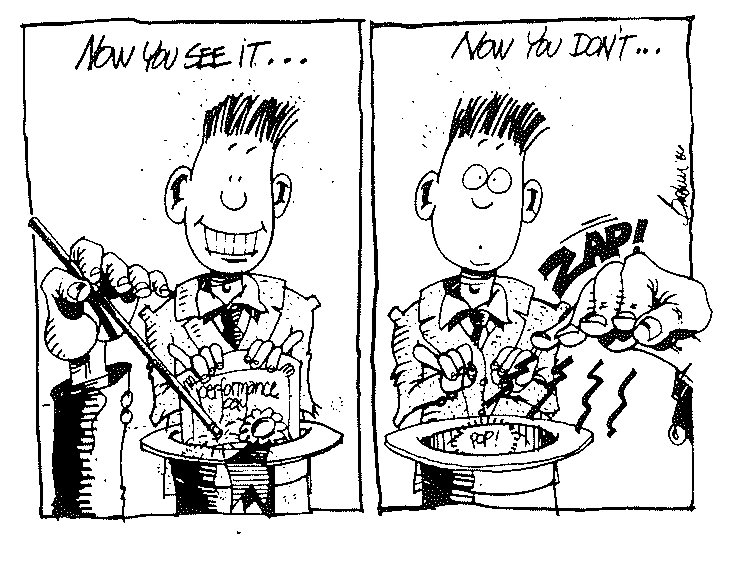
If diplomacy teaches us anything, it is that in acts of retribution are carried the seeds of future troubles. The decision by Personnel to move back by five months the effective date of promotion to the FS2 level is too clever by half. It makes a mockery of the recent decision by the Public Service Staff Relations Board which confirmed that newly promoted officers are entitled to the full amount of their performance pay award. PAFSO is trying to have the action withdrawn or modified.
While there are a number of issues at stake in this dispute it is worth looking back at Circular Document (No. 28/78). The purpose of performance pay, it says, is “generally recognized to be the encouragement, by material recognition, of high standards of performance. It provides management with a system of incentives supplementary to promotion and allows recognition of degrees of performance to be translated into concrete benefits to the employees concerned.” It short, it is intended as both a reward for past performance and an incentive for future distinction. I wonder if that still applies?
View the original scanned pages →
Originally published in bout de papier, Vol. 4, No. 4 (1986) — Winter 1986 // Hiver 1986, p. 4. Read the rest of this issue →



