
bout de papier, Vol. 4, No. 2 (1986) — Spring/Summer 1986 // Printemps/Été 1986, p. 22
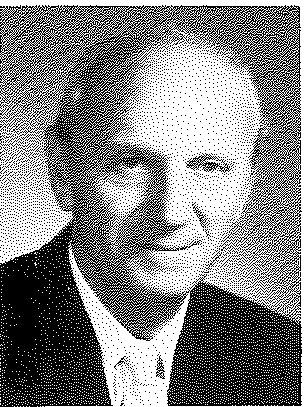
To those of us who were his close friends and neighbours in the early days of the United Nations, the 1950 Nobel Peace Prize award to Ralph Bunche came hardly as a surprise. We knew that not only human being but that, within a few years, he had already become one of the world’s top diplomatists and an outstanding black American of his generation. Completely unpretentious, he was also blessed with a sense of humour – understandably tinged with a bittersweet irony when recounting the extraordinary situations in which he sometimes found himself. He was very handsome, with an infectious smile, and for whatever reason of genetics, was a rather light-complexioned black.
In 1950 the U.S. Supreme Court decision on school desegregation was still years away. The Alabama sit-ins, Martin Luther King’s “We shall overcome” marches, the whole civil rights movement were still years in the future, and student busing and affirmative action were unheard of.
After distinguished service in the wartime Office of Strategic Services and the State Department, Bunche was an early appointee to the top echelon of the United Nations Secretariat, as Undersecretary for Special Political Affairs. In this capacity he performed the remarkable achievement of negotiating armistice agreements between Israel and the Arab states that had attacked her in 1948-49. Because the Arab nations did not recognize Israel and would not meet with the representative, Bunche was forced to perform a nimble pre-Kissinger type of shuttle diplomacy on the Island of Rhodes, and it was for his success in these endeavours that he was awarded the Peace Prize and received world-wide acclaim.
At that time we were neighbours of the Bunches in Parkway Village, a 700-unit garden apartment development on Long Island that had been leased by the United Nations to house families coming in from all parts of the world — members of the U.N. Secretariat, of Missions to the U.N., and of the international press corps. Parkway Village helped them overcome the postwar housing shortage and the special problems faced by newcomers from far-off continents, with black, yellow or brown skins, of widely-differing ethnic backgrounds, and utterly at sea in North American day-to-day living
Our neighbours from the Canadian Mission included John Starnes, Arnold Smith, George Grande and Bud Lefevre, and my daughter Riva and young Ralph Bunche Jr. were playmates and fellow kindergarten students at the fledgling United Nations School, long before it became the world-famous educational institution of today.
With the Bunches, our conversation would sometimes turn to the oddities encountered in living in Parkway Village and working at the United Nations. One evening my wife, Crenia, mentioned that the neighbouring Edingers — he was Agence France Presse bureau chief — had sent us an invitation card presenting their compliments and requesting the pleasure of our presence, but with the sole and uninformative notation “9:30 p.m. Thursday”. We assumed that this was the crisp French way of saying “come around after dinner Thursday for a cup of coffee and a drop of Grand Marnier” “, so we ate heartily at home and were shaken to find ourselves facing an exquisite and sumptuous French dinner on arrival.
Then Ralph casually mentioned that he had been at quite a dinner himselt a tew nights earlier – a “White Tie and Decorations” affair given by U.N. Secretary General Trygve Lie in honour of Crown Prince Olaf of Norway, who was visiting the United States at that time. Lie himself was a Norwegian. The Nobel Peace Prize award to Bunche had just been announced, generating world-wide publicity, and he would soon be off to accept it in Oslo.
Other guests included the visiting head of the Swedish-American Line – most people still crossed the Atlantic by ship in those days — and his American wife, next to whom Ralph found himself seated at dinner. When she asked whether he had ever been to Scandinavia, Ralph replied that he would soon be going over to Osio.
“What are you going there for?” asked
“Well, it’s in connection with the Nobel Peace Prize,” Ralph replied.
“Oh, that thing. Who on earth are they giving it to this year?” she wanted to know.
While Ralph was mulling over how he should reply, Trygve Lie proposed a toast to the President of the United States.
“Imagine having to drink to the honour of that tie salesman in the White House!” the American lady muttered to Ralph (Harry Truman at one time had owned a haberdasher’s shop in Kansas City).
To this Bunche ventured to suggest that perhaps one of the good things about the United States was that a tie salesman could make it to the White House. To this she retorted: “All this nonsense about equality
– why the negroes are beginning to get more and more uppity and first thing you know they’ll want to be going to our schools and swimming at our beaches.” At this moment the guest on her left got up from his chair and whispered something in Trygve Lie’s ear and he, in turn, whispered in Prince Olaf’s ear. Wanting to cool it with the lady, Ralph responded that he could understand that negroes might feel they needed good schooling and also that they might want to be able to swim at a decent beach. But the American lady wasn’t having any of it and Ralph, with déjà vu sensation, listened to her say: “Well you know where all that’s going to lead to. They’ll soon be wanting to marry with our children. Now how would you like it if your daughter married a negro?” As Ralph related it to us that evening with an ever-so-wistful grin: “While I was wondering whether I should make my stock reply in this situation — that that was probably what my daughter will do when she’s grown up — one of Trygve Lie’s aides came over and told her she was wanted in the ante-room. She got up and slipped out — and never returned to the dinner.
View the original scanned pages →
Originally published in bout de papier, Vol. 4, No. 2 (1986) — Spring/Summer 1986 // Printemps/Été 1986, p. 22. Read the rest of this issue →



