
bout de papier, Vol. 4, No. 1 (1985) — Winter 1985 // Hiver 1985, pp. 7–10
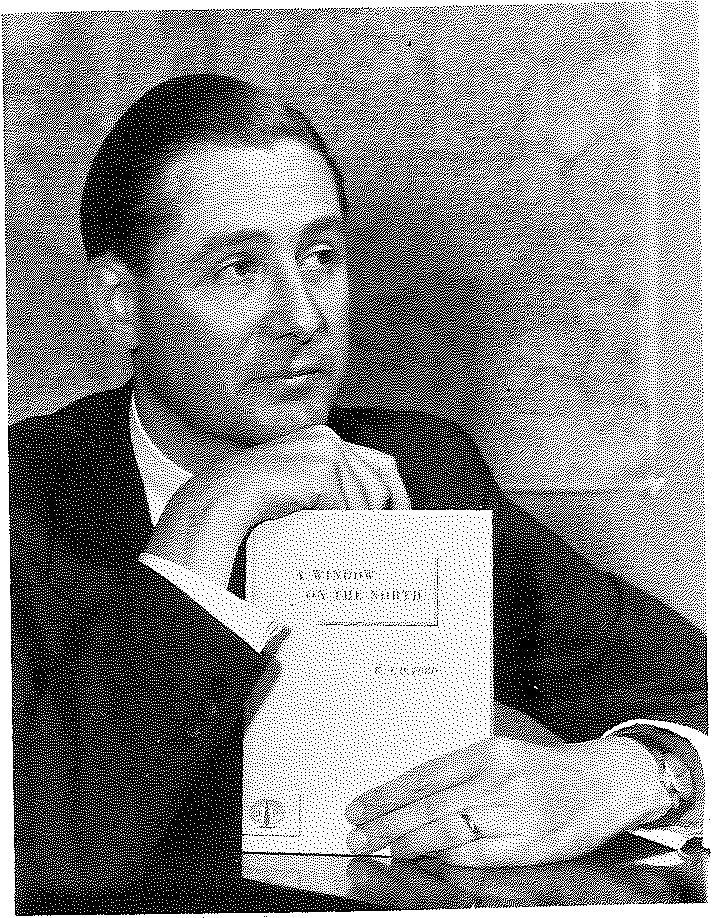
Robert Ford, Canada’s Ambassador to Moscow for more than 16 years, expert in East/West relations and Russian poetry, and recipient of the Governor General’s medal for poetry for his work “A Window on the North”, has retired from the diplomatic service and taken up residence in a classified historic property, the Château de La Poivrière, in central France. During a recent meeting he talked with Terrence Cormier, then serving as Canadian Consul in Marseilles, about the foreign service, his experiences in Moscow, arms control, Gorbachev, poetry and his present activities, plans and projects.
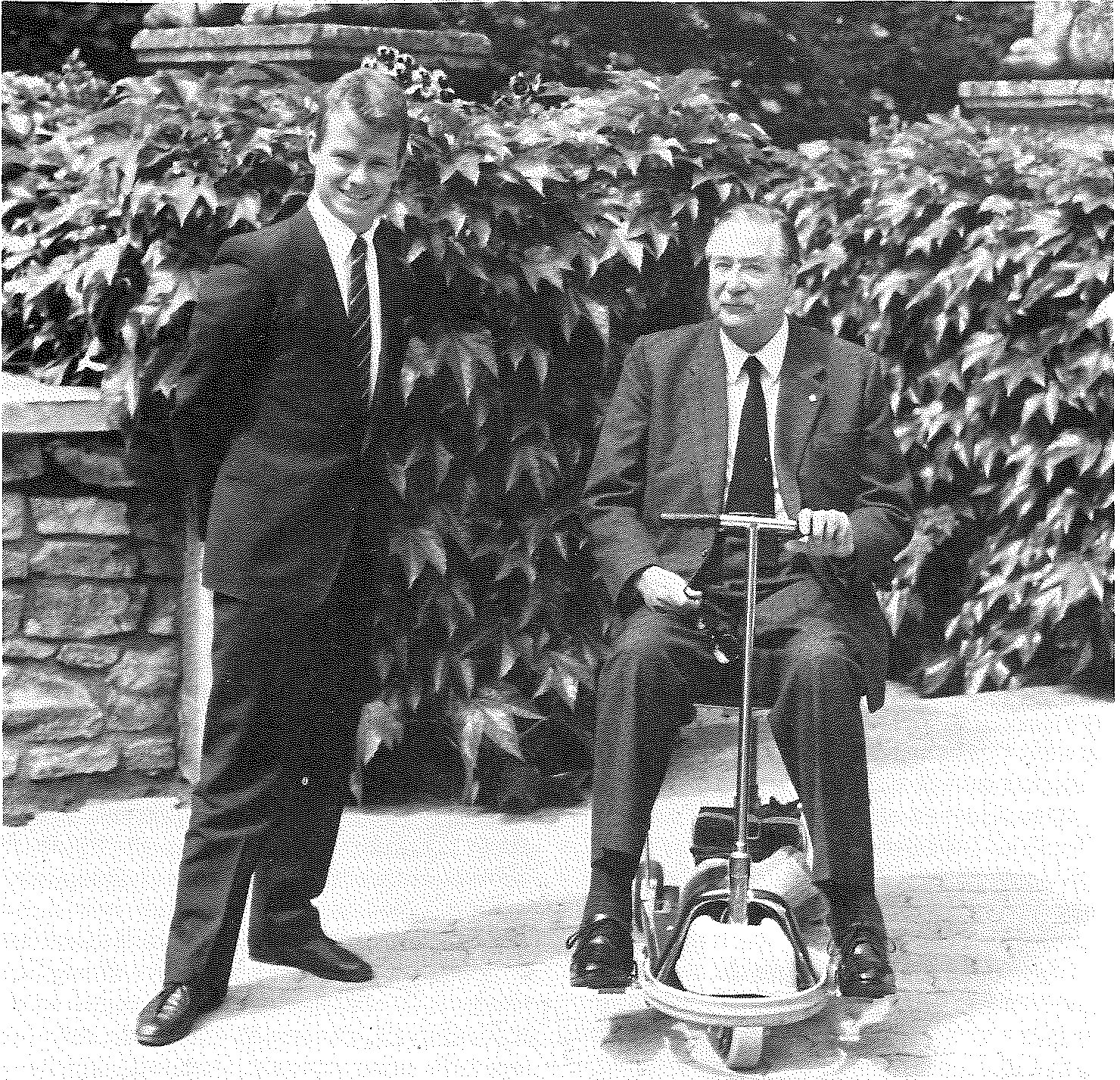
bout de papier: Ambassador Ford, most Canadians know you as our Ambassador to Moscow, but you have had a long and varied career other than your service in the USSR. You are also an important Canadian poet; you have won the Governor General’s medal for poetry and have recently published a new volume of poetry. Can you tell us a little about yourself, your origins and why you came to join the Canadian foreign service?
FORD: My family is United Empire Loyalist. I grew up in western Ontario although I was born in Ottawa. My father was in journalism, and was editor of the London Free Press. I contemplated a journalistic career; I worked for a little while for the Montreal Gazette and then got a fellowship to Cornell. I was planning on an academic career when I was persuaded to try the examinations for External Affairs. Fortunately, I had learned a little Russian at Cornell for some studies I was doing on French-Russian relations in the 19th Century and that stood me in very good stead because when I joined the department, there was only one other person who knew Russian and that was George Ignatieff. He was obviously eliminated from any possibility of a posting to Moscow because he was born in St. Petersburg.
I had always been attracted by External Affairs. I like languages and I have never regretted for a moment the choice I made.
I started my career in Brazil. I love Latin America. I’ve travelled to almost every country there. I was Ambassador to Colombia, which is a nice antithesis to postings in difficult places like Cairo, Belgrade and Moscow. I have always regretted that Canada has neglected its relations with Latin America.
bout de papier: You have watched the Canadian foreign service evolve since the war and you are still actively involved in East-West questions. What are the principal ways in which Canada’s role in the world has changed during the time you have been so much involved?
FORD: It evolved from a small group which was really trying to find its way, trying to find a role for Canada in the world. It had quickly to expand and quickly to adjust after the War, first to the enhanced role which Canada had as a result of our performance militarily, and then ten years after that, adjust to another period that was a time when we were reduced again to a role more commensurate with our size and wealth. I think it is quite remarkable the way in which starting from practically scratch, we have been able to build up what I think is one of the most respected foreign services in the world.
bout de papier: East-West relations. Changes in the international economy. What do you see as the principal challenges to Canada’s foreign policy making until the end of the century?
FORD: In a way, there are two basic elements in our foreign dilemma. One is security and, that is that we live in unfortunately a more or less bipolar world in which we are divided into two antagonistic groups. Our position has to be, and is, quite clear. The second, of course, is our determination to maintain an independent position in North America vis-à-vis an enormously more powerful neighbour.
I have always seen our position as a triangular one, that is between Canada, the United States, and the USSR. Well, that is a highly simplified version of our position in the world because it does not take into consideration the extremely important trade element. Part of our effort to maintain an independent position with the United States, independent but not antagonistic, is the trade element. Clearly that has always been at the top of our priorities and presumably for the next couple of decades will remain there. Each government has a different way of looking at this particular problem. In the end I think we all come back to pretty much the same position, that is cooperation with, but not subordination by, the United States economically and political cooperation with the U.S. as the major power in the Western democratic alliance.
I participated last year in a very interesting colloquium in Paris organized by the “Institut international de Géopolitique” of which I am a member of the “Conseil d’Administration”, about Canada/U.S., that is North America, the Pacific countries and Europe. It was a great shock to the Europeans to discover the extent to which even a country like Canada was shifting its priorities, certainly economically and even politically to some extent, to the Pacific. They knew already that the U.S. had this very important Pacific element but they were not aware how dependent Canada was becoming upon trade and political ties with countries like Japan, South Korea, Malaysia and obviously China.
bout de papier: Sixteen years as Ambassador to Moscow?
FORD: Almost 21 years in Moscow. … 1946-47 ended rather abruptly because of the continuing repercussions of the Gouzenko spy affair in Ottawa and our Embassy was reduced to almost a skeleton staff. Then 1951-54 during which I attended the funeral of Stalin as the Canadian government representative and saw the rise of Khrushchev, and then 16½ years as Ambassador from January, 1964, to October, 1980
bout de papier: You have probably had one of the longest tenures of any Canadian as Ambassador to any country. What were some of the more memorable moments of your time as Ambassador to the Soviet Union?
First, there Was th there were quite a hew. Made in 1966, when I persuaded the government to invite, and then the Soviet government to accept, an invitation to the First Deputy Prime Minister, member of the Politburo, and expert in agriculture, Demetri Polyanksy, to visit Canada. This was the first time that anything of this sort had happened since Khrushchev’s visit to the United States. Then the Soviet participation in Expo ’67 was very important and very exciting because the Soviets put an enormous effort into it and sent at least 6,000 of their top officials to Montreal to study what they called the school of the world. The most interesting and important event was the visit of Pierre Trudeau, followed by the return visit of Kosygin, and the building up of detente and good relations between Canada and the USSR in almost every field. I believe that this in many ways helped to make it easier for Nixon and Kissinger eventually to achieve their own measure of detente. Those were probably the highlights politically. From the personal point of view, one of the highlights was the first Canada-Soviet hockey summit in 1972 which was extremely exciting and a revelation to the Russians of our expertise in that sport. This meant a concentration on Canada as a country, of which the Russians were not terribly aware before.
bout de papier: You were instrumental in a whole series of agreements which Canada signed with the Soviet Union. There was the Economic Cooperation Agreement of 1976. There were agreements dealing with agriculture, science, fisheries, air, exchanges. What practical impact did these agreements have on relations with the Soviet Union?
FORD: Unfortunately, you cannot divorce agreements of that sort, or trade either for that matter, from politics. These agreements were beginning to bear fruit when unfortunately a number of events occurred which put an end, or put detente into the deep freeze, for quite a while. One, of course, was the decline in U.S./Soviet relations and a certain tension between them over various issues. The second was she in in durion and the NATO decision te modernize its theatre nuclear force. Most important of all, of course, was the invasion of Afghanistan, followed by tension in Poland. All of these things added up to an atmosphere in which it was very difficult to fully implement, or fully exploit, practical agreements which, in another atmosphere, would have been more successful. Nonetheless, they did accomplish a number of things. They exposed a large number of Canadians to the Soviet reality and they made it possible for us to continue to be considered by the Russians as their first source of supply for grain, above all for high quality Durum wheat. I think that once we get back onto the right track again in relations with the Soviet Union, that the experience of those agreements will prove a very solid base for moving forward again.
bout de papier: Many observers believe that we have reached the low point in East-West relations. Does the January meeting between Gromyko and Shultz, and that both sides are talking again about some measure of arms control, mean that we are re entering the process of detente? Are both sides now prepared and willing to see a lessening of tensions?
FORD: Yes, I think so. The low point in relations came about two years ago when the hardliners in the United States administration were still arguing in terms of an evil empire and were taking various measures, particularly economic ones, which would help to put Russia on the dust bin of history. This was all very foolish talk. It infuriated the Russians. It put them in a position which they considered humiliating. It made it almost impossible for any kind of dialogue to get going again. Well, all that has been abandoned by the American administration which is now trying to make an effort with the new Gorbachev goverment in Moscow to return to some measure of detente, at least on arms control. I cannot say how sincere is one side or the other. As Gromyko once remarked “Governments are never sincere”. But, I don’t think that there can be any doubt that the Russians would like to see some measure of disarmament and control which would permit them to avoid another expensive series of arms developments and to divert that money to much needed economic reforms. They are not happy at the idea of competition with the United States on these new arms.
The problem is that the Russians show no sign whatsoever of give. The Americans show no sign of give. How long this impasse will continue, I do not know. It took a long time to get Salt I. It took a good deal longer to get Salt II, and then it was not ratified by the American Congress. There were what appeared in 1977 to be some insurmountable obstacles to Salt II, but eventually compromises were found which permitted the Vienna meeting to take place and Carter and Brezhnev signed the Salt II Agreement. I am hopeful that they will find some way of compromising. I am on the whole a supporter of being fairly strong but correct and just with the Russians. But I do think that there are two sides of arms control which are absolutely essential: one is the anti-ballistic missile treaty and the other is to abandon any effort to extend the arms race into outer space. I think that this is absolute folly.
bout de papier: Many strategic analysts believe that in this era of space defence initiatives, the prospects for any comprehensive arms control agreement are very small and that it would be a better investment of time and energy to put our efforts into strategic confidence building measures. Where should the efforts be put?
FORD: The two go together. There have been efforts on confidence building measures for many years now. I think that one of the major things which the Stockholm Conference can do is to elaborate upon and expand those measures. You cannot really have arms control or disarmament measures which are going to last unless you have a measure of trust. One depends upon the other. You can argue that if you get a solid and important agreement on arms control or disarmament or reduction of arms, that in itself creates a certain measure of trust. I would like to see a greater effort at trust established on both sides as well.
I know from my many years of experience, that it is very difficult to establish a measure of trust with the Russians. At almost any point you might establish a relationship which is fairly satisfactory and then some unexpected event happens, such as the shooting down of the Korean airliner, the invasion of Afghanistan or an outburst in Poland, or who knows where in the Soviet bloc, which almost automatically puts all our efforts at establishing confidence with the Russians into hold, at the very least, if not into strong doubt.
bout de papier: The arrival of Gorbachev as the Soviet leader is certainly a tremendous change in style. What is your appreciation of the impact which he can have on the Soviet political and economic system?
FORD: In a way, his arrival in the number one position should have happened a decade ago when the older men in the Politburo should have retired or have brought forward the people who are ten years older than Gorbachev. However, it has been delayed that time but now, finally, the younger people are coming into position and they are very different from the older people who have been running the Soviet Union for the past 20 years. On the whole, they are much better educated and have a better appreciation of technology. Most of them probably have a clearer understanding of the strength of Western society and the nature of the capitalist antagonist. They are at the same time strong Russian nationalists, and I say Russians, because they will very nearly all be Russian. Russian nationalism is becoming an extremely important element in the Soviet Union. They will be very difficult to deal with despite a surface smoothness of manner and treatment. I think that they are in the old Russian traditional sense, Westernizers rather than Slavophiles, that is that they see Russia as part of the western world and would like to see it accepted as part. However, the system makes it very difficult to do so since the ideology, although it may not play a role in the everyday workings of the Soviet Union, still is a dominant factor in their thinking and this thinking makes it a relationship of antagonism.
I think that people like Gorbachev would like to see the economy revised, made more efficient, more and better quality goods produced, the standard of living increased. I think Brezhnev wanted to do the same, but Brezhnev had no real plan and he was not prepared to introduce any measures which would upset the old style bureaucrats upon whom his power rested. Whether Gorbachev can do it or not, I do not know. Up to now, he has introduced measures which are simply a more efficient form of slogans and suggestions of the Brezhnev era, that is more discipline, better quality and so on. I am not sure that this will make the Soviet economy more efficient. I think it needs basic reforms but to do that endangers the system. You need someone with the tremendous charisma, the tremendous power, of a Khrushchev to try to introduce reforms of that nature. Perhaps, Gorbachev eventually will prove the man who can do it, but it will take time.
bout de papier: You are not only a specialist on the Russian political and economic system, but also Russian poetry.
FORD: I have recently published a collection of my translations of Russian poetry. I have been working on this, off and on, over the years that I spent in Russia, partly as a “divertissement”, partly because I like the poetry and language and also because it gave me a certain entrée into the world of the poet and writers of the Soviet Union.
I recently had a letter from Graham Greene who had just read my collection of Russian poetry, in which he said that he had finally found some translations of Russian poetry which meant something to him because you had to be a poet and you had to know the language to translate Russian poetry. Most of the translations he had seen had come from prose translations or were written by people who knew the language but were not poets.
bout de papier: The subjects of your own poetry have changed considerably. In 1956 when you won the Governor General’s medal for poetry, you dealt largely with nature. In you most recent volume “Needle in the Eye”, the new poems have a more political content. There is a certain pessimism, a certain angst about the current state of the world.
FORD: I think you could not spend 16 years in Russia without having a certain angst about the state of international politics and the world. You could not work on disarmament and related questions without (continued on page 10) being worried, and this inevitably comes out in my poetry. But I don’t think I am a pessimistic poet. I have lots of poems which express confidence and optimism about people, about one’s self, and about the human being. Incidentally I have a new book of poetry which will be coming out in the fall, called “Doors, Words, and Silence”, which is strictly non political; it is all reflective, philosophical and love poetry.
bout de papier: In your recent poems, one detects a dissatisfaction with modern urban life. You have obviously opted for a different style of life here in the country near Vichy.
FORD: My dissatisfaction with today’s life style is dictated partly because I have spent much of my life in large cities. It is also dictated by the fact that I have struggled with a form of muscular atrophy most of my adult life and living in a big city is not easy when you have to cope with problems caused by a physical disability of that sort. It is the reason perhaps why I have chosen to live in the country. I am now making up with silence and tranquillity for the many years of intense activity and exposure to thousands of people, many of whom I am delighted never to see again.
bout de papier: You remain very active. You still advise on East-West relations. You are very busy writing. What projects do you have for the immediate future?
FORD: I am no longer special advisor on East-West relations. I left that position last fall, but I still do some assignments occasionally for the government. I am a member of the Independent Commission on Disarmament and Security Issues chaired by Olaf Palme. I am a member of the Council of Administration of the International Institute of Geopolitics. I have some local positions such as honourary president of the local France/Canada Association. But what I am doing more and more is writing. I am writing articles. I am writing poetry. Above all, I am writing a book on Russia which I hope to have finished by the end of this year.
bout de papier: What advice would you give to people who aspire to a
View the original scanned pages →
Originally published in bout de papier, Vol. 4, No. 1 (1985) — Winter 1985 // Hiver 1985, pp. 7–10. Read the rest of this issue →



