
bout de papier, Vol. 30, No. 4 (2019), p. 39
BY JAMES COMEY
EDITED BY LISA WARDEN,
FOREWORD BY MIKHAIL
GORBACHEV
FLATIRON BOOKS, 2018
312 pp, $34.99
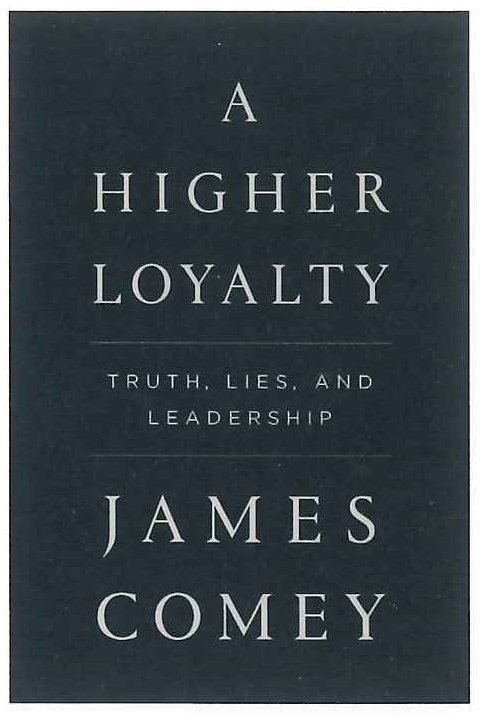
MOST READERS OF FORMER FBI DIRECTOR James Comey’s memoir will likely flip directly to the end of the book for his explanations of the FBI’s decisions in the face of Hillary Clinton using a private e-mail server while Secretary of State, or for insights into Comey’s contentious relationship with President Donald Trump.
Clearly, had the 2016 presidential election taken a different course and had Comey not been removed from his position, he would likely not have written the book, or this book at this time. However, much of the value of his volume is not just in his account of recent history but also in his insights about leadership and the qualities of US leaders. As the existing book reviews have focused on Comey’s falling out with and firing by Trump, this review considers the book’s other content.
A Higher Loyalty starts with Comey’s experience as a prosecutor in Manhattan, working on cases as diverse as the Mafia and Martha Stewart’s insider trading. This carefully selected material acts not only as background — notably because of its emphasis on ethical leadership — but it also helps frame Comey’s later depiction of President Trump and the critique of his behaviour in office.
Comey notes that when inheriting the FBI directorship from Robert Mueller, now the Special Counsel to the US Department of Justice on Russia’s involvement in the 2016 US elections, he found his new organization to be overly traditional. Leadership was largely an afterthought. To move ahead, Comey aimed to make the FBI the US government’s “premier leadership factory” and a preferred supplier of leaders in the private sector after special agents retired. Among his key goals was to recruit more visible minorities and women to demographically balance the FBI and renew its leadership. Indeed, he was at one such event in Los Angeles when he learned that he had just been fired.
Comey enjoyed privileged access to senior US decision-makers, including presidents, and his analysis of their qualities is among the best attributes of the book. He observes that the typical “Washington listen” is a period during which a speaker cedes the floor to another person only to return to make the points s/he intended to make all along.
Comey’s perspective on President Obama contrasts sharply with the “Washington listen.” He notes that Obama was an excellent listener: through active listening, including one-on-one discussions, Obama drew out his interlocutors and purposefully sought alternative views.
To be sure, there are some shortcomings with Comey’s focus on leadership. From this reviewer’s perspective, Comey’s leadership model, as with so many others, would benefit from a discussion of followership. After all, there are often more followers than leaders in any given organization: what motivates the latter? Furthermore, we can all be leaders or followers in different contexts: what are these? A more dynamic model of leadership and followership would help organizations maximize the potential of both.
If Comey’s book is only read for the “inside story” of the 2016 election, it may be soon forgotten among the avalanche of books on Trump. If, however, readers step back and absorb some of its enduring insights, it will likely stand the test of time.
Originally published in bout de papier, Vol. 30, No. 4 (2019), p. 39. Read the rest of this issue →



