
bout de papier, Vol. 30, No. 1 (2017), pp. 6–11
The mood was somber amongst the small group of officers meeting to discuss lessons learned. We huddled in the middle of a massive airplane hangar, cold, hungry, tired and overwhelmed. It was past 7 p.m., and the last families of refugees interviewed on that first day were just leaving the building. Plastic chairs were being stacked along partition walls. Staff lingered outside, chatting and smoking as they waited for their buses to leave. A vacuum cleaner whirred somewhere in the distance.
We went over the accomplishments of our huge team, consisting of staff from various Government of Canada departments and the International Organization for Migration (IOM). We had successfully interviewed, fingerprinted and photographed 250 refugees in one day, a seemingly impressive number. We had even completed the painstaking task of filling in their lengthy immigration forms. But we had finished very late – too late – and needed to get a lot faster at running the refugees through our makeshift processing center if we were going to meet the 10,000 person target assigned to Amman by Immigration, Refugees and Citizenship Canada (IRCC) headquarters in Ottawa. 250 was great, but in just three more days that number would need to double. The question lingered in our minds as we discussed the first day of operations in Amman: how on earth were we going to process 500 Syrian refugees per day for one month straight in a frigid airplane hangar on the northern edge of Amman? And if we couldn’t figure out the answer to that question, how would IRCC meet the government’s publicly-announced pledge to resettle a mind-boggling 25,000 Syrian refugees by February 29th?
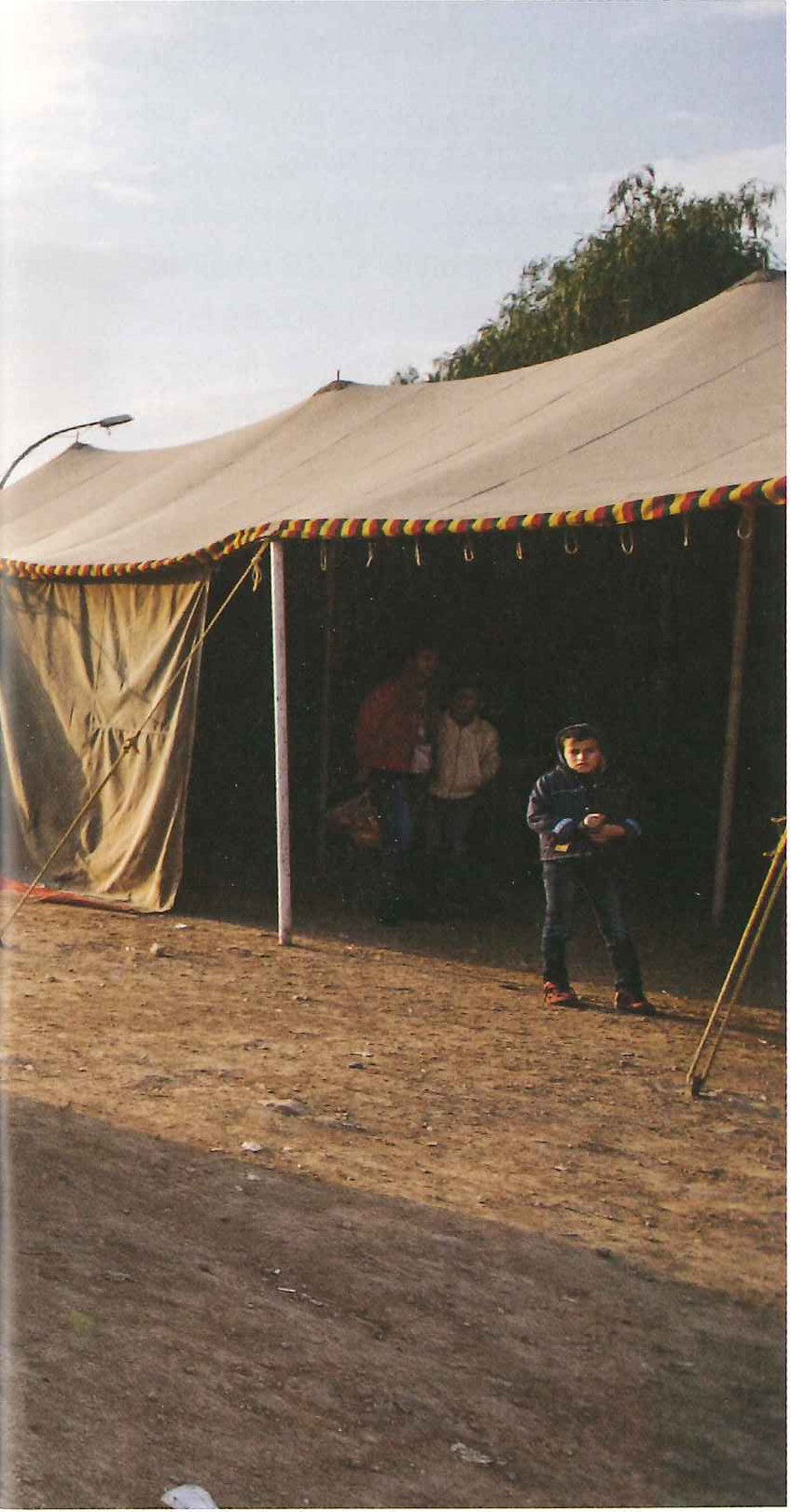
It is difficult to overstate the challenge presented by the newly-elected Liberal government’s plan, dubbed Operation Syrian Refugees (OSR). It called for identifying, interviewing, vetting, medically clearing, transporting to Canada and then housing 25,000 Syrian refugees in a space of around three months. It would mean establishing operation centres from scratch in three countries at once – Turkey, Jordan and Lebanon – on the periphery of a calamitous civil war in the heart of the Middle East; undertaking thousands of laborious, lengthy interviews, including many involving complex security issues; chartering dozens of planes during the holiday season and finding thousands of homes for the newly-arrived refugees in Canada in the dead of winter; resettling in three months close to the number of refugees Canada normally resettles in two years; and mobilizing hundreds of Government of Canada officials and deploying scores overseas. Ultimately, for the 2015-16 fiscal year, IRCC personnel completed 1,111 weeks on assignments related to resettling Syrian refugees, equivalent to 254 months or 21 years of work.
After the October elections, it became evident that the Trudeau government was serious about its election promise to resettle 25,000 Syrian refugees by the end of 2015.
The general sense within IRCC was that this was impossible. Different plans were floated and then wisely discarded, notably the one to transport refugees on massive cruise ships and process them while they sailed across the Atlantic. Though elegant in theory – the refugees could be interviewed and medically cleared en route and then remain on the boats while docked in Canada until proper housing was found – it featured a fatal flaw: what to do if a refugee was rejected by a visa officer while chugging toward Canada in the middle of the ocean? As such, there was widespread relief when, in early November it was announced internally that the deadline was extended to February 29, 2016 and that plans were being drawn up to charter planes and not boats. Visa officers immediately began to parachute into the Middle East. But even the new target presented a massive challenge.
Luckily, resettling refugees was nothing new for the department. Visa officers have a proud tradition of processing refugees from across the globe, often under very challenging conditions. Whether in muggy Southeast Asia, the remotest parts of the Horn of Africa or war-torn corners of the Middle East, visa officers have answered the call of duty for decades. They had already undertaken other large-scale refugee resettlement projects, including the ones to bring Hungarian, Chilean, Ugandan, Indochinese and Kosavar refugees to Canada during the second half of the 20th century. Visa officers have been selecting immigrants since the 1800s, playing a behind-the-scenes role in building our country.
What made OSR unique were the timelines, described variously as “ill-advised”, “crazy” or, simply, “impossible”. There were also logistical challenges, including a massive one presented by Transport Canada regulations prohibiting direct flights from Lebanon. This meant that the planeloads of refugees departing from Beirut would have to change planes somewhere on the way to Canada – Amman was eventually chosen as the transit location – adding a time and resource-consuming complication to the transport logistics. Foreign Service Officers and other government officials spent hours adding and deleting names on flight manifests, sending emails back and forth between Beirut, Amman and Ottawa and overseeing the boarding and unloading of the planes. It meant a lengthy and difficult journey for the refugees that began with a bus from their temporary home in Lebanon many The Special Operations Forces Exhibition or SOFEX is a cavernous airplane hangar on the outskirts of Amman. It shares a runway with Marka Airport, where the refugees would be boarding their flights to Canada. It was an unorthodox refugee processing centre to say the least. Normally used to park planes and play host to a multi-day arms fairs, the facility was offered to Canada as a possible venue for OSR by the Jordanian government. SOFEX was located in a bleak part of Amman, far from attractions, restaurants or suitable hotels. But SOFEX proved an inspired choice, and was an important factor in the Amman Operation’s overall success.
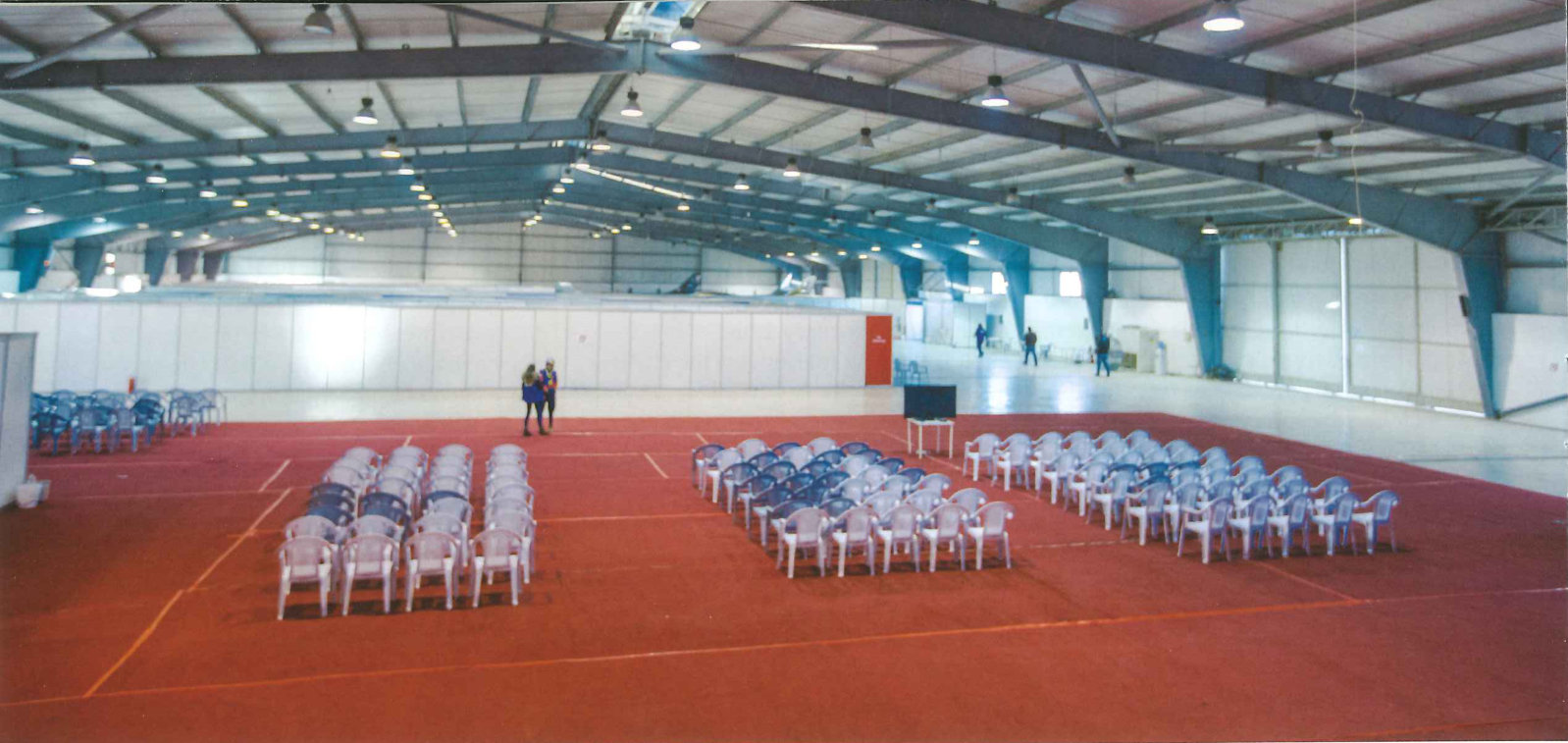
There were drawbacks, however: it was cold, drafty and leaky. Airplanes roared just outside and noxious jet fumes sometimes drifted into the building. The food was mediocre. And birds sometimes dropped their business around the workstations, dangerously close to officers and refugees alike.
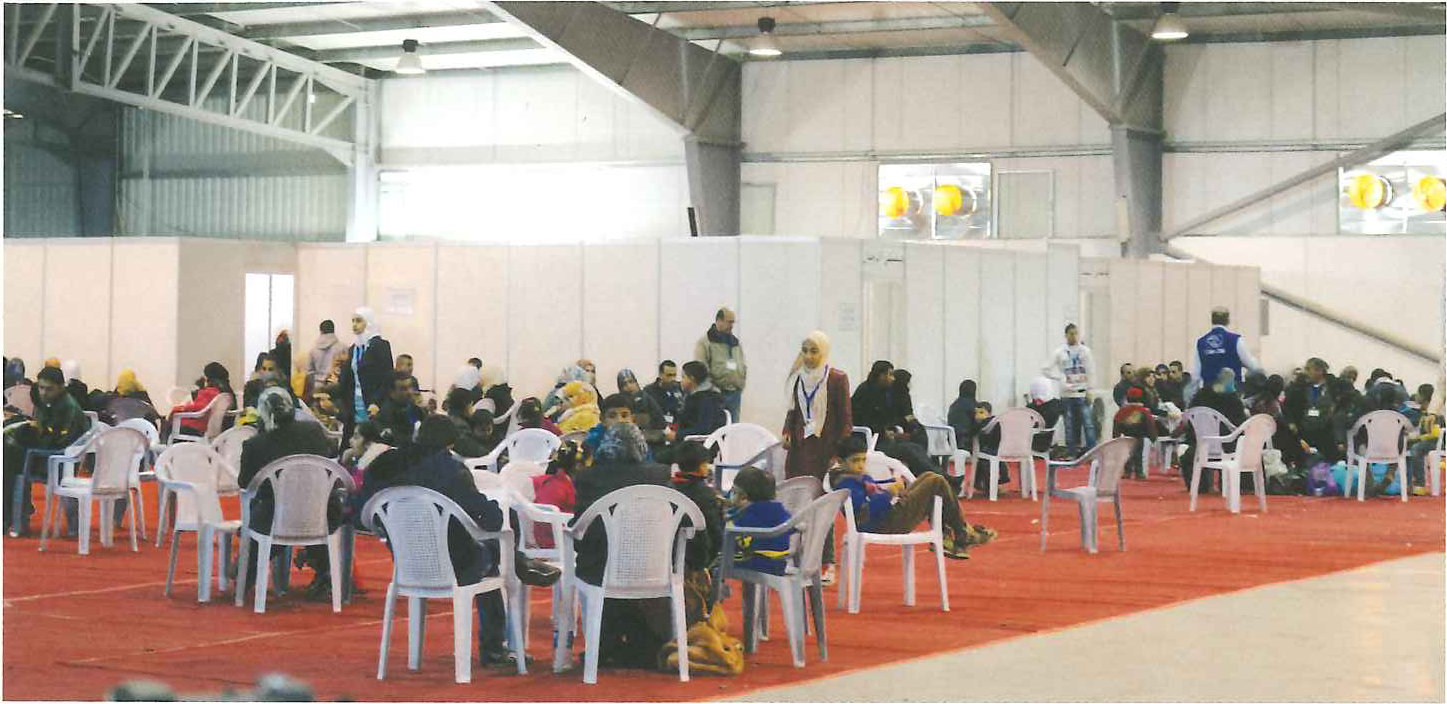
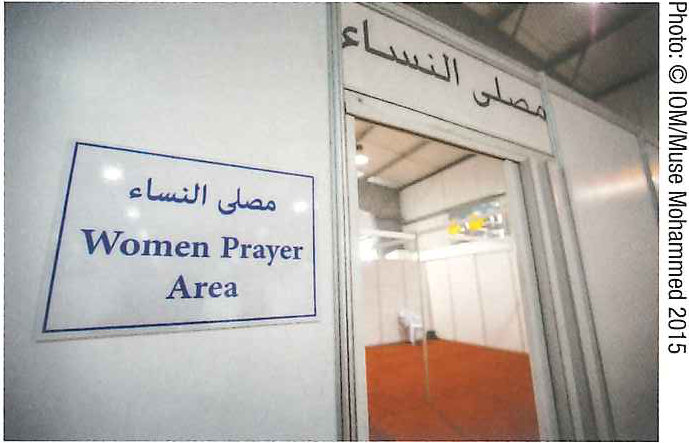
But all of these problems were manageable and the exhibition hall had one quality that outweighed all disadvantages: its size. No matter how many people entered the complex it never felt cramped. Hundreds of dividers were erected and different stations were set up: a vast waiting area, prayer room, daycare and diaper change area; form filling, interview and biometrics collection booths; medical examination and x-ray machine rooms; a section for office supplies, in a separate building in the back, basic offices and a conference table for the Director of the Operation and IT staff; and a “back office” for the visa processing operation, where files were tracked and finalized, and where every refugee case ready to be issued a visa and travel was squeezed out of the electronic system and flagged as soon as it appeared. There was even room left over for the original occupants of the hangar: two Jordanian Air Force planes parked inconspicuously at the rear of the building. hours before their first flight, and ended with touch-down at a cold Canadian airport countless hours later.
I found out I would be heading to Amman in mid-November. I packed my bags and traded my downtown Ottawa workplace for a temporary visa office in the middle of nowhere.
Prior to leaving Canada, I had spent the few days before my departure madly running around Ottawa, buying Christmas presents and stocking up the house with as many supplies as I could to reduce the burden on my spouse. Just before departing, I was given the assignment of “Logistics Lead” for the Amman operation. I had no idea what this meant and was terrified that whatever it was, I would not be very good at it.
Like the rest of the officials deployed to OSR, I learned on the job. While I am not sure if it was in fact logistics, in Jordan I found myself performing tasks well outside the normal duties of a visa officer. Amongst many other things, I helped arrange shuttles for officers between the hotel and SOFEX, ordered office supplies and furniture, wrote reports and updates for headquarters, negotiated heating with venue management for the frigid hangar, tried to protect officers from the bird droppings, in addition to interviewing refugee families. I think I had the best job in Amman for those six weeks. Every day presented a new challenge and a new adventure; I even found myself in a room with the IRCC Minister during his second visit to Amman, briefing him on the operation, something normally unheard of for someone at my level. Whatever “Logistics Lead” was, it was the highlight of my career.
So at the end of that first tough day – which, on top of everything else, included the visit of three federal ministers to SOFEX – we didn’t despair, but instead, worked on solutions, and learned from our mistakes. Everybody got faster at their jobs and by the middle of December we were moving hundreds of refugees through SOFEX every day in an orderly fashion. Every department and organization involved played their part – CBSA set up shop near the entrance, pre-screening applicants and flagging any issues to interviewing officers; Canadian Armed Forces personnel efficiently ushered refugees through the maze of trade-show dividers that enclosed the various stations; Global Affairs monitored the fragile IT systems and mobilized transport; and IOM, contracted by the government of Canada to assist with OSR, filled forms, provided interpretation and kept us supplied with food and tea, amongst many other tasks.
It helped that the team was excellent, including experienced officers such as Sian Upton. Sian approaches her work with fierce devotion tinged with the weariness one might expect from someone who has spent years involved in refugee processing while moving from one hardship post to another. She was part of the small team that initially designed the Amman Operation Centre, and also managed IRCC’s relationship with UNHCR Jordan. We had presented the UN refugee agency with the unprecedented challenge of feeding Canada’s refugee referral pipeline at a massively accelerated pace, and the relationship required a diplomatic and practical hand.
Sian was a crucial resource on the ground, owing to her local expertise. She had just completed a two-year posting in Amman; before that, she had helped shut down the Damascus refugee program in 2012 and subsequently started the refugee program in Beirut. Thus, she had recent, on-the-ground experience with Syrian refugees, and so, along with partner agency personnel, knew the conflict. She was able to brief us on security and eligibility issues pertaining to this population. After completing her temporary duty (TD) in Amman, Sian returned to the Middle East to manage the Beirut Operations Centre, and thus had the privilege of participating in the OSR project in both Jordan and Lebanon.
Sian guided officers through the interview template, a thorough document sometimes cursed for its length and seemingly tedious detail. But while following the template line-for-line could be excruciating for both interviewer and interviewee alike, doing so ensured a rigorous examination. With visa officers assigned the front-line responsibility of screening out refugees who may pose a safety or security risk to Canada, the better-safe-than-sorry template provided a critical tool for ensuring that decisions were sound.
Though conditions in Amman were unusual, there were even greater challenges in Beirut. Lebanon has not had a properly functioning parliament since 2014. The government is unable to even arrange garbage collection for the citizens of its largest city, and large chunks of Beirut – including the airport area – are controlled by the militant group Hezbollah. There was the issue of flight routing; and obtaining exit permits in Lebanon was complex, compared to Amman, where the Jordanian authorities agreed to issue exit permits to the refugees at the airport just prior to departure. And whereas Canada had nearly exclusive use of the quiet commercial departure area at Marka Airport in Amman, in Beirut flights had to run out of the chaotic commercial terminal.
Like me, Paul Jamieson was not sure what he was going to be doing when he was told to pack his bags for Beirut. He had lots of experience processing refugees in Africa and the Middle East so he was well-placed to assist. He also knew Syria, having been posted to Damascus on his first overseas assignment. However, the six weeks he spent in Beirut were like nothing he had experienced before. A blur of late-night taxi rides, frantic negotiations, tedious data entry and very little sleep, Paul and his partner Gary Wallace ensured that the planes taking off from Beirut were filled. They were the liaison between the Beirut Ops Centre and the IOM, taking on the role of co-Departures Lead.
By the time Paul arrived in late November, Gary – a member of the Foreign Service since 2004 – was already a veteran of the makeshift Beirut operation. He had been dispatched to Lebanon in early October (before the federal election) as part of a wave of officers who were to implement a Conservative government plan to increase the number of Syrian refugees resettled in Canada. However, the Departures assignment was far different from the interviewing he had been doing until then. Gary and Paul found themselves thrust into a role where time pressures were immense and the margin of error, razor thin. One night early on in the operation they were confronted with the alarming news that 17 exit permits for an extended family of refugees had not made it to the airport for a flight due to depart imminently. At lam the pair jumped in a Beirut “white taxi” and sped off to Lebanese General Intelligence Service (GIS) headquarters on the edge of Hezbollah territory. Barred from entering and with gunfire echoing in the distance, Gary and Paul conducted what Gary called “sidewalk diplomacy”, talking their way into the heavily guarded compound, and into a meeting with the officer in charge of the permits. After some tense discussions, the permits were released and the relieved visa officers rushed to the airport with a police escort, pulling up to the doors with a screech of tires. The flight had been held and the 17 Syrians were able to board and travel to their new lives in Canada. Both officers are convinced that their unorthodox methods that stressful night cemented their relationship with the GIS and, crucially IOM.
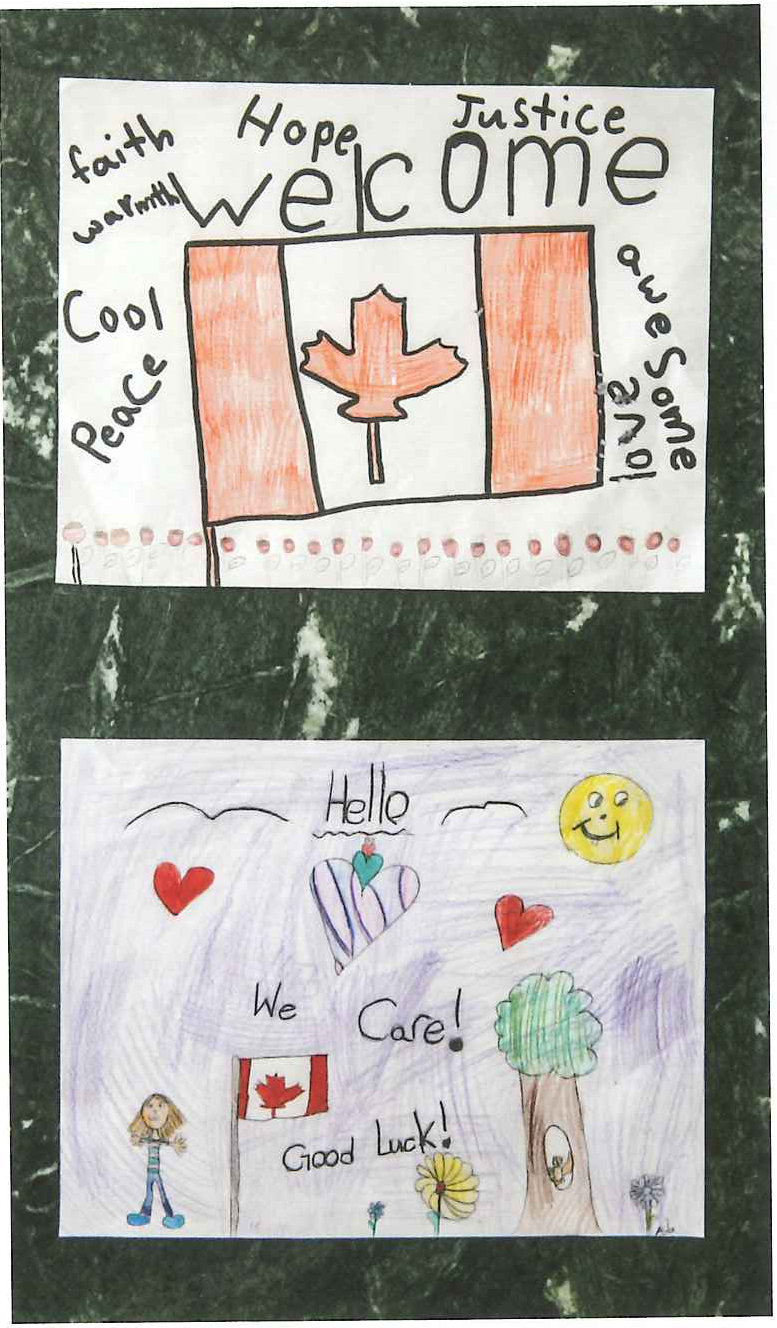
Indeed, the unsung heroes of the operation were the tireless staff of both IOM (which has been around for over half-a-century, providing services and advice to governments on migrants) and the UNHCR. As Gary Wallace put it in reference to IOM staff, “for every 23 hours we worked, they worked 24”. To describe these organizations as crucial partners in OSR is an understatement: they were essential and irreplaceable in all three locations. IOM took on responsibilities big and small, everything from ordering staples, to chartering planes. Staff were always on call, professional and courteous, impressing everyone involved in the operation. Their dedication ensured its success.
Meanwhile, the UNHCR also played an integral role in making OSR possible. UNHCR Staff worked nights and on weekends, sending tens of thousands of text messages to prospective candidates for Canada’s refugee resettlement program. They then pre-screened the thousands who signalled interest; personally explained Canada’s OSR program to them; and helped negotiate exit permits with local governments.
Tyler Arrell had returned to Ottawa after an eventful decade abroad during which he oversaw the closure of IRCC’s visa office in Tehran and managed the network’s busiest Temporary Resident Unit in Beijing, where he oversaw huge changes in the distribution of processing work throughout the IRCC network, earning a PASO award for his innovative work. Perhaps hoping for a more mundane assignment after two years in the Beijing pressure cooker, he returned to Ottawa in August as a Senior Analyst for Refugee Resettlement. Instead of a 37.5-hour work week and strolls along the Rideau Canal, Tyler found himself working evenings and weekends almost from the moment he stepped into the hospital-green corridors of IRCC headquarters. Tyler began his assignment mere days before the photo of the lifeless body of Alan Kurdi was published around the world, thrusting refugee resettlement into the middle of the Canadian federal election campaign and to the top of the priority list for IRCC. It was an extremely busy time for anyone involved in refugee affairs within the department.
Once the election was over, Tyler’s work only intensified. He helped engineer the massive refugee processing machine that had to be constructed on the fly in order to meet the newly-elected government’s pledge to resettle 25,000 refugees by the end of February. Once constructed, Tyler found himself at the very centre of this huge apparatus. He was a crucial component that provided direction to the operations on the ground in the Middle East, briefed senior managers, gave instructions to other government departments involved in the operation and liaised with staff leading the in-Canada side of the operation. He was a walking-talking command centre, and he worked non-stop for weeks, breaking occasionally for a few hours rest in his flat, conveniently located a mere block away from the office. His work is a reminder that visa officers and other officials served the operation proudly in Canada as well as overseas.
The operation in Turkey presented logistical challenges of its own, ones that ultimately led to it being wrapped up after only a few weeks. The Ops Centre was set up in Adana, close to the Syrian border in southern Turkey, but hundreds of miles away from where the refugees to be processed were located. It was also far from the nearest Canadian mission (located in Ankara), unlike the operations in Beirut and Amman, cities that also host visa offices. Because of security concerns, the visa officers assigned to Adana were not permitted to leave their hotel. Despite these challenges – or perhaps because of them – the Adana Ops Centre introduced unique operational procedures that leveraged the one advantage it had over both Amman and Beirut, and even Ankara: a fast, reliable Internet connection.
The backbone of IRCC operations is its unloved electronic file management system, GCMS (Global Case Management System). Clunky and bandwidth-hungry, it has endured its fair share of curses and insults since its deployment overseas in 2010. However, deployed effectively and connected to a reliable Internet provider, it can be a powerful tool for just the type of operation Adana needed in order to deal with its unique logistical challenges. Innovative staff developed a unique solution to the problems they faced: they went paperless. IRCC forms were completed by IOM at a facility in Gaziantep, closer to where the refugees were living, and then uploaded into GCMS. Fingerprints were taken simultaneously and also uploaded into the system. This saved huge amounts of time (and countless trees). When the refugees finally appeared for interview, visa officers needed to simply open the electronic file where they found all the information they needed to process the application. With two screens open, it was easy to navigate between the forms and GCMS. This innovative approach, after a brief period of skepticism, was enthusiastically supported by the Adana officers.
Despite such innovations and a strong spirit of camaraderie amongst the staff in Adana, the decision was made to wind down the operation earlier than expected. The logistics were too daunting and the security of staff, a concern. Despite the inconvenience of being holed up in a hotel for weeks on end, staff were disappointed and many would have preferred to push on in Adana. There were a few tears, the intensity of the previous weeks and the exhaustion that had built up overwhelming some staff. Many were flown to Beirut or Amman to join the operations there, while others headed home.
A few went back to their postings in Ankara, where they set up a smaller “pop-up” Operations Centre staffed by 6-8 officers. They worked long hours through the bleak winter months, closing up shop at the end of February after having successfully interviewed around 2,500 refugees to go along with the 1,800 or so interviewed in Adana.
Operation Syrian Refugees succeeded due to strong cooperation between various government departments, the herculean efforts of IOM and UNHCR, and the leadership and dedication of the staff involved, including the Foreign Service Officers that conceived and managed much of the operation in Ottawa and overseas. The operation was exhausting – staff worked long days and through weekends, and spent the holiday season on the job away from their families. Many went home burnt out and sick, the adrenaline of the mission finally draining from within them as their assignment wound down. But officers interviewed for this story expressed pride in what was accomplished and admiration for their colleagues. The team I worked with in Amman impressed me every day with their enthusiasm, professionalism, creativity, and stamina in myriad ways. As one officer described it: “People really believed – as a result they delivered.”
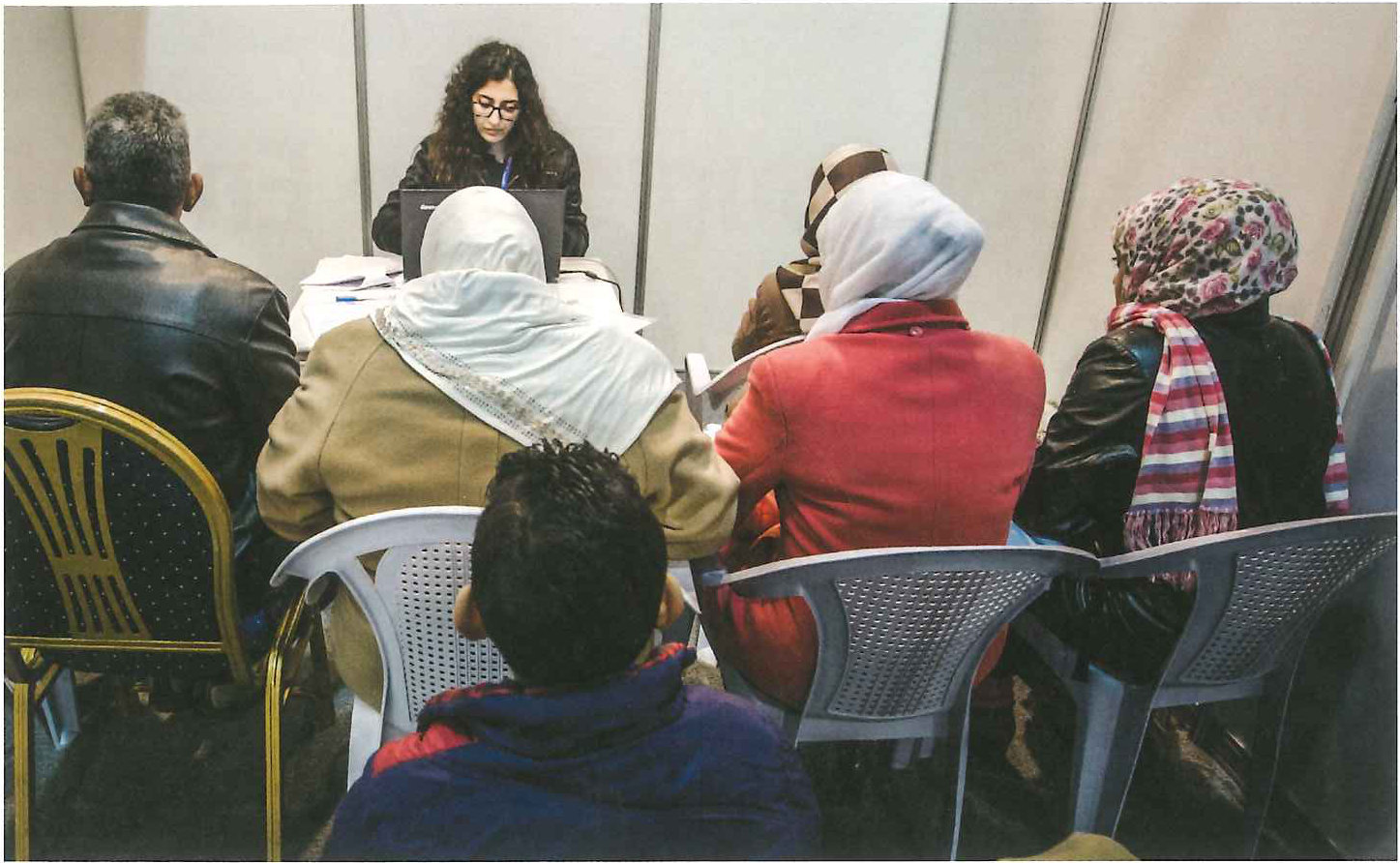
And what was it they believed? That bringing these refugees to Canada was the right thing to do. As Sian told me, “I can’t think of a richer working environment, or of a project that was so meaningful that we felt it in our bones.” Concerns were expressed amongst us about the pace of the work, the stress on the refugees having to move to Canada so quickly and how they would manage and settle once they arrived, but there was a strong sense that this was an historic mission, whether we worked for the Canadian Armed Forces, IRCC, Global Affairs Canada, the Canada Border Service Agency or another department or partner such as IOM.
Whatever reservations we may have had, there was no doubt that the refugees we were resettling needed help. The stories they told us made this abundantly clear. The narratives become depressingly familiar: the lives of innocent families shattered; friends and relatives killed; parents unable to get to work through an unpredictable and dangerous maze of checkpoints; arbitrary arrest and detention, and for the unlucky, torture and beatings; random shelling and bombing; finally, a building dangerously close to home destroyed by the war, making it clear it had become too dangerous to stay at home. Families scattered – a sister in Lebanon, in-laws in Turkey, a brother in Germany.
A life on the edge in the country of asylum – irregular work on a building site or driving a taxi; more ominously, daughters married off at increasingly young ages to reduce the financial burden on the family. Life in Canada will be challenging for these families – many don’t speak English or French, have limited education and know little of the world outside the towns and villages they fled. But the children they brought with them will enrol in school; they will quickly learn the language, make friends, attend birthday parties, join a sports team. Their parents may struggle, but the children will be given the opportunity to flourish and contribute to their new country. Thus, the mission to resettle these refugees – exhausting, exhilarating, extraordinary – was a nation-building one, in many ways the job we, as visa officers, have always done, albeit at a vastly accelerated pace. Entrusted with the responsibility to select the immigrants that will help tell the next chapters of Canada’s unfolding story as a nation, visa officers are proud to have been entrusted with such a noble and important task.
View the original scanned pages →
Originally published in bout de papier, Vol. 30, No. 1 (2017), pp. 6–11. Read the rest of this issue →



