
bout de papier, Vol. 3, No. 3 (1985) — Fall 1985 // Automne 1985, pp. 40–42
proposal, we would submit that it must be within the powers of this Board to consider this matter, whether as a question “necessarily incidental” to the arbitration under Section 67, or as a factor relevant to the matters in dispute under Section 68, or under your residual powers contained in Section 18. We would submit that it would be a denial of procedural due process, and a denial of the “fair and reasonable terms and conditions of employment” you are required to consider under Section 68, should the particular form of words used in our proposal stand as a bar to your consideration of the issue. This is all the more true given the fact that PAFSO was given no indication of Treasury Board concern over the form of words used until after matters had been referred to arbitration. This posturing, delay, and “gamemanship” should not prevent the Board from addressing a matter required to be considered by Section 68.
I earlier spoke of our vocation for negotiation. The converse is also true: we are not experienced in third-party settlement. This is the first time in our history we have been forced to have resort to arbitration. As a bargaining agent of only 1,000 persons, more or less, our funds for legal counsel are not inexhaustable. We are anxious that the Tribunal, and this hearing, resolve all the issues outstanding.
Comparability
I need not take any more of your time regarding the questions of overtime and severance pay. These, too, form part of the single pay issue before you. I would, however, like to say a few words about comparability. Section 68 of the Act requires this Tribunal to have regard to conditions of employment “in similar occupations outside the Public Service” ’, and to “the need to maintain appropriate relationships in the conditions of employment as between different grade levels within an occupation and as between occupations in the Public Service”
First, as to conditions of employment within our occupation, our acting pay proposal, as I have suggested, would redress an inequity in remuneration.
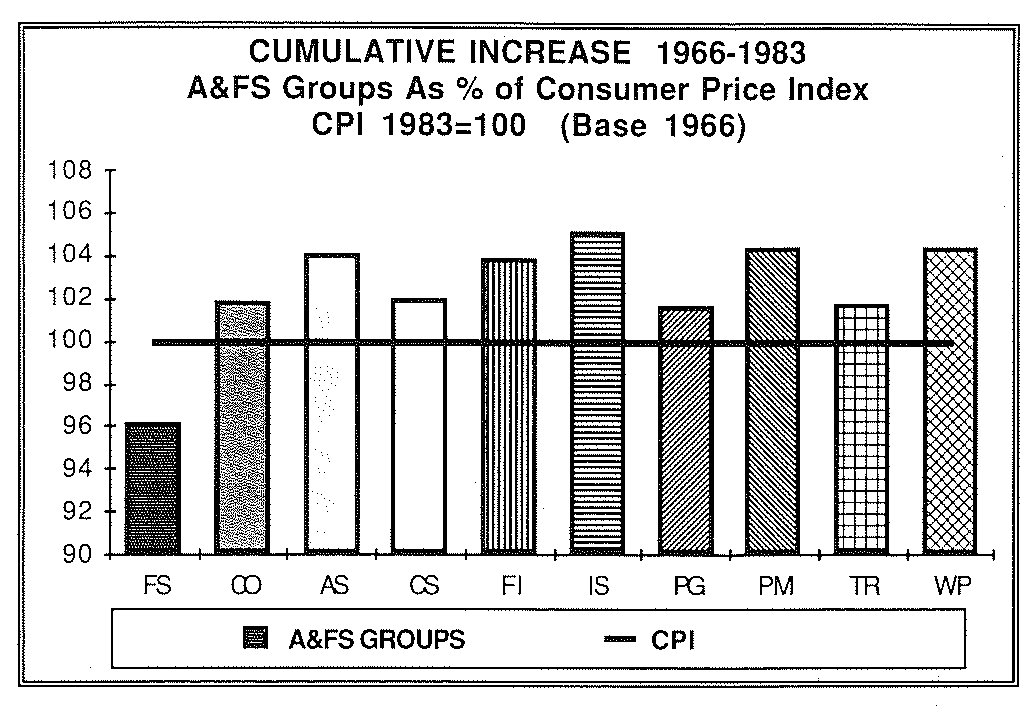
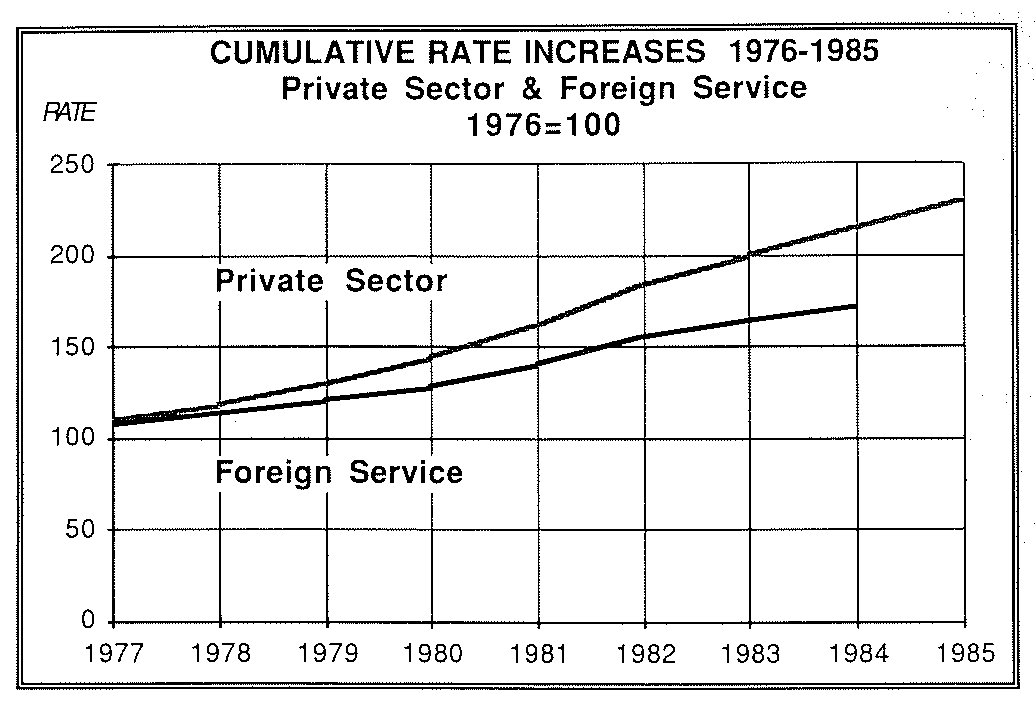
Secondly, as to comparisons with the private sector or with occupations outside the Public Service, Treasury Board claims that it is impossible to compare. On the other hand, we would ask you to note the following points:
a) various private enterprises, such as industry, banks, consulting firms, law firms, and even labour unions do employ Canadians abroad, often on a rotational basis; such work often entails monitoring political and economic developments, promoting commercial interests, or other functions similar to those assumed by many of our members;
b) increasingly, provincial governments in Canada are establishing and staffing trade, cultural, or general relations offices abroad; Canadian business involved in international trade employs in Canada professionals skilled in assessment of political and economic developments, or in trade promotion, or in government relations;
d) private business at home and abroad and provincial governments have sought out and hired former PAFSO members, generally with higher rates of pay, benefits and responsibilities; due to the difficulties in collecting such disparate data, PAFSO suggested to Treasury Board that an independent study of comparability be undertaken, to serve as the basis for the next round of negotiations; this was rejected out-of-hand by the
Treasury Board.
Thirdly, in regard to comparisons within the public service, the Act requires this Tribunal to have regard to other occupations. While the Act defines “occupational group” and “occupational category”, it does not offer a definition of “occupation” itself. We would suggest that the ordinary meaning of the word must signify other specific jobs performed, rather than, as Treasury Board suggests, the general nature of the public service as a whole. Relationships “between” occupations, as well as “within an occupation”,, can only mean comparisons with other specific jobs or classifications within the federal public service.
Treasury Board again suggests that it is impossible to compare. On the other hand, we would ask you to note the following points: a) the FS stream leads directly to the EX category. Management functions performed by our members make comparisons with SM and PM rates of pay appropriate; in any given year, many of our members are seconded to other departments and to the PCO to fill occupations classified in a different group; as the PAFSO written submission shows, our members regularly fill LA, CO, OM, SM, and other management positions. Our comparisons are not, as Treasury Board suggests, based on selecting a high-paid group, but rather, on an objective assessment of equivalency insofar as possible; the converse is also true: the Department of External Affairs accepts, on secondment, members of other groups to fill FS positions, including the LA, CO, PM, SM, SI and other groups. This surely indicates the employer’s own view of comparability; again, in this regard, Treasury Board refused during negotiations to even consider an objective study of comparability.
In sum, despite what may appear to be a paucity of data (although more is provided in our submission than Treasury Board suggests is available), we would suggest that this Tribunal is required, on the basis of information before it and to the best of its ability, to have full regard to comparibility within and without the Public Service, as required by Section 68 of the Act.
Conclusion
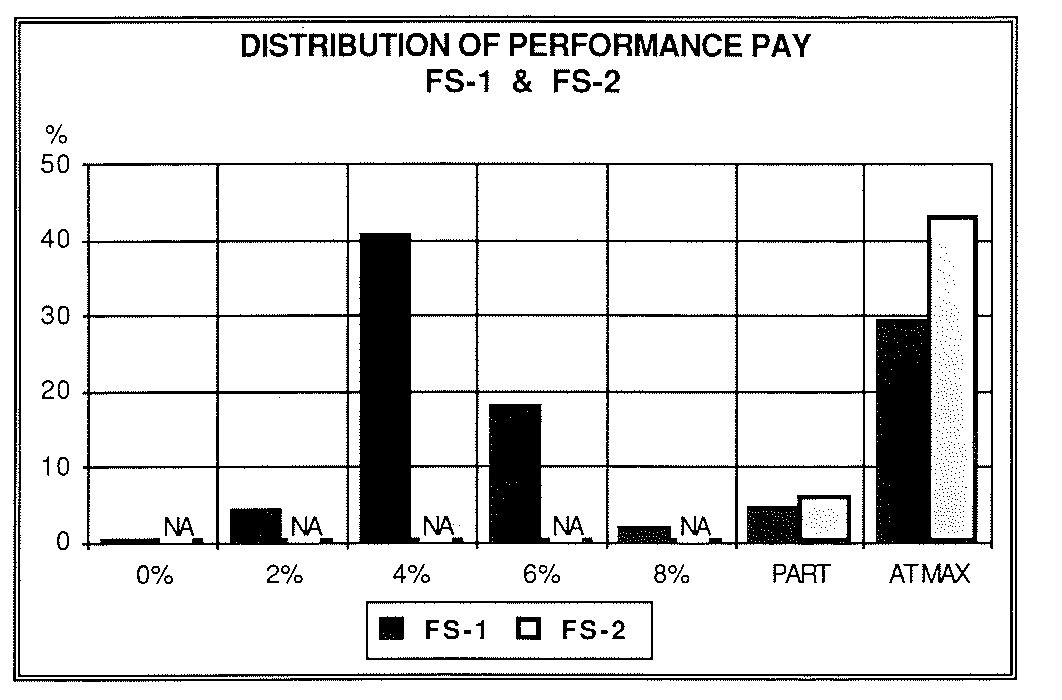
In conclusion, we begin the merits of this arbitration against the backdrop I have described. Our recourse to arbitration was not motivated by some calculation of higher average settlements, as the Treasury Board written submission suggests. Rather, if I may state the matter simply, a first offer by Treasury Board that came only in the last round of bargaining, that would have guaranteed a loss of real income for our members, that would have guaranteed greater inequities in comparisons between our occupation and others within and without the Public Service, could not be accepted. And no further offers came in response to our further counter-offer in the interests of compromise.
We are here reluctantly. We have negotiated in good faith, as we do each and every day with representatives of other countries, in the name of Canada. We have exhausted every conceivable avenue for a negotiated settlement. We have succeeded in resolving all issues not related to pay. Before you today are various jurisdictional and substantive arguments related only to pay-related matters.
As we will show throughout our presentation, PAFSO’s submissions to not seek to lead the public service, or to place us ahead of the private sector. Rather, we seek only to prevent what has been a clear and ongoing deterioration in the terms and conditions of our employment from continuing. We seek only to maintain some semblance of comparability.
We may have been slow to learn that despite the fact that we, together with our employers, are indeed engaged in a common enterprise – the management and promotion of Canada’s international relations — it is no longer true, if it ever was, that we share a community of interests in respect of labour relations. We believed the Prime Minister of Canada when he said, soon after taking office, that his government remained committed to attracting “the best and the brightest” of Canada to the Public Service. We believe that the Public Service Staff Relations Act, and in particular Section 68, gives this Tribunal the tools to ensure that our terms and conditions of employment “are fair and reasonble in relation to the qualifications required, the work performed (whether or not you choose to call them “duties”), the responsibility assumed and the nature of the services rendered”. And we believe that our written submission, and the evidence that will be put before you, set out those fair and reasonable terms and conditions — those contained in the PAFSO proposals.
View the original scanned pages →
Originally published in bout de papier, Vol. 3, No. 3 (1985) — Fall 1985 // Automne 1985, pp. 40–42. Read the rest of this issue →



