
bout de papier, Vol. 3, No. 3 (1985) — Fall 1985 // Automne 1985, pp. 17–26
The eyes are blue, the thinning blonde hair is whitening, Sitting erectly at his desk he looks a decade younger than his 74 years. Once described as “a sort of Prairie Gothic Junior, son of Jest Folks” Mitchell Sharp has served the Government of Canada either as mandarin or minister for over a half century. He has dealt directly with every Prime Minister since Mackenzie King. But his is no silver spoon story. He left school at age 14 to help his mother support the family and worked his way through Winnipeg’s University of Manitoba at night class. He later took a post graduate degree from the London School of Economics when it was run by the socialist Harold Laski. He rose to prominence in the St. Laurent years and became a deputy minister before he was 40. Many believe he was the only person who could manage C.D. Howe. He left the civil service because John Diefenbaker did not trust him.
After a four year stint with Brascan, he joined the Liberal Party and ran, successfully, in the 1963 general election. Earlier he had organized the 1960 Kingston Conference where the down and out Pearson Liberals had regenerated their Party. He served as Minister of Trade and Commerce and then Minister of Finance. But for a money bill defeated in 1968 he might have gone on to become Prime Minister, instead he bowed out of the race to replace Mike Pearson and backed Pierre Trudeau. His reward was External Affairs, a portfolio he held longer than any other incumbent but Pearson. Architect of the Third Option he presided over the department during the debate over the “Foreign Policy for Canadians”, the voyage of the Manhattan, the Nigerian Civil War, the Soviet invasion of Czechoslovakia, and the end of the Vietnamese trauma. After two years as Privy Council President he left the ministry and later resigned from the House in 1978 to become Northern Pipeline Commissioner, a position which he still holds in a part time capacity.
bout de papier: After a successful career as a civil servant you chose politics. Why did you make the jump from the security of the senior civil servant to become a politican?
SHARP: I left the Public Service because I came to the conclusion that Prime Minister Diefenbaker did not trust me. As you know, he regarded most of the senior civil service who had been in office while the Liberals were in charge as being Liberals. He called officials in the Department of External Affairs, Pearsonites. I left and entered private business because I felt that I was not likely to have a very satisfactory career if the Prime Minister did not trust me.
bout de papier: But you had served for a brief period with Diefenbaker: you did not leave right after the election?
SHARP: No, I stayed on after the election and I had every intention of staying on. It shocked me when I found that the Prime Minister did not have confidence in me. I just assumed that I was a permanent civil servant. I had served the government of the day which was Liberal. I expected to serve the Conservatives.
My relations with my first Conservative Minister Gordon Churchill were rather ambiguous. He gave me my first hint that I did not have the confidence of the Prime Minister. Although Gordon Churchill and I did not have any open quarrels, there were indications from time to time that he was a bit uncomfortable. I suppose the best evidence was when I did perform what I considered ordinary services. He was sort of mildly surprised that I was doing these things for him in order to advance the government’s interest. I think others like me felt the same way. Did you know that in Pearson’s first government there were eight former senior civil servants: the. Prime Minister, Jack Pickersgill, Guy Favreau, Bud Drury, Hédard Robichaud, Maurice Lamontagne, who was not in the regular civil service but had been in the Prime Minister’s Office, and a civil servant who had been Deputy Minister in the Quebec government, a man called René Tremblay. And of course, myself. Pearson and Pickersgill had moved directly from the Civil Service into the government. The rest of us had left the Public Service sometime before the election and done other things. I had left in 1958 and I did not enter politics until 1962. I did not become a Minister until 1963.
If Mr. Diefenbaker pushed me out of the public service, Mr. Pearson pulled me into politics. Some years after I had left the civil service, Mr. Pearson asked me if I would consider entering politics. After some hesitation, I agreed. It was my friendship with him, both when he was a civil servant and later when he was Minister. I liked Pearson. I did not like Diefenbaker. I did not think the Diefenbaker Government was governing the country very well. People said to me: “Well, if that’s what you think, why don’t you do something about it?” And that is how I got into politics!
bout de papier: You mentioned Pearson. You had travelled with him to Moscow in 1956 when the first trade agreement was signed with the Soviet Union. Tell me about that.
SHARP: That is a very interesting story. When Pearson was invited to go to Moscow, it was the first break in the cold war and the first indication that there was a thaw. He had some misgivings, however, about the trip. He did not want to go and simply put in an appearance to be symbolic of the thaw. He wanted to do something. He put the question to some of us as to what he might do while he was there.
bout de papier: You were then Deputy Minister?
SHARP: Yes, I was Deputy Minister in Trade and Commerce. We came to the conclusion that the time was right to have a trade agreement with the Soviet Union. We considered the issue and came to the conclusion that we could probably get something additional to the exchange of most favoured nation agreements, if we were to negotiate with the Soviet Union. When we got to Moscow, Pearson indicated that he would like to initiate negotiations and that I was the principal negotiator. I had George Ignatieff as my right hand man and it was a great advantage because I did not have to depend entirely upon the translation provided by the Soviet interpreter. George understood it all and checked the interpretation. I do not think he actually interpreted for me. He listened and he was able to confirm that I was being interpreted accurately. We came to the conclusion in Moscow that an agreement was profitable and left it that a delegation would come from the Soviet Union to Ottawa to complete the negotiations. Ileft Moscow and flew West to come home. Pearson, Ignatieff and John Holmes went on around the world.
I landed in Montreal, and as I was coming down the ramp from the plane a reporter was there with a camera. I looked around to see who was being photographed and found it was myself. I had never been on television as an official. When I got down to the bottom of the ramp, the reporter said: “Mr. Sharp, you just arrived from Moscow. Can you tell us what went on?” I said what I thought were some innocuous things. When I got into the airport, my wife was there. She had motored down from Ottawa at the request of my minister, Mr. Howe, who had instructed her to go to Montreal and meet me, take me up to the Laurentians for the weekend and deliver me safely to Ottawa without having seen anyone. I had not said anything that mattered, I thought, and so I appeared in my office at 9:00 on Monday morning.
C.D. called me in and asked how I had got along. I told him that the negotiations had gone very well and we were going to have our very advantageous trade agree. ment with the Soviet Union. He appeared quite pleased. When I got back to my office my secretary told me the Prime Minister wanted to see me. I went over immediately. His first remark to me was ’How’s Mike?’ I told him and he said: “So how did you get along?” ’, and I gave him the same story as I had given the C.D. and he asked if I had already reported to Mr. Howe. I said yes. He asked about his reaction. I said, he seemed pleased and a bit relieved. The Prime Minister said “That is good because last week Mr. Howe said to me: What in the hell do you think they are doing over there?” I told him that Mr. Pearson was an experienced diplomat and that Mr. Sharp knows his business. I am sure they are carrying out our instructions.” Howe replied: “I hope so, that fellow Sharp is so damn enthusiastic.
Moscow was one of my first experiences with Mr. Pearson. Earlier, I went to Atlantic City for the first council meeting of the United Nations Relief and Rehabilitation Administration and I had Gerry Riddell with me. This was my first experience as an official with an External Affairs’ officer as a partner, and we had to draft a speech for Mr. Pearson. I was familiar with certain aspects of the subject but Gerry Riddell was an expert drafter of speeches. Ilearned a lot from watching what he did to my text.
bout de papier: You mentioned C.D. Howe. He sounds like a great character.
SHARP: He was an extraordinary Minister. I never thought that I would ever work with him because at one stage when I was in the Department of Finance, when I began in my career in the Public Service, we were at the same meeting. I made some remarks and he jumped on me saying my remarks were just ’a lot of bloody nonsense’ Some years later, when the Department of Defence Production was started up, Max McKenzie was to be transferred from being the Deputy Minister of Trade and Commerce to be the Deputy Minister of Defence Production and Fred Bull, who was the Assistant Deputy Minister, was to become the Deputy and I was asked to join Trade and Commerce to become the Associate Deputy Minister.
The circumstances of the invitation, lam told, were these: General Young had been the Vice President of Central Mortgage and Housing Corporation and he was appointed Deputy Minister of Mines and Resources, and when the appointment came up in Cabinet, one of the Ministers said: “You know that the whole plan is that the President of Central Mortgage and Housing Corporation wants Mitchell Sharp to be the Vice President and eventually to succeed him. C.D. spoke up and said: “Well if Mitchell is prepared to leave the Department of Finance there is going to be competition.” So he asked Max McKenzie to get in touch with me. While I didn’t think that I had made a very good impression on C.D., I apparently had and that was how joined the Department of Trade and Commerce.
C.D. and I were quite opposites. I was a very careful civil servant who advised Ministers to be careful. C.D. was the opposite. My first job was to prepare a text of a speech for him. I was at that moment the top man in the department, because Max McKenzie had chicken pox and Fred Bull had fallen down the stairs at the rear of the temporary office number one, so he was out of action. Max McKenzie’s executive assistant was seeing C.D. in McKenzie’s absence. He came to me with the request that Mr. Howe would like to make a speech during the debate on the speech from the throne in 1951 and passed me a lot of material prepared by Jack Firestone about the department.
I read this material through and realized that it might become necessary, because the Korean War was on at that time, to introduce price control. Fortunately the government decided against it. I would have been the responsible civil servant because I had been the liaison between the war-time Prices and Trade Board and Minister of Finance during the war, and this experience apparently equipped me to handle it.
I decided that I would put in the speech some references to the problem of price control during the Korean War. I sent the text of my draft 45 minute speech over to Max McKenzie who was at home. He thought it was fine and it was sent on to Mr. Howe. I heard nothing; I got worried about this and I was just about to ask Max what the Minister thought about my draft when his executive assistant arrived in my office with a great bundle of manuscript in his hands. I was just about to ask if my draft had been satisfactory when he told me that he did not know. The Minister had apparently sat down and dictated a lot of stuff which he thought was dreadful. I read it and I thought it was awful too. I concluded that we could not recommend the speech.
I phoned Max McKenzie and asked him what I should do; he told me to retain all the ideas in my speech but use C.D.’s language which was there in manuscript form. I did that, and C.D. was very pleased. I never had any further trouble. He liked a particular way of speaking and I soon learned how to put my own views in his words!
It was a great satisfaction to work for C.D. He either had confidence in you or he did not. If he didn’t, he didn’t use you; if he had confidence in you, he used you and he defended you. For example, I advised him on the building of the Trans-Canada Pipeline. I got myself into this by invitation, because when I came back from Geneva on one occasion, I found that C.D. was about to resign because his advice was not being taken on the Trans-Canada Pipeline.
bout de papier: This was 1955?
SHARP: Yes, about 1955. A friend of mine, whom I phoned when I got back from Geneva, told me that there had been terrible controversy about the Trans-Canada Pipeline and that C.D.’s advice was not being accepted. He would not talk to anybody, and my friend reported that he was determined to resign. I did not want to know anything about pipelines but my friend said that C.D. would listen to me; he would not listen to the rest of us. So I screwed up my courage and one day I told C.D. that I understood he was having trouble about that Trans-Canada Pipeline. He agreed saying that he was finished: “They don’t take my advice and things are in a mess, and I am going to resign.” I said that it must be pretty serious and asked him if he would have any objection if I got a group of senior civil servants together to look at this problem, and see if they could come up with some ideas. He did not object saying that the situation could not be any worse.
I subsequently met with Ken Taylor, Bob Bryce and John Deutsch and later we discussed it with the president and the chairman of the Board of Trans-Canada Pipelines. We came to the conclusion that the problem was the Canadian shield, that area from Winnipeg to Sudbury, where nobody lives. If the pipeline was going to go across Canada the pipeline had to get across that area and it was costly. We recommended that the government build that section of the pipeline and rent it to Trans-Canada on a through-put basis. The rent went up as the volume went up. In due course, Trans-Canada would have the privilege of buying the pipeline back from the government at cost plus the interest. In return, we would get the pipeline built.
When I put this before C.D. he thought it was a stupid idea. I persisted saying it was the right solution, there is not any better solution, and as far as I was concerned, I was finished with the pipeline. I was furious with his attitude! He phoned me in the afternoon to say he had discussed the idea with the Prime Minister who liked it and he asked me to put it down on paper. And eventually we got the pipeline. This story illustrates the sort of man he was; very satisfactory in a way but one who could be very dilficult.
bout de papier: You eventually came back in C.D.’s place as Minister of the department in which you had been the Deputy. What was the reaction of your former colleagues?
SHARP: My first Deputy Minister was Jim Roberts who was a Conservative political appointee. He was a friend of Gordon Churchill and he had been appointed after the death of John English. I liked Jim Roberts and I thought he was a good Deputy and he stayed on. I advised Pearson that I saw no reason to change him.
bout de papier: You did not take the attitude that the Tories took?
SHARP: No, I did not. After a time, Jim went off to Switzerland and Jake Warren became my Deputy Minister. There were all sorts of officials in my department whom I had known when I was Deputy Minister. A reporter asked me if I intended to run the department the way I had when I was Deputy. On the contrary, I said, I had not of running the department as that was the job of the Deputy Minister. My job as Minister was to make the decisions, to defend them, to work within the government on general problems of government policies, to try to pursuade members of the caucus to support the policies of the government and to ensure our re-election. Those were my priorities. I would not interfere with the running of this department because that was the job of the Deputy Minister.
It was an enormous advantage to have been a civil servant. The transition to Government was easy for the eight of us who at one time had been civil servants, because we understood how the system worked. We did not require a long period of education or instruction on how to act. The bureaucracy was not our problem. Our problem was governing well, which was quite a different matter.
The transition from being a civil servant to being a Minister is a very interesting one. Fortunately, I had a period of five years in between. I resigned from the Public Service in 1958 and became a Minister in 1963 so I had been out of the government service for five years which was a sufficient break to enable me to enter politics without feeling that I was still a civil servant.
Politics is a very different kind of life. When I left the Public Service in 1958, I thought that I would never do anything more satisfying or exciting than being the Deputy Minister of Trade and Commerce. I thought that was going to be the pinnacle of my career.
From that time on I thought everything else was going to be run of the mill. I didn’t think about going into politics. It is very difficult to tell in which career I found the greater satisfaction. I did like being a civil servant mainly, I think, because I had three very strong Ministers: I had J.L. Illsley, Douglas Abbott and C.D. Howe. All of them were top figures in the government who knew how to use the public service, who knew how to make decisions. It was a very satisfying career. I was less happy when I had to work with Churchill. He was not experienced and my feeling of uncertainty was a reflection of his uncertainty as to how to proceed.
bout de papier: You had the Trade Commissioner Service as part of your Ministry. As you know it is now part of External Affairs. You have been External Affairs Minister. What is your reading on bringing the Trade Commissioner service into External? Was that an idea that you considered earlier on? Is it something that made a lot of sense?
SHARP: I am skeptical about the change. What surprised me, quite frankly, was that the business community did not react more negatively to that move. The great attraction of the Trade Commissioner Service in the business community was that it was the direct link between the businessman and the Trade Commissioner in the field. In the Department of Trade and Commerce you had not only the Trade Commissioner Service but backup in the Industrial Division of the department. The Industrial Division received the views of the business community, gathered the information, and provided the background to the activities of the Trade Commissioner in the field in promoting the sale of Canadian goods.
The Trade Commissioner Service was distinct from the diplomatic side of government service. Their role was not so much diplomacy, but rather active trade promotion. While in the field, the Trade Commissioner was part of the organization of the embassy, he did not work through the Ambassador, but rather directly through the department at home. I thought that method was superior to that of say, the Americans or the British. I thought we had the right formula for an active trade promotion service. I was a bit taken aback when the decision was made to put this all in the Department of External Affairs and to separate the industrial side from the trade promotion side.
bout de papier: Hadn’t this ever been considered when you were Minister of Trade and Commerce or later External Affairs Minister?
SHARP: No, I never remember it being actively considered. I did recognize that you had to have some coordination of policy in the field. I thought that the separation of the services made sense. I am not very happy about what happened. What is interesting, however, is that I believe that the strongest support for the idea came from the Department of Trade and Commerce. It is not as if this was something imposed on the department. There were senior officials in the department who were actively promoting the idea of bringing everything together. The other aspect that troubles me about it is that I think the Department of External Affairs has become far too complicated an organization. The Under Secretary is more of a manager than an adviser.
bout de papier: Is that a reflection on who occupies the job or simply because the job has become so complex?
SHARP: This is the result of being a ’central agency’. I think it is rather unfortunate. When I was the Minister for External Affairs, I met with my Under- Secretary every morning at 9:00. We went over the events of the day. He brought me up to date on what the department was doing, the concerns and so on, and I advised him on any aspects of Government Policy with which he was untamiliar. We then discussed the issues. I felt confident then that I could answer the questions in the House of Commons. I had people assigned, of course, to prepare answers for me in Question Period.
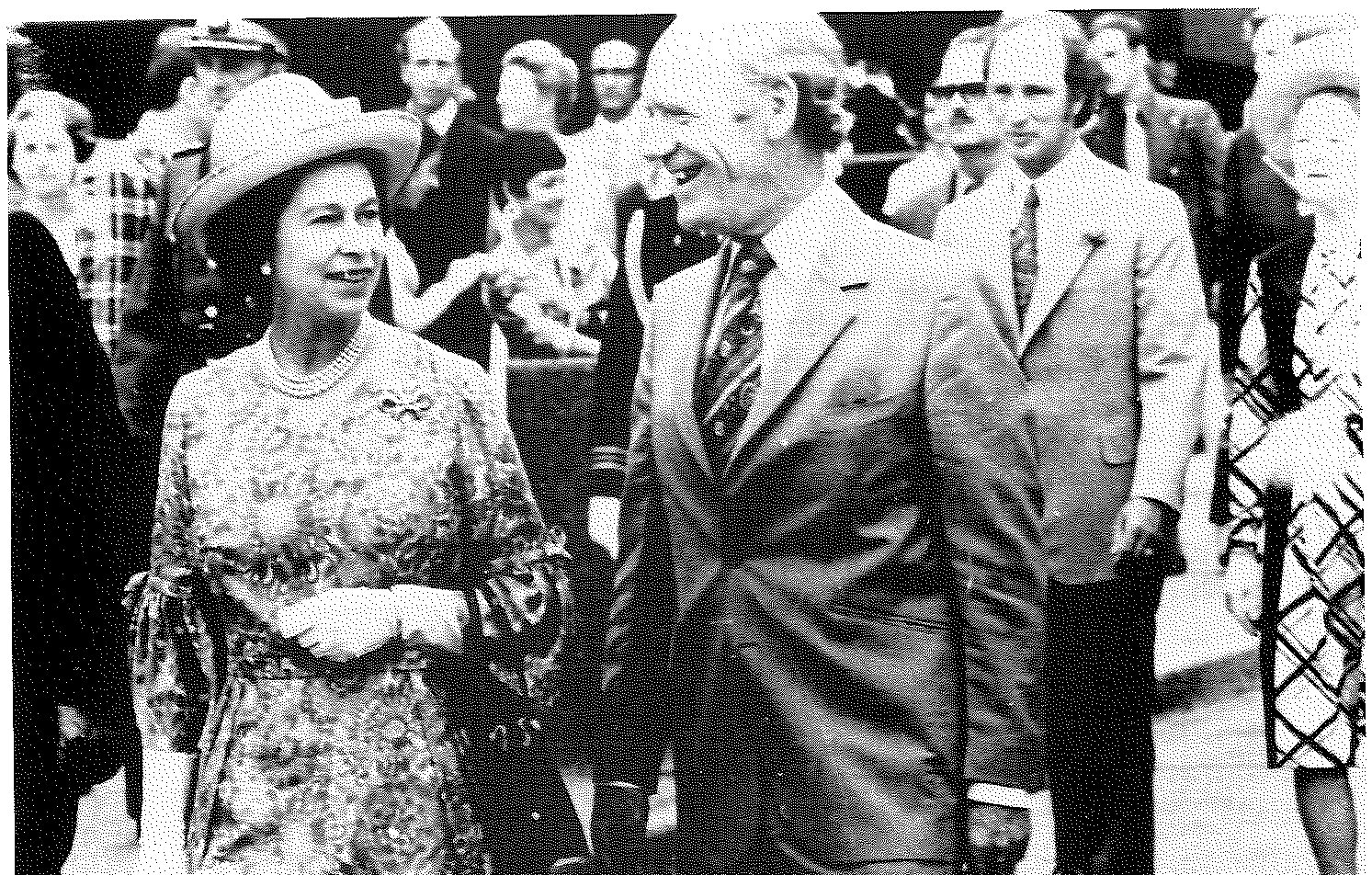
I was kept closely in touch with developments in the field of foreign policy. I was not expected to answer questions on Trade Policy. I might be familiar with them, because of my background in Trade and Commerce and Finance, but that was the responsibility of another Minister, my concern was the foreign policy. Moreover, the line of authority was very direct. I dealt with the Under-Secretary. When he felt it advisable, he brought in officials to meet with me in the morning.
bout de papier: These meetings were basically one on one. Did the USSEA ever bring in a whole bunch of officials?
SHARP: Only if necessary. If there were some subjects on which he wanted to have more expert views, he brought in the head of the responsible division. That was his judgment. I never asked to see anyone else.
bout de papier: How long would you meet? Would this be your first item of business?
SHARP: I did not have any appointments at 9:00 other than with him. I was away, of course, from time to time but while I was in Ottawa, (this is what I learned from C.D. Date. It was a very satisfactory arrangement.
bout de papier: Did the Parliamentary Secretary attend these meetings?
SHARP: He was invited; some did, some did not. There was one Parliamentary Secretary, Pierre DeBané, who did not attend and I said to him one day: “Pierre, don’t you want to learn how to be a Minister? You can come and observe what goes on.” He said: “No, I don’t want to be a Minister.” He changed his mind
Now you have three Ministers, three Deputy Ministers and countless Assistant Deputy Ministers all working in the same general field. I am not at all clear on who the advisers are to the SSEA. Any conversations I have had, which I did not pursue very diligently because I do not want to interfere in any way, lead me to believe that there is some confusion.
bout de papier: You were talking earlier about your press officer, Dick Gorham. Dealing with the press during this period, both as bureaucrat and Minister, has it changed in its role?
SHARP: The big change occurred before I became Minister. When I was a civil servant, the relationship between the press and the Ministers was quite different to what it was when I became a Minister. When I was a civil servant, there were senior journalists, like Blair Fraser, Grant Dexter, and Bruce Hutchinson, who had a very close relationship with Ministers. They talked with the Minister and the got the inside view.
I can recall one instance when I was a civil servant in the Department of Finance. I came to the office which was then located in the East Block. In those days, the Department of External Affairs, Department of Finance, Treasury Board and the Prime Minister’s Office were all located in the East Block. Today not one of those departments could be housed in the East Block. My next door neighbour was George Ignatieff of External Affairs. Our offices were pretty run down during the war, and the doors all did not close very tightly. We had no outside office, no secretary, no carpet on the floors, it was real austerity!
bout de papier: You typed your own memos?
SHARP: No, but we called for a secretary from the pool. We did not have our own special secretary. We had girls who were assigned to us and we usually had the same one, but they were just in the pool. So there was no protection against the outside. I happened to meet a friend who was in the Privy Council Office, and we were talking, quite openly, all alone in the corridor, about what had gone on in the Cabinet the previous day. He left me and I walked into my office. The door was ajar, and sitting there was Grant Dexter.
I thought: Oh Dear! He undoubtedly overheard this conversation, I have got to tell him that he must forget what he heard, otherwise it would have been the end of my career. I did not need to worry. He said to me: “Mitchell, I have been talking to Jimmy Gardner and to Tom Crerar and they have given me different versions as to what went on in Cabinet. Which one is right?” So he was far better informed than I was about what was going on in Cabinet. By the time I became Minister, all of this had changed and the press had taken up the role of the adversary. The press, when I was Minister, and even more today, looked upon itself as the real opposition to the government. They tend to believe it is not the Opposition in Parliament that matters, it is the press.
I have since talked to publishers and editors and they would not permit the establishment of the sort of relationships that existed between Ministers and journalists, as was the case in the past. noticed the other day in your magazine that Jeff Simpson was talking about whether civil servants were following the orders that they were to be on the record all the time. (See March bout de papier No. 1 Vol. 3) I share Simpson’s skepticism as to whether these rules were followed. Of course it is not being followed. Of course it is not being followed, for there is a certain relationship between civil servants and journalists that is healthy and necessary.
Civil servants now have to be much more careful in their relations with the press because the press does not look upon itself only as a means of transmitting information, but also as an expression of opinions. This includes raising skeptical views about what the government is doing. You can hardly read an article now that is not full of implied criticism that the government is not somehow doing what it should be doing. I don’t know whether it is better journalism or not. It seems to me that if there is some confidence between the journalists and the politicians, the stories are more likely to be accurate. It does not mean that the journalist’s silence is being bought or anything like that, no journalist would accept that and the politician would expect that the journalist would be indepedent. But it certainly is a different relationship if the politician feels that he can talk in confidence and try to give the journalists an idea of what really has been going on.
Pearson, of course, was a master with the press. He had the press in his pocket, in his hands, because he told them what went on and they were able to write better stories.
bout de papier: Do you think there is some of the old style journalism about, or are they pretty much a thing of the past?
SHARP: I think it is pretty much a thing of the past. We have been greatly affected by Watergate.
bout de papier: Foreign Policy for Canadians was the first major exercise you undertook as Minister. Did you discuss the review with Mr. Trudeau before you were named to the Cabinet? You had backed him in the leadership. Did the portfolio and the review came as a surprise?
SHARP: Well, I was appointed Secretary of State for External Affairs before the election. I helped to draft the platform for the election, and in it was the undertaking of the foreign policy review, and the pledge to try to establish diplomatic relations with the People’s Republic of China, as well as strengthen our ties with Latin America. I think these were the three principal items in the platform.
bout de papier: Were these your ideas or were they something you discussed with Trudeau?
SHARP: Well, I worked with Michel Vennet: Michel had been my special assistant before he moved over to the Prime Minister’s Office. Michel and I were used to working together and I think we more or less worked it out between us. I think Michel knew what Trudeau wanted and therefore we turned out something that Trudeau was quite happy with. I do think, however, that the purpose of the foreign policy review was different in Trudeau’s mind from what it was in mine.
The Prime Minister was not a member of the foreign policy establishment as was Mr. Pearson or Mr. Martin. However, I had had quite a good deal to do with foreign negotiations, and I think I can claim that I have been involved in more negotiations with the American government over a longer period of time than anyone else.
I had not been in the Department of External Affairs, I had never served abroad or any of these kinds of things. It was not my consuming interest. I had, when asked by Trudeau, said that I was interested in External Affairs and therefore my appointment was not a surprise.
It was my view that it was a good thing to have the foreign policy review more to confirm that we were on the right track than to question whether we were not.
I knew, for example, that there were a group of people in the Cabinet who were opposed to our membership in NATO. I was satisfied, however, that when the reviews were finished we would still be in NATO. The differences between the foreign policy review that was undertaken when Mr. Martin was Foreign Minister and Mr. Pearson was Prime Minister, were fundamental. What Mr. Trudeau insisted upon was a fundamental review going back to the very elements of our foreign policy. Should we be nonaligned? Should we be neutral? Should we have defence arrangements only with the United States? Should we be in NATO with no troops in Europe? Should we be in Europe with troops? And if so, how many? We went through that exercise. We actually looked at the implications of neutrality and nonalignment in a fundamental way. We examined all these possibilities. I was satisfied before we began, as I believed that we would abandon them, but the Prime Minister insisted it should be done. At the end, we decided to stay in NATO and have troops in Europe but to reduce the number. It was at that point that I was unhappy.
I was satisfied that we would have to reduce the number of troops in Europe. We were not prepared, and Parliament would not have been prepared to approve the increase in defense expenditures necessary to equip those 10,000 men in Europe for the task to which they had been assigned. I knew that was not on, and there would have to be a change. The Minister of National Defence, Leo Cadieux, and I were both satisfied on that point. After we had finished the review we wanted to announce that we had decided to stay in NATO, and would have troops in Europe, after we had finished the review. Then we planned to go to our allies and say: “You must understand that we are not prepared to ask Parliament to vote the money necessary to equip the 10,000 men currently in place adequately for their task. Therefore we wanted to make the announcement in a way that minimizes the damage to the alliance of our decision to reduce our troops.”
However, the Prime Minister came to the conclusion that we could not be content with that simple statement after such a long review. “What had we been doing?” he said. A lot of controversy had been generated. After spending all this time he believed there had to be evidence of change. I was quite satisfied that there would have to be change, but I wanted to do it somewhat later, after we had discussed the implications with our allies. But that view did not prevail. And so we had the unhappy task of explaining to our allies, atter we had made the decision, that our intent was not to weaken the alliance. It was a painful period, more particularly, I think, for the Minister of National Defence, because it was his primary responsibility.
bout de papier: When you say ’we’ was it basically you and Cadieux and Trudeau or did this go to full Cabinet?
SHARP: The full Cabinet decided. Cadieux and I were supported on membership in NATO and maintaining troops in Europe. After we had gone through the exercise, we were still in NATO and had troops in Europe. The question of how many troops was a technical question. It was a question not of principle, but what we were prepared to support and maintain. We did not satisfy those members of the Cabinet who were opposed to being in NATO. You may recall that Mr. Kierens, while a Minister, made a speech in which he said that we ought to get out of NATO. I think he regretted ever having made the speech but that was at a time when there was a feeling, I think one that Mr. Trudeau shared, that there was no harm in having a public debate between Cabinet members.
bout de papier: Paul Martin told us that every other member of Cabinet sees himself as potential Foreign Minister, probably even more so for that portfolio than any other portfolio, and yet he said that to be really effective it worked best when he dealt directly with the Prime Minister and felt that is how things worked out when he was Secretary for External Affairs. You followed him but things were a bit more wide open.
SHARP: Oh, yes. When I was Minister of Trade and Commerce, and Minister of Finance, I never remember there being a full scale session on foreign policy in Cabinet. Martin was perfectly right. Most of the issues were settled by Mr. Martin with the Prime Minister. That was not so in the Trudeau government. The foreign policy review was not only discussed in Cabinet Committee, it was discussed in full Cabinet At one point, I think I had suggested that there ought to be a permanent item on the agenda dealing with foreign policy but that was not accepted. You must recall, too, that Mr. Trudeau brought about a very big change in Cabinet procedure. Trudeau believed in collegiality and he practiced it. For example, he insisted upon all proposals being thoroughly documented. In the Pearson government there was some documentation, but not nearly as much as there was when Trudeau became Prime Minister. Moreover, the method for discussion of issues was different.
Trudeau insisted that all matters go to committees to begin with, and then come back to Cabinet for confirmation of decisions made in committee. If the committees could not agree, then there would be a report to Cabinet and the matter would be discussed in Cabinet.
bout de papier: What role did Ivan Head play in foreign policy making?
SHARP: Ivan Head, to some extent, played a part in this process. Ivan’s principal role was to act on behalf of the Prime Minister in his relationships with certain other heads of Government. He helped to maintain relations between our Prime Minister and the Prime Ministers of other commonwealth countries. He would go on trips on behalf of the Prime Minister to deal with certain issues. He always discussed them with me in advance, and he always reported to me afterwards. We had a very good working relationship.
bout de papier: And there was not a problem with that?
SHARP: No, I had no problems with Ivan Head at all.
bout de papier: The department had other ideas?
SHARP: Yes, but that’s a different story.
bout de papier: As Minister, you felt quite satisfied?
SHARP: I was quite satisfied. He always made a point of coming to me in advance of any trip abroad and of reporting afterwards. At the beginning, there was an occasion when we had some disagreement during the foreign policy review.
Ivan Head put forward a memorandum on defence policy to the Prime Minister who in turn thought it would be interesting for the Committee to read. But it was withdrawn on the grounds that proposals on defence policy should originate in Cabinet with the responsible Minister, ie the Minister of National Defence. Otherwise, the implication might be that the Prime Minister had lost confidence in the Minister of National Defence. This was the only incident, right at the beginning, where there was any sort of friction involved and it was cleared up very quickly.
The foreign policy review itself, apart altogether from NATO, was an interesting exercise and it was intended to be part of a general review of all aspects of Government Policy. Trudeau instructed all departments to do the same thing. The only departments that ever complied were External Affairs and National Defence, both of which produced review documents. Other departments produced something but there was never anything quite like our reviews.
I remember the astonishment of other Foreign Offices throughout the world that we would take the risk of trying to express the bases of our foreign policy in a series of documents. They never did. You will not find any documents put out by the Department of State which purports to state what lies behind all aspects of American foreign policy, or for that matter, in the British, German or least of all the French foreign offices.
When I became Minister, there was no documentation except Minister’s speeches. If you wanted to know the foreign policy of Canada, you had to go back and look at the speeches of Mr. Pearson or Mr. St. Laurent or Mr. King, whoever happened to be speaking on behalf of the government.
bout de papier: But in a sense that still holds true.
SHARP: Yes.
bout de papier: Was Foreign Policy for Canadians all that terribly useful in the end? Speeches are still seen as reflecting most directly the views by the Prime Minister and the Minister.
SHARP: Yes, that is right. Some time ago, in the course of writing the history of the department, I was asked to look at a paper which concerned the foreign policy review. I understand now that the department will publish a review but it will not extend to the Trudeau years. At that time, they had the idea that they might bring it up to the end of my term and the paper was interesting about the process that had gone on.
There were certain places where I felt correction was necessary and I indicated those but it was the conclusion of the paper I remember very well. It said that the foreign policy review had not covered Canadian- American relations specifically. I remember very well having to defend this and saying that relations between Canada and the United States were so fundamental that you could not have written the first of these papers without dealing as extensively as we later did with our American relations.
bout de papier: That was a conscious decision?
SHARP: At that time it was a conscious decision. Later when we got into difficulties with the Americans over their taxation of our imports..
bout de papier: That was a 1971 surcharge crisis?
SHARP: Yes. The surcharge; that was when we decided that we would do a paper on Canadian-American relations.
bout de papier: So that really was the spark?
SHARP. Oh, yes, it was. So the department got to work and put out the Third Option paper.
bout de papier: The Third Option seems, at least in retrospect, to be very much your baby, for which you were responsible.
SHARP: That was deliberate. The question arose as to whether this should be published as another volume of the foreign policy review or done separately, and it was decided that it would be better to be a little more tentative and to publish it as my view and to publish it in International Perspectives (Autumn, 1972).
bout de papier: Which was again a creation of your own.
SHARP: Yes, that is right. So it was done.
Well, this official who was doing the departmental history, said at the end of his dissertation on the process of the foreign policy review that “When the Third Option paper was published it fell with a dull thud” My remark was “I don’t remember whether it did or not, all I can tell you is that it is the only one of these papers that has ever survived”. I said “I continue to get more inquiries about the Third Option; more interviews with students and professors who are trying to understand what it was all about than any of the other papers in the foreign policy review.”
It is the one that has survived, and of course, I even entered a new phrase for Canadian vocabulary with “the Third Option”. It is, however, an interesting point that that paper was supposed to be not quite a statement of government policy, but close
bout de papier: Why the nuance?
SHARP: I think it only makes sense if you look at it in terms of “Why was it not published as another volume of the foreign policy review?” If it had been published independently and without any relationship to the review that had taken place, I think it would have been interpreted as simply a statement of government policy made by the Secretary of State for External Affairs who usually makes statements on government policy. But the fact that we had a foreign policy review and this was not published in it, differentiated it slightly. That is why I say it is a nuance.
bout de papier: And yet it came out in the house organ of External Affairs rather than as a white paper.
SHARP: Yes, that is the difference.
bout de papier: But it did reflect Government Policy.
SHARP: It certainly did. It was not enthusiastically endorsed by all Ministers. There was great skepticism in the Departments of Trade and Commerce and Finance, not on the grounds that it was a reasonable statement of Government Policy, but that it was a mistake to try to express it. They thought it was better to have Canadian Government policy respond pragmatically to events rather than to attempt to formulate our relationship with the U.S. U a boutade spend eaten in 191e ther in g to ere was no real option except the first option which was to continue as we have been: following a pragmatic course and adjusting ourselves to events as theyarose. That was the real alternative. Not the second one. The Third Option was an attempt to outline an approach to Canadian-American relations which I still think was a reasonable one but which had to be defended and which was subject to all sorts of interpretations. Tony Westall’s piece in International Perspectives (November/December 1984) really roused me. I can understand why there should be all sorts of interpretations of the Third Option, but it was not intended to be a particularly nationalistic document. Indeed, there was great disappointment in the hearts of many economic nationalists who saw it as a mild statement.
bout de papier: Did it represent the views of the Secretary of State for External Affairs or Mitchell Sharp’s personal vision of foreign policy? Would that document have been drafted if you had not been Minister?
SHARP: It was the events of the time that compelled the government or impelled the government to try to clarify its views of relations between Canada and the U.S. If those events had not occurred, I don’t think we would have issued a paper of any kind. We would have just let the foreign policy review rest as it was. The illustration of our vulnerability to events in the U.S. led the government to say where it stood.
bout de papier: This was the surcharge which really came out of the blue? SHARP: Yes, it did and it was a great shock.
bout de papier: What does that say about the relationship? People say we are best friends to the United States. Did the Americans make a mistake? Did you consider it as a personal a front? You had doubtless developed relationships with the Americans?
SHARP: It was a shock. A real shock to have the Secretary of the Treasury, John Connolly, consider that relations between Canada and the U.S. were just the same as the relationship between the U.S. and other countries. First of all, it was great shock because it signalled the end of the special relationship.
The end of the special relationship was really what the application of the surcharge meant, and it was personified in the attitude of Connolly. “Why not?” he said, “Canada is responsible for as much of our trouble as anyone else. “ But we knew we were not, and indeed the basis of the special relationship was the view held on both sides that there was nothing the U.S. could do to rectify its own economic problems by taking action against Canada because we were bound to react in such a way as to do equal damage to them. This was the basis of the special relationship in the economic sense. There may have been other political ramifications to it but that was essentially what the special relationship was about.
We were so inter-twined economically and so closely bound together that neither side could do anything to help itself at the expense of the other. We could not do it and they could not do it. In all my previous negotiations with the Americans, when I was the Minister of Finance for example, it was taken for granted and they always modified any of their policies in order to avoid doing damage to us which they knew would not benefit themselves. It was going to damage their interest in Canada, it was going to damage the trade and investment upon which both of us were so dependent.
bout de papier: Vietnam was another abiding concern throughout most of this period, and a vital part of the Canada- U.S. relationship. You, for example, visited Hanoi and Saigon and we were participants in the ICCS. Did Vietnam keep you busy? Paul Martin spoke of it when I saw him, and he said he spent a lot of time on it.
SHARP: My handling or the department’s handling of the request by the Americans to be a member of the second International Control Commission was better, in my opinion, than any other issue during my time. I felt we made no mistakes. When Bill Rogers, who was then U.S.A. Secretary of State, approached me and said that it was likely that they were going to ask us to enter another International Control Commission, my officials were opposed to it. They had been very badly burned in the original commission. They felt that if we agreed to enter a second time, we would get sucked in and never be able to get out again.
I did not share this view. I felt that we could not turn down the invitation. It would create the wrong impression. We wanted to see the settlement in Vietnam and if all the adversaries concerned felt that we could be useful, we had to agree.
I told my officials that we would not continue in the commission if it developed as the earlier commission. The first ICC was a farce and I saw no purpose in continuing it. And if that is the way it developed this time, we would withdraw. What we should do is give a conditional response that would enter for a period of 60 days, and if at that time we decided it was going to be a repetition then we would get out.
We had first to find out a few things, such as whether we were the choice of the North Vietnamese as well as the South and the U.S.A. We had to try to find out whether there would be anyone to report to other than the two sides. I went to Paris at the time of the Peace Conference and tried to involve Kurt Waldheim, the Secretary General of the United Nations. I wanted the Control Commission to report to him. However, I was unsuccessful. Indeed, I was quite shocked at the treatment that was given to the Secretary General at that conference. However, I guess he was accustomed to it and he asked me not to say too much about it but I was very angry.
We were useful at the beginning of the second ICC, because we helped the Americans get out. We supervised the withdrawal. I instructed our Ambassador, Michel Gauvin, that since I had been unsuccessful in establishing anybody to which the ICC would report that he should report to the world. My instructions were to follow an ’open-mouth policy. Whenever there is something to report, he was to report it. The Prime Minister of Singapore later came to a meeting of the Commonwealth Heads of Governments in Ottawa and he told me, “Mr. Sharp, we are very grateful to Canada. You are the only people who have told the truth about Vietnam”. I think that was probably true.
The Poles and the Hungarians would never permit any investigation of complaints by the South on the Americans. They only were interested in investigating complaints from the North. They were committed to that side. As Canadians, we tried to be objective and neutral. We were the only people who had an absolutely objective view on events. Very soon it turned into a farce. When we tried to get out, we were urged by our NATO allies and by the Japanese to stay on. I went to Vietnam to see what was going on, and to see first hand at how we were doing.
I went to both Saigon and Hanoi. The South Vietnamese wanted us to continue because they thought it was useful to have us there. Hanoi would express no view. They said,, “You are there?” I said, “Do you want us to continue?” and they told us “It is up to you.”
I will never forget the words of the Prime Minister of Laos who, as I was leaving his office said, “You are now going to Hanoi?” I said yes. He said, “Please tell them to stop”. We eventually got out.
We kept the Americans thoroughly informed at all times of what was going on. We had advised the State Department that on Thursday (May 31, 1973), I was going to make the withdrawal announcement in the House of Commons. But Henry Kissinger phoned me and asked if I would consider postponing the announcement until later because he was in the midst of these negotiations with the North. I said, “No, I can not agree to that. I will tell you what I will do, if it will be helpful. I will postpone our withdrawal”. Some time later I met Secretary of State Bill Rogers and he said, “You will notice I did not call you”. I told him I did notice that but that it would not have made any difference as we were going to get out.
Much later, in the last year or two, I saw Henry and we got talking about this subject. He said he never did understand why the Iranians succeeded us. He thought it was stupid of them to do that as the thing was useless. Well, times change!
bout de papier: Earlier you said that you have probably spent more time negotiating with the Americans than any other Canadian. Any advice after half a century in the business?
SHARP: I am sceptical about having any exclusive relations with the Americans, except those that arise from geography. There can only be one International Joint Commission, because we happen to have a common border. I would not like to see us entering into arrangments with the U.S.A. that exclude other people. I think that if we do, we compromise our independence, and this is why I am not one of those who advocates entering into a free trade arrangement with the United Staes.
bout de papier: Even sectoral?
SHARP: Sectoral arrangements are not likely to succeed. I share the scepticism of those who say that we are not likely to be able to make deals in particular commodities. Moreover, if you go about it in that way you concentrate the opposition, because if you seek to have a special deal on a specific commodity, the Americans are going to counter by asking for special arrangement on another commodity, in which they have a greater interest and in which they are more competitive. Those kinds of negotiations are not likely to be very successful. You have a choice between a comprehensive free trade agreement or having something that is designed to minimize the effects of protectionist policies in the United States upon Canada. The latter is rather different. It is not a comprehensive free trade agreement but it is something that tries to minimize the adverse effect of protectism.
The trouble with the free trade arrangement is tht it involves discrimination against the Europeans and the Japanese, as well as other countries. As an internationalist, I favour eliminating as many barriers to trade as possible, but I very much prefer doing it on a multilateral basis. One of the interesting side effects of entering into an exclusive arrangement of this kind, is that we would no longer be interested in a reduction of trade barriers because that would reduce the margin of preference that we enjoyed in the American market as a result of our free trade arrangement. In a comprehensive free trade arrangement, presumably there would be no barriers to trade and industrial exchange between Canada and the United States. We would then enjoy a margin of preference in the United States. We would not be interested in seeing the Americans make any further trade agreements. It has an element of exclusivity that will run counter to our traditional attitude towards the United States.
As a nation we are, to a very large extent, a reaction to the United States. Look at our history and you will see how often our policies have been governed by something that is going on in the United States. Confederation itself is somewhat of a reaction to the doctrine of manifest destiny. The fact that the British guaranteed the rights of French Canadians was a reaction to the possibility that they might join the revolution. You can see similar events all through our history. To enter into an exclusive relationship with the Americans really does run counter to our history, and it is very difficult to foresee what would happen if we took that momentous step. On economic grounds, one has to agree that the combined wealth of Canada and the United States would be enhanced. How it would be divided is quite a different matter. If we could eliminate all barriers between Canada and the United States as part of a multilateral agreement to remove all barriers between countries, I would favour the scheme. It is when it is done between the two of us, and it excludes others that I object. They are political objections, but political in the most general sense and they have to do with our nature as a country. We would become in the eyes of the rest of the world more of an appendage of the United States than we are today. We would think this was the case. We could not thereafter resist cultural and other pressures as effectively as we have been able to do until now.
bout de papier: Efforts to diversify trade over the past ten years really haven’t succeeded. The U.S.-Canada trade figures have risen from 65 per cent to 75 per cent today. Did the Third Option give it our best shot? Is the North/South pull inevitable, despite the best efforts of government?
SHARP: I think that it was inevitable. Our industry was not equipped to compete as effectively in overseas markets, as it was to compete in the United States. Business therefore took the American route as it was the most profitable route to take and there was nothing that the government could do that would be effective against it. We did succeed to some extent in our relationship with the European Common Market by persuading them to establish an office here. However, our trade with the United States developed much more rapidly than it did elsewhere. We did not lose ground in Europe or in Japan or any other part of Asia.
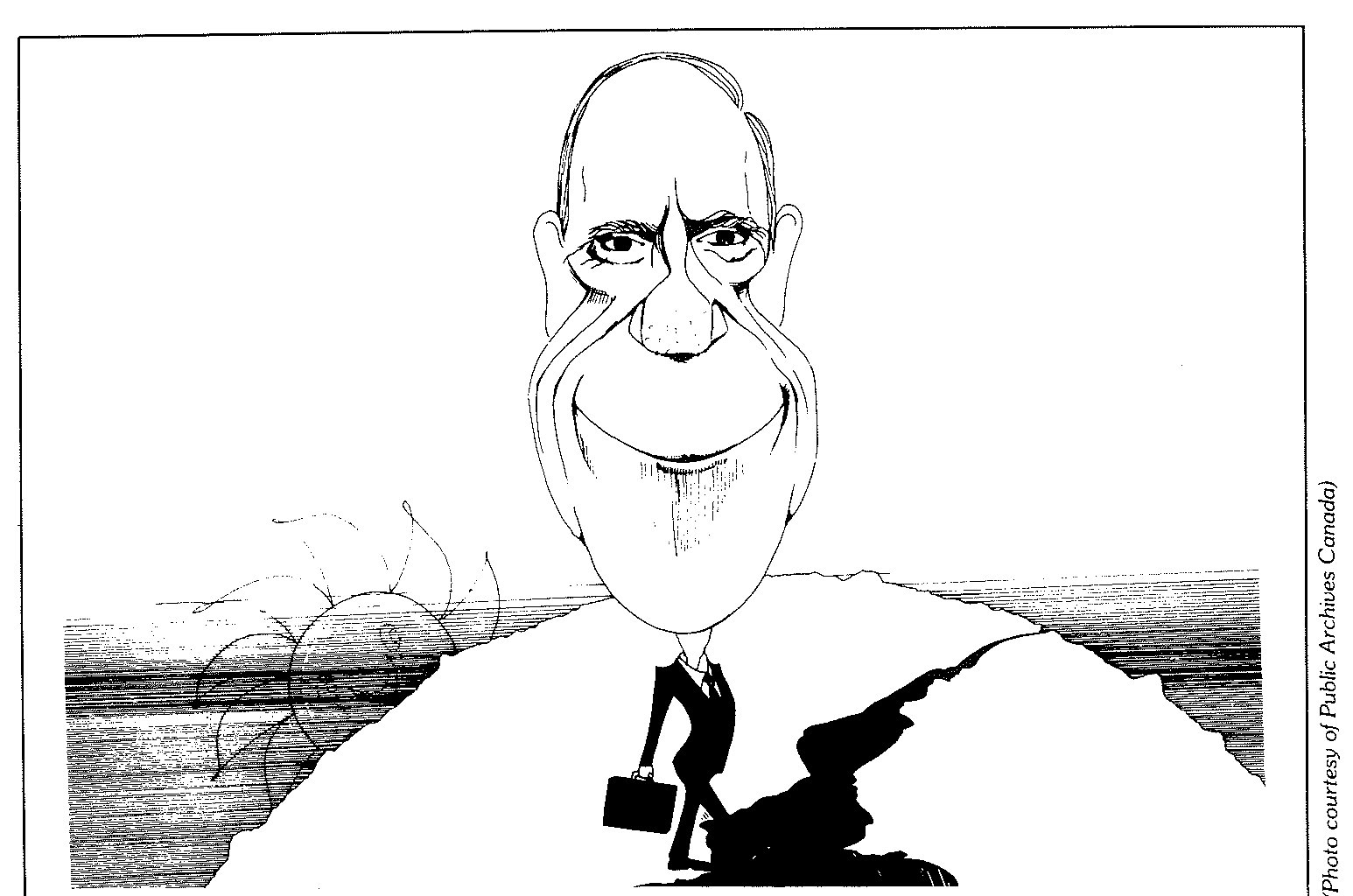
Rather the American market simply grew faster.
When the Diefenbaker government decided in 1958 that they were going to divert the imports from the United States to Europe or to Britain, I accompanied the ministerial delegation which met with their opposites in that old institution, the Joint Canada-United Kingdom Cabinet Committee, which was established by St-Laurent and Pearson. Donald Fleming was the Minister of Finance and the leader of the Canadian Delegation, and he gave a very eloquent speech to the Americans who were led by John Foster Dulles, who was Secretary of State. We warned Mr. Fleming that he should be careful about what he said; however, he was undeterred and he gave a strong speech saying that we were determined to diversify our trade and that we were not going to have all our eggs in one basket. Prime Minister Diefenbaker later made a speech in London about diverting 15 per cent of trade to the United Kingdom. U.S. Secretary of State John Foster Dulles listened to this and you could see that he was getting angry. He replied that the reason Canada did so much trade with the United States was that the Americans paid cash, and produced the things that Canadians liked to buy. He asked: “Who is financing Europe today?” and he said that if it were not for U.S.A. help to Europe, Canada would not be selling anything to Europe.
bout de papier: You spent six years as Foreign Minister. You just marked seven years here at the Pipeline Commission. You also have been involved in other things such as conflict of interest guidelines for ministers as well as the West Coast Fisheries dispute. You have kept you hand in! Which assignment was your favourite?
SHARP: People ask me which portfolio did I enjoy most and they are shocked when I say Finance. I enjoyed External Affairs but at the end I felt that I was becoming separated from domestic politics and so in 1974, after the July election, I said to the Prime Minister that I would like to move back into domestic affairs. This conversation was reported to Paul Martin and when I was over in London on one occasion, while he was the High Commissioner, he said: “Mitchell, is it true that you said to the Prime Minister you did not want to be Foreign Minister any longer? “ I said, “That is right” He said: “I do not believe you”. Paul could not believe that I would want to move out of that portfolio. I thought that I had been there long enough and that I had interests other than foreign policy.
bout de papier: You had no desire to go back to Finance?
SHARP: Oh no, none whatsoever and I had some difficulty in finding anywhere else to go. I ended up being House Leader which is not the easiest job. In many ways it is one of the most unsatisfactory. Maybe Paul was right, perhaps I should have stayed at External.
bout de papier: Will you write your memoirs?
SHARP: I don’t know. I have been putting down some recollections, but whether I will ever publish them is a different matter. However, I think I should put them down.
bout de papier: Is your work here at the Commission starting to come to an end?
SHARP: Oh yes. The work is only part time anyway and indeed it is only because I was asked to stay on that I am still here. I have spare time, part of which I use for the purposes that you have already outlined, and I find that I have a little more leisure and I can put down some recollections.
bout de papier: Mr. Sharp, thank you very much.
View the original scanned pages →
Originally published in bout de papier, Vol. 3, No. 3 (1985) — Fall 1985 // Automne 1985, pp. 17–26. Read the rest of this issue →



